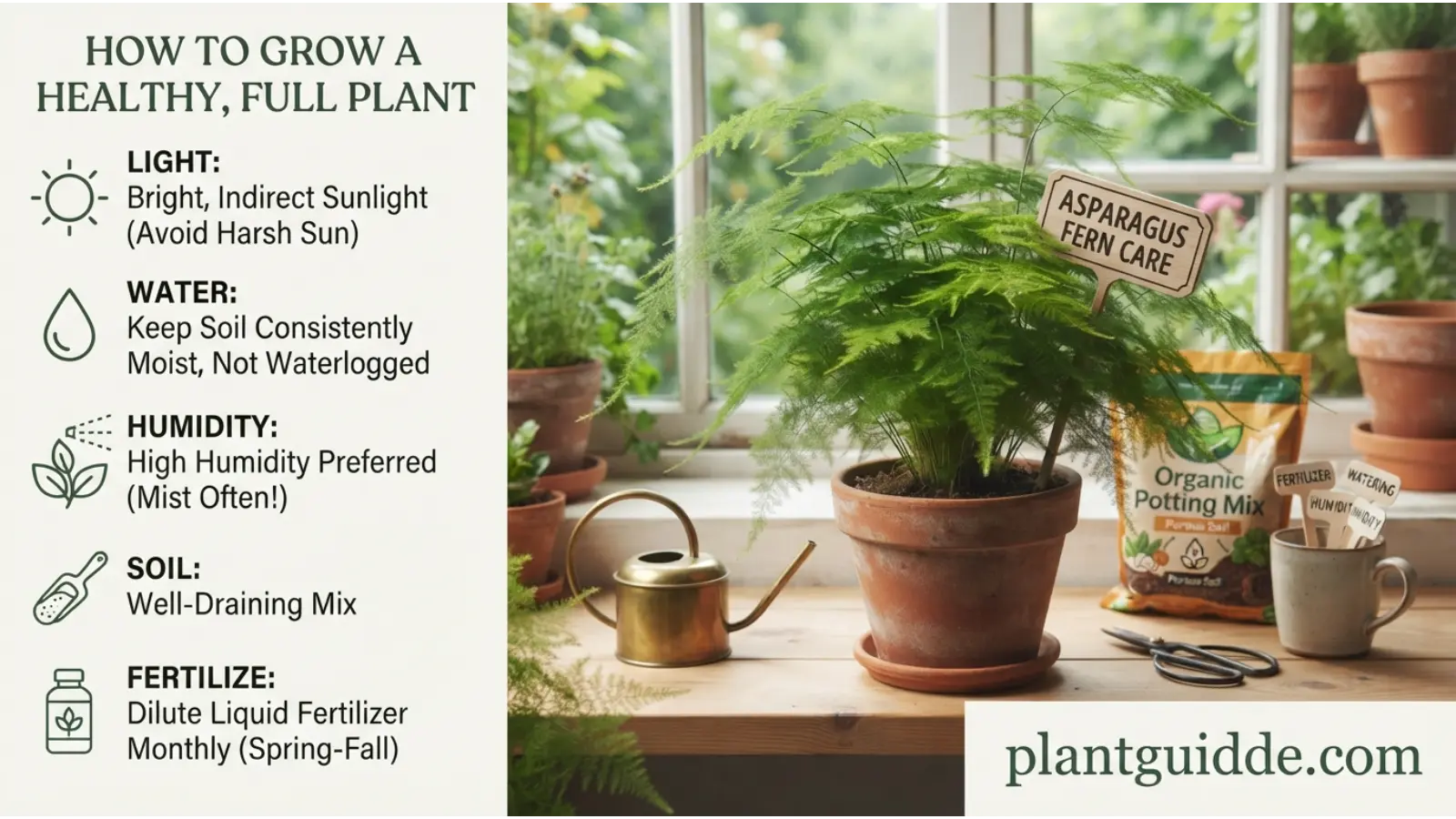
Asparagus fern plant is a popular houseplant because of its soft, feathery foliage and naturally full growth habit. Despite its common name, it is not a true fern. It belongs to the asparagus family and generally responds to different growing conditions than many traditional ferns.
The biggest mistakes with asparagus fern plant usually involve extremes.
Soil that stays constantly wet can damage the roots, while allowing the plant to become completely dry for long periods can cause yellowing, browning, and foliage loss. Finding the balance between moisture, light, humidity, and airflow is what keeps the plant attractive.
Quick Answer
Asparagus fern plant is easiest when the plant receives bright, indirect light, evenly moist but well-drained soil, moderate humidity, and regular trimming. Water when the surface of the soil begins to dry rather than following a rigid schedule.
Protect it from harsh afternoon sun, prolonged soggy soil, and very dry air. Occasional pruning keeps the foliage dense and prevents the plant from becoming tangled or leggy.
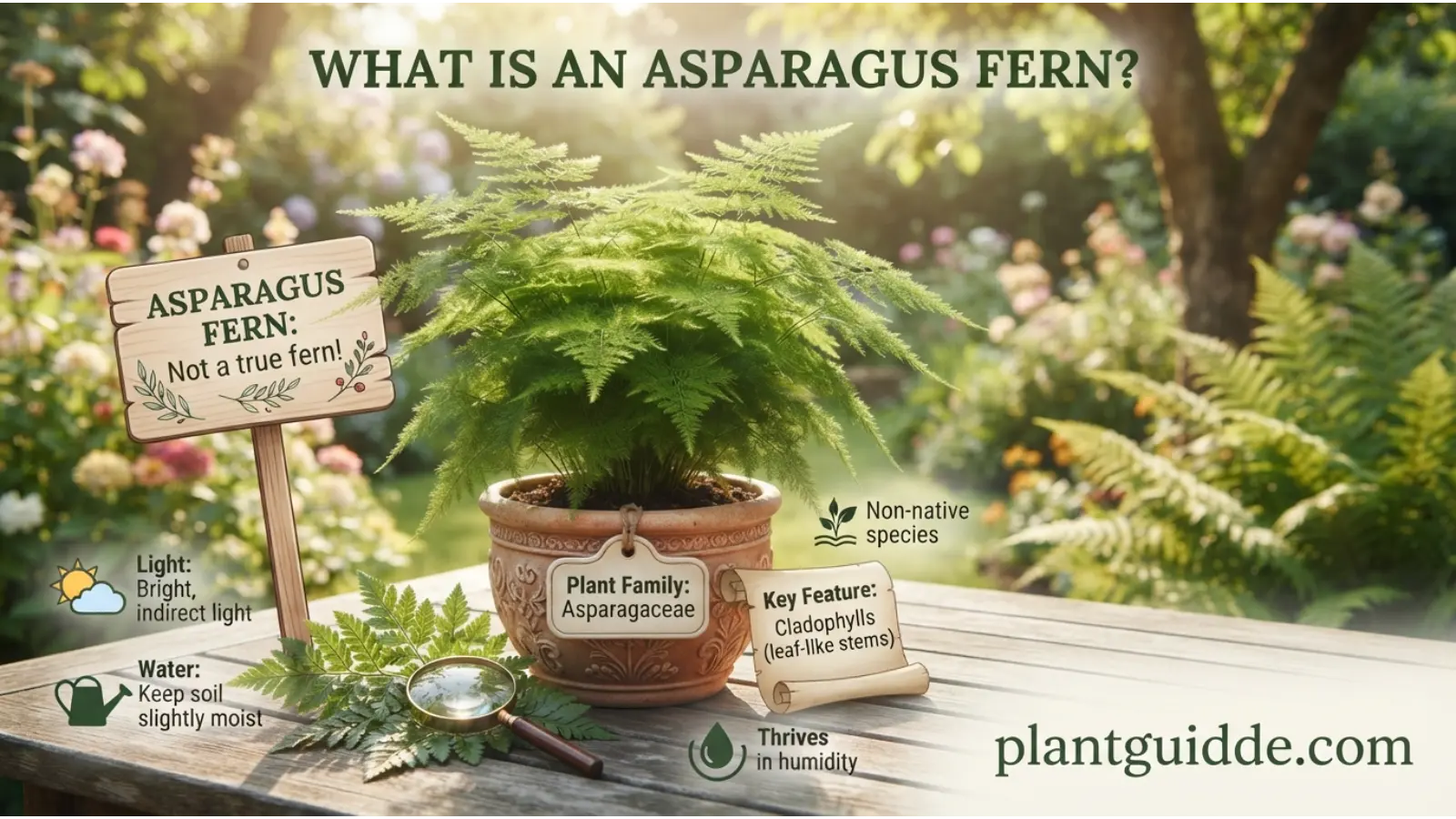
What Is an Asparagus Fern?
Asparagus fern is a common name used for several plants in the Asparagus genus, particularly Asparagus setaceus, which is also known as lace fern or plumosa fern. Its delicate, needle-like foliage gives it the appearance of a fern, but botanically it is related to edible asparagus rather than true ferns.
The plant produces fine, branching stems that can grow upright when young and become trailing or arching as they mature. Under good conditions, it can become surprisingly large and dense.
Its soft appearance can be misleading. Asparagus fern is more vigorous and adaptable than its delicate foliage suggests, but it still reacts noticeably when its growing conditions are poor.
Asparagus Fern Light Requirements
Bright, indirect light is usually the best starting point for asparagus fern indoors.
Place it near a bright window where it receives plenty of filtered daylight but is protected from intense, direct afternoon sun. A little gentle morning sun can be tolerated, but prolonged hot sunlight through glass can scorch the foliage.
Signs the light is not right
Too little light may cause:
- Sparse or stretched growth
- Longer spaces between stems
- Pale or weaker foliage
- Slower growth
- A plant that becomes less bushy
Too much intense sunlight may cause:
- Bleached-looking foliage
- Brown or crispy areas
- Drying of the fine foliage
- Sudden decline when moved into strong sun
If your asparagus fern is becoming thin and reaching toward a window, gradually move it closer to a brighter location rather than immediately placing it in harsh direct sunlight.
How Often Should You Water an Asparagus Fern?
Water asparagus fern when the upper layer of soil has started to dry, while keeping the root zone from remaining completely dry for extended periods.
There is no reliable watering schedule that works for every home. Temperature, pot size, soil type, light level, humidity, and season all change how quickly the soil dries.
Before watering, check the soil with your finger. If the surface feels dry and the layer underneath is beginning to lose moisture, it is generally time to water.
When you water:
- Moisten the soil thoroughly.
- Allow excess water to drain from the bottom of the pot.
- Empty standing water from a saucer or cachepot.
- Let the upper soil begin drying before watering again.
The goal is moist soil with good drainage, not permanently saturated soil.
What happens when asparagus fern is overwatered?
Constantly wet soil reduces the air available around the roots and can contribute to root problems. The foliage may become yellow, growth can weaken, and stems may eventually decline.
A common mistake is to interpret yellow foliage as a sign that the plant needs more water. Sometimes the opposite is true.
Check the soil before increasing watering.
Best Soil for Asparagus Fern
Asparagus fern grows best in a loose, well-draining potting mix that can retain some moisture without becoming waterlogged.
A quality indoor potting mix can work well. If the mix feels heavy or stays wet for a long time, improve drainage with materials such as perlite or coarse material designed for container growing.
The container is just as important as the soil. Always use a pot with drainage holes.
A decorative pot without drainage may look attractive, but it makes watering much harder to manage because excess water has nowhere to escape.
Humidity and Temperature
Asparagus fern generally appreciates moderate to higher humidity, particularly in dry indoor environments.
Low humidity can cause the fine foliage to become brown, crispy, or shed more readily. This can be especially noticeable during periods when indoor heating or air conditioning dries the air.
Useful ways to improve the environment include:
- Keeping the plant away from strong heating or cooling vents
- Grouping plants together
- Using a humidifier when indoor air is consistently dry
- Maintaining good airflow around the foliage
A humidifier is usually more dependable than repeatedly misting the foliage. Avoid creating a constantly wet, stagnant environment around the plant because poor airflow can encourage fungal and other problems.
Keep temperatures comfortably warm and protect the plant from cold drafts and sudden temperature changes.
How to Fertilize Asparagus Fern
During active growth, asparagus fern can benefit from regular but moderate fertilization.
Use a balanced liquid houseplant fertilizer according to the product’s label directions. Avoid applying concentrated fertilizer to dry soil because it can stress the roots.
A practical approach is to fertilize during the growing season when the plant is actively producing new growth and reduce or stop feeding when growth naturally slows.
More fertilizer does not necessarily mean a fuller plant. Excessive feeding can contribute to salt buildup in the soil and may damage roots or produce weak, overly soft growth.
Pruning and Trimming Asparagus Fern
Regular pruning is one of the easiest ways to keep asparagus fern attractive indoors.
Old stems can become tangled, yellow, brown, or excessively long. Instead of trying to make every damaged stem recover, remove poor growth cleanly at the base with clean, sharp scissors or pruners.
Pruning helps:
- Remove dead or unattractive growth
- Control the plant’s size
- Encourage a cleaner appearance
- Prevent long stems from taking over
- Make room for new growth
Do not be afraid of cutting back an asparagus fern when it has become excessively overgrown. Healthy plants can produce fresh shoots after substantial pruning when their roots and growing conditions are good.
Wear gloves when handling mature plants if the stems are irritating to your skin, as some asparagus species can develop small spines.
Repotting Asparagus Fern
Repot asparagus fern when the roots have become crowded, the plant dries unusually quickly, or growth has become restricted.
Spring is generally a convenient time for repotting because the plant can recover while actively growing.
Choose a container only moderately larger than the existing pot. Moving a small root system into a very large container can leave excess soil wet for too long.
During repotting:
- Remove the plant carefully from its container.
- Examine the roots for obvious damage or decay.
- Gently loosen severely compacted roots.
- Place the plant into fresh, well-draining potting mix.
- Water thoroughly and allow excess water to drain.
- Return it to bright, indirect light while it settles.
Asparagus fern can develop a substantial root system, so a crowded plant may benefit noticeably from fresh soil and additional root space.
Why Is My Asparagus Fern Turning Yellow?
Yellow foliage is one of the most common asparagus fern problems, but it does not have a single cause.
Consider the plant’s recent conditions before changing anything.
Overwatering
Asparagus fern plant the soil remains wet for long periods and the plant is developing widespread yellow foliage, excessive moisture may be involved.
Check the drainage holes, soil texture, and watering habits before simply adding fertilizer or moving the plant.
Underwatering
If the soil is extremely dry and the foliage is yellow, brown, crispy, or dropping, the plant may have been allowed to dry too severely.
Water deeply rather than giving repeated tiny amounts that only wet the surface.
Poor light
Very low light can weaken growth and contribute to foliage loss. Move the plant gradually toward a brighter location with filtered light.
Normal aging
Individual older stems and foliage can naturally decline. A few yellow sections do not necessarily mean the entire plant has a serious problem.
The important clue is the pattern. Widespread yellowing combined with consistently wet soil is very different from an occasional old yellowing stem.
Why Is My Asparagus Fern Turning Brown?
Brown foliage is often associated with dryness, low humidity, excessive sunlight, inconsistent watering, or root stress.
First check the soil.
Asparagus fern plant it is bone dry, review how long the plant has been going without water. If it is constantly wet, investigate drainage and root health instead.
Also check whether the plant sits close to:
- A heater
- An air conditioner
- A drafty window
- Strong afternoon sunlight
Brown tips can sometimes remain on the plant even after the underlying problem has been corrected. Pruning damaged foliage can improve its appearance while new growth develops.
Why Is My Asparagus Fern Drooping?
Drooping can occur when the plant is thirsty, stressed by heat, affected by root problems, or experiencing an abrupt environmental change.
Check the soil before watering.
Asparagus fern plant the soil is dry several centimeters below the surface, water thoroughly. If the soil is already wet, adding more water may make the situation worse.
A drooping asparagus fern with wet soil deserves closer inspection of the roots and drainage rather than automatic watering.
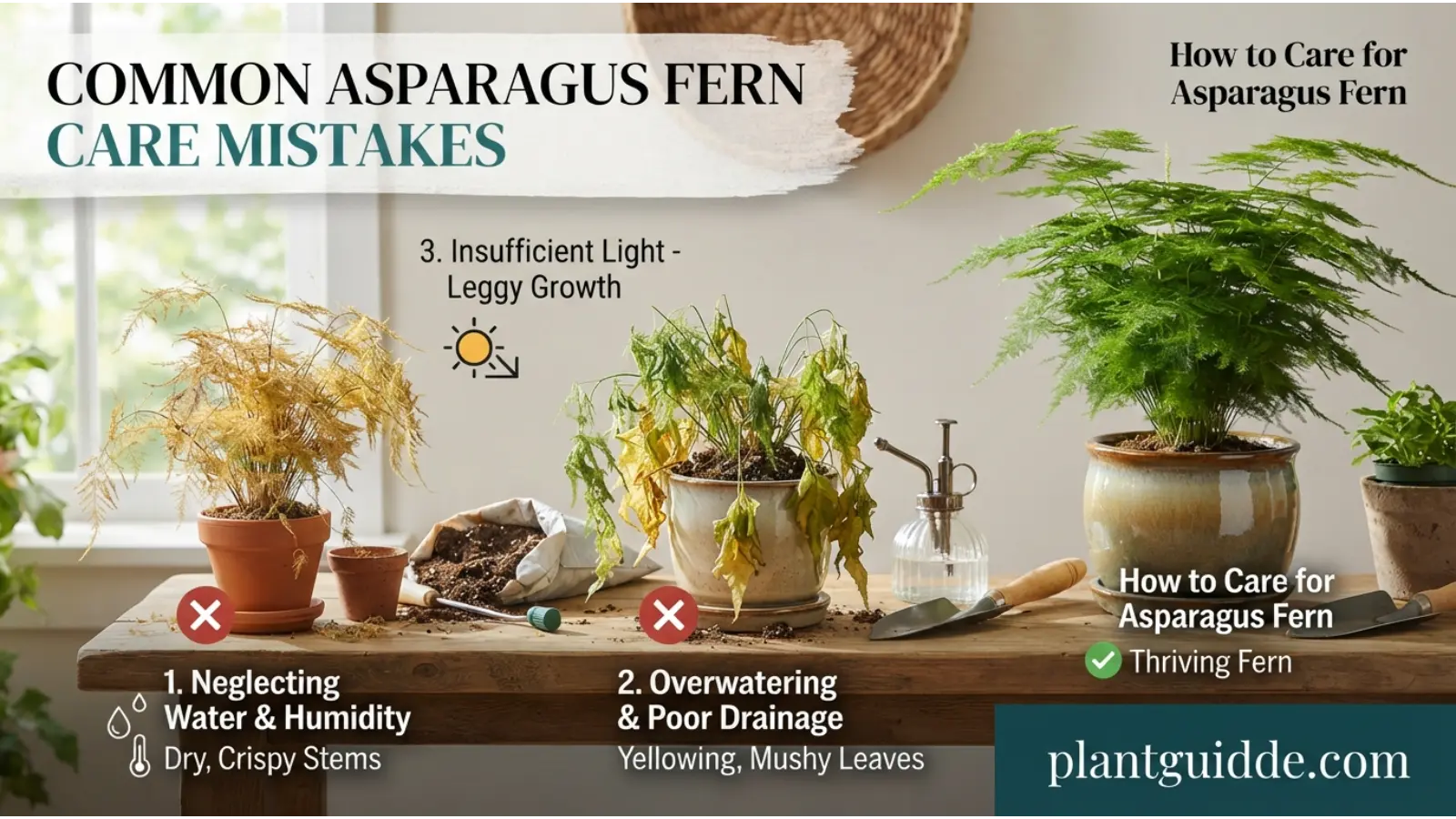
Common Asparagus Fern Care Mistakes
Following a fixed watering calendar
Watering every Sunday, for example, may work temporarily, but it ignores changes in temperature and light.
Better approach: check the soil and plant condition before watering.
Keeping the soil constantly wet
Asparagus fern likes moisture, but moisture-loving does not mean waterlogged.
Better approach: use a well-draining mix and allow some surface drying between waterings.
Putting it in harsh direct sun
The delicate foliage can suffer in intense afternoon sunlight.
Better approach: provide bright, filtered light.
Keeping it in a dark corner
The plant may survive for a while in low light but become thin and unattractive.
Better approach: give it a bright indoor position with indirect light.
Ignoring drainage
Even a good potting mix can cause problems if water cannot escape.
Better approach: choose a container with drainage holes.
Fertilizing a struggling plant too heavily
Fertilizer is not a cure for poor light, root damage, or improper watering.
Better approach: correct the growing environment first, then fertilize during active growth.
Asparagus Fern Pests
Asparagus fern can occasionally attract common houseplant pests such as spider mites, scale, aphids, or mealybugs.
Inspect the plant regularly, especially around stems and crowded areas where pests can be harder to notice.
Watch for:
- Fine webbing
- Sticky residue
- Cotton-like clusters
- Small insects on stems or foliage
- Discolored or distorted growth
Early detection makes pest management much easier. Isolate an affected plant from other houseplants and address the infestation using an appropriate treatment for the specific pest.
Avoid repeatedly applying treatments without identifying the problem first.
How to Make an Asparagus Fern Fuller
A fuller asparagus fern usually comes from a combination of adequate light, appropriate moisture, regular pruning, and healthy roots.
Asparagus fern plant the plant has become sparse:
- Move it to brighter indirect light if it is currently too dark.
- Check whether the soil is staying excessively wet.
- Remove weak, bare, or damaged stems.
- Keep watering consistent without keeping the roots saturated.
- Feed moderately during active growth.
- Give new shoots time to develop.
Pruning alone cannot compensate for poor growing conditions. If the plant continues producing thin growth, investigate light and root conditions first.
Can You Grow Asparagus Fern Outdoors?
In suitable climates, asparagus fern can be grown outdoors in a sheltered position with appropriate light and moisture.
However, its behavior outdoors depends strongly on the species and local climate. Some Asparagus species can become invasive in warm regions, so check local invasive-plant guidance before planting it outdoors or allowing it to spread.
For container gardening, keeping the plant in a controlled location also makes its size and spread easier to manage.
Is Asparagus Fern Toxic to Pets?
Some asparagus species contain compounds that can cause irritation or gastrointestinal problems if pets ingest them. The exact risk can vary by species, so pet owners should identify the plant accurately rather than relying only on the common name “asparagus fern.”
If a cat or dog has eaten part of the plant and develops symptoms such as vomiting, diarrhea, excessive drooling, or significant irritation, contact a veterinarian or appropriate animal poison service for advice.
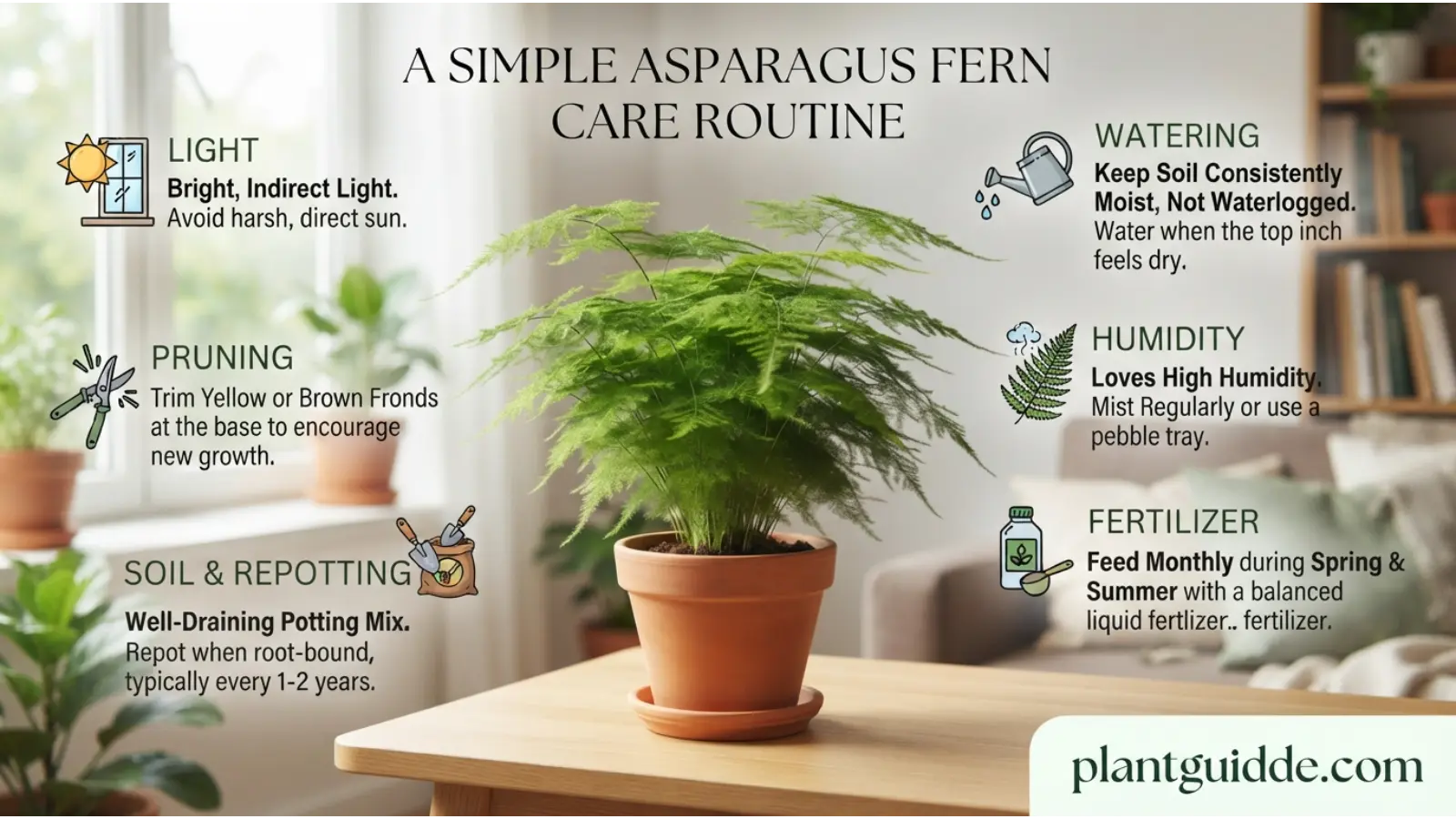
A Simple Asparagus Fern Care Routine
For beginners, the following routine is more useful than trying to memorize a strict schedule.
Every few days:
Look at the foliage and check whether the plant is exposed to excessive sun, drafts, or unusual heat.
Before watering:
Feel the soil rather than watering automatically.
Every few weeks during active growth:
Inspect stems and foliage for pests and signs of new growth.
During the growing season:
Fertilize moderately according to the fertilizer label if the plant is actively growing.
Whenever needed:
Remove yellow, brown, dead, or excessively tangled stems.
When the plant becomes crowded:
Check the roots and consider repotting into a slightly larger container.
FAQs:
Does asparagus fern need direct sunlight?
It generally performs best in bright, indirect light. Gentle morning sun may be tolerated, but strong afternoon sunlight can scorch or dry the fine foliage. If the plant becomes thin and stretched, gradually increase its access to bright filtered light.
How often should I water asparagus fern?
Water when the upper portion of the soil has started to dry rather than following a fixed weekly schedule. Water thoroughly and allow excess water to drain. The exact frequency depends on temperature, light, humidity, pot size, and soil.
Why is my asparagus fern losing leaves?
Leaf loss can result from underwatering, overwatering, low light, dry air, temperature stress, or a sudden environmental change. Examine the soil first, then consider recent changes in light, temperature, and humidity.
Can asparagus fern grow indoors?
Yes. Asparagus fern can grow well indoors when provided with bright indirect light, appropriate moisture, good drainage, and reasonable humidity. Indoor plants should also be given enough space because mature growth can become considerably larger than expected.
Should I cut back a completely overgrown asparagus fern?
Yes, healthy asparagus fern can be pruned substantially when it becomes tangled, sparse, or overgrown. Remove weak or damaged stems at the base with clean pruners. After pruning, provide suitable light, moisture, and nutrition so new growth can develop.
Final Thoughts
Successful asparagus fern plant comes down to balance rather than constant attention. Give the plant bright filtered light, well-draining soil, consistent moisture without waterlogging, moderate humidity, and occasional pruning.
If the foliage begins yellowing, browning, or drooping, do not immediately change everything. Check the soil, drainage, light, and recent environmental changes first. Those clues usually reveal what the plant needs.
For a healthier, fuller asparagus fern, focus on maintaining good conditions consistently rather than trying to rescue the plant with extra water or fertilizer after problems appear.

Asad Mumtaz is a dedicated plant enthusiast and gardening writer with a passion for helping people care for their plants successfully. He specializes in plant care guides, indoor gardening, and practical growing tips for all skill levels. His content focuses on making gardening simple, enjoyable, and rewarding. Through his work, Asad shares reliable advice to help readers create thriving green spaces.