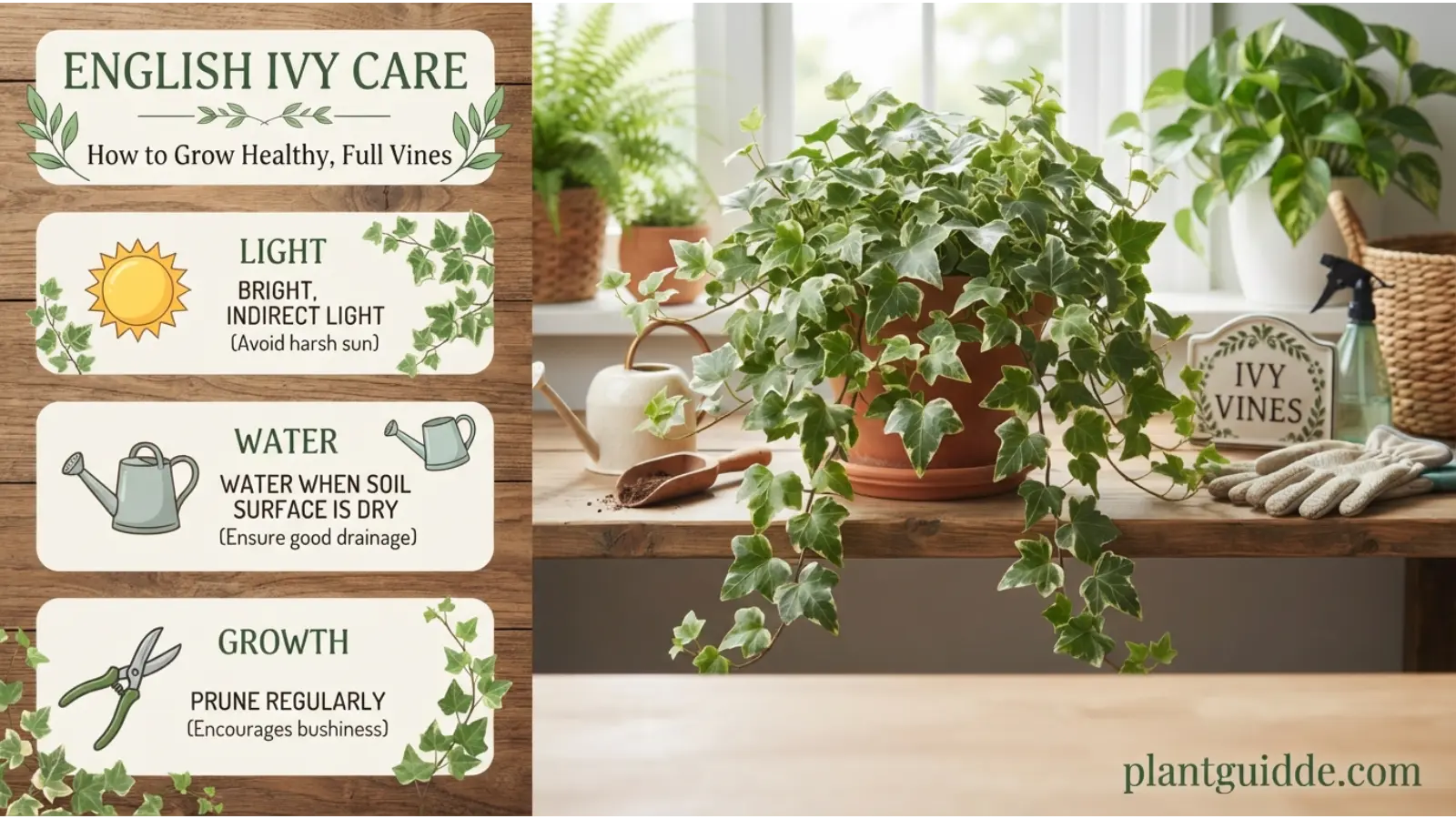
English ivy plant care (Hedera helix) is a classic trailing plant valued for its attractive lobed leaves and vigorous growth. It can look especially impressive when allowed to cascade from a hanging basket, climb a support, or trail along a shelf.
Despite its reputation as an easy plant, indoor English ivy can become difficult when its basic growing conditions are misunderstood. Too much water, hot direct sunlight, stagnant air, very dry conditions, or insufficient light can quickly lead to yellow leaves, leaf drop, brown foliage, or weak growth.
The key to successful English ivy plant care is not keeping the soil constantly moist. Instead, aim for a balance of light, moisture, drainage, humidity, and airflow that keeps the roots healthy while supporting steady foliage growth.
Quick Answer
English ivy plant care is mainly about providing bright, indirect light, well-draining soil, moderate watering, and good airflow. Let the top portion of the soil dry before watering again, and avoid keeping the roots constantly wet.
Regular pruning keeps vines full and manageable, while occasional pest checks help prevent common problems such as spider mites, scale, yellow leaves, and leggy growth.
English Ivy at a Glance
| Care requirement | Best condition |
|---|---|
| Botanical name | Hedera helix |
| Light | Bright, indirect light |
| Water | Water when the upper soil begins to dry |
| Soil | Well-draining, moisture-retentive potting mix |
| Humidity | Moderate to moderately high |
| Temperature | Cool to moderate indoor temperatures |
| Fertilizer | Light feeding during active growth |
| Growth habit | Trailing or climbing vine |
| Pruning | Regularly to maintain fullness |
| Common problems | Spider mites, scale, root rot, yellow leaves, leggy growth |
How Much Light Does English Ivy Need?
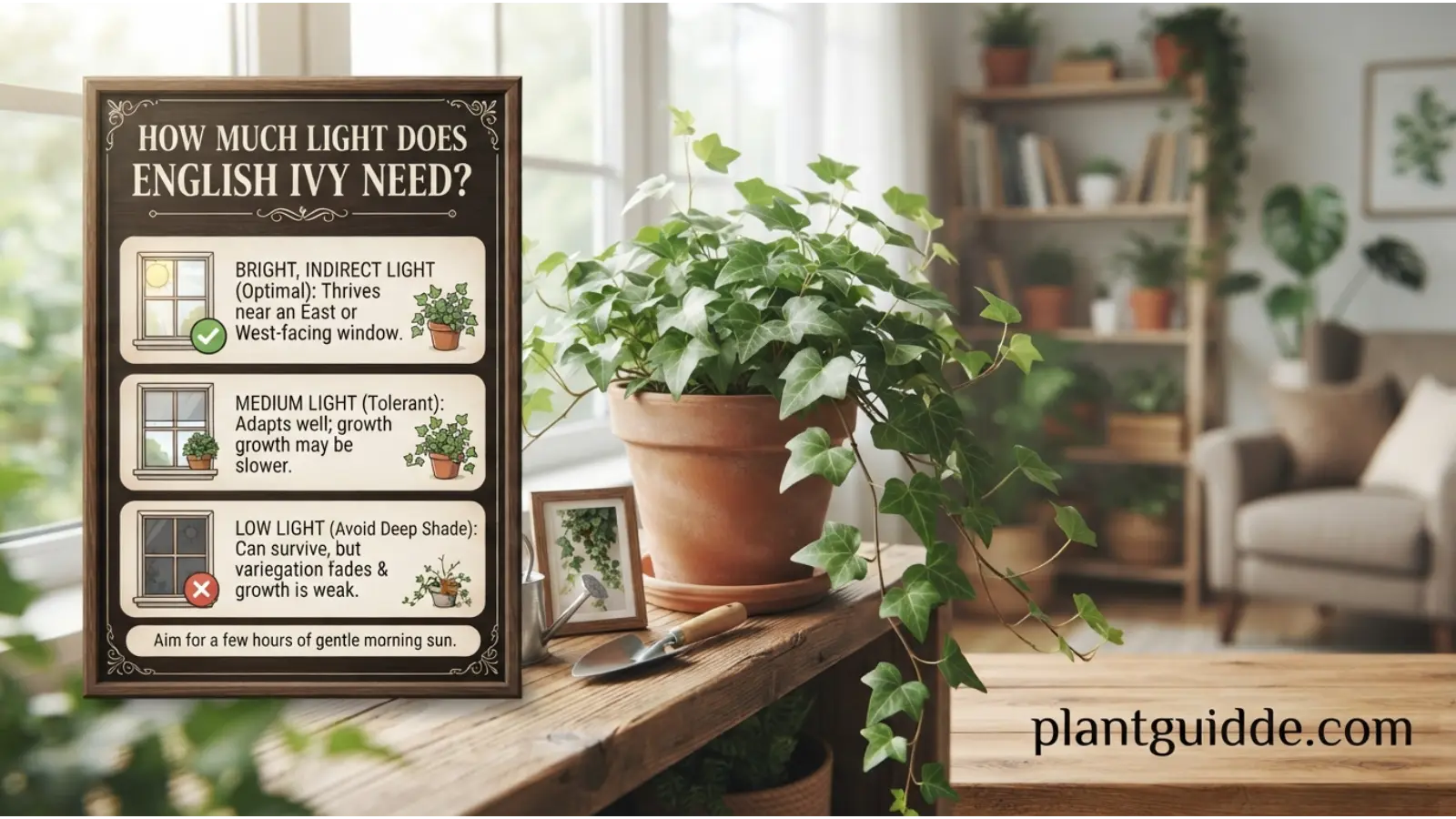
English ivy generally performs best in bright, indirect light. A position near an east- or north-facing window can work well, while a bright location near a south- or west-facing window may also be suitable if harsh afternoon sunlight is filtered.
Light affects more than just growth speed. It also influences how compact and attractive the plant becomes.
When English ivy does not receive enough light, you may notice:
- Long spaces between leaves
- Small or less attractive new leaves
- Weak, stretched stems
- Sparse growth
- Loss of vigor
If the plant receives intense direct sun through hot glass, especially during summer, leaves can develop bleached or scorched patches.
Practical tip: If your ivy is becoming long and sparse despite regular watering, check the light before assuming it needs more fertilizer.
How to Water English Ivy
Watering is one of the most important parts of English ivy plant care because the plant dislikes extremes. It should not remain bone-dry for prolonged periods, but constantly wet soil can be even more damaging.
Instead of following a strict calendar, check the soil.
Insert your finger about an inch into the potting mix. If the upper layer feels noticeably dry, it is generally time to water. If it still feels damp, wait and check again later.
When watering:
- Water thoroughly until excess moisture drains from the bottom.
- Allow the excess water to leave the drainage holes.
- Empty standing water from the saucer or outer container.
- Wait until the upper portion of the soil dries before watering again.
The exact interval depends on light, temperature, pot size, soil, humidity, and season. An ivy growing in bright light may need water more frequently than one kept in a cooler, dimmer room.
Signs of Overwatering
Overwatering does not simply mean giving too much water at one time. More often, it means watering again before the soil has had enough time to dry.
Watch for:
- Yellowing leaves
- Soft or weak stems
- Persistent wet soil
- Leaf drop
- A musty smell from the pot
- Dark or mushy roots
If these symptoms appear together, inspect the roots rather than immediately adding fertilizer or moving the plant into brighter light.
Signs of Underwatering
An English ivy that is too dry may develop:
- Limp or curling leaves
- Crispy brown edges
- Dry potting mix pulling away from the container
- Sudden leaf drop
- Slow recovery after watering
A severely dried-out root ball may not absorb water efficiently at first. In that situation, watering slowly and thoroughly can be more effective than repeatedly adding a small splash.
Best Soil for English Ivy
English ivy needs soil that holds some moisture while still allowing excess water to drain freely.
A practical indoor mix can contain:
- Quality indoor potting soil
- Perlite or pumice for extra drainage
- A small amount of compost or another organic component
Avoid dense garden soil in containers. It can compact around the roots and reduce air spaces, increasing the risk of prolonged wetness.
The container is equally important. Drainage holes are essential. A beautiful pot without drainage can become a problem if water accumulates around the roots.
Image Suggestion: A close-up comparison showing healthy English ivy roots growing in airy soil versus dark, waterlogged soil.
Temperature and Humidity for English Ivy
English ivy generally appreciates cooler conditions compared with many tropical houseplants. It can struggle when exposed to prolonged heat, especially when combined with dry indoor air and poor airflow.
Keep it away from:
- Hot radiators
- Heating vents
- Strong air-conditioning drafts
- Very hot windows
- Sudden temperature changes
Moderate humidity is helpful, particularly when indoor heating makes the air very dry.
However, increasing humidity without improving airflow can sometimes create another problem. A crowded, constantly damp environment can encourage fungal and pest issues.
The goal is not maximum humidity. The goal is a stable environment with reasonable moisture and good air movement.
How to Fertilize English Ivy
English ivy does not require heavy feeding to remain healthy. Excess fertilizer can create salt buildup in the soil and may contribute to leaf-edge damage.
During active growth, use a balanced liquid houseplant fertilizer at a reduced strength according to the product instructions.
A practical approach is to:
- Fertilize only when the plant is actively growing.
- Avoid feeding stressed, recently repotted, or severely dry plants.
- Do not increase fertilizer simply because growth appears slow.
- Periodically water thoroughly to help flush excess soluble salts from the potting mix.
If the plant has adequate light but still produces very weak growth, evaluate its roots, soil, watering pattern, and pot size before assuming it needs more nutrients.
Pruning English Ivy for Fuller Growth
Pruning is one of the easiest ways to improve the appearance of indoor English ivy.
Ivy naturally produces long trailing stems. If you want a fuller plant rather than a few extremely long vines, trim the growing stems regularly.
Use clean, sharp scissors or pruning shears and cut just above a leaf node. This encourages branching from lower points along the vine.
You can remove:
- Long bare sections
- Weak or damaged stems
- Yellow or dead leaves
- Overcrowded growth
- Vines that have grown beyond the desired shape
Do not throw away every healthy cutting. English ivy can be propagated from suitable stem cuttings, making pruning useful for both shaping and producing new plants.
How to Propagate English Ivy
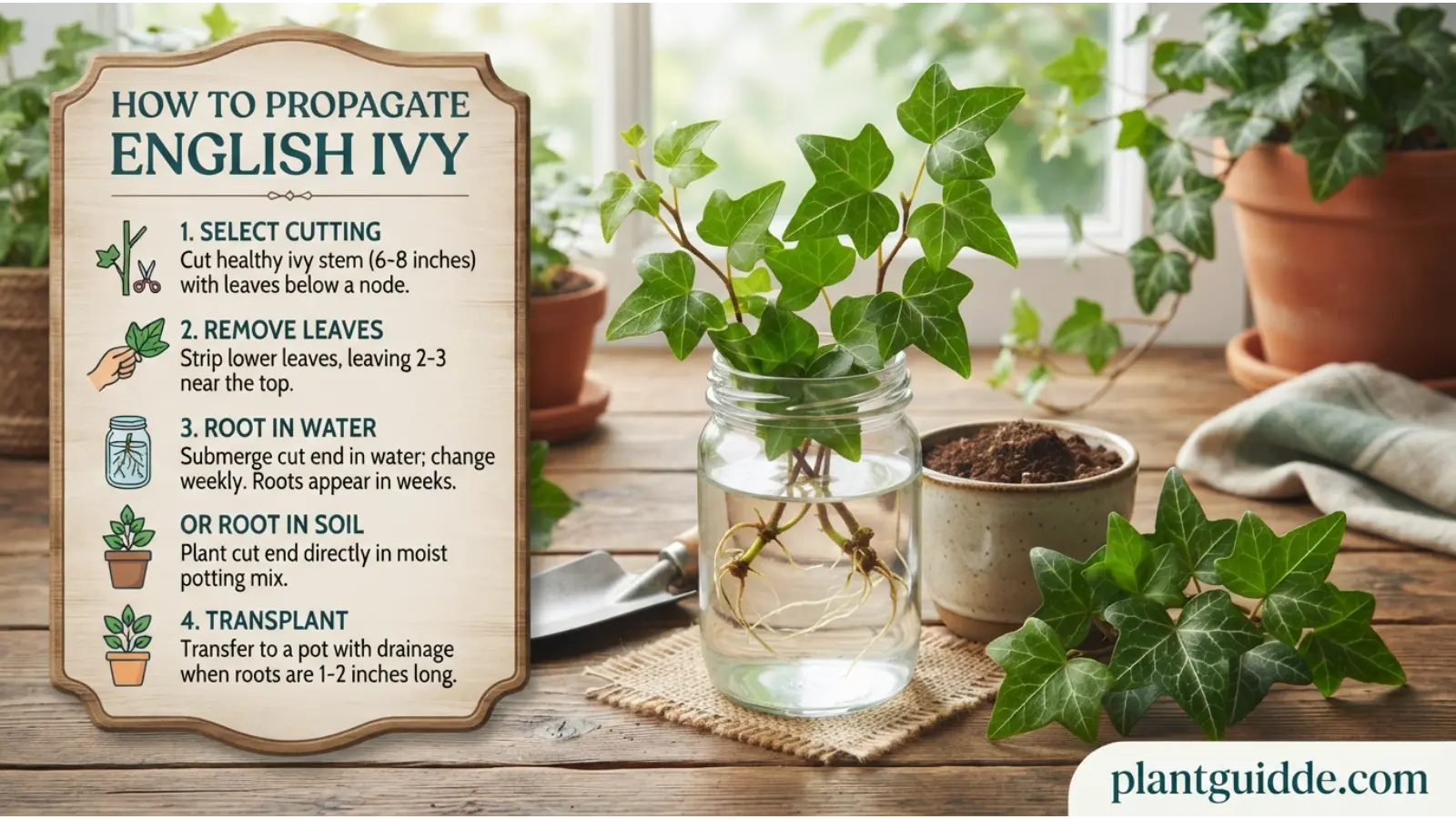
Stem cuttings are a straightforward way to propagate English ivy.
Propagation in Water
- Select a healthy stem with several leaves.
- Cut just below a node.
- Remove leaves from the lower portion of the cutting.
- Place the lower node in clean water.
- Keep the cutting in bright, indirect light.
- Change the water regularly.
- Once roots develop, transfer the cutting into a suitable potting mix.
Avoid leaving newly rooted cuttings in water indefinitely. They eventually need to transition to a growing medium that provides the structure and oxygen roots require.
Propagation in Soil
You can also place a prepared cutting directly into moist, well-draining potting mix. Keep the medium lightly moist while roots develop, but avoid saturating it.
Soil propagation can reduce the shock associated with moving established water roots into soil later.
Repotting English Ivy
English ivy does not necessarily need frequent repotting. Move it into a larger container when the roots have substantially filled the existing pot or water begins running rapidly through the container because the root system has become very crowded.
Signs that repotting may be useful include:
- Roots emerging from drainage holes
- A severely root-bound root ball
- Growth slowing despite good light and proper care
- Soil drying unusually quickly
- The plant becoming difficult to keep stable in its container
Choose a pot only moderately larger than the current one. Moving a small root system into a very large container can leave excessive soil wet for too long.
After repotting, water the plant thoroughly and place it back in suitable indirect light. Avoid immediately compensating for transplant stress with heavy fertilizer.
Why Is My English Ivy Turning Yellow?
Yellow leaves can have several causes, so the correct solution depends on the pattern.
If multiple leaves are yellow and the soil remains wet for long periods, excessive moisture is a strong possibility.
If older leaves occasionally yellow while the plant continues producing healthy new growth, natural aging may be involved.
Other possible causes include:
- Insufficient light
- Root stress
- Poor drainage
- Temperature stress
- Pest activity
- Nutrient problems
- Sudden environmental changes
Rather than treating yellow leaves as a fertilizer deficiency automatically, inspect the soil and roots first.
Why Is My English Ivy Losing Leaves?
Leaf drop can occur when the plant experiences a sudden change in its environment.
Common triggers include:
- Moving the plant from bright to low light
- Overwatering
- Severe underwatering
- Hot or cold drafts
- Very dry indoor air
- Pest infestation
- Root damage
A recently purchased ivy may also lose some leaves after being moved into a different home environment. This does not necessarily mean the plant is dying.
Look at the new growth as well as the older leaves. Healthy new growth is generally a better indication of recovery than a few older leaves that have already been damaged.
Why Is My English Ivy Getting Leggy?
Leggy growth usually means the plant is not receiving enough usable light for compact growth.
Instead of immediately cutting everything back, improve the light first. Move the ivy closer to a bright window or provide suitable supplemental lighting if natural light is limited.
Then prune the stretched stems to encourage branching.
A useful combination is:
Better light + strategic pruning + consistent watering = fuller growth.
Adding fertilizer to a low-light plant rarely solves the underlying problem.
Why Are English Ivy Leaves Turning Brown or Crispy?
Brown, crispy foliage often indicates moisture stress, but the cause can vary.
Check for:
- Soil that has become extremely dry
- Very low humidity
- Hot direct sunlight
- Heater or air-conditioner exposure
- Salt buildup from fertilizer
- Spider mites
English ivy plant care f only the leaf edges are brown while the rest of the plant looks healthy, review your watering consistency and indoor air conditions.
If the leaves are covered with fine stippling or the plant appears unusually dusty, inspect closely for spider mites.
Common English Ivy Pests
Indoor English ivy can be vulnerable to pests, particularly when growing conditions are stressful.
Spider Mites
Spider mites are more likely to become troublesome in warm, dry conditions. Look for fine webbing, tiny moving dots, stippled leaves, or gradual loss of leaf color.
Isolate an affected plant from other houseplants and inspect the undersides of leaves carefully.
Scale
Scale insects can appear as small bumps attached to stems and leaves. Heavy infestations can weaken the plant and contribute to sticky residue.
Early detection makes management considerably easier.
Aphids
Aphids may cluster around tender new growth. Regularly inspecting new shoots can help you catch them before the infestation becomes widespread.
For any pest problem, physically removing visible pests and improving plant conditions should be part of the response rather than relying on a single treatment.
Common English Ivy Care Mistakes
Even experienced houseplant growers can run into problems when English ivy is treated like a generic tropical plant.
Watering on a Fixed Schedule
“Water every Sunday” sounds simple, but plants do not use water at the same rate every week.
Better approach: Check the soil and consider light, temperature, and season.
Keeping the Soil Constantly Wet
English ivy appreciates moisture but does not need permanently saturated roots.
Better approach: Use a draining pot and allow the upper soil to dry before watering again.
Keeping It in a Dark Corner
Ivy can survive poor conditions for a while, but surviving is not the same as producing attractive, dense growth.
Better approach: Give it bright, indirect light.
Ignoring Airflow
High humidity combined with stagnant air and wet foliage can create an unfavorable environment.
Better approach: Give the plant reasonable spacing and airflow.
Fertilizing a Struggling Plant
Weak growth does not automatically mean a nutrient deficiency.
Better approach: Diagnose light, roots, watering, and pests before increasing fertilizer.
A Simple English Ivy Care Routine
For beginners, a simple routine is more useful than a complicated calendar.
Weekly:
Check the leaves and stems for pests, discoloration, or new damage.
Every few days:
Touch the upper soil if you suspect it is drying. Water based on soil moisture rather than the day of the week.
Every few weeks:
Rotate the pot if growth is becoming noticeably one-sided.
During active growth:
Prune long or bare vines and provide light feeding when appropriate.
Seasonally:
Reassess light levels, watering frequency, temperature, and indoor humidity as conditions change.
Is English Ivy Good for Beginners?
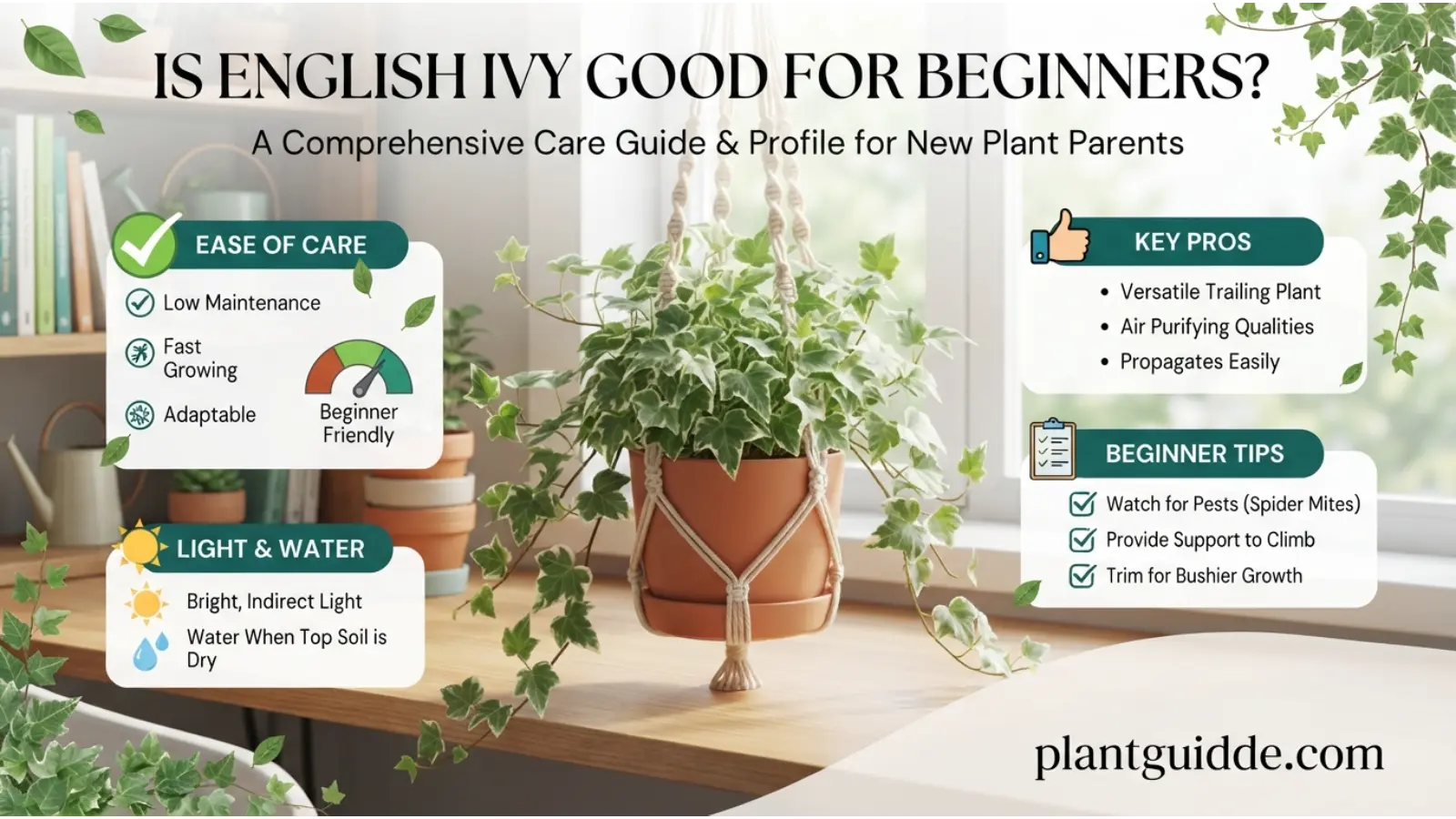
English ivy can be a rewarding plant for beginners who understand its main weakness: poor watering and indoor conditions can cause problems faster than its “easy-care” reputation suggests.
It is particularly suitable for someone who wants a trailing or climbing plant and is willing to monitor soil moisture and light.
It may be less suitable if you want a plant that can tolerate consistently dry indoor air, very low light, or irregular care without consequences.
One important consideration is pet safety: English ivy should be kept away from cats and dogs because ingestion can cause illness. If pets have access to houseplants, choose a safer alternative or place ivy where they cannot reach it.
FAQs:
How often should you water English ivy?
Water when the upper portion of the potting mix has begun to dry rather than following a fixed schedule. Water thoroughly until excess drains from the bottom, then empty standing water. Frequency varies with light, temperature, pot size, soil, and season.
Does English ivy need direct sunlight?
English ivy generally does best in bright, indirect light. Some gentle morning sun can be tolerated, but intense direct afternoon sunlight through glass can scorch foliage. If growth becomes thin and stretched, the plant may need more light.
Why is my English ivy dying?
Check the roots and soil first. Persistent wet soil, poor drainage, severe dryness, inadequate light, pests, or sudden environmental changes can all cause decline. Do not assume the problem is simply a lack of fertilizer.
Can English ivy grow indoors?
Yes. English ivy can be grown indoors when it receives adequate bright light, appropriate watering, well-draining soil, and reasonable airflow. Regular pruning is particularly useful indoors because the vines can become long and unruly.
How do I make English ivy grow fuller?
Provide brighter indirect light and prune long, bare stems just above healthy nodes. Consistent moisture without waterlogging also supports stronger growth. If the plant remains sparse, improve its growing conditions before relying on fertilizer.
Conclusion
Successful English ivy plant care comes down to balance rather than constant attention. Give Hedera helix bright indirect light, a well-draining potting mix, thorough but appropriately timed watering, reasonable humidity, and good airflow. Prune regularly to maintain a fuller shape and inspect the foliage frequently for pests.
If your ivy starts yellowing, dropping leaves, or becoming leggy, diagnose the growing conditions before treating the symptom. In most cases, correcting light, moisture, drainage, or airflow is more useful than simply adding fertilizer or watering more often.

Asad Mumtaz is a dedicated plant enthusiast and gardening writer with a passion for helping people care for their plants successfully. He specializes in plant care guides, indoor gardening, and practical growing tips for all skill levels. His content focuses on making gardening simple, enjoyable, and rewarding. Through his work, Asad shares reliable advice to help readers create thriving green spaces.