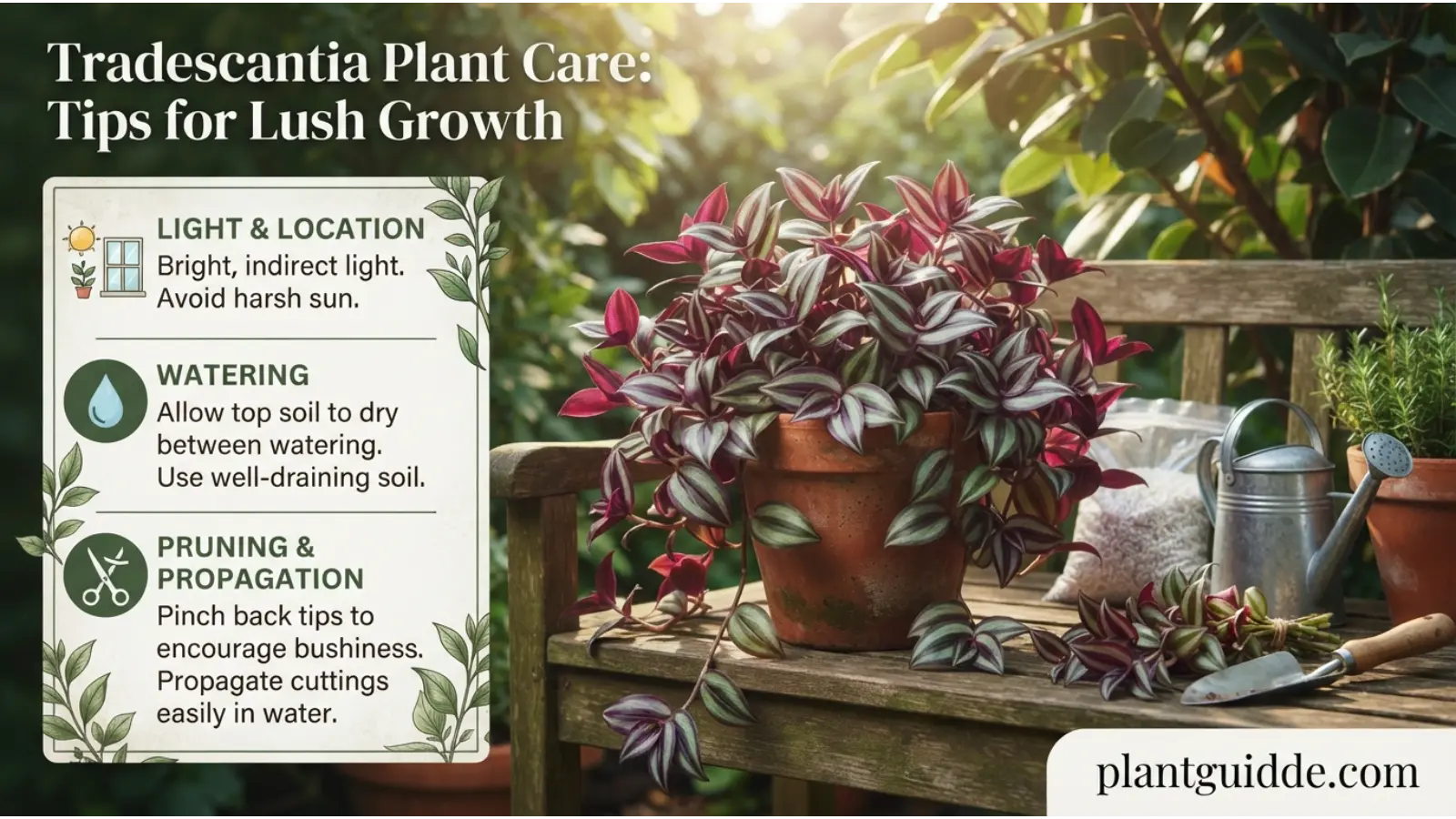
Tradescantia plant care are popular houseplants because they grow quickly, trail beautifully, and can add striking color to shelves, hanging baskets, and bright indoor spaces.
Varieties such as inch plant, wandering dude, and several striped or purple-leaved types can be surprisingly forgiving once their basic growing needs are understood.
The biggest problems with tradescantia plant care usually come from conditions rather than complicated maintenance.
Too little light can cause stretched, sparse growth and faded coloring, while excessive watering or poorly draining soil can leave stems soft and roots damaged. Regular pruning is also important because Tradescantia can become long and bare instead of staying dense and attractive.
Quick Answer
Tradescantia plant care is mainly about providing bright indirect light, well-draining soil, moderate watering, warmth, and regular pruning.
Let the top layer of soil dry slightly before watering, and avoid keeping the roots constantly wet. Good light helps maintain compact growth and strong leaf color, while occasional trimming encourages a fuller, more attractive plant.
What Is a Tradescantia Plant?
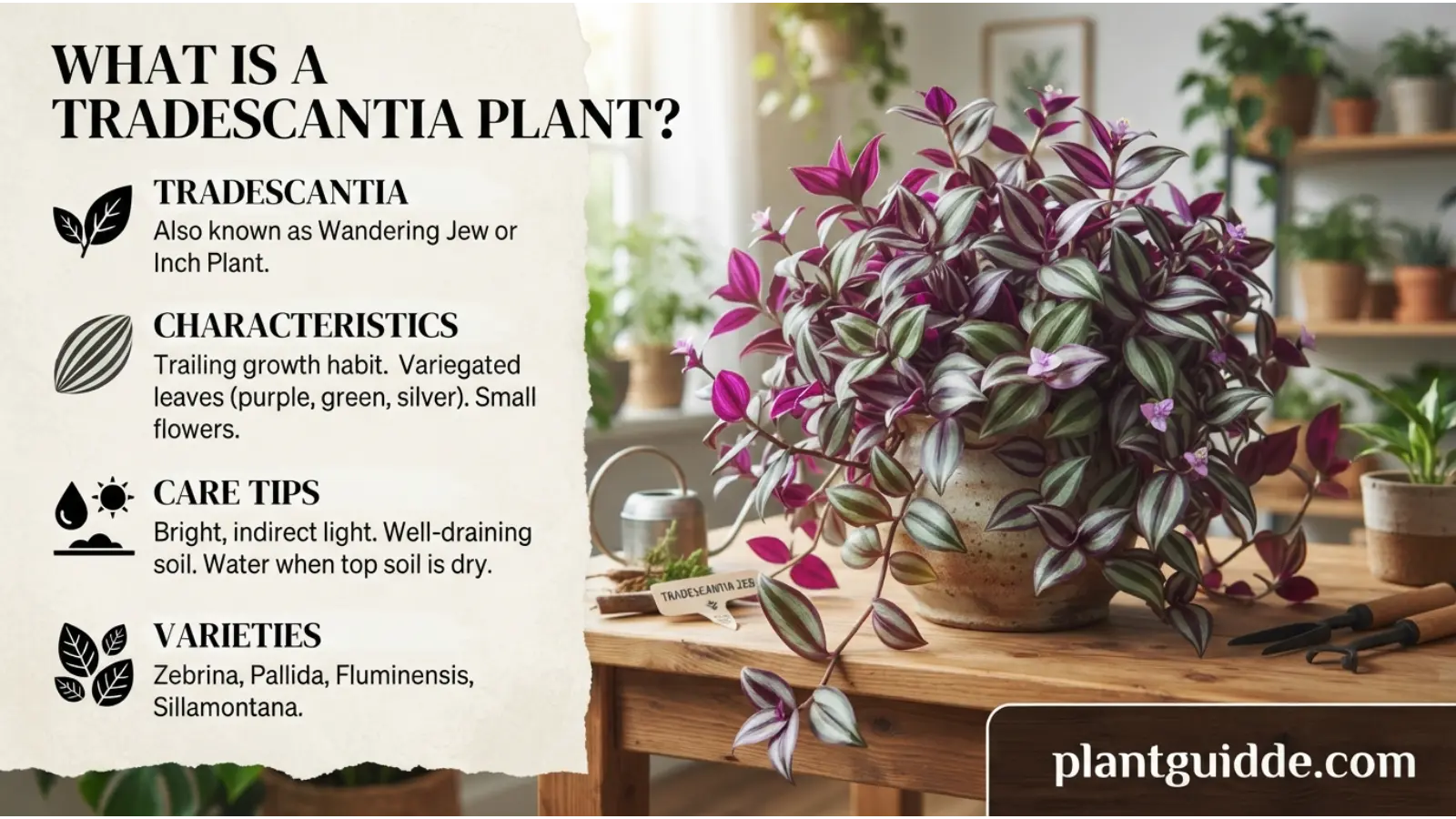
Tradescantia is a genus of plants in the spiderwort family, Commelinaceae. Several species and cultivars are grown as ornamental houseplants, particularly trailing varieties valued for their colorful foliage.
Depending on the variety, leaves may show combinations of green, silver, cream, pink, purple, or burgundy. Some Tradescantia plants have distinctly striped leaves, while others develop deeper purple tones when grown under suitable light.
Their fast growth is one of their main advantages, but it also explains why pruning matters. A healthy plant can quickly produce long stems that eventually look thin if the growing tips are never trimmed.
Tradescantia Plant Care Requirements
| Care factor | What Tradescantia prefers |
|---|---|
| Light | Bright indirect light; some varieties tolerate gentle direct sun |
| Water | Water when the upper soil begins to dry |
| Soil | Loose, well-draining potting mix |
| Humidity | Average household humidity is usually adequate |
| Temperature | Warm, stable indoor conditions |
| Fertilizer | Light feeding during active growth |
| Pruning | Regular trimming to encourage bushier growth |
| Propagation | Stem cuttings root easily |
How Much Light Does Tradescantia Need?
Bright light is one of the most important factors in successful Tradescantia care.
Place the plant near a bright window where it receives plenty of indirect light. A few hours of gentle morning sunlight can be beneficial, but strong afternoon sun through glass may scorch delicate foliage, particularly after the plant has been growing in lower light.
Light affects more than growth speed. It can also influence the appearance of variegated and purple-leaved varieties.
Signs your Tradescantia may need more light include:
- Long gaps between leaves
- Weak or stretched stems
- Fading variegation
- Smaller new leaves
- Growth leaning strongly toward a window
- A plant becoming sparse in the center
Tradescantia plant care your Tradescantia has been growing in a dim corner, move it gradually toward brighter conditions rather than suddenly placing it in intense direct sunlight.
Practical tip: Rotate the pot every week or two so one side does not receive dramatically more light than the other.
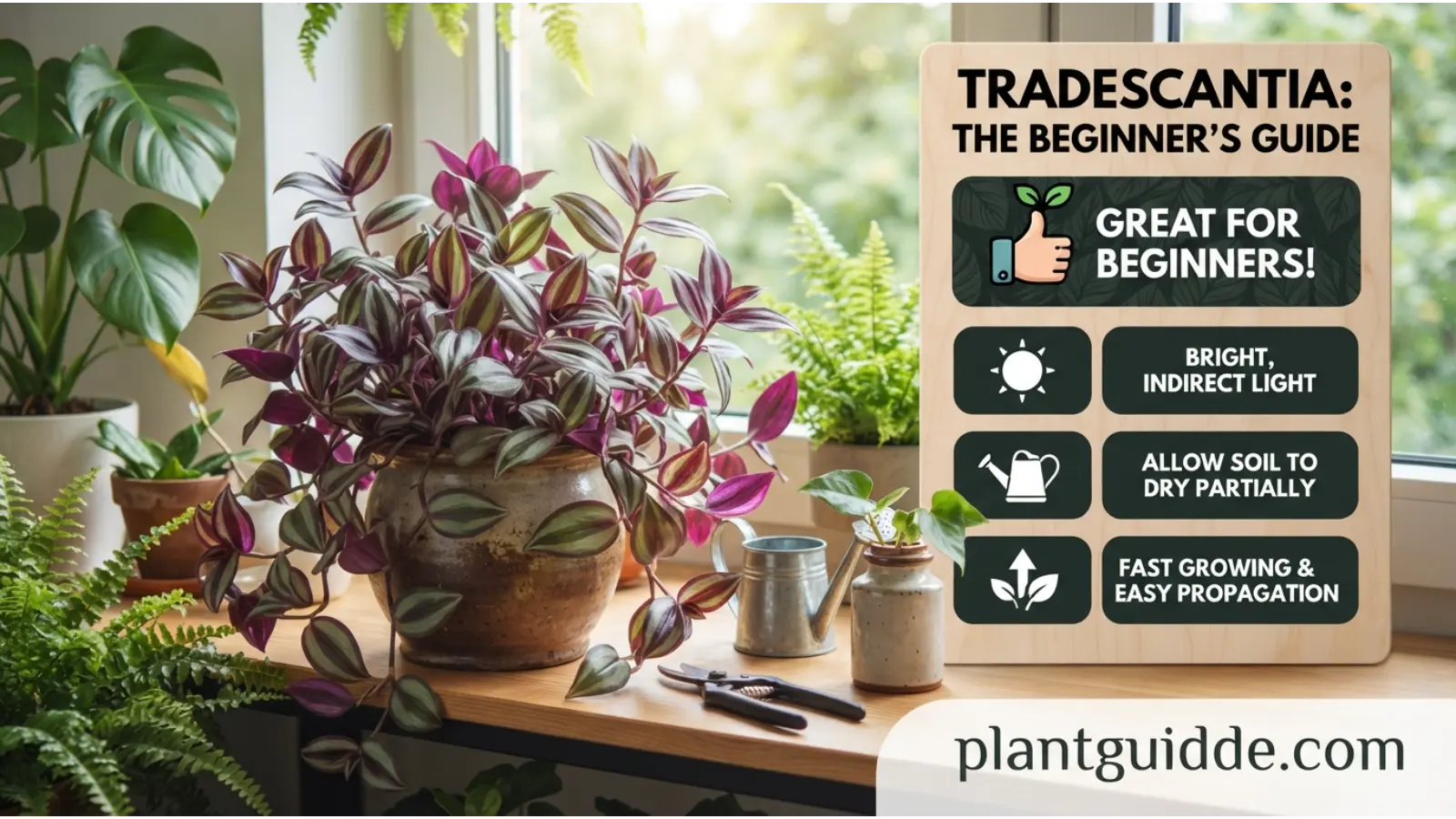
Image Suggestion: A healthy Tradescantia in a bright indoor window showing dense trailing growth and colorful foliage.
How Often Should You Water Tradescantia?
Tradescantia prefers consistent moisture during active growth, but it does not appreciate permanently soggy soil.
Instead of following a strict weekly watering schedule, check the soil. When the upper portion has started to dry, water thoroughly until excess water drains from the bottom of the pot.
Then empty any water collected in the saucer.
The exact frequency depends on several factors, including:
- Pot size
- Soil composition
- Light intensity
- Temperature
- Humidity
- Plant size
- Season
A Tradescantia sitting in bright light in a warm room may dry much faster than one growing in a cool, dim location.
Signs of Overwatering
Consistently wet soil can cause:
- Yellowing leaves
- Soft or collapsing stems
- Black or brown damaged roots
- Leaf drop
- Unpleasant-smelling soil
- Slow or weak growth
The important distinction is that yellow leaves do not automatically mean the plant needs more water. Always check the soil before watering again.
Signs of Underwatering
A plant that has stayed too dry may develop:
- Wilting
- Limp foliage
- Crispy leaf edges
- Dry, brittle stems
- Rapid leaf loss
Tradescantia plant care the soil has become extremely dry and pulled away from the sides of the container, water slowly and thoroughly rather than repeatedly adding tiny amounts.
Best Soil for Tradescantia
Tradescantia does best in a loose potting mix that drains efficiently.
A basic indoor potting mix can work well when the container has adequate drainage. If the mix stays wet for a long time, improve its structure by incorporating an appropriate amount of an aerating material such as perlite.
The goal is not to create extremely dry soil. The goal is to prevent water from remaining trapped around the roots for extended periods.
A suitable mix should:
- Hold enough moisture for healthy roots
- Drain excess water efficiently
- Allow air around the root system
- Resist becoming compacted
A drainage hole is just as important as the soil itself. A high-quality mix cannot compensate for a container that continually traps excess water.
What Temperature Does Tradescantia Prefer?
Tradescantia generally grows best in warm indoor conditions and can struggle when exposed to prolonged cold.
Keep it away from:
- Cold drafts
- Frequently opened exterior doors during cold weather
- Unheated rooms
- Direct blasts from heating or cooling equipment
Sudden environmental changes can contribute to leaf damage or slowed growth.
For indoor plants, a stable environment is often more useful than trying to maintain a perfect temperature at every moment.
Does Tradescantia Need High Humidity?
Tradescantia can usually adapt to average household humidity, so a humidifier is not automatically necessary.
However, very dry indoor air can contribute to crispy leaf edges or generally stressed foliage, particularly when combined with heat or inadequate watering.
If your home is especially dry, practical options include:
- Using a humidifier
- Grouping compatible plants together
- Keeping the plant away from strong heat vents
- Maintaining appropriate watering habits
Avoid relying on frequent misting as the primary solution. It does not replace proper root watering or adequate environmental conditions.
How to Fertilize Tradescantia
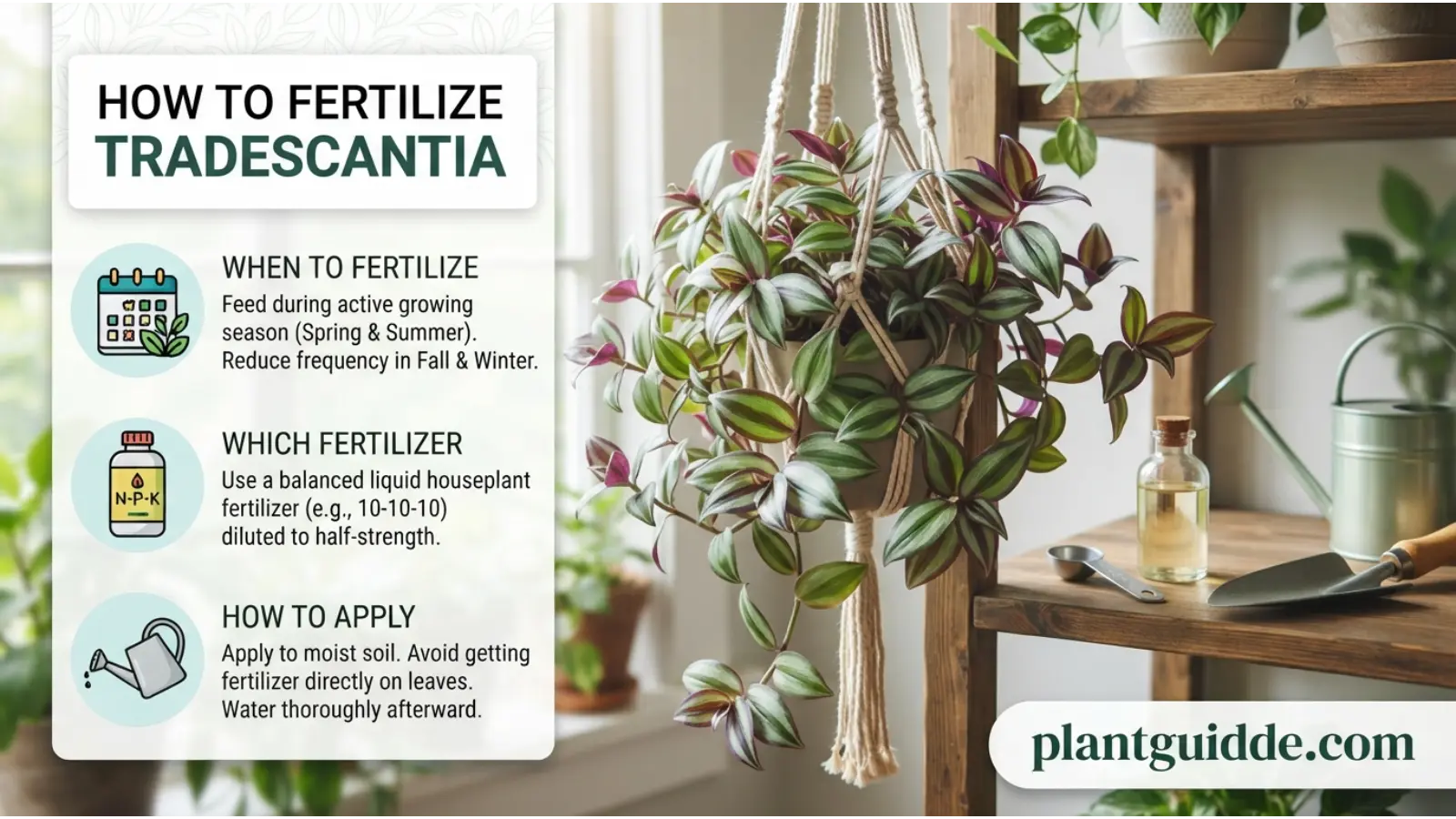
Because Tradescantia can grow quickly, it benefits from nutrients during active growth.
A balanced, diluted houseplant fertilizer can be applied according to its product directions during the growing season. Avoid assuming that more fertilizer will produce a healthier plant.
Excess fertilizer can contribute to salt accumulation in the soil and may damage roots.
If your plant is growing slowly during a darker winter period, reducing or pausing feeding may be appropriate rather than continuing a heavy fertilizing routine.
Why Pruning Is So Important for Tradescantia
Pruning is one of the easiest ways to improve the appearance of a Tradescantia.
Without regular trimming, stems can become extremely long, with leaves concentrated toward the ends. This is especially noticeable when the plant is grown indoors under moderate light.
To encourage fuller growth:
- Identify long or bare stems.
- Use clean, sharp scissors or pruning shears.
- Cut just above a healthy leaf node.
- Remove weak or damaged growth.
- Use healthy cuttings for propagation if desired.
Don’t be afraid to prune a healthy Tradescantia. Strategic trimming can encourage branching and give the plant a much denser appearance.
How to Make Tradescantia Bushier
If your plant looks long and sparse, pruning alone may not solve the underlying problem.
Check the light first.
A Tradescantia growing in insufficient light may continue producing long stems even after repeated trimming. Move it toward a brighter location, then prune the longest growth.
You can also root several cuttings and place them back into the same pot. As the cuttings establish and new growth develops, the container can become noticeably fuller.
This combination works better than simply allowing one long stem to continue growing indefinitely.
How to Propagate Tradescantia
Tradescantia is one of the easier houseplants to propagate from stem cuttings.
Propagation in Water
Take a healthy cutting containing several leaves and remove the lower leaves if they would sit underwater.
Place the stem in clean water with at least one node submerged. Keep it in a bright location away from harsh direct sunlight.
Once roots develop, the cutting can be transferred to potting mix.
Propagation Directly in Soil
You can also place a healthy cutting directly into a moist, well-draining potting mix.
Make sure at least one node is in contact with the growing medium because roots can develop from the nodes.
Keep the medium lightly moist while the cutting establishes, but avoid saturating it.
Practical tip: When pruning your Tradescantia, don’t automatically throw away every healthy cutting. Propagation can be an easy way to replace bare growth and create a fuller container.
Common Tradescantia Problems and How to Fix Them
Tradescantia Leaves Turning Yellow
Yellow leaves can have several causes, but consistently wet soil is one of the first things to investigate.
Check:
- How wet the soil remains between waterings
- Whether the container has drainage holes
- Whether the potting mix is compacted
- Whether the plant is receiving enough light
If the soil stays wet for many days, reducing watering alone may not be enough. The root environment itself may need improvement.
Tradescantia Getting Leggy
Leggy growth usually points toward insufficient light, natural trailing growth, or both.
Move the plant to a brighter position and prune excessively long stems. Rooting the cuttings and returning them to the pot can help restore a fuller appearance.
Tradescantia Losing Its Color
Colorful Tradescantia cultivars often need good light to maintain their strongest foliage patterns.
If a variegated plant becomes predominantly green or a purple variety looks less intensely colored, assess its light before changing fertilizer or watering.
Avoid suddenly exposing a low-light plant to intense sunlight, as the foliage may scorch.
Tradescantia Leaves Turning Brown and Crispy
Crispy foliage may result from prolonged dryness, very dry air, intense sunlight, or environmental stress.
Check the soil moisture first. If the soil is dry, correct the watering pattern. If the soil is appropriately moist, consider whether the plant is receiving harsh direct sun or sitting near a heat source.
Tradescantia Stems Becoming Soft
Soft stems are more concerning than ordinary drooping.
Inspect the soil and roots if the stems are becoming mushy, especially when the potting mix remains wet. Remove severely damaged material and address the drainage or watering problem rather than simply watering less often.
Common Tradescantia Care Mistakes
Watering on a Fixed Schedule
Calendar-based watering can cause problems because indoor plants do not lose moisture at exactly the same rate every week.
Check the soil instead.
Keeping the Plant in a Dark Corner
Tradescantia may survive lower light for a while, but survival is not the same as producing dense, colorful growth.
If the plant becomes stretched and sparse, light should be one of the first factors you investigate.
Using a Container Without Drainage
Excess water needs somewhere to go. A decorative outer pot is fine, but the actual growing container should allow drainage.
Never Pruning Long Stems
Allowing every stem to grow indefinitely can create a plant that looks sparse even when it is technically healthy.
Regular trimming is part of maintaining its shape.
Fertilizing a Stressed Plant
Fertilizer is not a cure for root problems, severe underwatering, pest infestations, or inadequate light.
Correct the environmental problem first.
How to Keep Tradescantia Looking Full and Healthy
For consistently attractive growth, focus on the plant’s overall environment rather than trying to fix individual symptoms separately.
A simple routine is:
- Provide bright, suitable light.
- Check soil moisture before watering.
- Use a well-draining potting mix.
- Empty standing water after watering.
- Feed lightly during active growth.
- Trim long stems regularly.
- Propagate healthy cuttings back into the pot.
- Inspect leaves and stems during routine watering.
- Adjust care when seasonal light and temperature change.
One useful habit is to examine new growth rather than judging the entire plant by its older leaves. New leaves and stems provide a better indication of whether current conditions are working.
Is Tradescantia Good for Beginners?
Tradescantia can be a good choice for beginners because it grows readily, responds well to pruning, and can be propagated from relatively small stem cuttings.
However, its fast growth can make problems visible quickly. A plant that starts producing long, thin stems or declining foliage is often showing that its light, watering, or root conditions need attention.
The advantage is that you can usually make adjustments before the entire plant declines.
FAQs:
How much sunlight does a Tradescantia need?
Tradescantia generally prefers bright indirect light. Some varieties can tolerate gentle direct morning sun, but strong afternoon sunlight may scorch foliage. If growth becomes stretched or colors fade, increase light gradually.
How often should I water a Tradescantia?
Water when the upper layer of soil has started to dry rather than watering according to a fixed schedule. The plant may need more frequent watering in bright, warm conditions and less in cool or low-light conditions.
Why is my Tradescantia becoming leggy?
Leggy growth commonly occurs when the plant does not receive enough light or when long stems are allowed to grow without pruning. Provide brighter light and trim the longest stems to encourage a fuller shape.
Can Tradescantia grow in low light?
Tradescantia can tolerate less-than-ideal light for a period, but low light often produces weaker, more stretched growth and can reduce the intensity of colorful foliage. Brighter indirect light is generally better for attractive growth.
Can I propagate Tradescantia from cuttings?
Yes. Tradescantia can be propagated from healthy stem cuttings in either water or a suitable potting mix. Include at least one node because roots can develop from the nodes.
Conclusion
Successful tradescantia plant care is less about following a rigid schedule and more about responding to the plant’s growing conditions. Give it bright light, well-draining soil, sensible watering, warmth, and regular pruning, and it can produce vigorous trailing growth with attractive foliage.
If your Tradescantia is becoming leggy, losing color, or developing yellow leaves, don’t immediately add more water or fertilizer. Start by checking the light, soil moisture, drainage, and root environment. Those basic factors usually provide the clearest clues about what needs to change.

Asad Mumtaz is a dedicated plant enthusiast and gardening writer with a passion for helping people care for their plants successfully. He specializes in plant care guides, indoor gardening, and practical growing tips for all skill levels. His content focuses on making gardening simple, enjoyable, and rewarding. Through his work, Asad shares reliable advice to help readers create thriving green spaces.