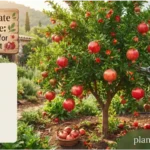
Pomegranate plant care are valued for their colorful flowers, edible fruit, and ability to handle relatively dry conditions once established. But even a hardy pomegranate can struggle when it receives too little sunlight, stays wet for long periods, or is pruned at the wrong time.
Good pomegranate plant care is less about constant attention and more about getting the growing conditions right. Sunlight, drainage, watering, pruning, nutrition, and climate all influence how well the plant grows and whether it has the conditions needed to flower and fruit.
Pomegranate plant care you are growing a pomegranate in a garden, container, or warm backyard, the goal is the same: encourage strong roots and branches without pushing excessive leafy growth at the expense of flowers and fruit.
Quick Answer
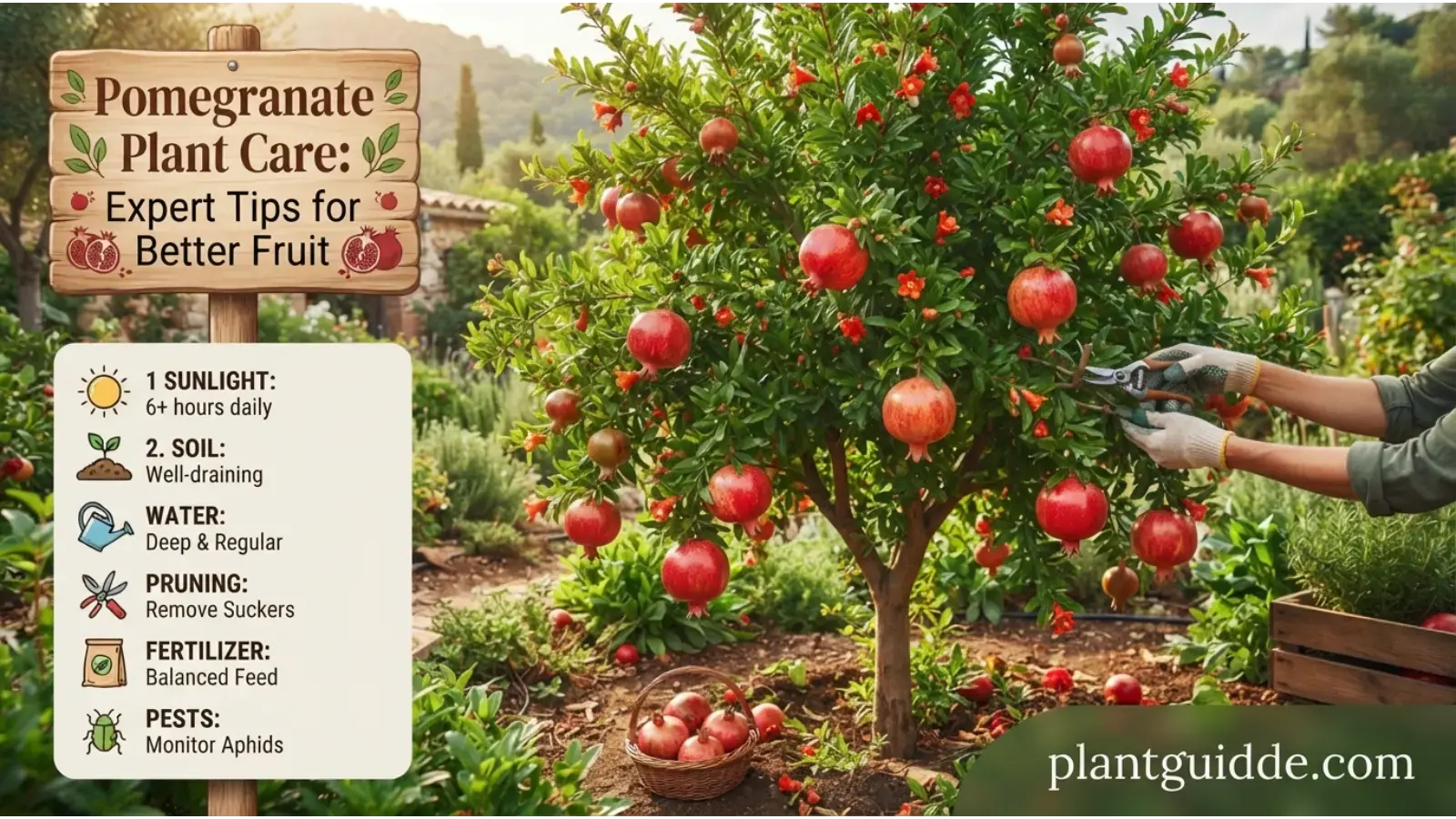
Pomegranate plant care focuses on full sun, well-draining soil, deep but controlled watering, and regular pruning. Established pomegranates tolerate dry conditions better than consistently wet soil.
Give young plants more consistent moisture, feed lightly during active growth, and prune to maintain an open structure. With enough warmth and sunlight, healthy plants can produce attractive flowers and fruit while remaining relatively low-maintenance.
Understanding the Pomegranate Plant
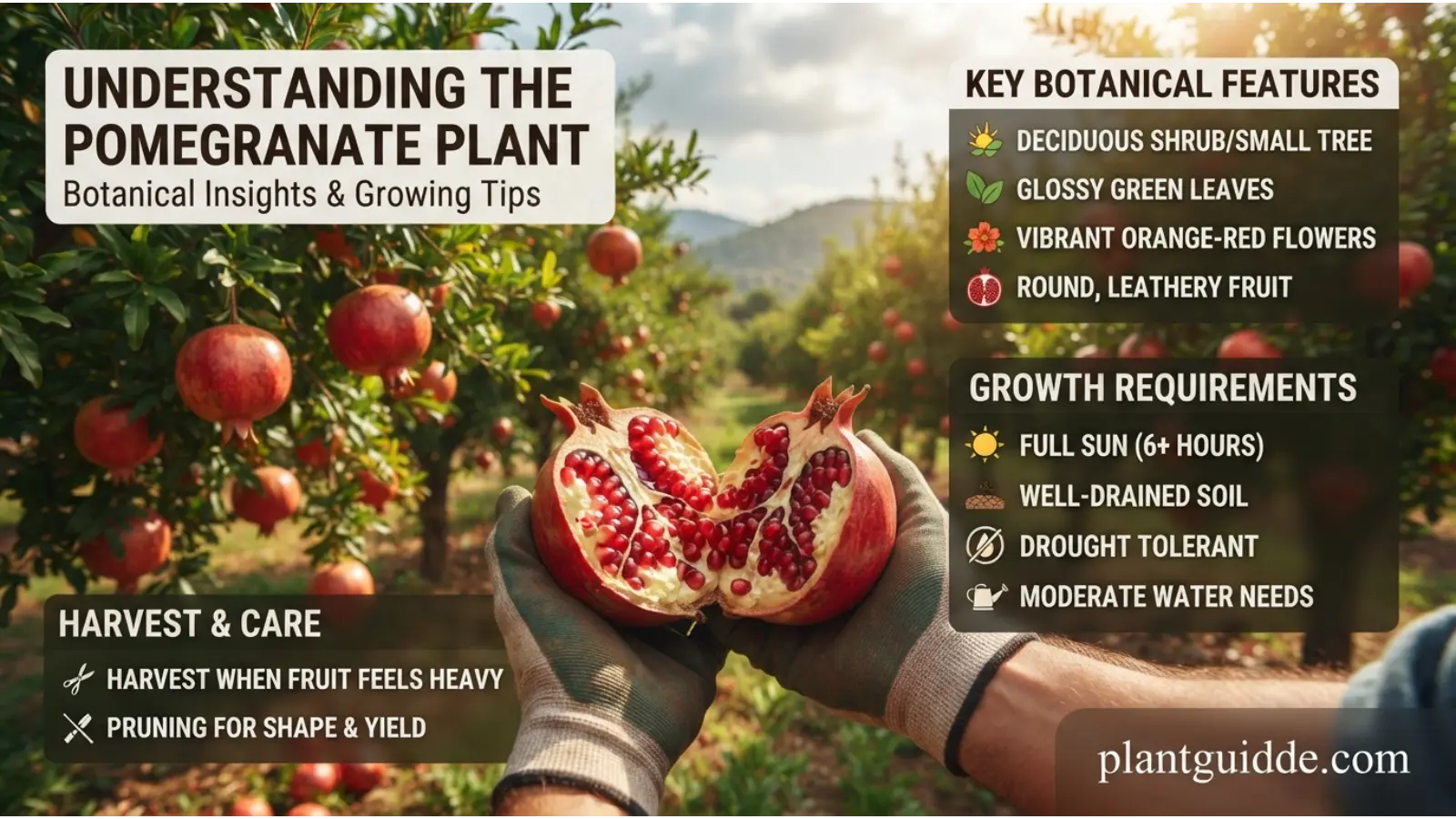
The cultivated pomegranate is Punica granatum, a deciduous shrub or small tree grown for its ornamental flowers and round, fruit-bearing structures.
Depending on the variety and growing conditions, a pomegranate can develop into a substantial shrub or small tree. It naturally produces multiple stems from the base, although gardeners can train it into a more tree-like form.
Pomegranates generally perform best where they receive:
- Plenty of direct sunlight
- Warm growing conditions
- Well-draining soil
- Moderate, consistent moisture during active growth
- Protection from prolonged severe cold
- Adequate space for roots and branches
One important distinction is that drought tolerance does not mean drought is always desirable. A mature pomegranate may survive dry conditions, but young plants and fruiting plants can benefit from adequate moisture during active growth.
How Much Sun Does a Pomegranate Plant Need?
Pomegranates grow best in full sun, ideally receiving around six or more hours of direct sunlight each day.
More sunlight generally supports stronger growth, flowering, and fruit development. Plants grown in excessive shade may become thin, produce fewer flowers, or struggle to ripen fruit properly.
Choose a location that receives direct sun for much of the day rather than a spot shaded by buildings, large trees, or walls for several hours.
What happens when sunlight is insufficient?
You may notice:
- Long, weak growth
- Fewer flowers
- Reduced fruit production
- Smaller or poorly developed fruit
- Greater spacing between leaves
If a container-grown pomegranate is struggling to flower despite otherwise healthy foliage, light should be one of the first things you evaluate.
Best Soil for Pomegranate Plants
Good drainage is one of the most important parts of pomegranate plant care.
Pomegranates can tolerate a range of soil types, but roots generally perform better when excess water can move away rather than remaining around the root zone.
A suitable soil should:
- Drain efficiently
- Provide enough organic matter
- Hold some moisture without becoming constantly saturated
- Allow roots to develop freely
Heavy, poorly drained soil can create problems even when the plant receives plenty of sunlight.
If your garden soil drains slowly, improve the planting area rather than simply watering less frequently. For containers, use a quality, well-draining potting mix and always use a container with drainage holes.
How to Water a Pomegranate Plant
Watering should change according to the plant’s age, weather, soil, and growing location.
Young pomegranate plants
Newly planted pomegranates need more consistent moisture while their root systems become established.
Water deeply enough to moisten the root zone, then allow the soil to dry somewhat before watering again. Avoid keeping the surface constantly muddy or saturated.
Established pomegranate plants
Once established, pomegranates are relatively tolerant of dry conditions. However, completely neglecting water during periods of prolonged heat and drought can still stress the plant.
During active growth and fruit development, consistent moisture can be particularly useful.
A practical approach is to check the soil rather than following a rigid calendar.
Insert your finger several inches into the soil. If the upper root-zone soil has dried substantially and the plant needs water, water thoroughly. If the soil is still noticeably wet, wait and reassess.
Avoid shallow, frequent watering
Frequent light watering encourages moisture to remain near the surface and may not adequately wet the deeper root zone.
Instead, when watering is needed, aim for a thorough soaking followed by an appropriate drying period.
How to Fertilize Pomegranate Plants
Pomegranates do not necessarily need heavy feeding to grow successfully.
Too much nitrogen can encourage vigorous leafy growth while reducing the balance between vegetative growth and flowering or fruit production.
A soil test is the most reliable way to determine whether a specific nutrient is actually lacking.
For plants growing in reasonably fertile soil:
- Feed according to the needs of the plant rather than automatically applying large amounts.
- Avoid excessive nitrogen.
- Apply fertilizer during active growth according to the product’s directions.
- Reduce or stop routine feeding as the plant enters dormancy in climates where it loses its leaves.
- Water appropriately after applying granular fertilizer if the product instructions call for it.
If a pomegranate has abundant green foliage but poor flowering, simply adding more fertilizer may not solve the problem. Insufficient sunlight, excessive pruning, plant age, environmental stress, or excessive nitrogen can also affect flowering.
How to Prune a Pomegranate Plant
Pruning helps control size, remove weak growth, improve structure, and make harvesting easier.
Pomegranates naturally tend to produce suckers from the base. If you want a tree-like form, these can require regular removal.
Remove:
- Dead or damaged branches
- Weak or crossing branches
- Unwanted suckers
- Growth that creates excessive congestion
- Branches that interfere with the plant’s desired shape
Avoid removing large amounts of healthy growth without a clear reason.
Should you prune pomegranate trees heavily?
Usually, no.
Severe pruning can stimulate vigorous vegetative growth and may remove wood that would otherwise contribute to flowering and fruit production.
For a mature plant, thoughtful structural pruning is generally more useful than repeatedly cutting it back simply to make it smaller.
If your primary goal is fruit production, learn how your particular variety flowers and bears fruit before making major pruning cuts.
When Does a Pomegranate Plant Flower?
Pomegranates typically flower during the warmer part of the growing season.
Their flowers can be bright red, orange-red, or otherwise strongly colored depending on the cultivar. Some varieties are grown primarily for ornamental flowers, while others are selected for fruit.
Flowering can be affected by:
- Sunlight
- Plant maturity
- Temperature
- Water availability
- Pruning
- Nutrition
- Cultivar characteristics
A healthy plant that is not flowering should not automatically be assumed to need more fertilizer.
Start by checking whether it receives enough direct sunlight and whether its growing conditions are appropriate for its age and variety.
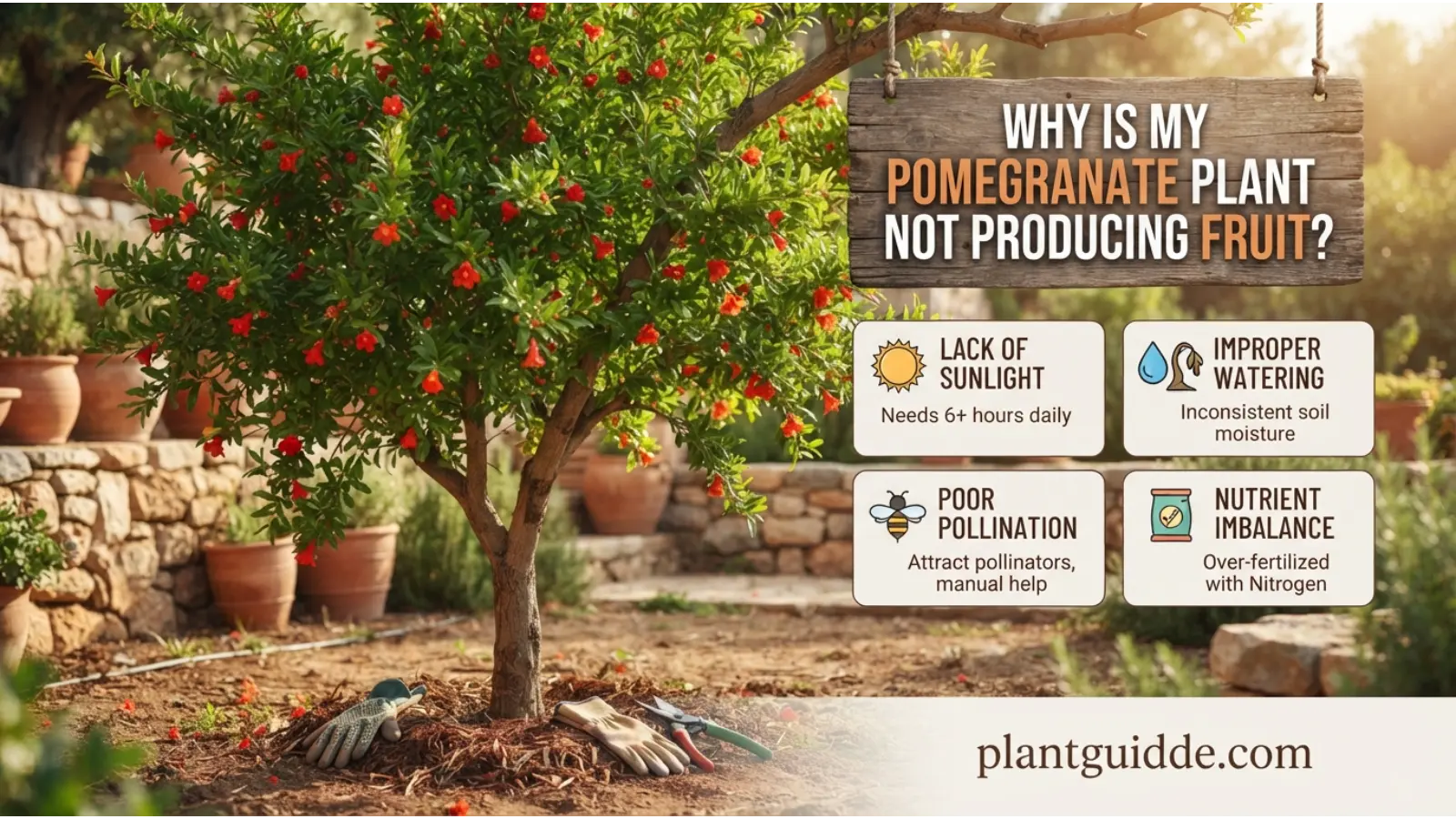
Why Is My Pomegranate Plant Not Producing Fruit?
A pomegranate can flower without producing a large crop of fruit. This does not necessarily mean the plant is unhealthy.
Several factors can influence fruit set.
Insufficient sunlight
A plant growing in shade may produce less flowering and weaker fruit production.
Young plant
Recently planted or young pomegranates may need time to reach sufficient maturity before producing a meaningful crop.
Environmental stress
Extreme heat, drought, irregular watering, or other stress during flowering and fruit development can affect performance.
Excessive nitrogen
Too much nitrogen can encourage foliage at the expense of reproductive growth.
Pollination conditions
Pomegranate flowers have different reproductive characteristics, and fruit set can vary with cultivar, weather, pollinator activity, and flower type. Good insect activity can still be beneficial even though pomegranates are capable of self-pollination.
Excessive pruning
Removing too much productive wood can reduce the plant’s ability to flower and fruit.
Pomegranate Plant Care in Containers
Pomegranates can be grown in containers, particularly when a naturally smaller cultivar is selected or the plant is managed carefully.
Container growing requires more attention to root space and watering because pots dry out faster than garden soil.
Choose:
- A container with drainage holes
- A well-draining potting mix
- A container large enough for the plant’s root system
- A sunny location
- A stable container that will not easily tip as the plant grows
Do not choose an extremely large container simply to avoid repotting. Excess unused soil can remain wet for longer after watering.
As the plant grows, it may eventually need a larger container or root management.
How to Grow Pomegranate From Cuttings
Pomegranates can be propagated from cuttings, and this is a common way to produce plants that retain characteristics of the parent plant.
A practical propagation process involves:
- Select healthy, disease-free wood from a suitable parent plant.
- Take an appropriately sized cutting during the recommended propagation period for your climate.
- Prepare a clean, well-draining rooting medium.
- Insert the cutting so that the appropriate portion is below the medium.
- Keep the medium lightly moist rather than saturated.
- Provide suitable warmth and bright conditions without allowing the cutting to dry out.
- Wait for rooting before gradually transitioning the young plant to normal growing conditions.
Propagation success depends on the type and maturity of the cutting, timing, temperature, humidity, and aftercare.
Common Pomegranate Plant Problems
Yellow leaves
Yellow foliage can have several causes, so avoid assuming that the plant simply needs fertilizer.
Check:
- Soil moisture
- Drainage
- Root condition
- Recent weather changes
- Light exposure
- Nutrient availability
If the soil stays wet for extended periods, improving drainage may be more important than adding nutrients.
Leaf drop
Some leaf drop is normal when deciduous pomegranates enter dormancy.
Unexpected leaf loss during the active growing season can result from environmental stress, watering problems, pests, disease, or sudden changes in growing conditions.
Look at the plant and soil together rather than diagnosing the problem from leaf color alone.
Cracked or split fruit
Fruit splitting can be associated with fluctuations in water availability, particularly when fruit development follows a period of dry conditions and then receives substantial moisture.
Maintaining more consistent soil moisture during fruit development can help reduce stress, although cracking can also be influenced by cultivar and environmental conditions.
Few or no flowers
Start with the basics:
- Check direct sunlight.
- Consider the plant’s age.
- Review pruning practices.
- Avoid excessive nitrogen.
- Look for environmental stress.
- Consider whether the cultivar is primarily ornamental or fruiting.
Pomegranate Pests and Diseases
Pomegranates are generally resilient, but they can still be affected by insects and diseases.
Potential problems vary by region and climate and may include:
- Aphids
- Scale insects
- Whiteflies
- Fruit-feeding insects
- Fungal diseases
- Bacterial or other plant diseases
Before treating a problem, inspect the leaves, stems, flowers, fruit, and surrounding soil carefully.
Look for signs such as:
- Sticky residue
- Clusters of insects
- Distorted young leaves
- Spots or lesions
- Premature fruit drop
- Unusual discoloration
- Dieback
Avoid spraying pesticides simply because a plant looks unhealthy. Correct identification matters because yellowing caused by waterlogged roots requires a very different solution from an insect infestation.
Pomegranate Plant Care Through the Seasons
Spring
As growth resumes:
- Check for winter damage.
- Remove dead or damaged wood.
- Begin monitoring soil moisture.
- Watch for new shoots and suckers.
- Resume feeding only when appropriate for your plant and growing conditions.
Summer
This is often the most active period for growth, flowering, and fruit development.
Pay particular attention to:
- Sun exposure
- Water consistency
- Heat stress
- Pest activity
- Fruit development
Avoid allowing a young or heavily fruiting plant to experience prolonged severe water stress.
Fall
Depending on your climate and cultivar, fruit may mature and foliage may begin changing or dropping.
Reduce routine watering as growth slows, but do not allow container plants or newly established plants to become severely dry without reason.
Winter
In climates where pomegranates become dormant, leaf drop is normal.
Protect young plants from unusually severe cold where necessary. Container-grown plants are generally more vulnerable to cold because their roots have less insulation than roots growing in the ground.
Common Pomegranate Growing Mistakes
Some of the most common problems come from treating a pomegranate like a typical moisture-loving houseplant.
Watering on a fixed schedule
Weather and soil conditions change. Check the soil and plant instead of automatically watering every few days.
Keeping the soil constantly wet
Pomegranates tolerate dry conditions better than persistently waterlogged roots.
Growing in too much shade
A pomegranate may survive in inadequate light, but survival is not the same as strong flowering and fruit production.
Overfertilizing
More fertilizer does not automatically mean more fruit. Excessive nitrogen can produce lush vegetative growth.
Overpruning
Aggressive pruning can remove productive wood and create unnecessary vigorous regrowth.
Ignoring suckers
If you want a tree-form pomegranate, basal suckers can gradually take over the plant’s structure if they are not managed.
Expecting immediate fruit
Young plants may require time to mature, and fruiting performance depends on cultivar, climate, growing conditions, and plant age.
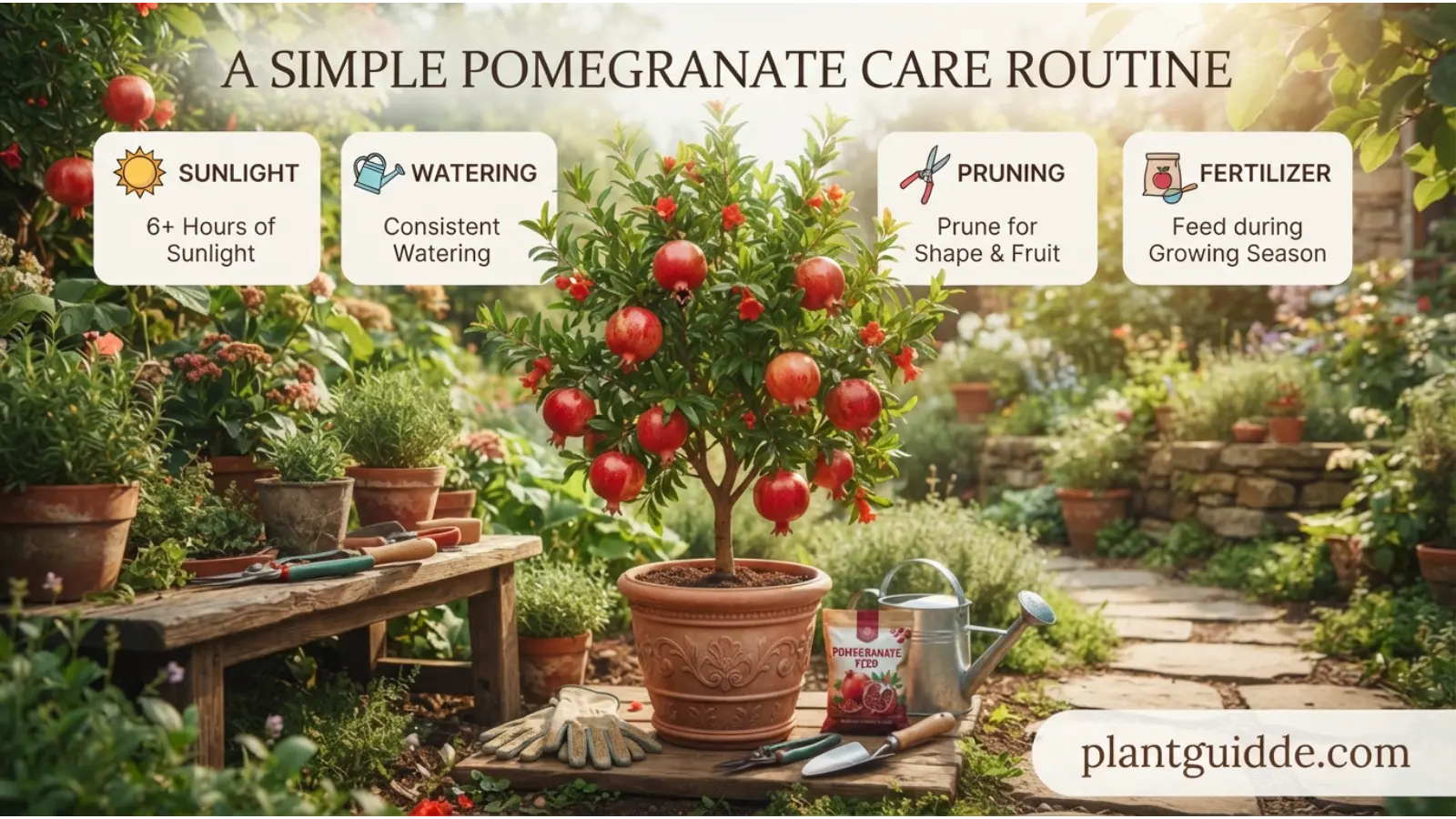
A Simple Pomegranate Care Routine
If you want a practical routine rather than a complicated care schedule, use this checklist:
Every week during active growth:
Check soil moisture, inspect new growth, and look for pests or unusual leaf changes.
Every few weeks:
Check the plant’s overall shape, remove unwanted suckers when appropriate, and inspect flowers and developing fruit.
During hot or dry weather:
Monitor soil more frequently because containers and shallow soils can dry rapidly.
During dormancy:
Reduce routine watering and avoid unnecessary pruning or fertilizing unless there is a specific reason.
Throughout the growing season:
Watch what the plant is telling you. Yellowing, weak growth, poor flowering, and fruit problems are symptoms to investigate rather than automatic signals to add water or fertilizer.
FAQs:
How often should I water a pomegranate plant?
Water when the soil has dried to an appropriate depth rather than following a strict calendar. Young plants generally need more consistent moisture, while established pomegranates tolerate drier conditions. During hot weather and fruit development, check soil moisture more frequently.
Does a pomegranate plant need full sun?
Yes. Pomegranates generally perform best with abundant direct sunlight. A sunny location supports stronger growth and flowering and provides better conditions for fruit development than a heavily shaded site.
Why is my pomegranate plant growing leaves but no fruit?
Possible reasons include insufficient sunlight, young plant age, excessive nitrogen, environmental stress, inappropriate pruning, or cultivar characteristics. Check light and growing conditions before increasing fertilizer.
Can pomegranates grow in pots?
Yes. Pomegranates can be grown in containers when given adequate root space, excellent drainage, sufficient sunlight, and appropriate watering. Smaller cultivars can be particularly useful for container growing.
Should I prune my pomegranate plant?
Yes, but prune with a purpose. Remove dead, damaged, crossing, or unwanted growth and manage basal suckers if you want a tree-like form. Avoid excessive pruning because removing too much healthy wood can affect the plant’s structure and fruiting potential.
Final Thoughts
Successful pomegranate plant care comes down to a few fundamentals: plenty of sunlight, good drainage, sensible watering, restrained fertilization, and purposeful pruning. The plant is naturally resilient, but its tolerance for dry conditions should not be confused with a need for neglect.
If your pomegranate is struggling, start with the growing environment before reaching for fertilizer or pesticides. Check the sunlight, examine the soil moisture, inspect the roots and foliage, and consider the plant’s age and season. Those observations usually reveal far more about the plant’s needs than a fixed watering or feeding schedule.

Asad Mumtaz is a dedicated plant enthusiast and gardening writer with a passion for helping people care for their plants successfully. He specializes in plant care guides, indoor gardening, and practical growing tips for all skill levels. His content focuses on making gardening simple, enjoyable, and rewarding. Through his work, Asad shares reliable advice to help readers create thriving green spaces.