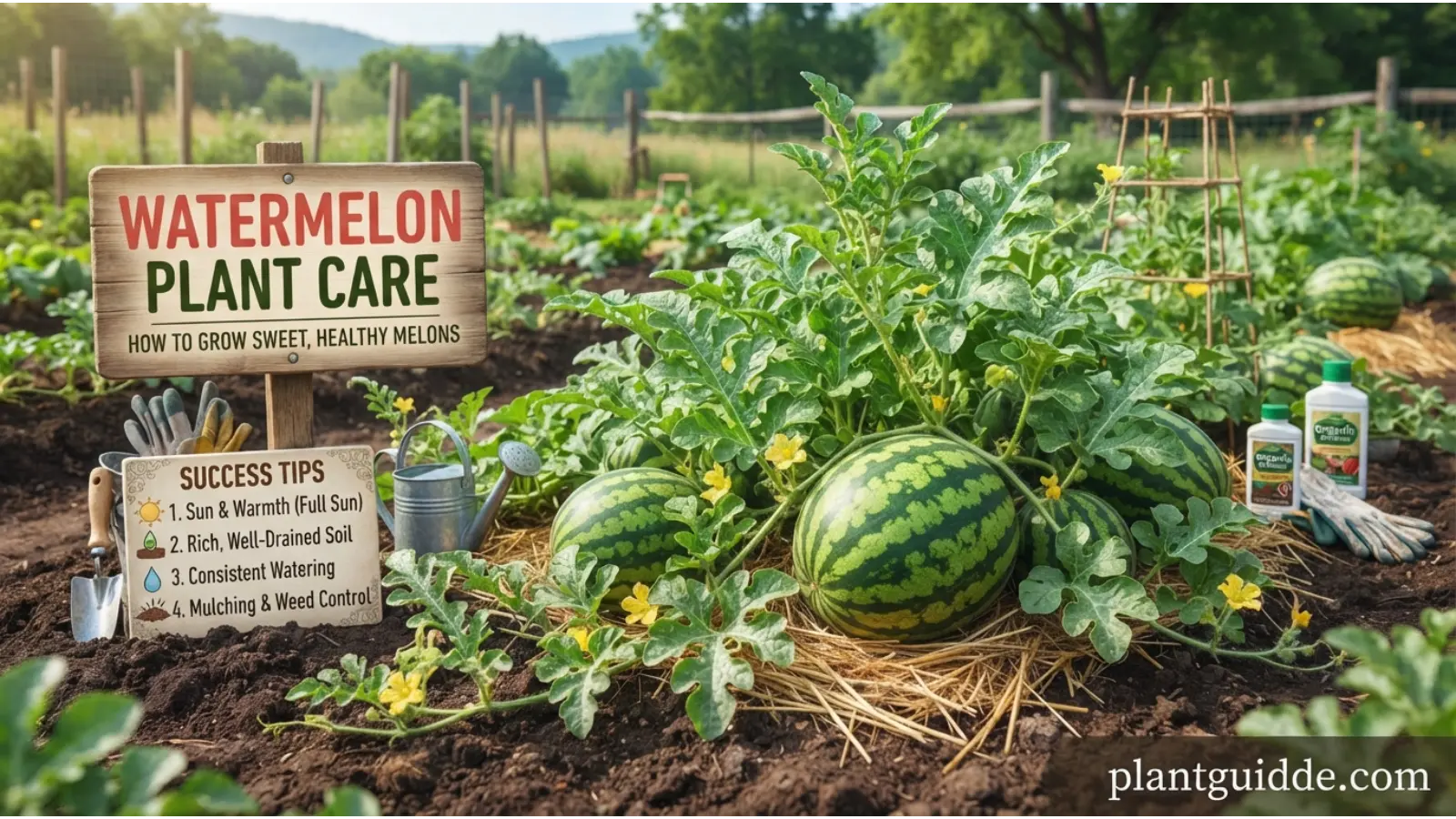
Watermelon plant care are rewarding to grow, but they need more space, warmth, and moisture management than many common garden crops. A plant can produce impressive vines yet still fail to develop good fruit if it receives too little sunlight, suffers from irregular watering, or grows in compacted soil.
The key to successful watermelon plant care is consistency. Watermelons grow rapidly when conditions are right, so small problems such as poor drainage, nutrient shortages, weeds, or inadequate pollination can become noticeable quickly.
Watermelon plant care you are growing watermelon in a garden bed, raised bed, or large container, understanding what the plant needs at each stage makes harvesting much easier.
Quick Answer
Watermelon plant care comes down to strong sunlight, warm temperatures, fertile but well-draining soil, consistent moisture, and plenty of space for vines to spread.
Water deeply when the soil begins to dry, feed plants during active growth, protect developing fruit from pests and rot, and avoid wetting the foliage unnecessarily. Good pollination and steady growing conditions are especially important for large, sweet watermelons.
Understanding Watermelon Growth
Watermelon (Citrullus lanatus) is a warm-season annual belonging to the cucumber family, Cucurbitaceae. It produces long trailing vines, large leaves, yellow flowers, and fruit that can vary considerably in size, shape, color, and sweetness depending on the variety and growing conditions.
Most watermelons need a long, warm growing season. The plant uses its leaves to capture sunlight and produce the energy needed for vigorous vine growth and fruit development.
This is why sunlight and temperature are not minor details. A watermelon planted in a cool, shaded location may survive but produce weak growth or disappointing fruit.
Choose the Right Location
The planting location has a major effect on watermelon growth.
Choose a site that provides:
- Full sun for most of the day
- Warm soil
- Good air circulation
- Well-draining soil
- Plenty of horizontal space for vines
- Easy access to water
Watermelon vines can spread several feet, depending on the cultivar. Before planting, consider where the vines will travel rather than focusing only on the small size of the young plant.
A location that looks spacious when seedlings are planted can become crowded once the vines begin producing runners.

How Much Sunlight Does Watermelon Need?
Watermelons grow best in full sun, generally requiring around 6–8 hours or more of direct sunlight each day for strong growth and fruit production.
More sunlight allows the plant to produce more energy through photosynthesis. Insufficient light can result in weak, stretched growth and fewer flowers or poorly developed fruit.
For the best results:
- Choose the sunniest part of the garden.
- Avoid locations shaded by buildings, fences, or tall crops.
- Keep competing vegetation under control.
- Avoid overcrowding plants so leaves can receive adequate light.
Watermelon plant care you are growing watermelon in a container, place it where the entire plant can receive strong sunlight rather than keeping the container in a partially shaded corner.
Best Soil for Watermelon
Watermelon prefers fertile, loose, well-draining soil with plenty of organic matter.
The ideal soil should hold enough moisture for active growth while allowing excess water to drain away. Heavy, compacted soil can create poor root conditions, particularly when the plant is watered frequently.
Before planting, improve the soil with mature compost or other suitable organic matter if needed.
A practical soil target is:
- Loose and well-drained
- Rich in organic matter
- Moderately fertile
- Slightly acidic to neutral, approximately pH 6.0–7.0
Avoid planting watermelon in a location where water regularly collects after irrigation or rain.
Why Drainage Matters
Watermelon plants need water, but their roots should not remain surrounded by saturated soil for long periods.
Poor drainage can contribute to root problems and may cause yellowing, weak growth, or general decline. If your garden has heavy clay soil, a raised bed can provide better control over drainage and soil structure.
When to Plant Watermelon
Watermelon should be planted after the danger of frost has passed and the soil has warmed.
Cold soil slows germination and root development, while cold weather can severely stress young plants.
For direct sowing, wait until the soil is consistently warm. If you start seeds indoors, avoid keeping seedlings indoors for too long because watermelon develops a sensitive root system and generally benefits from being transplanted carefully.
In cooler climates, black plastic mulch, landscape fabric, or other soil-warming techniques can help increase soil temperature early in the season.
How to Plant Watermelon
You can grow watermelon from seed directly in the garden or transplant young seedlings.
Growing From Seed
Direct sowing is often straightforward when the soil is sufficiently warm.
- Prepare loose, fertile soil.
- Plant seeds according to the depth recommended for the variety.
- Keep the soil evenly moist during germination.
- Thin seedlings after they establish if multiple plants were sown together.
- Give mature vines enough room to spread.
Avoid repeatedly disturbing the soil around emerging seedlings because young roots can be damaged easily.
Transplanting Seedlings
Watermelon plant care starting watermelon indoors, transplant carefully once outdoor conditions are warm enough.
Watermelon does not appreciate rough root disturbance. Harden seedlings gradually by exposing them to outdoor conditions before permanent planting.
When transplanting, keep the root ball intact and water the plant afterward to help settle the surrounding soil.
Watermelon Watering Guide
Consistent watering is one of the most important parts of watermelon plant care.
Young plants need regular moisture while establishing roots. As vines grow and fruit develops, the plant’s water demand can increase significantly.
Instead of following a rigid daily schedule, check the soil.
Water when the upper portion of the soil has begun to dry, then water deeply enough to moisten the root zone.
During Fruit Development
Water is particularly important while fruit is developing. Severe fluctuations between very dry soil and heavy watering can stress the plant and may contribute to fruit-quality problems.
A useful approach is:
- Water deeply rather than giving frequent shallow splashes.
- Check soil moisture before watering.
- Increase attention during hot, dry weather.
- Reduce unnecessary overhead watering.
- Maintain relatively consistent moisture while fruit is expanding.
Drip irrigation or a soaker hose can make this easier because water can be delivered near the root zone without repeatedly wetting the leaves.
Should You Reduce Water Before Harvest?
Gardeners sometimes deliberately stop watering watermelon shortly before harvest in an attempt to make the fruit sweeter. There is no universal rule that plants should be severely dried out before harvest.
Avoid allowing a mature plant to become severely stressed simply to manipulate sweetness. Variety, sunlight, plant health, maturity, and growing conditions all influence fruit quality.
How to Fertilize Watermelon Plants
Watermelon needs adequate nutrients for vigorous vines and fruit production, but excessive fertilizer can encourage leaves and vines at the expense of fruit.
Before planting, incorporate mature compost or a suitable garden fertilizer according to soil conditions.
During active growth, plants may benefit from additional feeding if the soil is not sufficiently fertile.
A practical approach is to:
- Start with fertile soil.
- Avoid excessive nitrogen.
- Follow the fertilizer’s application instructions.
- Consider a soil test if plants repeatedly perform poorly.
- Focus on balanced nutrition rather than simply applying more fertilizer.
Excessive nitrogen can produce impressive foliage without the fruit production you expected.
Do Watermelons Need Pruning?
Watermelon generally does not require aggressive pruning.
Its vines naturally spread across the ground, and healthy leaves are important because they produce the energy needed for fruit development.
You can remove:
- Severely diseased leaves
- Dead foliage
- Damaged plant material
- Vines that are creating a genuine space problem
Avoid cutting healthy vines unnecessarily. Heavy pruning can remove productive foliage and reduce the plant’s ability to support developing fruit.
Pollination: A Commonly Overlooked Problem
A watermelon plant can have plenty of flowers and still produce little or no fruit if pollination is poor.
Watermelon flowers are pollinated primarily by bees and other pollinating insects. Flowers may appear without developing into mature melons when pollinator activity is limited.
To encourage pollination:
- Avoid unnecessary insecticide applications during flowering.
- Grow flowering plants nearby to support pollinators.
- Provide a healthy garden environment for bees.
- Avoid disturbing flowers unnecessarily.
Watermelon plant care flowers repeatedly fall without producing small fruits, poor pollination is one possibility worth investigating.
Male and Female Flowers
Watermelon produces separate male and female flowers on the same plant.
Male flowers generally appear first and produce pollen. Female flowers have a small swollen structure behind the flower that can develop into a watermelon after successful pollination.
If a female flower is successfully pollinated, that small swelling should gradually enlarge rather than simply drying up and dropping.
How to Support Developing Watermelons
Watermelon fruit normally develops directly on the ground.
Once fruit begins forming, keep the area around it reasonably clean and free of excessive moisture.
A piece of cardboard, straw, a wooden board, or another suitable barrier can be placed beneath developing fruit to reduce direct contact with wet soil.
However, the material should not trap excessive moisture against the fruit.
Avoid constantly moving or turning large developing melons. Their connection to the vine is important until they are mature.
Mulching Around Watermelon
Mulch can be very useful for watermelon.
Organic mulch such as straw can:
- Reduce soil moisture loss
- Suppress weeds
- Keep fruit away from wet soil
- Reduce soil temperature fluctuations
- Limit soil splashing onto leaves
Leave a little space around the plant’s crown rather than piling wet mulch directly against the stem.
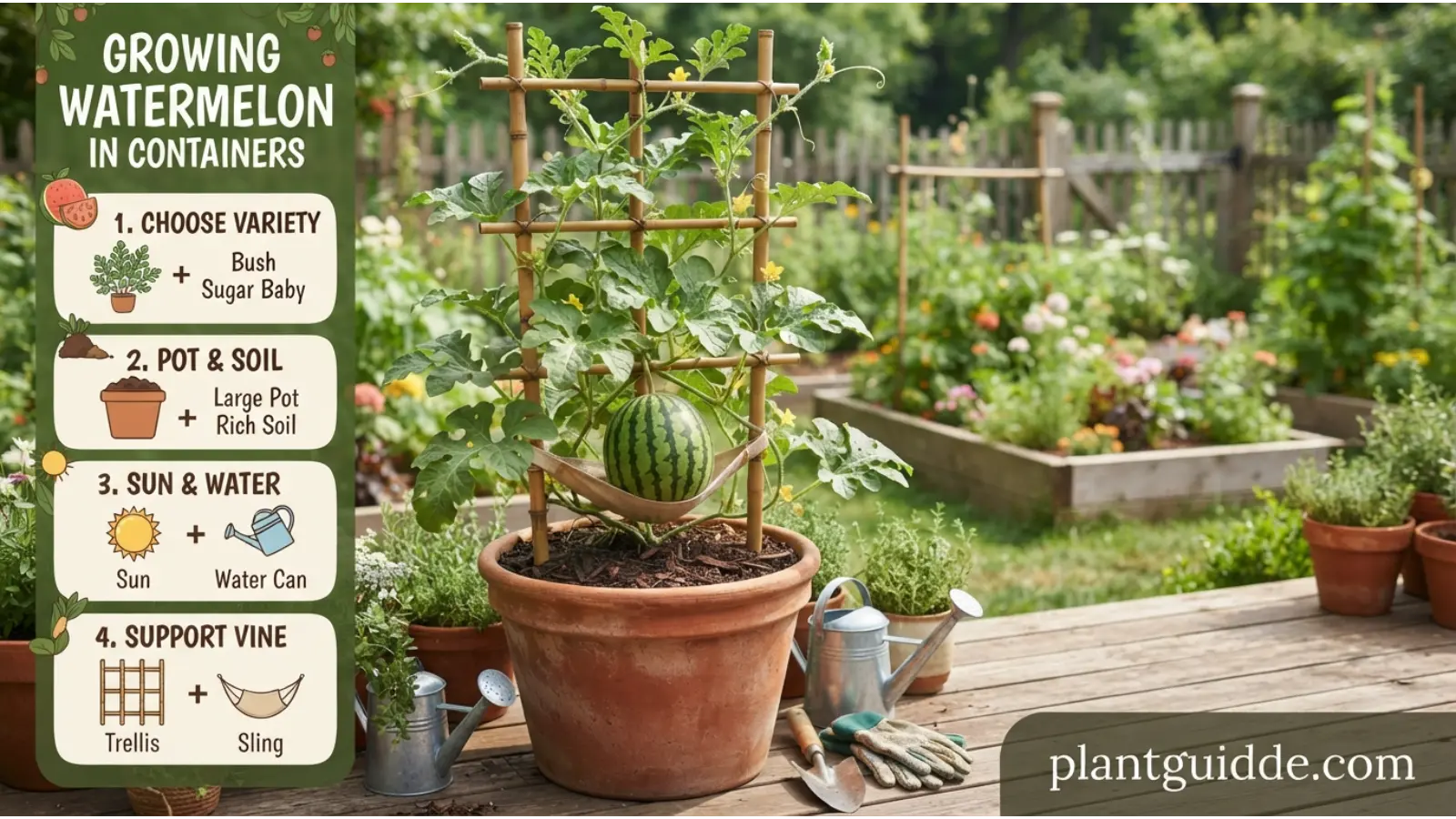
Growing Watermelon in Containers
Watermelon can be grown in containers, but the container needs to be substantially larger than those commonly used for herbs or small vegetables.
Choose:
- A large container
- Good drainage holes
- High-quality potting mix
- A sunny location
- A variety suited to smaller growing spaces
Compact or smaller-fruited varieties are generally easier to manage in containers than vigorous varieties that produce extremely long vines.
Container plants also dry out faster than plants growing in the ground. Check moisture frequently during hot weather.
A trellis can be used with some smaller watermelon varieties, but developing fruit may need physical support because heavy melons can damage vines if left hanging unsupported.
Common Watermelon Plant Problems
Many watermelon problems can be traced back to environmental stress rather than a single disease.
| Problem | Possible Cause | What to Check |
|---|---|---|
| Yellow leaves | Overwatering, nutrient problems, aging foliage | Soil moisture and drainage |
| Wilting | Drought, root problems, heat stress | Soil moisture and roots |
| Lots of leaves but few fruits | Excess nitrogen, poor pollination, insufficient sunlight | Fertilizer, flowers, sunlight |
| Flowers drop | Poor pollination or environmental stress | Pollinator activity and conditions |
| Small fruit stops growing | Poor pollination, stress, plant health | Moisture and flower development |
| Fruit rots underneath | Wet soil or prolonged moisture | Fruit contact with soil |
| Leaf spots | Fungal or bacterial disease | Airflow and foliage moisture |
| Chewed leaves | Insect pests | Undersides of leaves and stems |
| Vines grow poorly | Cold, poor nutrition, root problems | Temperature and soil |
Diagnosing the pattern is more useful than immediately applying a pesticide or fertilizer.
Watermelon Pests to Watch For
Several pests can affect watermelon plants, including aphids, cucumber beetles, squash bugs, spider mites, and various caterpillars depending on the growing region.
Inspect plants regularly, especially the undersides of leaves and new growth.
Look for:
- Small clusters of insects
- Sticky residue on leaves
- Holes or chewed edges
- Distorted new growth
- Yellow stippling
- Wilting or damaged stems
Early detection is easier to manage than a severe infestation.
Avoid automatically spraying every insect you see. Some insects are harmless or beneficial pollinators, and broad-spectrum insecticides can also harm beneficial species.
Watermelon Diseases
Warm, humid conditions can encourage several fungal and bacterial diseases.
Good prevention begins with growing conditions:
- Provide adequate spacing.
- Improve airflow around plants.
- Water near the soil instead of constantly wetting leaves.
- Remove severely diseased plant material.
- Avoid working with wet foliage when possible.
- Rotate crops when practical.
If a disease repeatedly affects watermelon in the same garden bed, crop rotation and sanitation become especially important.
Why Is My Watermelon Plant Wilting?
Wilting does not automatically mean the plant needs more water.
Check the soil first.
If the soil is dry several inches below the surface, drought or insufficient irrigation may be responsible. If the soil is consistently wet, adding more water can make the problem worse.
Also inspect the stems and roots for signs of pest damage or disease.
During extreme midday heat, temporary wilting can occur even when soil moisture is adequate. If the plant recovers as temperatures moderate, heat stress may be involved.
Why Is My Watermelon Plant Not Producing Fruit?
A watermelon plant may produce vigorous vines and flowers but little fruit.
Common possibilities include:
- Poor pollination
- Insufficient sunlight
- Excessive nitrogen
- Cold weather
- Severe water stress
- Immature plants
- Pest or disease pressure
Start by checking whether female flowers are forming. Then observe whether the small fruit behind pollinated flowers begins to enlarge.
If flowers repeatedly appear but fail to produce developing fruit, pollination deserves particular attention.
Why Are My Watermelons Small?
Small fruit does not necessarily indicate a problem because watermelon varieties differ dramatically in mature size.
If the variety should produce larger fruit but yours remain unusually small, investigate:
- Insufficient sunlight
- Inconsistent watering
- Poor soil fertility
- Excessive competition
- Too many developing fruits for the plant’s available resources
- Pest or disease damage
- A short or cool growing season
Do not judge fruit size before checking the expected mature size of your particular cultivar.
When and How to Harvest Watermelon
Knowing when to harvest is one of the trickiest parts of growing watermelon.
Unlike tomatoes, watermelon does not continue ripening significantly after harvest, so maturity matters.
Useful signs can include:
- The tendril nearest the fruit becoming brown and dry
- The ground spot changing from pale white to a more creamy or yellowish color
- The fruit developing the characteristic appearance expected for its variety
- The rind becoming less glossy
- A mature-looking sound when tapped, although this method is subjective
No single sign is perfect for every variety.
The tendril and ground-spot combination can be more useful than relying solely on the popular “thumping” method.
When harvesting, cut the stem with clean shears or a knife rather than aggressively pulling the fruit from the vine.
Common Watermelon Growing Mistakes
Watering on a fixed schedule
Weather, soil type, plant size, and container conditions all affect water requirements. Check the soil instead of automatically watering every day.
Planting in partial shade
Watermelon needs substantial sunlight to support vigorous growth and good fruit development.
Using too much nitrogen
More fertilizer does not automatically mean more watermelon. Excess nitrogen can encourage foliage at the expense of fruiting.
Ignoring drainage
Watermelon needs moisture, but constantly saturated soil can create serious root problems.
Removing too many leaves
Healthy foliage supplies the plant with energy. Avoid excessive pruning simply to make the vines look tidy.
Crowding the plants
Poor spacing reduces airflow and increases competition for sunlight, water, and nutrients.
Harvesting too early
A large watermelon is not necessarily a ripe watermelon. Learn the maturity signs for your specific variety.
A Simple Watermelon Care Routine
For beginners, watermelon plant care can be simplified into a regular observation routine.
Every few days:
- Check soil moisture.
- Inspect leaves for pests or disease.
- Look at new growth.
- Check flowers and developing fruit.
- Remove major weeds competing with the plant.
During fruit development:
- Maintain consistent moisture.
- Keep fruit from sitting directly in wet soil.
- Avoid excessive nitrogen.
- Monitor for pests.
- Protect the plant’s healthy leaves.
Near harvest:
- Watch for maturity indicators.
- Avoid severe water stress.
- Check the fruit’s ground spot and nearby tendril.
- Harvest carefully when the fruit shows appropriate maturity signs.
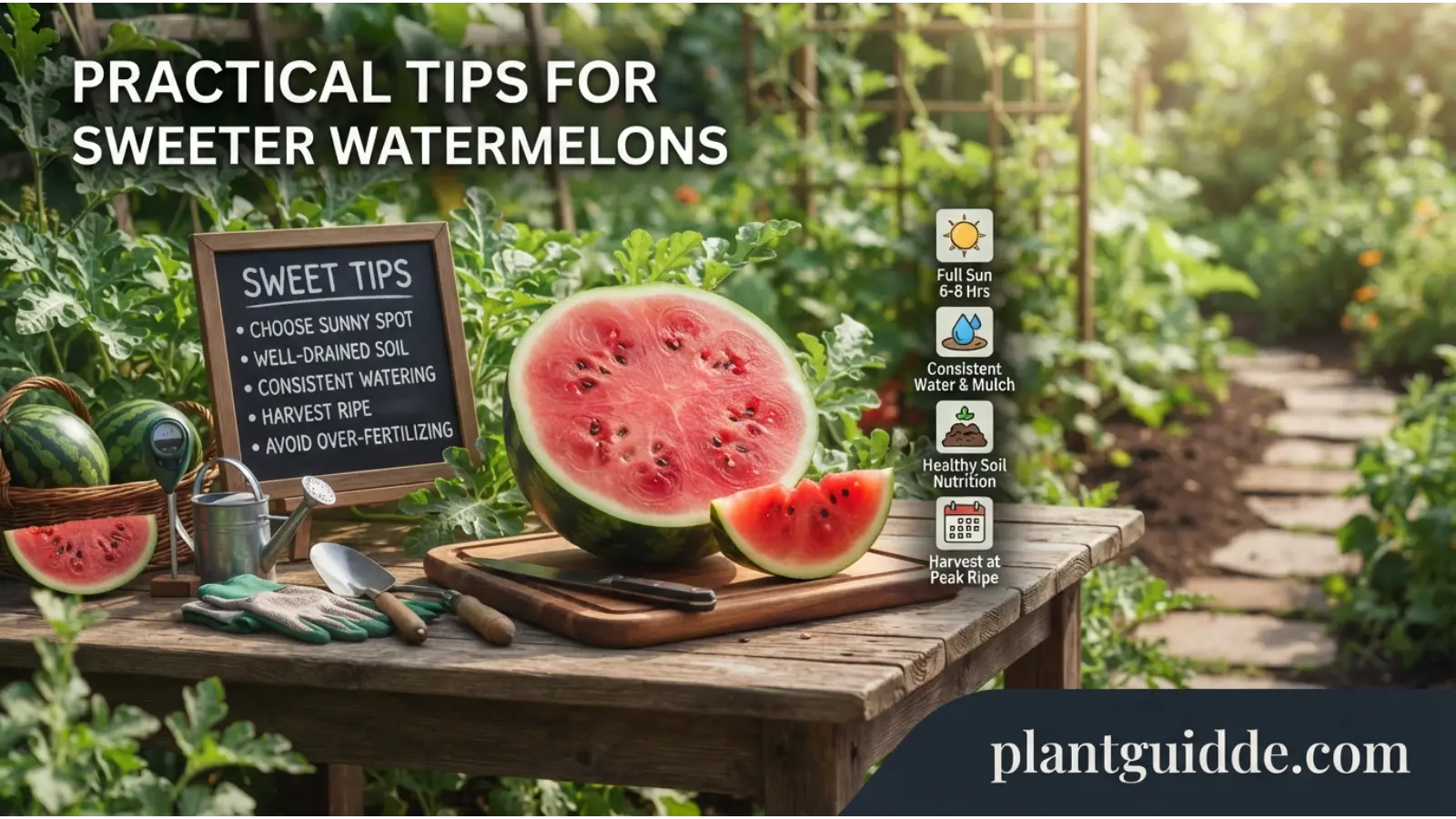
Practical Tips for Sweeter Watermelons
Sweetness depends on genetics as well as growing conditions, so good care cannot turn every variety into an exceptionally sweet melon.
You can, however, give the plant the conditions needed to reach its potential:
- Choose a variety known for good flavor.
- Give the plant plenty of sunlight.
- Keep the root zone adequately hydrated.
- Avoid severe drought stress.
- Maintain healthy foliage.
- Prevent major pest and disease damage.
- Allow fruit to mature fully on the vine.
The biggest mistake is often focusing on a single “sweetness trick” instead of maintaining healthy growth throughout the season.
FAQs:
How often should I water a watermelon plant?
Water when the soil begins to dry rather than following a strict calendar. During hot, dry weather, watermelon may need frequent deep watering, especially in sandy soil or containers. Maintain relatively consistent moisture during fruit development while avoiding constantly saturated soil.
Do watermelon plants need full sun?
Yes. Watermelon grows best in a location receiving about 6–8 hours or more of direct sunlight each day. Strong sunlight supports vigorous vines, flowering, fruit development, and the production of sugars that contribute to good flavor.
Why does my watermelon plant have flowers but no fruit?
Poor pollination is a common possibility, particularly when bee activity is low. Excessive nitrogen, insufficient sunlight, cold weather, and general plant stress can also interfere with fruit production. Check whether female flowers are forming and whether their small swollen bases begin enlarging after flowering.
Can watermelon grow in a pot?
Yes, but it needs a large container, good drainage, fertile potting mix, strong sunlight, and enough space for the vines. Compact watermelon varieties are generally easier to manage in containers. Monitor container plants closely because they can dry out quickly during hot weather.
How do I know when a watermelon is ready to harvest?
Look for several maturity indicators rather than relying on one sign. A drying tendril near the fruit, a creamy or yellowish ground spot, and the mature appearance expected for the variety can help. The popular tapping method can provide an additional clue but should not be your only test.
Final Takeaway
Successful watermelon plant care is less about complicated techniques and more about giving the plant enough warmth, sunlight, space, nutrition, and consistent moisture. Start with fertile, well-drained soil, protect healthy foliage, encourage pollination, and monitor developing fruit instead of reacting only when problems become severe.
If you are growing watermelon for the first time, focus on three things first: full sun, consistent soil moisture, and good drainage. Once those basics are right, pest monitoring, feeding, pollination, and harvest timing become much easier to manage.

Asad Mumtaz is a dedicated plant enthusiast and gardening writer with a passion for helping people care for their plants successfully. He specializes in plant care guides, indoor gardening, and practical growing tips for all skill levels. His content focuses on making gardening simple, enjoyable, and rewarding. Through his work, Asad shares reliable advice to help readers create thriving green spaces.