Camellia plant care are prized for their glossy evergreen foliage and elegant flowers, but they can be less forgiving when their basic growing conditions are wrong. A plant may remain alive while producing few flowers, dropping buds, developing yellow leaves, or suffering from root problems.
Good camellia plant care is less about following a rigid watering schedule and more about maintaining the conditions the roots and flower buds need throughout the year. Once you understand light, soil acidity, moisture, feeding, and pruning, camellias become much easier to manage.
Quick Answer
Camellia plant care mainly involves bright filtered light or partial shade, acidic and well-draining soil, consistent moisture, good air circulation, and protection from harsh wind and early morning frost.
Keep the roots moist but never waterlogged, mulch around the root zone, feed with an acid-loving plant fertilizer in spring, and prune lightly after flowering. The exact needs vary between camellia types, especially Camellia japonica and Camellia sasanqua.
Understanding Camellias Before You Plant
Camellias are evergreen shrubs in the tea family, Theaceae. Two groups commonly grown by gardeners are Camellia japonica and Camellia sasanqua, although many hybrids and cultivars are also available.
The distinction matters because their flowering periods and light preferences can differ.
- Camellia japonica: generally flowers from late winter into spring and prefers partial or dappled shade.
- Camellia sasanqua: generally flowers from autumn into winter and can tolerate more sun once established.
- Camellia × williamsii: hybrids that commonly flower from late winter into spring.
Flower color and form also vary considerably. Depending on the cultivar, flowers may be white, pink, red, single, semi-double, peony-form, anemone-form, or fully double.
This is important when choosing a plant because the best location for one camellia is not necessarily ideal for another.
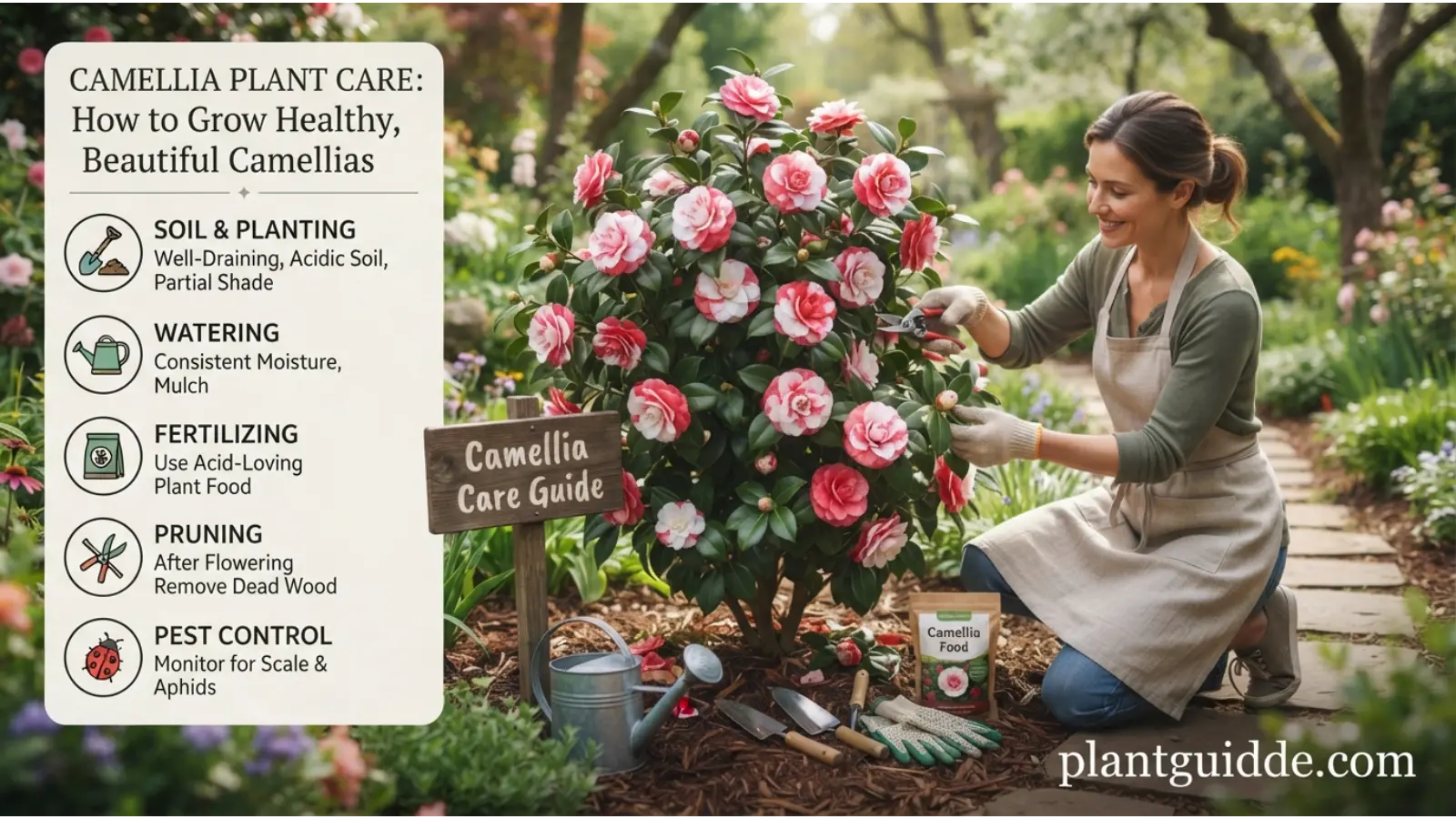
Camellia Care Requirements at a Glance
| Care factor | What camellias generally prefer |
|---|---|
| Light | Partial shade or filtered light |
| Soil | Acidic, fertile, moisture-retentive but well-drained |
| Soil pH | Around 5.5–6.5 is suitable for many camellias |
| Water | Consistent moisture without saturated roots |
| Humidity | Moderate natural garden humidity is usually beneficial |
| Fertilizer | Acid-loving or ericaceous fertilizer during active growth |
| Pruning | Usually light pruning after flowering |
| Mulch | Organic mulch around, but not against, the stem |
| Location | Sheltered from drying winds and harsh exposure |
| Containers | Excellent option when acidic soil is unavailable |
RHS guidance recommends acidic soil, reliable summer moisture, spring feeding with an ericaceous fertilizer, and pruning after flowering when pruning is necessary.
Choosing the Right Location
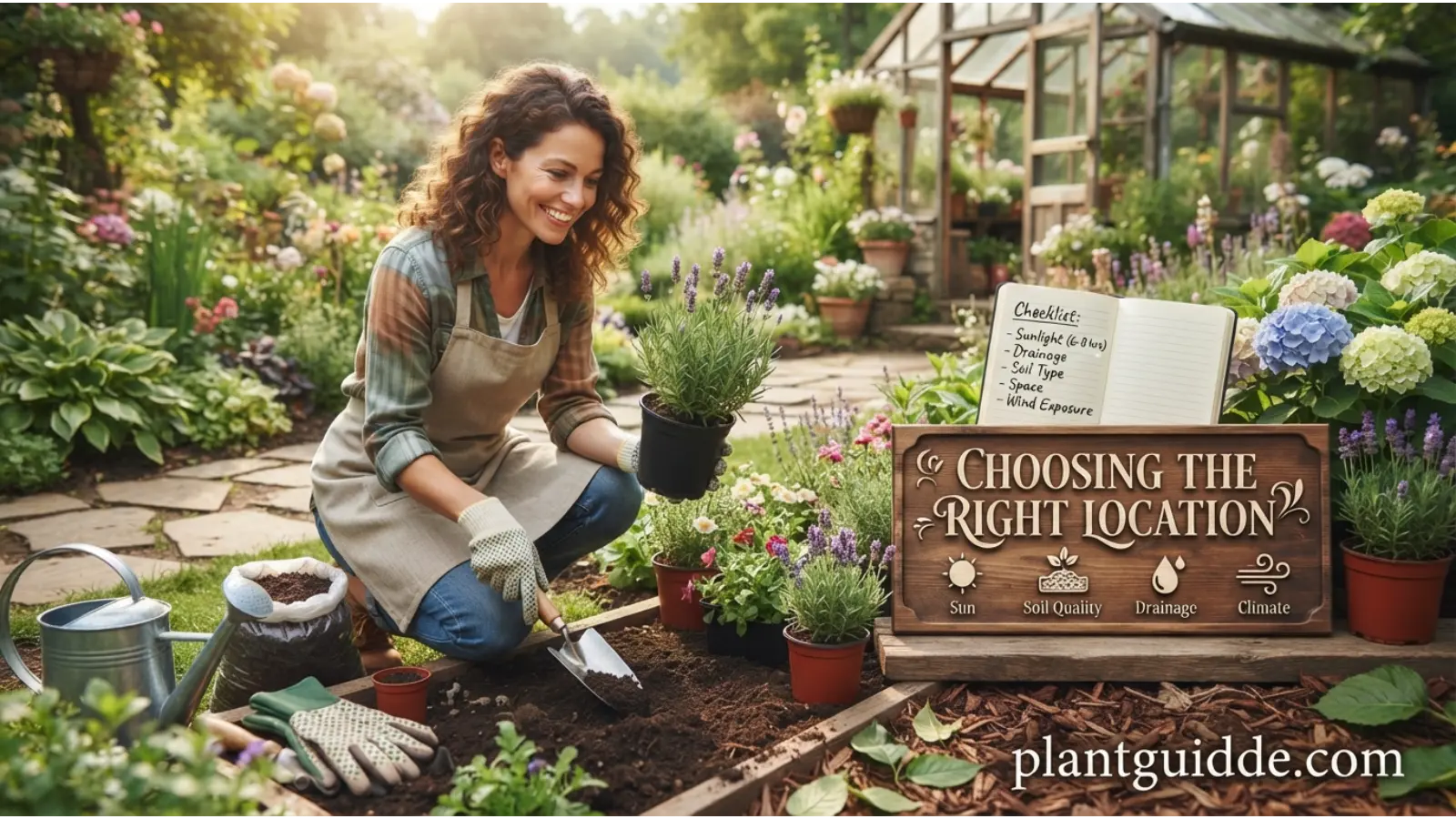
Location is one of the most important parts of successful camellia plant care because these shrubs dislike sudden environmental stress.
A sheltered position with filtered light or partial shade is a good starting point for many varieties. Protection from cold, drying winds is especially useful because wind can damage foliage, flower buds, and open blooms. Camellia japonica is particularly associated with sheltered, shaded conditions.
An east-facing location can sometimes be problematic in climates where freezing temperatures are followed by strong morning sunlight. Rapid thawing of frost-damaged buds can contribute to flower damage.
A position beneath the light canopy of taller trees can work well if the soil remains suitable and the area is not excessively dry.
How much sunlight does a camellia need?
Most camellias perform well with bright filtered light or partial shade rather than intense, exposed afternoon sun.
However, this is not a universal rule.
Established Camellia sasanqua can tolerate considerably more sun than many C. japonica cultivars. Too much intense sun can cause leaf scorch, especially when combined with drought or hot, drying winds.
Camellia plant care your climate has very hot summers, morning sun followed by afternoon protection is often a useful arrangement.
Getting the Soil Right
Camellia plant care there is one soil characteristic you should check before planting a camellia, it is pH.
Camellias are acid-loving plants. Many grow best in acidic soil, with approximately pH 5.5–6.5 suitable for C. sasanqua and many cultivated camellias.
But acidity alone is not enough.
The soil should also:
- Hold enough moisture to prevent repeated drying
- Drain excess water efficiently
- Contain organic matter
- Allow oxygen to reach the roots
- Avoid becoming compacted
A heavy soil that stays saturated for long periods can be more damaging than soil that is slightly too dry for a short period.
What if your garden soil is alkaline?
Do not simply plant a camellia into alkaline soil and expect fertilizer to solve the problem.
Camellia plant care your native soil is strongly alkaline or lime-rich, growing the plant in a large container with suitable acidic compost may be more practical. RHS specifically recommends peat-free ericaceous compost for container-grown camellias.
Before planting, a soil test can tell you whether the problem is actually pH rather than guessing from leaf color alone.
Image Suggestion: A simple visual showing ideal camellia soil structure, acidic pH range, drainage, organic matter, and healthy roots.
How to Water Camellias
Camellias prefer consistent moisture, particularly while they are establishing and during the period when they are forming flower buds.
That does not mean keeping the soil permanently wet.
RHS recommends checking moisture below the surface rather than watering according to a fixed calendar. During summer, soil should not be allowed to remain dry for prolonged periods because this is when plants are developing the following season’s flower buds.
A practical approach is:
- Check the soil several inches below the surface.
- If it is becoming dry, water deeply.
- Allow excess water to drain away.
- Check again rather than automatically watering the next day.
- Increase attention during hot, dry, or windy weather.
Newly planted camellias need more consistent monitoring until their roots become established.
Should you use tap water?
If your tap water is very hard, repeated watering can gradually make conditions less suitable for acid-loving plants.
Where practical, rainwater is preferable for long-term watering in hard-water areas. RHS also recommends avoiding prolonged reliance on hard tap water for camellias.
Fertilizing Camellias
Camellias do not need constant feeding.
The goal is to provide nutrients during active growth without encouraging excessive soft growth at the wrong time of year.
An ericaceous or acid-loving plant fertilizer is generally appropriate. Container-grown camellias can be fed in spring according to the fertilizer label.
Avoid the temptation to keep fertilizing because the plant appears slow.
Excessive or poorly timed fertilizer can create problems rather than more flowers. RHS specifically cautions against feeding later than the end of July because late feeding can contribute to bud drop.
If a camellia has yellow leaves, do not immediately assume it needs more fertilizer. Check the soil pH, root condition, watering pattern, drainage, and light first.
Mulching for Better Moisture Control
Mulch can make camellia care considerably easier, particularly in areas with hot summers.
Apply a layer of organic mulch over the root zone using materials such as:
- Composted bark
- Leaf mold
- Suitable garden compost
- Other well-decomposed organic material
Keep mulch away from direct contact with the main stem.
Mulching helps moderate soil temperature and reduces rapid moisture loss. RHS also recommends organic mulch to help retain moisture around camellias.
The objective is not to create a constantly wet environment. Good mulch works alongside well-drained soil rather than replacing drainage.
Pruning Camellias Without Sacrificing Flowers
Camellias generally do not require regular heavy pruning.
If your plant has a good shape and fits its location, you may only need to remove dead, damaged, diseased, or badly positioned growth.
When shaping is necessary, pruning is usually best done after flowering. This timing matters because camellias form their future flower buds well before the next blooming season.
Heavy pruning can be used in situations where an overgrown plant needs renovation, but recovery can take several seasons and flowering may be reduced temporarily.
A simple pruning method
After flowering:
- Remove dead or damaged branches.
- Remove weak or badly crossing stems.
- Shorten excessively long shoots if necessary.
- Thin crowded growth to improve structure and airflow.
- Avoid removing large amounts of healthy growth unless renovation is genuinely needed.
Do not prune simply because the plant has finished flowering. Many healthy camellias need little more than occasional maintenance.
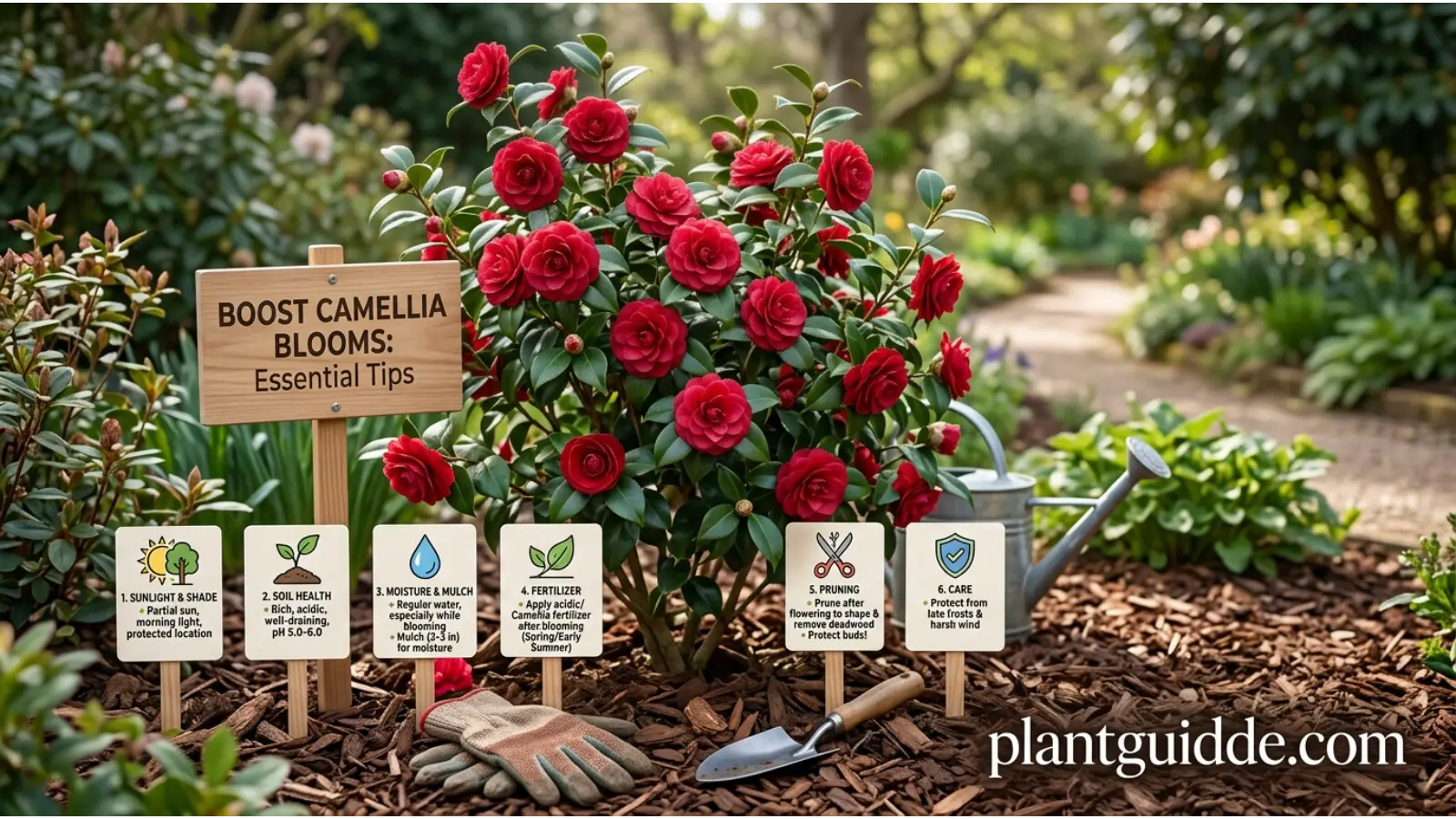
How to Encourage More Camellia Flowers
If a camellia has healthy leaves but produces very few flowers, look at its growing conditions rather than immediately reaching for more fertilizer.
Common factors include:
Insufficient light
Very deep shade can reduce flowering. Camellias generally appreciate bright filtered light, even though many dislike harsh exposure.
Dry conditions during bud development
Prolonged summer dryness can stress the plant while it is producing next year’s flower buds. Consistent moisture is therefore particularly important during this period.
Excessive fertilizer
Too much feeding can encourage vegetative growth without necessarily improving flowering.
Poor pruning timing
Heavy pruning after buds have already formed can remove potential flowers.
Environmental stress
Cold winds, late frost, drought, root problems, and sudden changes in growing conditions can all affect buds and flowers.
Growing Camellias in Containers
Camellias are well suited to containers, particularly when garden soil is alkaline.
Container growing also makes it easier to control the growing medium and drainage.
Use:
- A container with drainage holes
- Quality acidic or ericaceous compost
- A pot large enough to support the root system
- A sheltered position with suitable light
Avoid choosing an enormous container simply to reduce future repotting. Excess unused wet compost can remain around the roots longer than necessary.
As the plant grows, monitor the roots, drainage, and moisture more closely. Containers dry faster than garden soil during hot weather but can also become waterlogged when drainage is poor.
Repotting a Container Camellia
Repot when the root system has substantially filled the existing container or when the growing medium has deteriorated.
A useful time is generally around the beginning of the active growing period, provided local conditions are suitable.
When repotting:
- Choose a container only moderately larger than the existing one.
- Use fresh acidic, free-draining compost.
- Handle the root ball carefully.
- Position the plant at approximately the same depth.
- Water thoroughly after repotting.
- Protect the plant from excessive heat or drying conditions while it settles.
Avoid burying the stem deeper than it was previously planted.
Common Camellia Problems and What They Mean
Camellias often provide clues through their leaves, buds, and flowers.
| Symptom | Possible causes | What to check |
|---|---|---|
| Yellow leaves | Poor nutrition, unsuitable pH, root stress, excess water | Soil pH, drainage, roots, feeding |
| Brown leaf edges | Drought, wind, heat, root problems | Moisture and exposure |
| Buds dropping | Dry soil, frost, stress, poor conditions | Watering, weather, location |
| Few flowers | Too much shade, stress, pruning, poor bud development | Light and previous-season care |
| Wilting despite wet soil | Root damage or poor drainage | Root zone and drainage |
| Black or damaged flowers | Weather or flower disease | Flower condition and airflow |
| Weak growth | Poor light, root problems, nutrient issues | Light, pH, roots and soil |
A symptom rarely identifies one problem with absolute certainty. For example, yellow leaves can result from several different causes, so treating every yellow leaf with fertilizer is a poor diagnostic strategy.
Why Are Camellia Leaves Turning Yellow?
Start by checking the soil.
If the plant is sitting in saturated soil, root stress may be preventing normal nutrient uptake. If the soil is alkaline, nutrients such as iron may also become less available to the plant.
RHS notes that acidic fertilizers and chelated iron or trace elements can help nutrient uptake where appropriate.
Before applying supplements, check:
- Soil pH
- Drainage
- Watering frequency
- Root condition
- Light exposure
- Recent fertilization
Correcting the underlying condition is more useful than repeatedly treating the symptom.
Why Are Camellia Buds Falling Off?
Bud drop is one of the most frustrating camellia problems because the plant can appear healthy until the flowers fail to open.
Possible causes include:
- Prolonged dryness
- Sudden environmental stress
- Frost or cold exposure
- Poor root conditions
- Excessive fertilizer
- Incorrect pruning
- Other pest or disease problems
Summer moisture deserves particular attention because camellias develop flower buds for the following season during this period.
If your camellia repeatedly drops buds, review what happened during the months before flowering rather than focusing only on the week when the buds fell.
Why Is My Camellia Not Flowering?
A camellia that grows leaves but rarely flowers may be receiving inadequate light or experiencing stress during bud development.
Check whether:
- The plant is in very deep shade.
- The soil dries excessively during summer.
- Roots remain wet for long periods.
- The plant was heavily pruned at the wrong time.
- It receives excessive fertilizer.
- Flower buds are exposed to damaging weather.
Some varieties also simply have different flowering seasons, so identify the cultivar before assuming its flowering time is abnormal. C. sasanqua, for example, commonly flowers in autumn and winter, while C. japonica generally flowers later in winter and spring.
Pests and Diseases to Watch For
Camellias can encounter pests such as aphids, scale insects, and vine weevil, while diseases can include Phytophthora root rot, camellia gall, leaf blight, petal blight, and other problems depending on growing conditions.
Good prevention begins with the basics:
- Avoid constantly wet soil.
- Improve drainage where necessary.
- Provide suitable air circulation.
- Remove badly affected plant material when appropriate.
- Inspect leaves and stems regularly.
- Avoid unnecessary stress from drought or extreme exposure.
If you notice persistent decline, inspect the roots rather than treating only the visible foliage.
Camellia Plant Care Through the Seasons
Spring
Spring is often the main transition period after flowering for many camellias.
Focus on:
- Light pruning after flowering
- Mulching
- Spring feeding
- Monitoring new growth
- Maintaining consistent moisture
This is also a useful time to evaluate whether the plant has outgrown its position.
Summer
Summer moisture is particularly important because the plant is preparing the following season’s flowers.
Monitor the soil more frequently during:
- Heat waves
- Extended dry weather
- Strong winds
- Container growing
Do not let a newly planted camellia repeatedly dry out.
Autumn
Autumn is an important season for Camellia sasanqua, which can begin flowering during this period.
Maintain even moisture and avoid unnecessary disturbance while the plant is developing or displaying flowers.
Winter
Protect vulnerable plants from severe exposure, especially cold, drying winds.
For autumn- and winter-flowering camellias, flower protection becomes particularly important. Some C. sasanqua types are slightly less hardy than spring-flowering camellias, depending on the cultivar and climate.
Common Camellia Care Mistakes
Treating camellias like ordinary houseplants
Their glossy leaves can make them look tough, but camellias have specific soil and moisture requirements.
Watering on a fixed schedule
Weather, soil, plant size, and container conditions all affect how quickly the root zone dries.
Ignoring soil pH
A camellia can struggle even when you are providing enough fertilizer if the soil chemistry is unsuitable.
Planting in full, exposed afternoon sun
Some varieties tolerate sun better than others, but intense exposure can increase heat and moisture stress.
Pruning immediately after noticing overgrowth
Always consider flowering time before cutting. Removing growth at the wrong point in the season can remove future flower buds.
Keeping the soil constantly wet
Moist soil is not the same as waterlogged soil. Roots need oxygen as well as water.
A Simple Camellia Care Routine
If you want a straightforward routine, use this checklist:
Every few days during hot weather
- Check soil moisture.
- Look for wilt, scorch, or unusual leaf changes.
- Inspect the plant for pests.
During active growth
- Maintain consistent moisture.
- Apply appropriate acid-loving fertilizer according to the label.
- Keep mulch maintained.
After flowering
- Deadhead if desired.
- Remove damaged growth.
- Prune only when necessary.
Before major seasonal changes
- Check whether the plant is protected from strong wind.
- Inspect drainage.
- Review whether the soil remains suitably acidic.
This approach is more reliable than trying to care for every camellia according to a universal watering calendar.
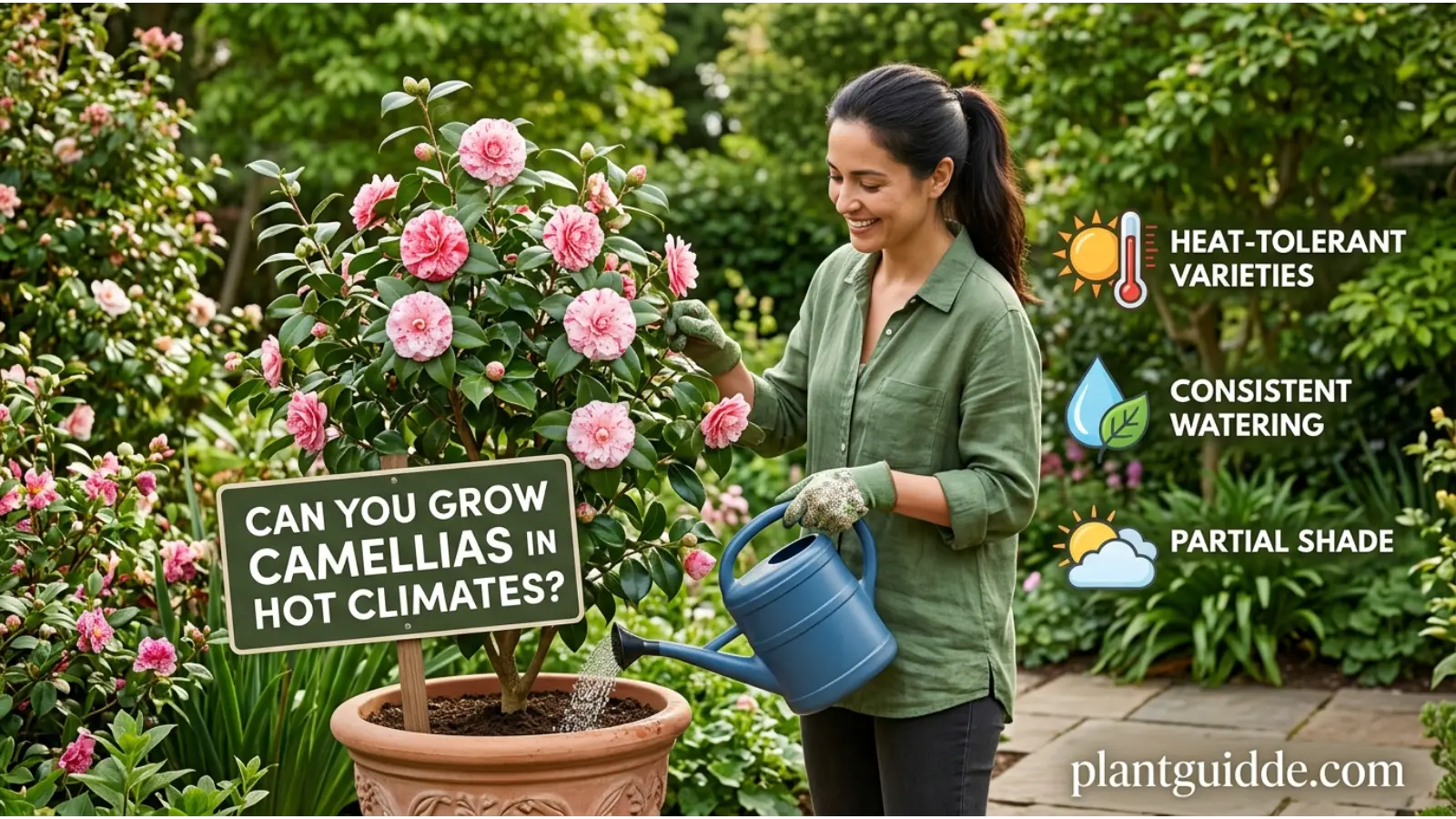
Can You Grow Camellias in Hot Climates?
Yes, but the choice of cultivar and planting location becomes more important.
In warmer regions, provide protection from intense afternoon heat, maintain consistent soil moisture, and avoid exposed positions where hot, dry winds can rapidly dehydrate foliage.
Camellia sasanqua may offer greater sun tolerance once established than many C. japonica plants, but local climate, cultivar, and water availability still matter.
For particularly hot locations, afternoon shade and a well-mulched root zone can help reduce environmental stress.
FAQs:
How often should you water a camellia?
Water when the soil is beginning to dry rather than following a strict schedule. Camellias prefer consistent moisture, especially during summer, but their roots should not remain waterlogged. Newly planted plants need closer monitoring while they establish.
Do camellias like full sun or shade?
Many camellias prefer partial or filtered shade, particularly Camellia japonica. Camellia sasanqua generally tolerates more sun once established. In hot climates, protection from intense afternoon sun can help reduce stress.
What type of soil is best for camellias?
Camellias generally prefer acidic, organic-rich soil that retains moisture while draining excess water. A pH around 5.5–6.5 suits many camellias, although the exact preference can vary by cultivar.
When should camellias be pruned?
Prune camellias after flowering when pruning is necessary. Avoid unnecessary heavy pruning because camellias can take considerable time to recover and incorrect timing can reduce future flowering.
Why does my camellia have buds but no flowers?
Buds may fail because of drought, frost, environmental stress, poor root conditions, excessive fertilizer, insufficient light, or other problems. Check the plant’s growing conditions over the months leading up to flowering rather than focusing only on the buds themselves.
Conclusion
Successful camellia plant care comes down to maintaining the right balance: acidic, well-drained soil; steady moisture; suitable light; protection from harsh exposure; and careful pruning after flowering.
The most useful habit is to observe the plant and its root environment together. If the soil stays wet, leaves yellow, buds drop, or flowering declines, investigate the growing conditions before adding more fertilizer or water. With the right site and consistent care, camellias can reward you with glossy evergreen foliage and impressive seasonal flowers for many years.

Asad Mumtaz is a dedicated plant enthusiast and gardening writer with a passion for helping people care for their plants successfully. He specializes in plant care guides, indoor gardening, and practical growing tips for all skill levels. His content focuses on making gardening simple, enjoyable, and rewarding. Through his work, Asad shares reliable advice to help readers create thriving green spaces.