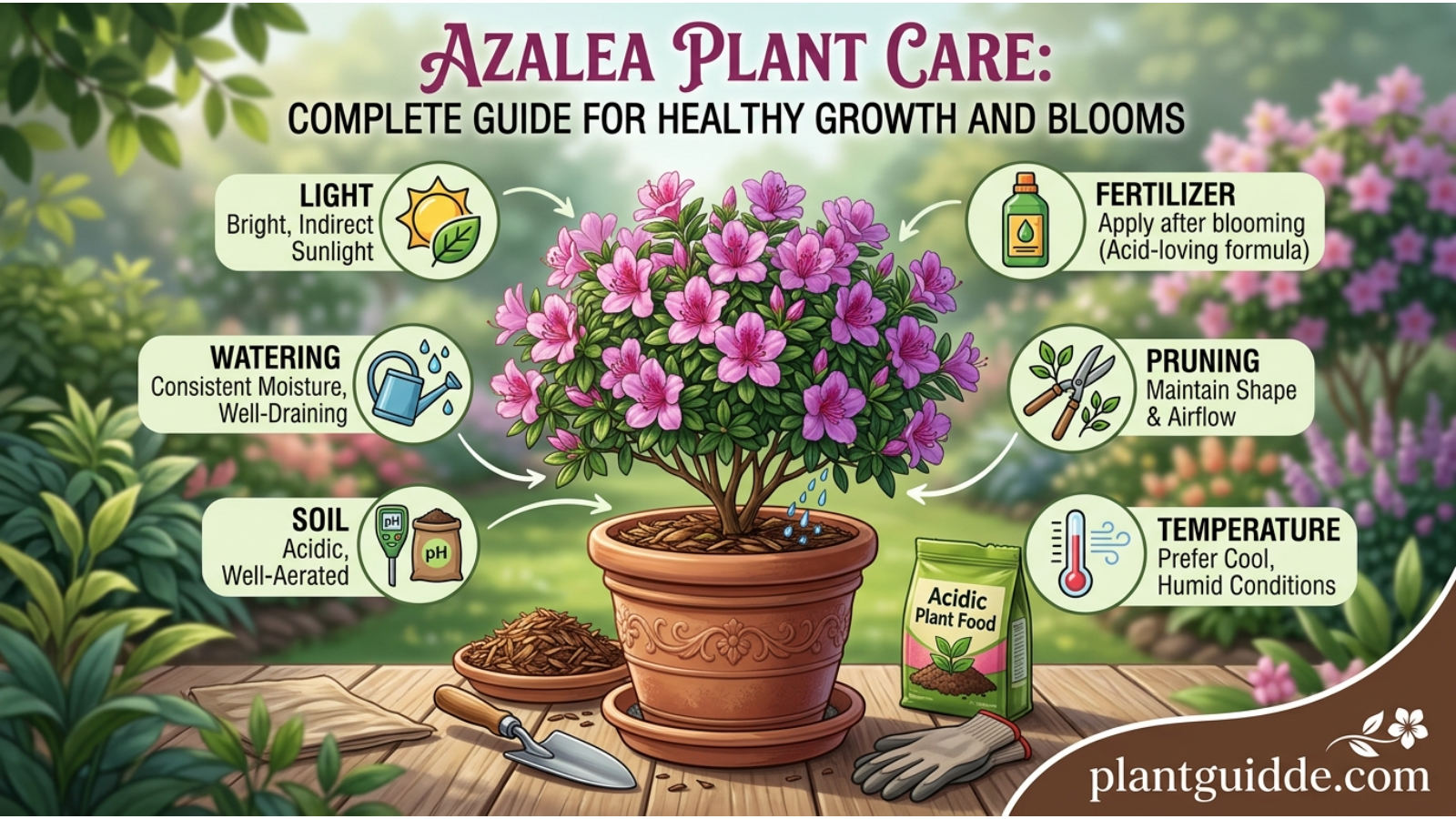
Azalea plant care are prized for their dense foliage and impressive flowers, but they can be surprisingly sensitive when their growing conditions are wrong. A plant may look healthy at the nursery and then begin dropping leaves, developing yellow foliage, wilting, or losing flower buds after it comes home.
The key to successful azalea plant care is understanding that azaleas are not drought-tolerant plants that can be watered occasionally and forgotten. Their fine roots prefer an acidic, evenly moist growing environment with good drainage. At the same time, constantly saturated soil can damage those roots and lead to yellowing and decline.
Azalea plant care you are growing an azalea outdoors in the garden or keeping a potted azalea indoors, the goal is to create stable conditions rather than constantly correcting problems after they appear.
Quick Answer
Azalea plant care comes down to keeping the roots consistently moist but never waterlogged, providing bright filtered light or partial shade, and using acidic, well-draining soil. Azaleas generally perform best when protected from intense heat and drying conditions. Indoor azaleas need especially careful watering, cool temperatures, humidity, and bright light without scorching sun.
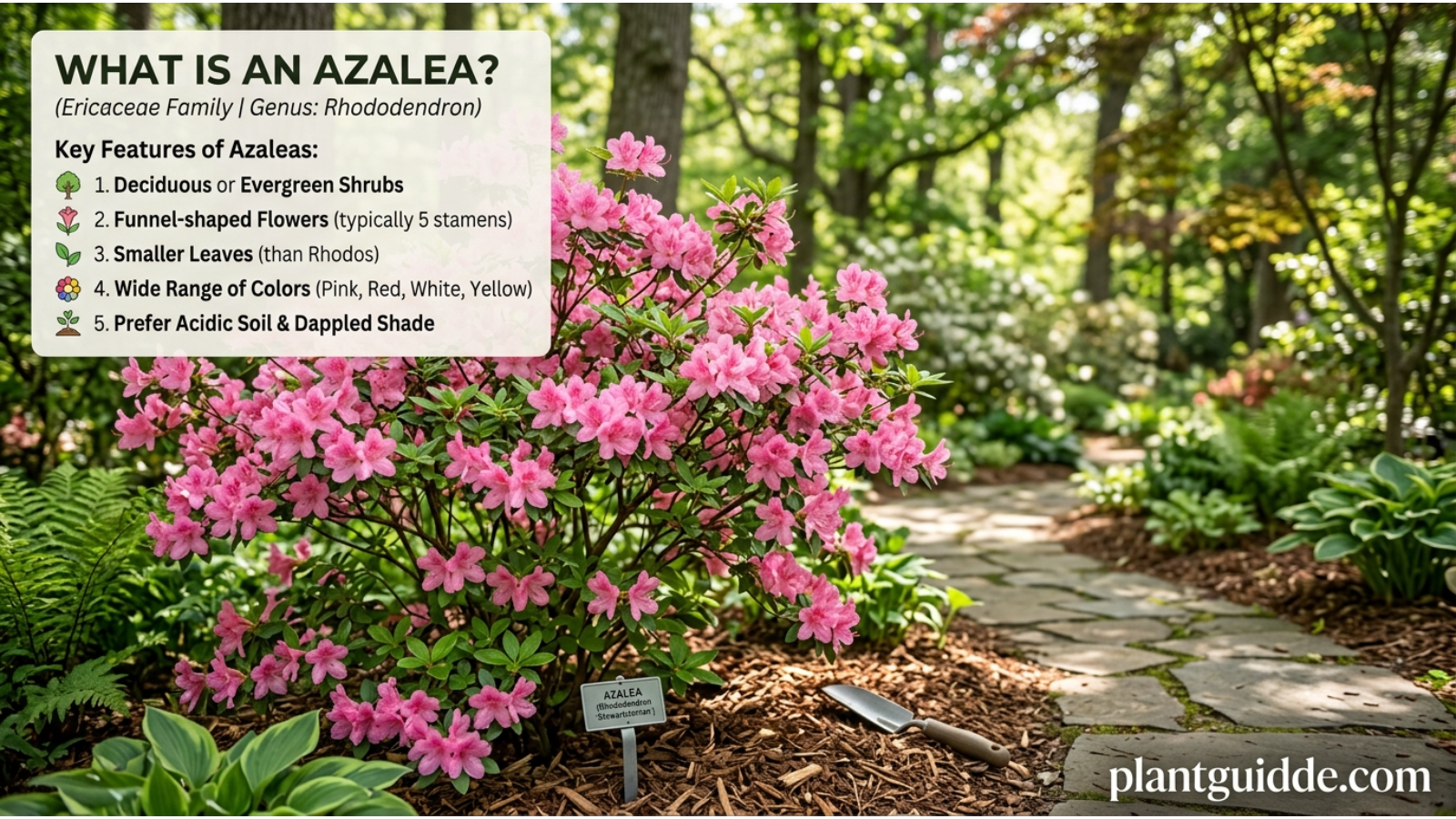
What Is an Azalea?
Azaleas are flowering plants in the genus Rhododendron and family Ericaceae. They may be evergreen or deciduous, depending on the type. Their flowers can appear in shades of white, pink, red, orange, yellow, and related colors.
Garden azaleas and florist-style indoor azaleas are not always interchangeable. Many indoor azaleas sold as flowering houseplants are cultivars of Rhododendron simsii. These plants are frost-tender and are typically grown in cool, bright, humid conditions rather than treated like ordinary warm-room houseplants.
Outdoor azaleas, meanwhile, can vary considerably in size, hardiness, flowering time, and sunlight tolerance.
This distinction matters because a care routine that works for a garden azalea may not work well for a compact indoor azalea purchased while it is blooming.
Azalea Plant Care Requirements at a Glance
| Care factor | What azaleas generally prefer |
|---|---|
| Light | Bright filtered light, dappled shade, or partial shade |
| Soil | Acidic, humus-rich, well-draining soil |
| Soil moisture | Consistently moist but not waterlogged |
| Water | Thorough watering when needed; avoid prolonged dryness |
| Humidity | Moderate to high humidity, especially indoors |
| Temperature | Cool to moderate conditions are generally preferable |
| Fertilizer | Light feeding during active growth when needed |
| Pruning | Usually light pruning after flowering |
| Repotting | Use an acidic/ericaceous growing medium |
| Common problem | Water stress, poor drainage, alkaline conditions, heat, pests |
Exact requirements vary among azalea species and cultivars, so the plant’s type and local climate should always be considered.
How Much Light Does an Azalea Need?
Azaleas generally perform well in bright filtered light, dappled shade, or partial shade.
Outdoor plants often benefit from protection from the strongest afternoon sun, particularly in hot climates. Some deciduous azaleas tolerate more sun, but moisture requirements increase as exposure becomes stronger. RHS plant profiles commonly recommend partial shade or light shade for many azalea types.
Indoor azalea light
Place a potted azalea near a bright window where it receives plenty of natural light but is protected from intense, scorching direct sun.
A bright east-facing window can work well. A bright west- or south-facing location may require a sheer curtain or some distance from the glass if the sunlight becomes intense.
Avoid placing an indoor azalea directly beside:
- A hot window exposed to strong afternoon sun
- A radiator or heater
- An air-conditioning vent
- A hot, dry appliance
- A location where temperature changes are extreme
Indoor azaleas can deteriorate when exposed to prolonged hot, dry conditions.
How to Water an Azalea
Watering is one of the most important parts of azalea plant care.
Azaleas prefer their growing medium to remain evenly moist, but their roots should not sit in stagnant water. Letting the root ball become completely dry can cause wilting, leaf drop, and flower-bud problems, while prolonged waterlogging can impair the roots and produce similar symptoms.
Instead of following a rigid calendar, check the growing medium.
A practical watering method
- Check the top layer of the growing medium.
- If it is beginning to dry but the root ball is still slightly moist, water thoroughly.
- Allow excess water to drain completely.
- Empty standing water from a saucer or decorative container.
- Check the plant again before the next watering.
The frequency will change with temperature, light, pot size, soil composition, and season.
What if the azalea becomes completely dry?
Indoor azaleas can become difficult to re-wet once their growing medium has dried severely.
RHS recommends soaking a dry indoor azalea’s compost in water until air bubbles stop rising, followed by thorough drainage. Do not leave the plant submerged for a prolonged period because saturated roots can lose access to oxygen.
What Water Is Best for Azaleas?
Water quality can matter because azaleas prefer acidic growing conditions.
If your tap water is hard or alkaline, repeated watering can gradually work against the acidic conditions these plants prefer. RHS specifically recommends rainwater for ericaceous plants and notes that hard tap water can be problematic for acid-loving plants.
Azalea plant care suitable rainwater or another appropriate low-alkalinity water source is available, it can be useful for azaleas, particularly when growing them in containers.
Do not automatically add acidifying products to every watering. Changing soil chemistry without knowing the existing pH can create a different problem. If an azalea repeatedly develops chlorosis or performs poorly despite good light and watering, testing the growing medium is more useful than guessing.
The Best Soil for Azaleas
Azaleas need acidic, humus-rich, well-draining soil.
An ordinary alkaline garden soil may not provide the conditions they need. Many azaleas are classified as acid-loving or ericaceous plants, meaning their root environment should remain acidic.
For containers, use a quality ericaceous or acid-loving plant potting mix rather than ordinary general-purpose compost.
Good drainage is equally important. Acidic soil does not mean permanently wet soil.
The ideal combination is:
- Acidic growing medium
- Good organic matter
- Reliable drainage
- Consistent moisture
- Adequate air around the roots
Avoid compacted soil that remains saturated long after watering.
How to Repot an Azalea
Repot an azalea when the container has become restrictive, the growing medium has deteriorated, or the plant has clearly outgrown its pot.
Choose a container with drainage holes and use an appropriate acidic potting mix.
Do not automatically move the plant into a dramatically larger pot. Excess soil around a small root system can remain wet for too long, increasing the risk of root problems.
When repotting:
- Water the plant appropriately before the process if the root ball is extremely dry.
- Remove it carefully from the existing container.
- Inspect the roots for obvious damage or decay.
- Move it into fresh acidic potting mix.
- Position it at approximately the same depth.
- Water thoroughly.
- Allow excess water to drain away.
For indoor azaleas, RHS recommends an ericaceous peat-free compost when repotting.
Humidity and Temperature for Indoor Azaleas
Indoor azaleas are often more demanding than their appearance suggests.
A flowering azalea kept in a warm, dry room may decline even when the soil is being watered correctly. RHS recommends a cool, humid atmosphere with plenty of light for indoor azaleas and notes that prolonged hot, dry conditions can cause deterioration.
A practical indoor location is therefore:
- Bright but not scorching
- Cool rather than excessively hot
- Away from heating vents
- Protected from sudden temperature changes
- Humid enough to reduce excessive drying
A pebble tray can increase local humidity, provided the pot itself is not sitting directly in standing water. Grouping plants together can also increase humidity around their foliage.
Humidity, however, should not be used as a substitute for proper root care.
How to Fertilize Azaleas
Azaleas generally do not need aggressive fertilization.
If the plant is growing actively and the growing medium is appropriate, a fertilizer formulated for acid-loving plants can be useful. Follow the product’s directions rather than assuming that more fertilizer will produce more flowers.
Overfertilizing can damage roots and create unnecessary salt buildup, especially in containers.
For indoor azaleas, RHS notes that light feeding during active growth can be useful, while extensive feeding is generally unnecessary.
Azalea plant care an azalea has yellow leaves, do not immediately assume it needs fertilizer. Yellowing can also result from waterlogging or iron availability problems associated with alkaline growing conditions.
How to Prune an Azalea
Azaleas usually require relatively little pruning.
The safest general approach is to prune after flowering, particularly when you need to maintain shape or remove unwanted growth. Many azaleas form flower buds for the following season relatively soon after their current flowering period, so heavy or poorly timed pruning can remove developing buds.
For routine maintenance:
- Remove dead or damaged branches.
- Remove weak or badly positioned growth.
- Lightly shape the plant after flowering.
- Avoid unnecessary severe pruning.
- Do not repeatedly shear the plant simply to maintain a tight shape.
RHS plant profiles commonly recommend minimal or light pruning after flowering for azaleas.
How to Encourage More Azalea Flowers
If an azalea produces healthy leaves but few flowers, look at the overall growing conditions rather than simply adding fertilizer.
Check these factors:
Light: Too much shade can reduce flowering, while intense heat and sun can stress the plant.
Water: Drought stress can interfere with growth and flower-bud development.
Pruning: Pruning at the wrong time can remove future flower buds.
Temperature: Indoor azaleas generally perform better in cool conditions than in hot, dry rooms.
Plant health: Root problems, pests, or poor soil conditions can reduce overall flowering.
Deciduous azaleas may need some sunlight to develop their best flower and autumn foliage coloration, while many evergreen types prefer partial or dappled shade.
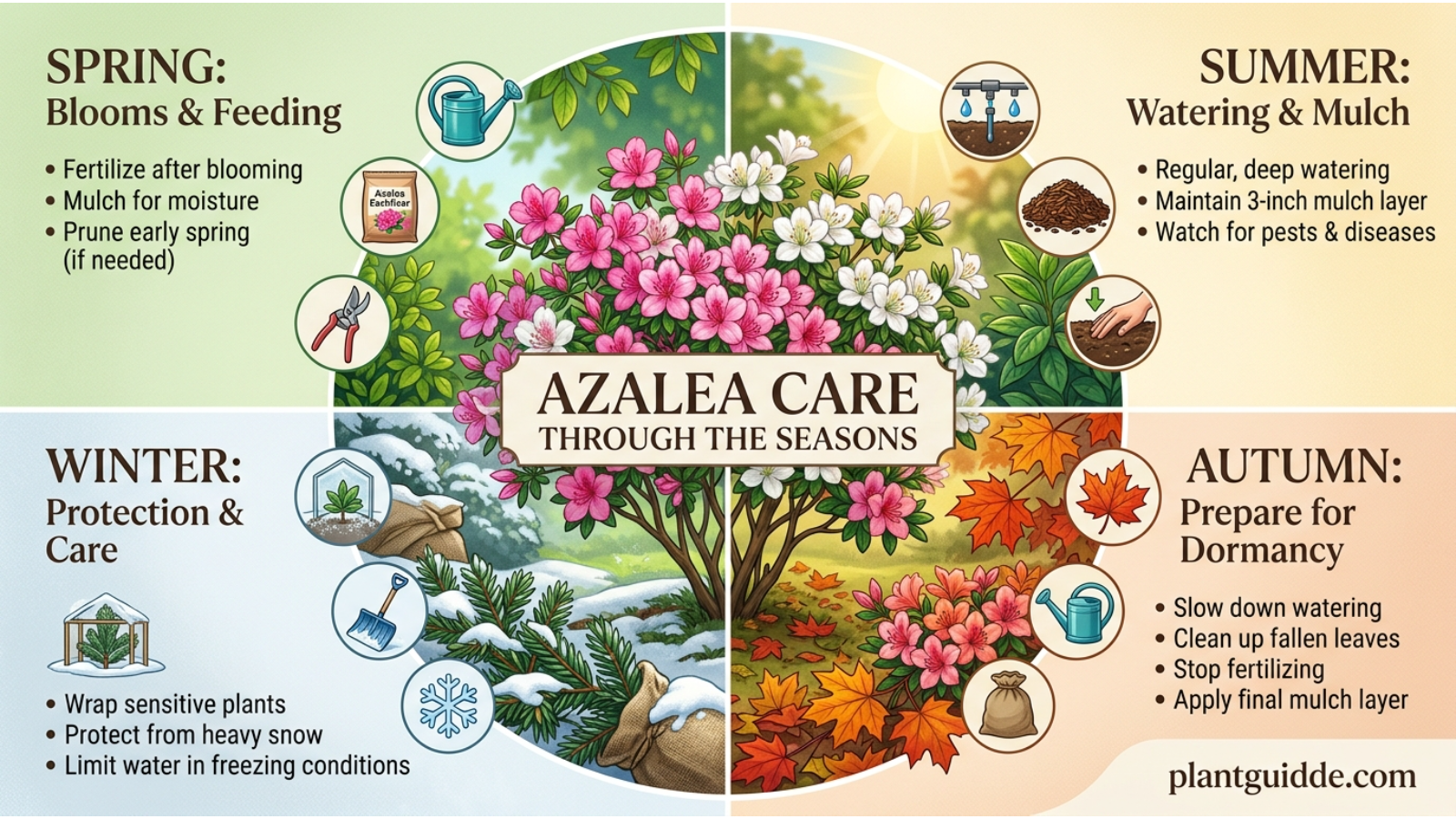
Azalea Care Through the Seasons
Spring
Spring is often an important flowering and growth period.
Keep the soil consistently moist, monitor new growth for pests, and avoid allowing the plant to dry out during warm spells.
After flowering is an appropriate time to perform necessary light pruning on many azaleas.
Summer
Summer heat can increase water loss.
Outdoor azaleas may need more frequent monitoring, especially when grown in containers. Mulching the surrounding soil with suitable organic material can help moderate moisture fluctuations while also contributing organic matter over time.
Avoid allowing container-grown plants to become completely dry.
Autumn
Reduce unnecessary disturbance as temperatures change.
For indoor azaleas that have spent summer outdoors, transition them before frost where relevant. Indoor Rhododendron simsii cultivars are frost-tender and should not be treated like hardy outdoor shrubs.
Winter
Indoor azaleas should remain in a bright, cool location rather than a hot room.
Continue monitoring moisture. Do not assume winter means the plant should be allowed to dry completely.
Outdoor requirements depend heavily on the particular cultivar and local climate.
Azalea Leaves Turning Yellow
Yellow leaves can have several causes, so the pattern and growing conditions matter.
Common possibilities include:
- Soil staying wet for too long
- Poor drainage
- Alkaline growing conditions
- Nutrient availability problems
- Root stress
- Natural aging of older leaves
RHS specifically notes that yellowing can occur when the growing medium remains sodden and that iron deficiency can be associated with alkaline potting materials or hard water.
Before adding iron or fertilizer, inspect the roots and growing medium.
If the soil is constantly wet, correcting drainage may be more important than adding nutrients.
Azalea Leaves Dropping
Leaf drop does not always mean the plant is dying.
Indoor azaleas can drop leaves after experiencing drought stress or prolonged waterlogging. Both conditions can interfere with the plant’s ability to maintain healthy foliage.
Work backward from the symptoms.
Ask:
- Did the soil become completely dry?
- Has it remained wet for many days?
- Has the plant recently moved?
- Is the room unusually hot?
- Is the plant near a heater or air conditioner?
- Has the light changed significantly?
- Are roots showing signs of decay?
Correcting the underlying stress is more effective than simply removing damaged leaves.
Why Are Azalea Buds Falling Off or Not Opening?
Flower buds can fail when the plant experiences unfavorable conditions, particularly drought or hot, dry air.
Indoor azaleas can be especially sensitive because flowering plants are often purchased in peak bloom and then moved from carefully controlled nursery conditions into a much warmer home.
If buds are present but fail to open:
- Check that the growing medium has not dried out.
- Move the plant away from intense heat.
- Provide bright light without scorching sun.
- Improve humidity when the air is very dry.
- Avoid sudden environmental changes.
RHS notes that warm, dry atmospheres can interfere with bud opening and that drought can cause buds to fail to develop properly or fall before opening.
Common Azalea Plant Care Mistakes
Watering on a fixed schedule
Watering every Monday or every three days regardless of conditions is unreliable.
Temperature, light, pot size, soil, and season all affect how quickly moisture is lost.
Letting the soil dry completely
Azaleas are not good candidates for prolonged drought cycles.
If the plant repeatedly dries out, foliage and flower buds can suffer.
Keeping the roots constantly wet
The opposite extreme is equally damaging.
Poor drainage can leave roots oxygen-starved and contribute to yellow leaves and decline.
Using alkaline soil
An azalea planted in unsuitable alkaline soil may struggle even when watering and sunlight appear correct.
Use an acidic growing medium instead.
Keeping an indoor azalea in excessive heat
A warm living room may feel comfortable to people but can be stressful for a cool-loving indoor azalea.
Move the plant away from heaters and hot, dry areas.
Pruning at the wrong time
Heavy pruning after flower buds have begun developing can reduce the next flowering display.
Assuming every azalea has identical requirements
Evergreen indoor azaleas and outdoor deciduous azaleas can have very different environmental tolerances.
Identify the type before changing its care routine.
Azalea Pests and Diseases
Azaleas can be affected by pests including aphids, scale insects, leafhoppers, whiteflies, caterpillars, and other insects. RHS also lists several fungal and root-related diseases among potential problems.
Inspect plants regularly, particularly:
- New shoots
- Leaf undersides
- Flower buds
- Branch junctions
- Areas with distorted or discolored growth
Early detection makes management much easier.
If leaves suddenly wilt while the soil is already wet, do not assume the plant simply needs more water. Root damage can produce wilting because damaged roots cannot supply foliage effectively.
Can Azaleas Grow Indoors?
Yes, but not every azalea is equally suited to permanent indoor growing.
Florist azaleas such as Rhododendron simsii cultivars can be maintained as potted plants when given appropriate conditions. They prefer bright light, cool temperatures, humidity, and consistently moist but well-drained growing media.
The biggest indoor challenge is usually environmental stress.
A plant that was grown in cool, humid commercial conditions may struggle when placed beside a heating vent in a dry room.
If your indoor azalea is declining, evaluate the room before assuming the plant needs more fertilizer.
Can Azaleas Grow in Containers?
Yes. Azaleas can perform well in containers when the potting medium is acidic and drainage is reliable.
Container growing can actually make soil conditions easier to control because you can choose the growing medium rather than trying to modify unsuitable garden soil.
For container azaleas:
- Use an acidic/ericaceous mix.
- Choose a pot with drainage holes.
- Avoid an excessively large container.
- Monitor moisture frequently during hot weather.
- Protect the roots from severe temperature swings.
- Repot when the root system or growing medium requires it.
Container plants generally dry faster than plants growing in the ground, so watering should be based on actual moisture rather than a fixed routine.
Azalea Care for Hot Climates
Hot climates require extra attention because azaleas generally prefer cooler root conditions and protection from intense heat.
If summers are hot:
- Provide morning sun and afternoon protection where appropriate.
- Use partial shade during the strongest heat.
- Monitor container moisture closely.
- Avoid dark containers sitting in extreme direct sun if they become excessively hot.
- Keep roots evenly moist without creating waterlogged conditions.
- Protect plants from hot, drying winds.
The exact amount of sunlight an azalea can tolerate varies by species and cultivar. Some deciduous types tolerate more sun than many evergreen varieties, particularly when adequate moisture is maintained.
Are Azaleas Toxic to Pets?
Yes. Azaleas are considered toxic to dogs, cats, and horses.
The ASPCA identifies Rhododendron species, including azaleas, as containing grayanotoxin and lists signs such as vomiting, diarrhea, weakness, and potentially serious cardiovascular effects.
If pets have access to your garden or houseplants, keep azaleas where they cannot chew or ingest the foliage or flowers. If ingestion occurs, contact a veterinarian or appropriate animal poison service promptly.
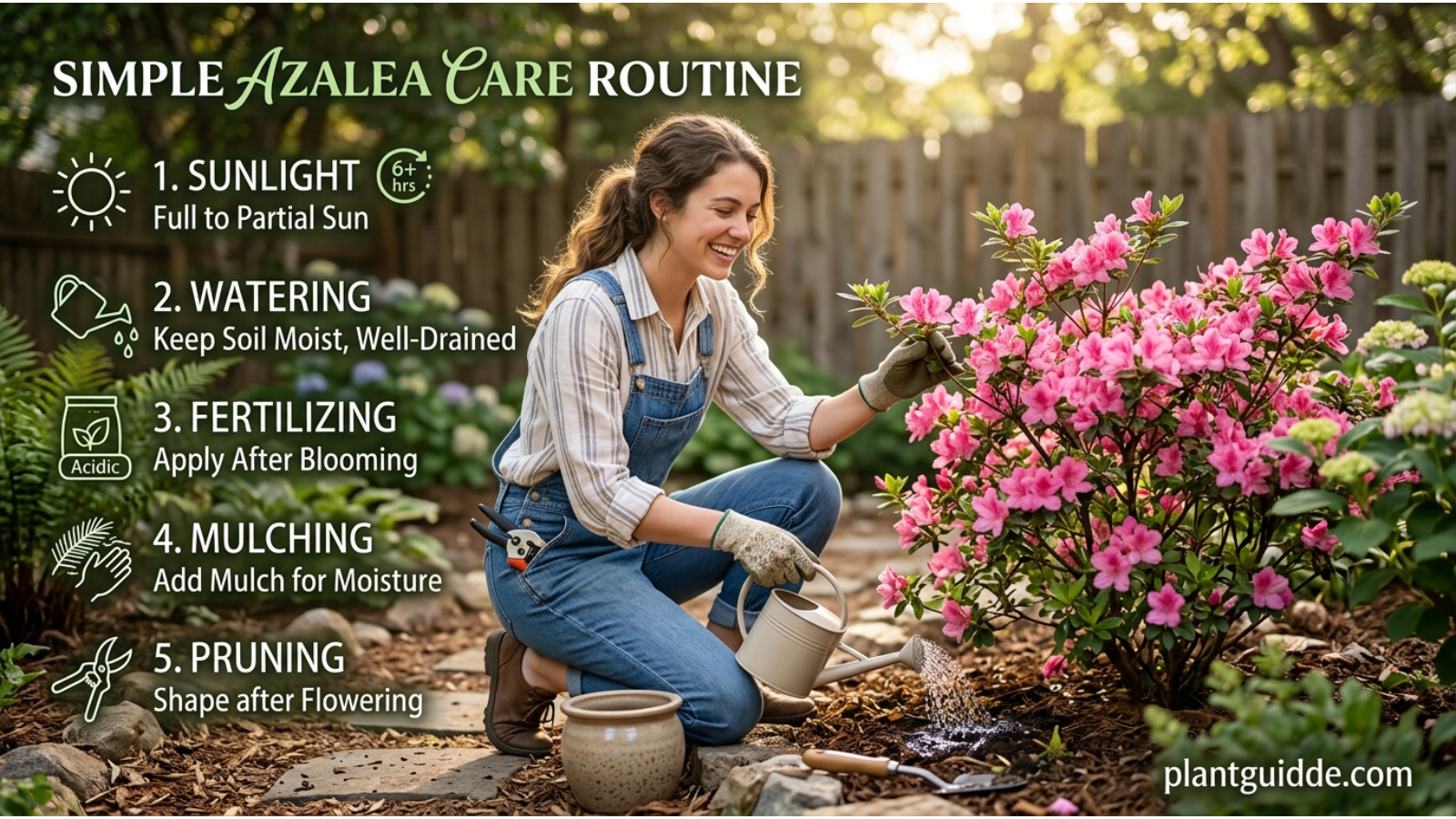
A Simple Azalea Care Routine
For most gardeners, a simple routine works better than constantly changing the plant’s environment.
Once or twice a week: Check soil moisture rather than automatically watering.
Weekly: Inspect leaves, shoots, buds, and stems for pests or unusual changes.
During active growth: Monitor new growth and provide appropriate light and, when necessary, light fertilizer.
After flowering: Remove spent flowers and perform only the pruning necessary to maintain shape.
Throughout the year: Keep the root environment acidic, moist but well drained, and protected from stressful extremes.
The most important habit is observation. An azalea often shows problems in its leaves and flowers before the root system is visibly damaged.
FAQs:
How often should you water an azalea?
Water when the growing medium is beginning to dry, rather than following a strict calendar. Keep the root zone consistently moist but never leave the plant sitting in water. Indoor azaleas should not be allowed to dry completely.
Do azaleas need full sun or shade?
Many azaleas perform best in partial, dappled, or filtered shade. Some deciduous varieties tolerate more sun, but intense heat can increase moisture stress. The ideal exposure depends on the species or cultivar.
What is the best soil for azaleas?
Use an acidic, humus-rich, well-draining growing medium. Container-grown azaleas generally do well in an ericaceous or acid-loving plant potting mix.
Why is my azalea losing leaves?
Leaf drop can follow drought, excessive moisture, root stress, or unsuitable indoor conditions. Check both the moisture level and the environment before deciding what treatment is needed.
Can azaleas be grown indoors year-round?
Some indoor azaleas, particularly Rhododendron simsii cultivars, can be maintained as potted plants, but they require bright light, cool conditions, humidity, and consistent moisture. They are more demanding than many conventional houseplants.
Conclusion
Successful azalea plant care is less about complicated routines and more about maintaining the right root environment. Give the plant acidic, well-draining soil, consistent moisture, suitable light, and protection from excessive heat and drying conditions.
If your azalea begins showing yellow leaves, wilting, leaf drop, or failed flower buds, look first at water, drainage, soil acidity, light, and temperature. Correcting those conditions usually addresses the underlying problem more effectively than simply adding fertilizer or watering more often.
For long-term growth, focus on keeping conditions stable and learning to respond to what the plant is showing you. That approach will help an azalea remain healthy, leafy, and capable of producing the abundant blooms that make it such a rewarding flowering plant.

Asad Mumtaz is a dedicated plant enthusiast and gardening writer with a passion for helping people care for their plants successfully. He specializes in plant care guides, indoor gardening, and practical growing tips for all skill levels. His content focuses on making gardening simple, enjoyable, and rewarding. Through his work, Asad shares reliable advice to help readers create thriving green spaces.