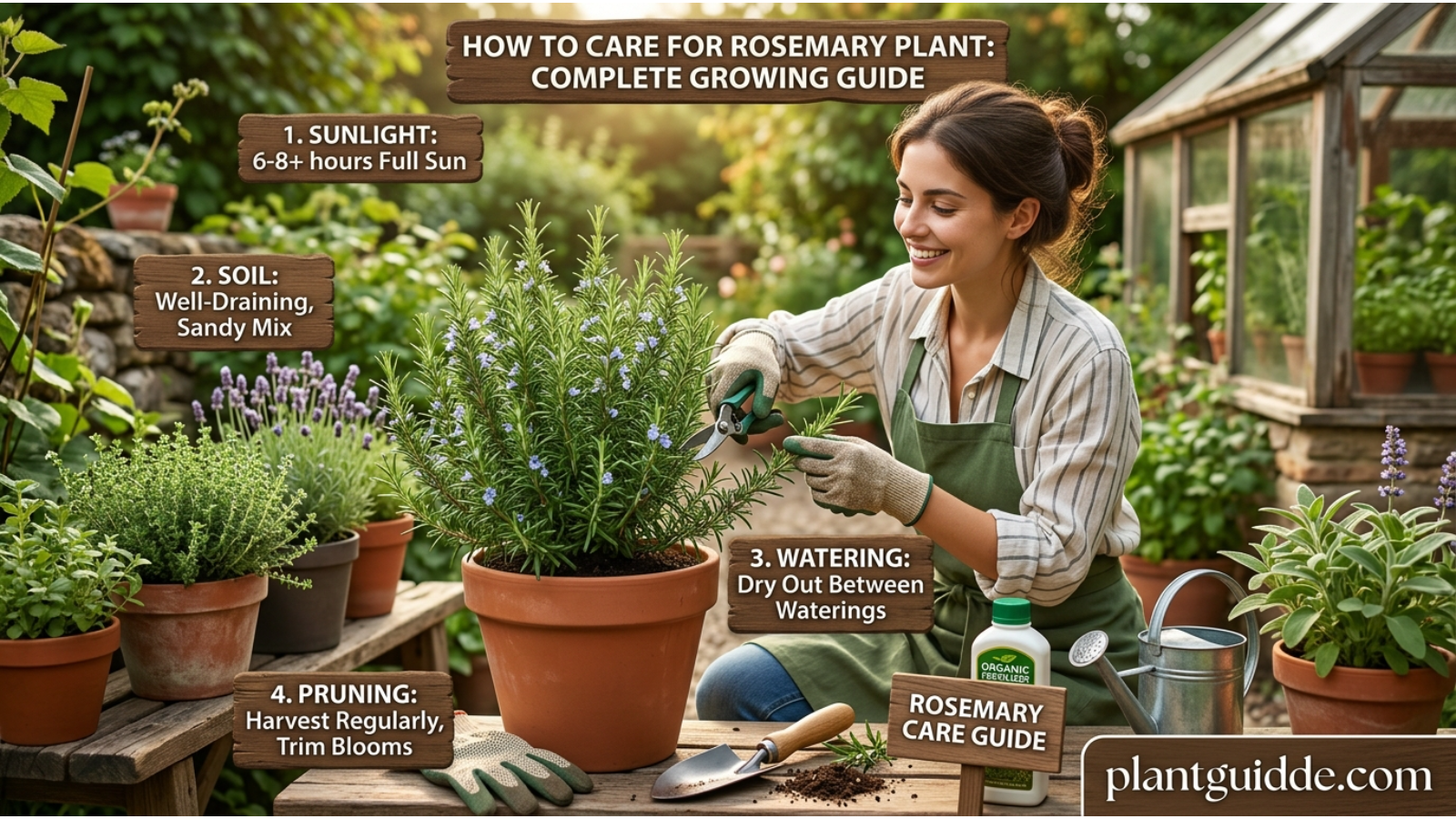
Care for rosemary plant (Salvia rosmarinus) is one of those herbs that can be surprisingly easy to grow once you understand what it actually prefers. Its fragrant, needle-like foliage and woody stems make it useful both as a culinary herb and as an attractive container or garden plant.
The biggest mistake beginners make is treating rosemary like a typical leafy herb or houseplant that needs frequent watering. Rosemary naturally handles periods of dryness, while its roots can struggle when the growing medium stays wet for too long.
When how to care for rosemary plant is approached around its natural preference for sun, drainage, and moderate watering, the plant usually becomes much easier to manage.
Quick Answer
To learn how to care for rosemary plant, give it plenty of direct sunlight, sharply draining soil, and a pot with drainage holes. Let the soil dry between thorough waterings, avoid constantly wet roots, and prune regularly to maintain compact growth. Rosemary prefers good airflow and relatively dry conditions, making overwatering and poor drainage two of the most common causes of failure.
Rosemary Plant Care at a Glance
| Care Requirement | What Rosemary Prefers |
|---|---|
| Light | 6–8 hours of direct sunlight |
| Soil | Very well-draining, moderately fertile soil |
| Water | Water deeply, then allow the soil to dry |
| Humidity | Average household humidity is usually suitable |
| Temperature | Warm conditions with good airflow |
| Fertilizer | Light feeding during active growth |
| Pruning | Regular harvesting and occasional shaping |
| Pot | Drainage holes are essential |
| Common problem | Overwatering and poor drainage |
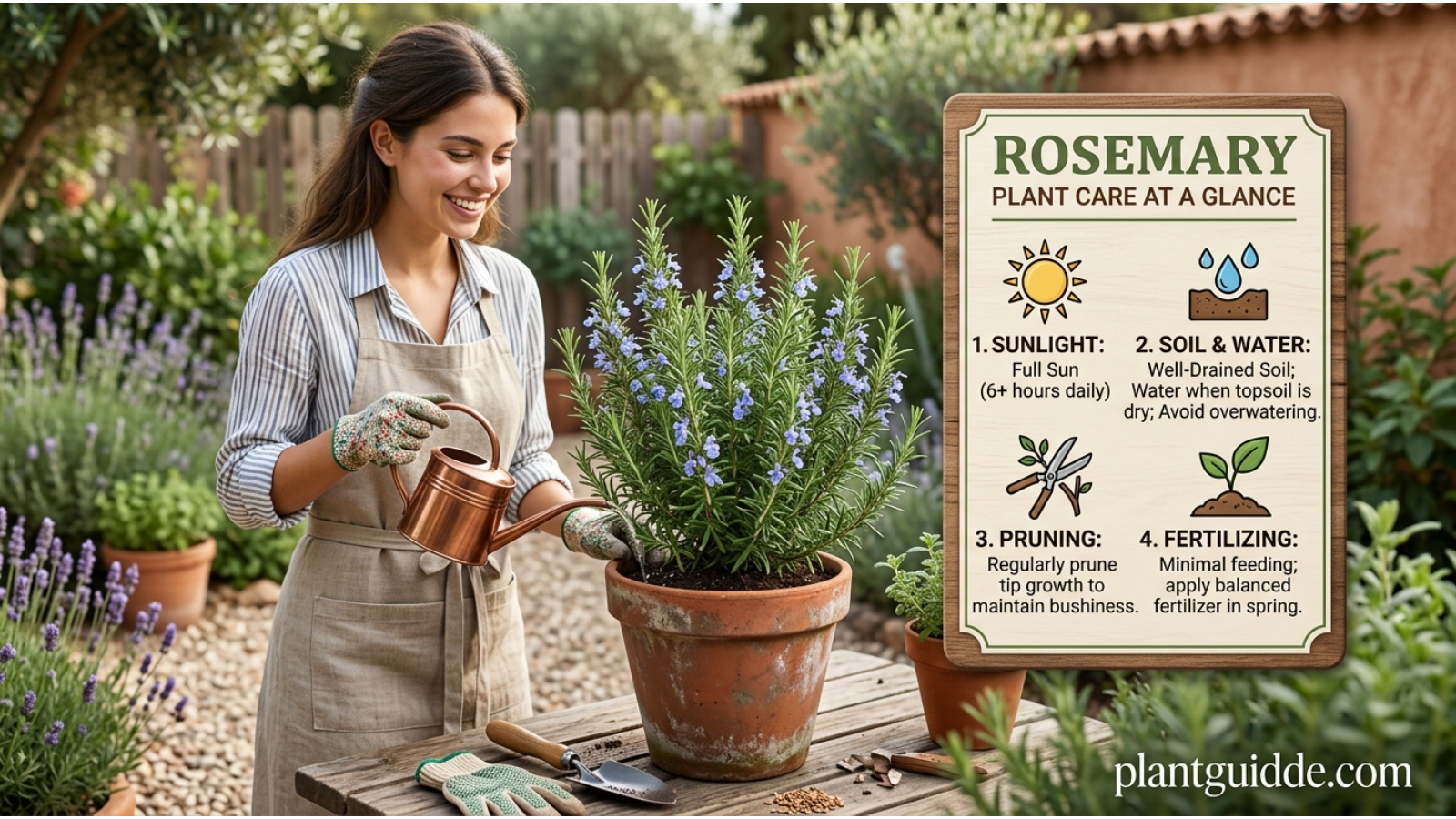
Understanding Rosemary Before You Start
Rosemary is a Mediterranean herb adapted to sunny conditions, relatively dry soil, and periods of limited rainfall. Its narrow, aromatic leaves reduce moisture loss compared with broad, soft foliage, which is one reason the plant generally handles dryness better than constantly wet conditions.
That does not mean rosemary should be left completely without water. A healthy plant still needs moisture to produce new shoots and maintain its foliage. The important distinction is between watering thoroughly when needed and keeping the soil continuously damp.
This is also why rosemary can struggle when planted in heavy garden soil or placed in a decorative container without drainage. The plant may look thirsty because its roots are damaged, leading a grower to add even more water and make the problem worse.
How to Care for Rosemary Plant Step by Step
1. Give Rosemary Plenty of Sunlight
Light is one of the most important factors in successful rosemary plant care.
Aim for around 6 to 8 hours of direct sunlight per day when possible. An outdoor location with unobstructed sun is usually ideal. Indoors, place rosemary near the brightest window available, preferably a south- or west-facing window in regions where that provides strong light.
Insufficient light can cause:
- Thin or stretched growth
- Weak stems
- Smaller leaves
- Reduced fragrance
- Slow growth
- A plant that becomes increasingly sparse
If your indoor rosemary receives only a few hours of weak window light, a grow light can provide additional support.
Practical tip: Rotate a container-grown rosemary plant periodically if one side is receiving substantially more light than the other. This helps encourage more even growth.
2. Choose Fast-Draining Soil
Rosemary needs soil that drains quickly rather than holding water around its roots.
A suitable container mix should contain materials that improve drainage and air space. A quality potting mix amended with coarse material such as perlite, pumice, or horticultural grit can work well.
Avoid compact, heavy soil that remains wet for days after watering.
The goal is not to create completely dry soil immediately after watering. Instead, you want excess water to move through the root zone efficiently so the roots are not sitting in stagnant moisture.
3. Use a Pot With Drainage Holes
A drainage hole is more important than an attractive container.
When excess water cannot escape, even an otherwise appropriate watering routine can lead to persistently wet soil. This increases the risk of root problems and can cause foliage to decline.
When growing rosemary in a container:
- Select a pot with at least one functional drainage hole.
- Make sure the hole is not blocked by compacted soil.
- Use a free-draining growing medium.
- Empty standing water from a saucer after watering.
- Repot when the root system has become severely crowded or the soil has degraded.
Terracotta pots can also be useful because their porous sides allow some moisture to evaporate, although the watering frequency will depend on climate, pot size, soil, and sunlight.
4. Water Rosemary Correctly
Watering is where many rosemary plants go wrong.
Rather than following a rigid schedule, check the soil before watering. Allow the upper portion of the growing medium to dry before giving the plant another thorough drink.
When the plant needs water, water slowly and deeply enough to moisten the root zone. Allow excess water to drain freely from the bottom of the container.
The exact interval can vary dramatically. A rosemary plant growing outdoors in hot, sunny weather may need water much more frequently than one growing indoors during a cool, low-light period.
A better rule than “water once a week”: check the soil and the plant’s growing conditions first.
How Do You Know When Rosemary Needs Water?
Look at the soil rather than relying on the calendar.
Signs that it may be time to water include:
- The soil has become noticeably dry
- The container feels considerably lighter
- The plant is beginning to lose firmness during prolonged dryness
- Hot, sunny weather is causing the growing medium to dry quickly
Do not wait for severe wilting every time. The objective is to let the soil dry appropriately without allowing the plant to remain severely dehydrated for extended periods.
5. Avoid Overwatering
Overwatering does not simply mean giving too much water in a single event. More often, the problem is watering too frequently or growing rosemary in soil that drains poorly.
A rosemary plant can receive plenty of water and still develop symptoms that look like drought stress because damaged roots cannot function properly.
Watch for:
- Yellowing foliage
- Brown or declining leaves
- Soft or weak growth
- A persistently wet potting mix
- Unpleasant-smelling soil
- Stem or root deterioration
- Sudden decline despite regular watering
If the soil remains wet for an unusually long time, reassess the container, drainage, soil composition, and watering frequency before simply adding more water.
Rosemary Humidity and Airflow
Rosemary generally does not need the high humidity that many tropical houseplants prefer.
In fact, good airflow can be more useful than creating a very humid environment. Crowded plants, stagnant air, and constantly damp foliage can create conditions that encourage fungal and other disease problems.
For indoor rosemary:
- Give it adequate space around the foliage.
- Avoid placing it tightly against other plants.
- Provide good ventilation.
- Avoid routinely misting the leaves.
- Keep the growing medium from staying excessively wet.
This makes rosemary somewhat different from herbs that naturally prefer consistently moist, humid conditions.
The Best Temperature for Rosemary
Rosemary grows best when temperatures are comfortably warm, particularly during active growth. Established plants can tolerate cooler conditions, and some varieties are considerably more cold tolerant than others.
Container-grown rosemary deserves extra attention during temperature extremes because its roots are more exposed than those of plants growing in the ground.
During very hot weather, monitor the soil more frequently because containers can dry rapidly. During cold or wet periods, be especially careful about overwatering because the growing medium may dry much more slowly.
Should You Fertilize Rosemary?
Rosemary generally does not require heavy feeding.
Too much fertilizer can encourage soft, excessive growth that is not necessarily desirable for a woody Mediterranean herb. If the plant is growing in reasonably fertile soil, aggressive fertilization is usually unnecessary.
For container rosemary, a modest amount of balanced fertilizer during active growth can be useful when the growing medium has limited nutrients.
Avoid using fertilizer simply because the plant looks unhealthy. First determine whether the actual problem is insufficient light, poor drainage, watering stress, pests, or root damage.
How to Prune Rosemary
Pruning helps keep rosemary compact, productive, and easier to harvest.
You can regularly harvest young stems by cutting above a healthy growth point. This encourages branching while providing fresh rosemary for cooking.
For general shaping:
- Remove dead or damaged growth.
- Cut back overly long shoots.
- Encourage a balanced shape rather than removing large portions at once.
- Harvest young, flexible stems regularly.
- Avoid repeatedly cutting deeply into old, bare woody sections.
Rosemary can become woody with age. New green growth is generally more responsive to pruning than thick, old wood that has little active foliage.
Practical tip: Regular light harvesting is often easier on the plant than waiting until it becomes very overgrown and then giving it a severe haircut.
How to Harvest Rosemary Without Weakening the Plant
For culinary use, snip healthy sprigs as needed rather than stripping large sections of foliage from one area.
Harvesting the softer green portions is especially useful because these stems are tender and easy to use in cooking. Leave enough healthy foliage behind for continued photosynthesis and growth.
You can use fresh rosemary with:
- Roasted vegetables
- Potatoes
- Bread
- Soups
- Sauces
- Beans
- Grilled foods
- Marinades
Care for rosemary plant you regularly cook with rosemary, harvesting can naturally double as light pruning.
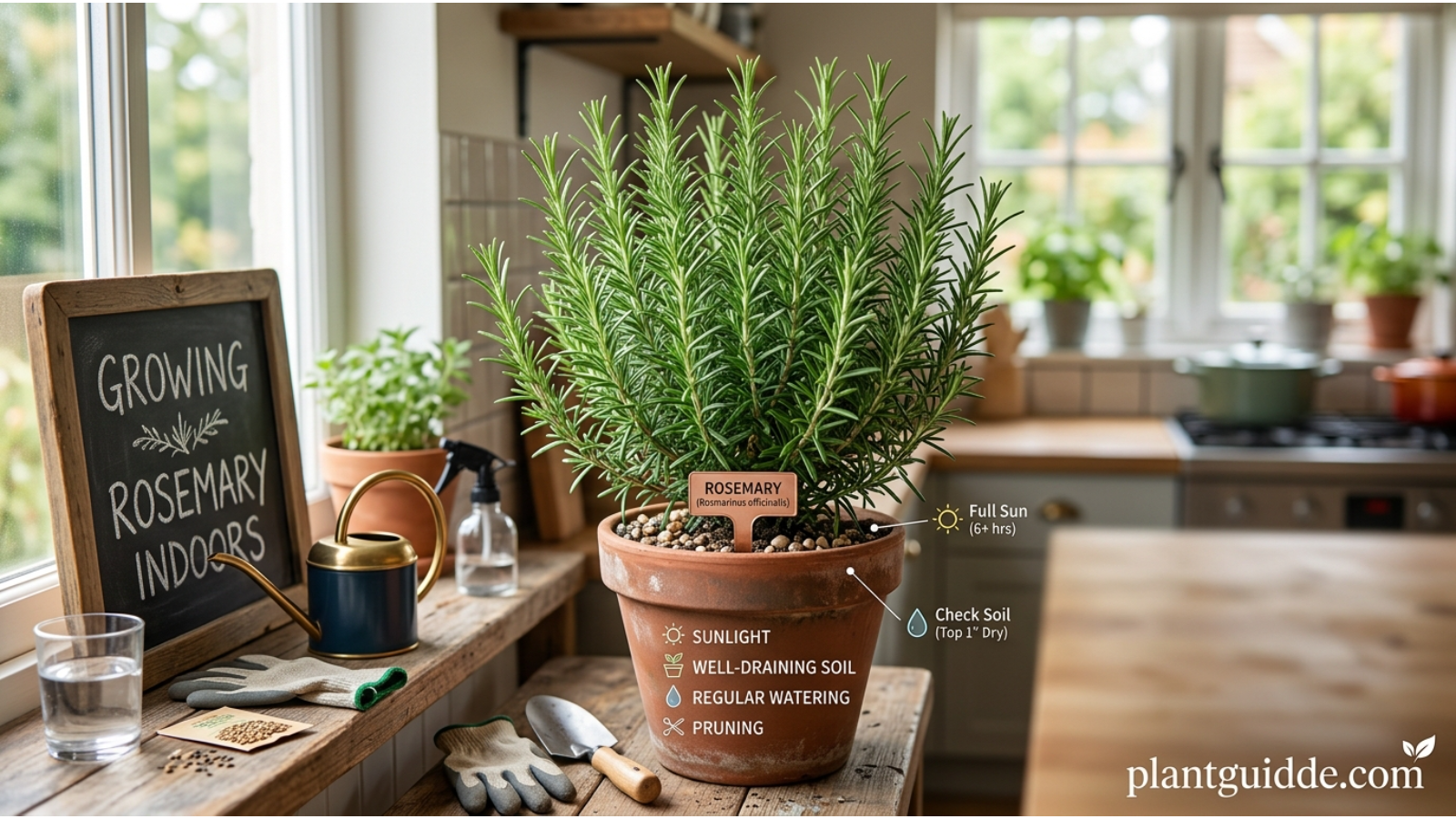
Growing Rosemary Indoors
Rosemary can be grown indoors, but it needs a brighter location than many common houseplants.
The biggest indoor challenges are usually insufficient sunlight and excessive watering.
For successful indoor growth:
- Place the plant in your brightest suitable window.
- Use a container with drainage.
- Choose a well-draining potting mix.
- Let the soil dry appropriately between waterings.
- Maintain reasonable airflow.
- Rotate the pot if growth becomes uneven.
- Consider supplemental lighting when natural light is inadequate.
Care for rosemary plant an indoor rosemary plant continually becomes thin and weak despite correct watering, light should be one of the first things you reassess.
Growing Rosemary in Containers vs. the Garden
Both methods can work, but they have different watering and maintenance requirements.
| Feature | Container Rosemary | Garden Rosemary |
|---|---|---|
| Watering | Soil may dry quickly | Usually more stable once established |
| Drainage | Must be managed carefully | Depends heavily on native soil |
| Root space | Limited | More available |
| Mobility | Easy to move | Fixed location |
| Winter protection | Easier to relocate | May need site-specific protection |
| Soil control | Easy to customize | Depends on garden conditions |
Containers are particularly useful when your native soil is heavy or poorly drained. In the ground, a raised bed or naturally well-drained location can provide excellent conditions.
Common Rosemary Plant Problems and Solutions
Rosemary Leaves Turning Brown
Brown foliage can have several causes, so avoid assuming it automatically means the plant needs more water.
Check:
- Soil moisture
- Drainage
- Recent weather
- Sun exposure
- Root condition
- Whether the plant is experiencing extreme heat or cold
Care for rosemary plant the soil is already wet, watering more can worsen the situation.
Rosemary Leaves Turning Yellow
Yellow leaves may occur when the roots remain too wet, especially in poorly draining soil.
Check the moisture level several inches into the growing medium and inspect the drainage hole. If the plant is consistently wet, improve drainage and adjust watering rather than immediately adding fertilizer.
Older foliage can also naturally decline, so consider whether only a few older leaves are affected or whether the entire plant is deteriorating.
Rosemary Is Wilting
Wilting can result from either insufficient moisture or root problems.
If the soil is completely dry, thorough watering may solve the issue. If the soil is wet and the plant is still wilting, the roots may be struggling with excess moisture.
This is one reason plant symptoms should always be interpreted alongside soil conditions.
Rosemary Is Becoming Leggy
Leggy growth is commonly associated with insufficient light.
Move the plant toward a brighter location and prune excessively long stems to encourage a more compact shape. Avoid compensating for poor light with extra fertilizer.
Rosemary Is Not Growing
Slow growth can be normal during periods of low light, cool temperatures, or other environmental stress.
Look at the basics first:
- Is the plant receiving enough direct sunlight?
- Does the soil drain quickly?
- Are you watering too frequently?
- Is the pot severely root-bound?
- Is the plant actively growing or naturally slowing down?
Fixing the environmental limitation is generally more effective than simply increasing fertilizer.
Rosemary Pests and Diseases
Healthy rosemary is relatively resilient, but stressed plants can still experience pest or disease problems.
Possible pests include aphids, spider mites, and other sap-feeding insects. Inspect the undersides of leaves and the newer growth when the plant looks unusually weak or distorted.
Disease problems are more likely when moisture and airflow are poorly managed. Constantly wet roots, dense foliage, and stagnant air can create additional stress.
If you notice a problem, isolate a severely affected container from other plants when practical and identify the cause before applying a treatment.
Common Mistakes When Caring for Rosemary
Treating Rosemary Like Basil
Basil generally appreciates more consistent moisture than rosemary. Applying the same watering routine to both herbs can leave rosemary unnecessarily wet.
Keeping the Soil Wet “Just in Case”
This is one of the most damaging habits for rosemary. The plant does not need constantly moist soil to remain healthy.
Growing It in a Dark Kitchen
A convenient location is not necessarily a suitable one. Rosemary needs substantially more light than many indoor plants.
Using a Decorative Pot Without Drainage
A beautiful container cannot compensate for trapped water around the roots.
Pruning Too Deeply
Cutting repeatedly into old, leafless woody sections can limit the plant’s ability to produce new growth.
Fertilizing a Stressed Plant Immediately
Yellow or weak foliage does not automatically indicate nutrient deficiency. Investigate light, water, drainage, and roots first.
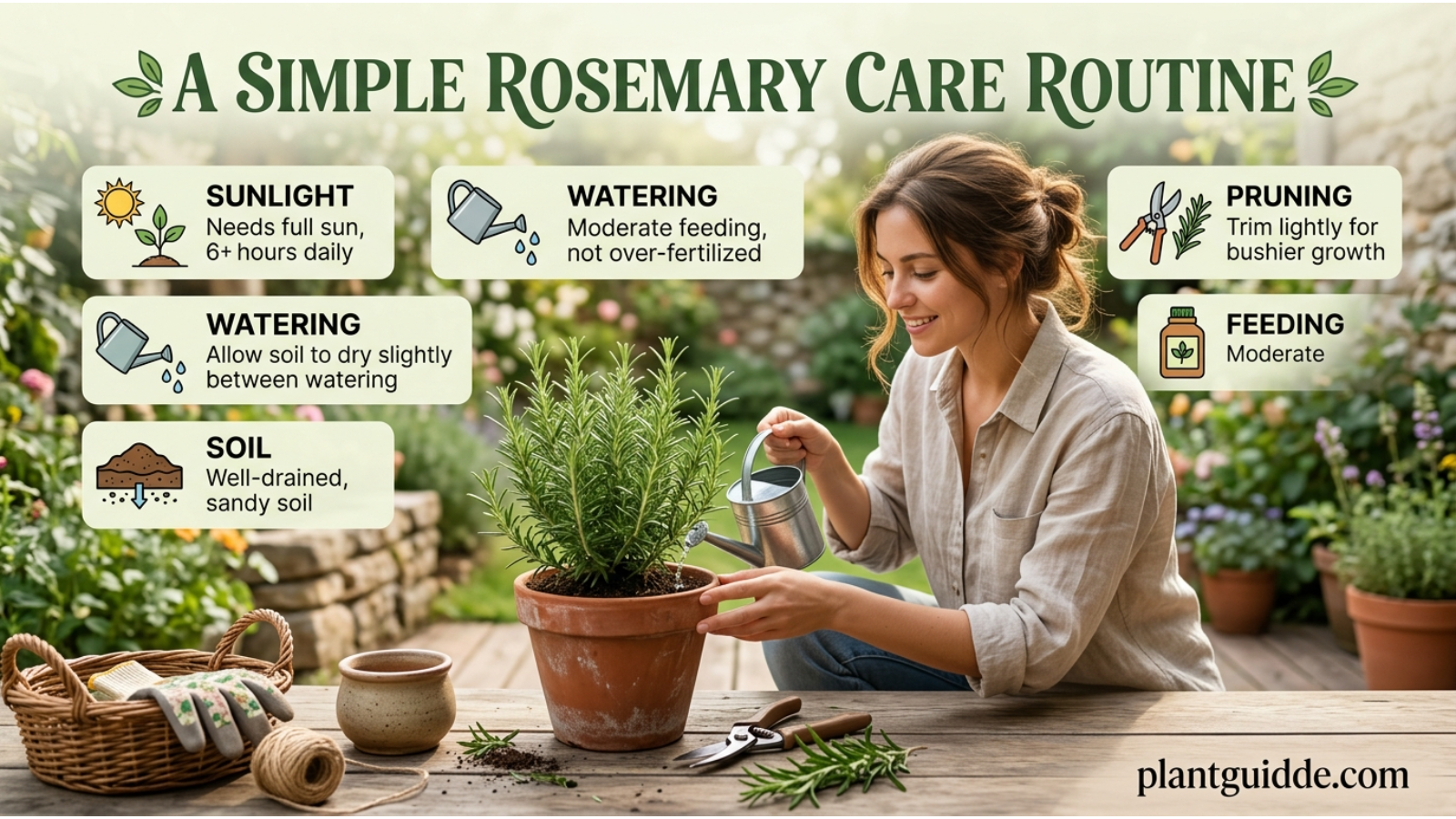
A Simple Rosemary Care Routine
If you want a straightforward routine, use this checklist:
Every few days: Check the plant and soil, especially during hot weather.
Before watering: Test whether the soil has dried sufficiently rather than watering according to a fixed calendar.
When watering: Water thoroughly and allow excess water to drain away.
Weekly: Inspect the foliage and stems for pests, discoloration, or unusual growth.
During active growth: Harvest young stems and lightly shape the plant.
When conditions change: Adjust watering. A routine that works during a hot summer may be excessive during a cool, cloudy period.
This flexible approach is more reliable than following a fixed number of cups or a strict watering day.
How to Keep Rosemary Healthy for Years
Long-term success comes down to maintaining the conditions rosemary naturally prefers.
Focus on these five priorities:
- Strong sunlight: Give the plant plenty of direct light.
- Excellent drainage: Never allow the roots to remain in stagnant water.
- Appropriate watering: Let the soil dry between thorough waterings.
- Good airflow: Avoid cramped, constantly humid conditions.
- Regular harvesting: Light pruning helps maintain useful, attractive growth.
Once these fundamentals are right, rosemary usually needs much less intervention than many people expect.
FAQs:
How often should you water a rosemary plant?
Water rosemary when the soil has dried sufficiently rather than following a fixed weekly schedule. Watering frequency depends on sunlight, temperature, pot size, soil, and whether the plant is indoors or outdoors.
Does rosemary need full sun?
Yes. Rosemary generally performs best with plenty of direct sunlight, ideally around 6–8 hours per day when conditions allow. Insufficient light can result in weak, stretched growth.
Can rosemary grow indoors?
Yes, rosemary can grow indoors when it receives strong light, has excellent drainage, and is not overwatered. A very bright window or supplemental grow light may be necessary.
Why is my rosemary turning yellow?
Yellowing can be associated with excessive moisture, poor drainage, root stress, insufficient light, or other environmental problems. Check the soil and roots before assuming the plant needs fertilizer.
Can you grow rosemary in a pot?
Yes. Rosemary grows well in containers when the pot has drainage holes and the growing medium drains quickly. Container plants may dry faster than garden-grown rosemary, so monitor the soil regularly.
Conclusion
Learning how to care for rosemary plant becomes much easier when you stop treating it like a moisture-loving leafy herb. Give rosemary strong sunlight, fast-draining soil, good airflow, and thorough but appropriately spaced watering. Most importantly, avoid keeping its roots constantly wet.
If your rosemary is struggling, start with the basics: check the light, feel the soil, inspect the drainage, and examine the roots before changing fertilizer or adding more water. Those simple checks often reveal the real problem faster than a rigid care schedule.

Asad Mumtaz is a dedicated plant enthusiast and gardening writer with a passion for helping people care for their plants successfully. He specializes in plant care guides, indoor gardening, and practical growing tips for all skill levels. His content focuses on making gardening simple, enjoyable, and rewarding. Through his work, Asad shares reliable advice to help readers create thriving green spaces.