Cacti are often described as nearly indestructible houseplants, but that reputation can lead to one of the most common cactus-care mistakes: treating them as cactus plant care they need no attention at all. A cactus can survive periods of drought, yet it can struggle when its roots stay wet, its light is inadequate, or its growing conditions change too quickly.
Good cactus plant care is less about watering as rarely as possible and more about understanding how the plant stores and uses water. When you learn to read the soil, pot, roots, and appearance of the plant, it becomes much easier to know when to water, when to wait, and when a problem needs attention.
Cactus plant care you are caring for a small cactus on a windowsill, a collection of desert species, or a flowering cactus, the basic principle remains the same: bright light, excellent drainage, thorough watering when appropriate, and a period of drying between waterings.
Quick Answer
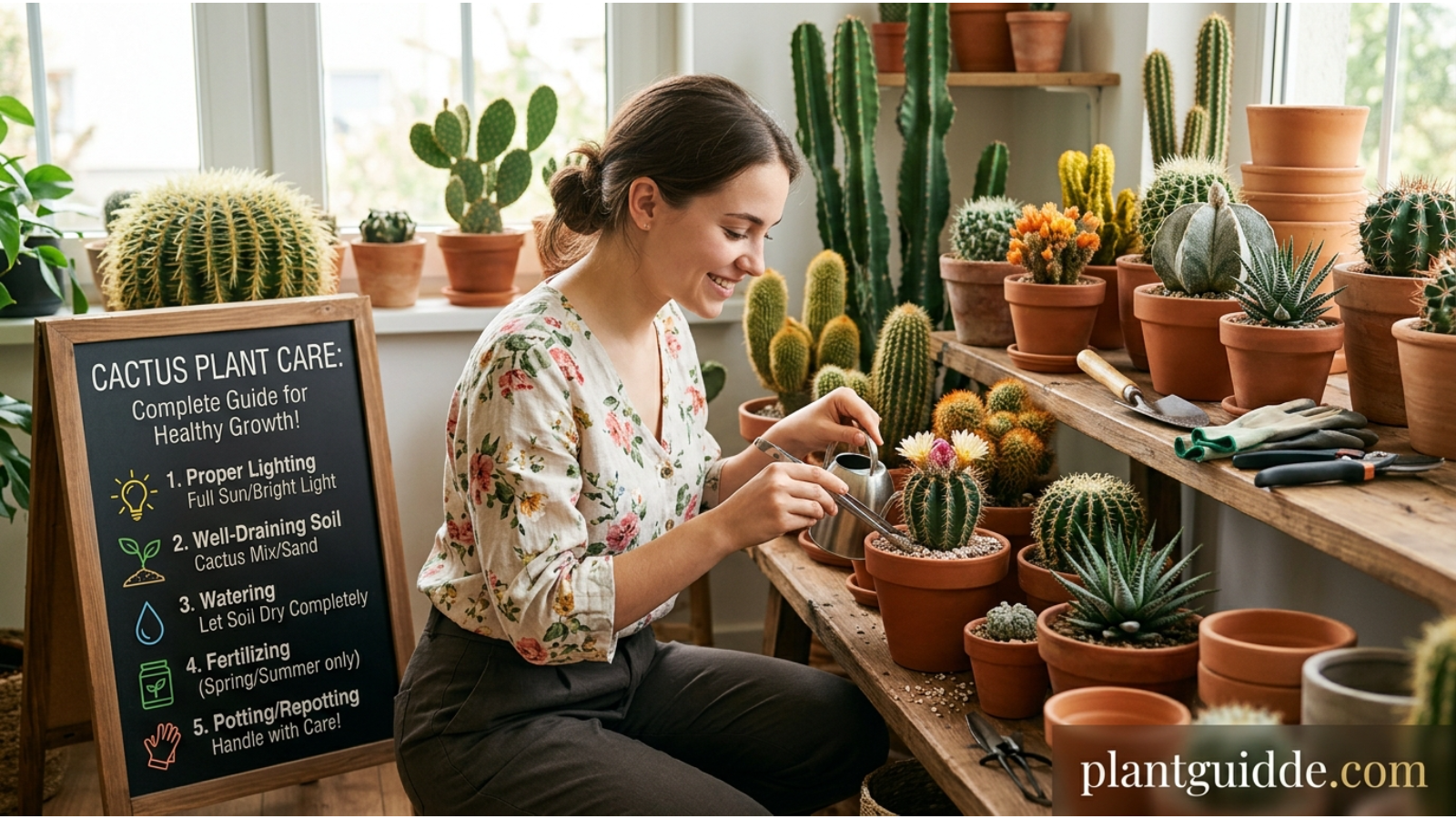
Cactus plant care is mainly about giving the plant plenty of bright light, fast-draining soil, a container with drainage, and deep but infrequent watering. Let the soil dry thoroughly before watering again, and protect the cactus from prolonged cold, excess moisture, and sudden changes in light. The right balance of light, water, airflow, and temperature encourages compact growth and healthy roots.
What Does a Cactus Need to Grow Well?
Most common cacti need four things to stay healthy:
- Strong light: Cacti generally perform best in a bright location with several hours of direct or very bright filtered light, depending on the species.
- Fast-draining soil: The growing medium should release excess water quickly rather than remaining wet for days.
- Deep but controlled watering: When the cactus needs water, thoroughly moisten the soil, then allow excess water to drain away.
- A dry period between waterings: The roots need access to air between watering sessions.
Temperature and airflow also matter. A warm, bright location with reasonable air movement is generally much safer than a dim room where damp soil remains wet for an extended period.
One important point for beginners is that dry does not automatically mean drought-stressed. A healthy cactus can remain dry for quite a while. The timing of watering depends on the cactus species, pot size, soil, season, temperature, humidity, and amount of light it receives.
Choosing the Right Light for a Cactus
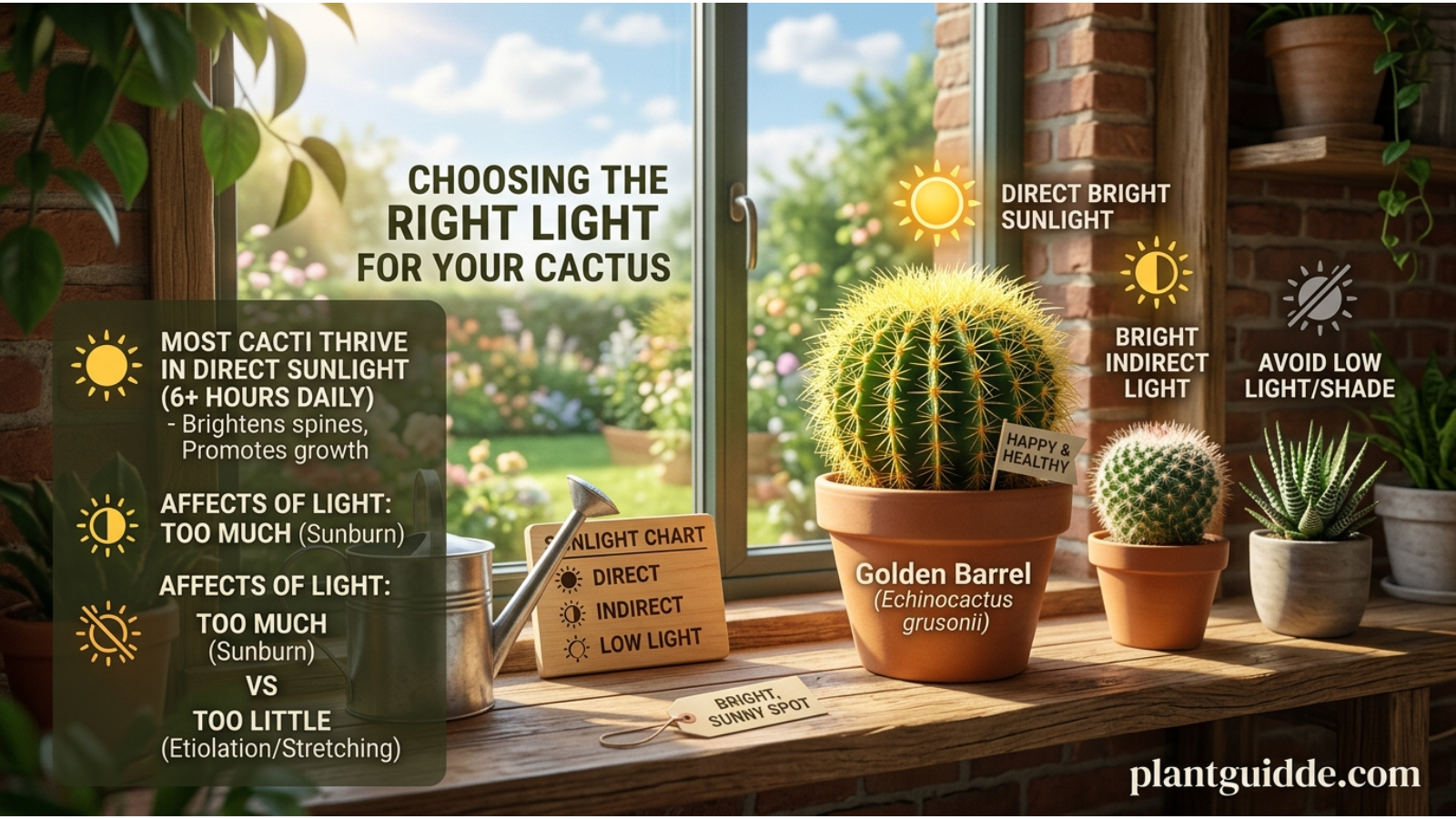
Light is one of the most important parts of cactus plant care because it influences growth, shape, color, water use, and flowering.
Most desert cacti prefer strong light. A bright south- or southwest-facing window can work well in many homes, although the exact exposure depends on your climate and the amount of sunlight reaching the glass.
How Much Light Does a Cactus Need?
A cactus that receives insufficient light may develop:
- Tall, stretched growth
- Pale or faded coloring
- Weak or unusually narrow new growth
- Leaning toward the window
- Poor flowering
- Slow development
This stretched growth, often called etiolation, cannot simply be corrected by moving the existing growth into better light. The new growth may become more compact, but the elongated section will generally remain.
If a cactus has been growing in low light, do not immediately place it in intense midday sun. Sudden exposure can cause sunburn.
Practical approach: Move it toward stronger light gradually over several days or weeks, especially if it previously lived indoors under relatively low light.
The Best Soil for Cactus Plant Care
Cactus soil should drain quickly and maintain enough structure for roots to receive oxygen.
A typical heavy houseplant potting mix can hold too much moisture for many desert cacti, particularly when combined with a large pot or a poorly ventilated indoor location.
A suitable cactus mix often contains a combination of:
- Mineral material such as pumice, perlite, coarse sand, or fine gravel
- Organic material such as a modest amount of potting mix, coco coir, or compost
- Components that prevent the mixture from becoming compacted
The ideal ratio is not identical for every cactus. Species from different environments can have different moisture preferences, so the goal is not to follow one universal recipe.
Why Heavy Soil Causes Problems
If the soil stays wet for too long, cactus roots may lose access to oxygen. Continued saturation can weaken roots and create conditions favorable to rot.
This is why changing the watering schedule alone may not solve a problem. If a cactus is planted in dense, moisture-retentive soil, simply watering less often may still leave the root zone wet for too long.
Better approach: Improve the growing medium and drainage first, then establish a watering routine based on how quickly the soil dries.
How to Water a Cactus Correctly
Watering is probably the most misunderstood part of cactus plant care.
The goal is not to give a cactus a few drops of water every week. Instead, when the plant and soil are ready, water thoroughly enough to moisten the root zone, then allow the excess to drain completely.
A Simple Cactus Watering Method
- Check the soil first. Do not water simply because a calendar says it is time.
- Confirm that the root zone has dried sufficiently. A small cactus in a shallow pot may dry faster than a large cactus in a deep container.
- Water thoroughly. Apply water evenly until some runs from the drainage holes.
- Let the pot drain completely. Never leave the cactus sitting in collected water.
- Return it to its normal growing position.
- Wait until the appropriate drying period has passed before watering again.
The frequency may change dramatically throughout the year. During active growth and warm, bright conditions, a cactus may use water more quickly. During cooler or darker periods, its water demand can fall considerably.
How Often Should You Water a Cactus?
There is no reliable universal schedule such as “once every two weeks.”
Instead, consider:
- Soil dryness
- Pot size
- Pot material
- Cactus species
- Season
- Temperature
- Light intensity
- Airflow
- Humidity
A cactus growing in a small terracotta pot beside a sunny window may dry much faster than the same species in a large plastic pot in a dim room.
The best cactus watering schedule is therefore condition-based rather than calendar-based.
How to Tell When a Cactus Needs Water
A completely dry growing medium is an important clue, but it should not be the only one.
Depending on the species, a cactus that needs water may begin to:
- Feel slightly less firm
- Develop a subtle shriveled appearance
- Show reduced fullness
- Become slightly softer than normal
However, these signs should be interpreted carefully. Some cacti naturally have ridges, wrinkles, or soft-looking surfaces, and different species respond differently to drought.
A moisture meter can sometimes provide additional information, but physically checking the soil and understanding how quickly your particular pot dries is usually more useful than relying on a single reading.
Why Overwatering Is So Dangerous
Overwatering does not simply mean “giving too much water once.”
The bigger problem is often watering again before the root zone has had enough time to dry.
Repeated moisture can create a persistently wet environment around the roots. If drainage is poor, the roots may deteriorate, and the cactus can eventually develop soft or discolored tissue.
Signs that may indicate excessive moisture include:
- Soft or mushy areas
- Yellowing or abnormal discoloration
- Sudden collapse
- Darkened tissue near the base
- A cactus that feels unusually soft
- Persistent wet soil
- An unpleasant smell from the growing medium
When rot is suspected, continuing to water is rarely the solution.
Choosing the Right Pot for a Cactus
The pot is part of the cactus’s growing environment, not just a decorative container.
Always Prioritize Drainage
A container with drainage holes allows excess water to escape. Without drainage, even a carefully prepared soil mix can become difficult to manage.
Terracotta pots are popular because their porous walls can allow moisture to evaporate more readily. Plastic pots retain moisture longer and can still work very well when watering and soil are adjusted accordingly.
Avoid Oversized Containers
A very large pot may contain substantially more soil than the cactus currently needs. That additional soil can remain wet longer after watering.
Choose a container that provides enough room for the roots without creating a disproportionately large reservoir of wet soil.
When repotting, moving up only modestly in pot size is often more practical than placing a small cactus into a much larger container.
Cactus Temperature and Humidity
Most desert-type cacti appreciate warm growing conditions during active growth and generally do not require the high humidity favored by many tropical houseplants.
This means you usually do not need to mist a desert cactus to keep it healthy.
In fact, frequent surface moisture combined with poor airflow and low light can create unnecessary problems.
Temperature requirements vary considerably among cactus species. Some tolerate cooler conditions better than others, while certain tropical or forest cacti have very different requirements from desert cacti.
Before adjusting temperature or humidity dramatically, identify the type of cactus you own.
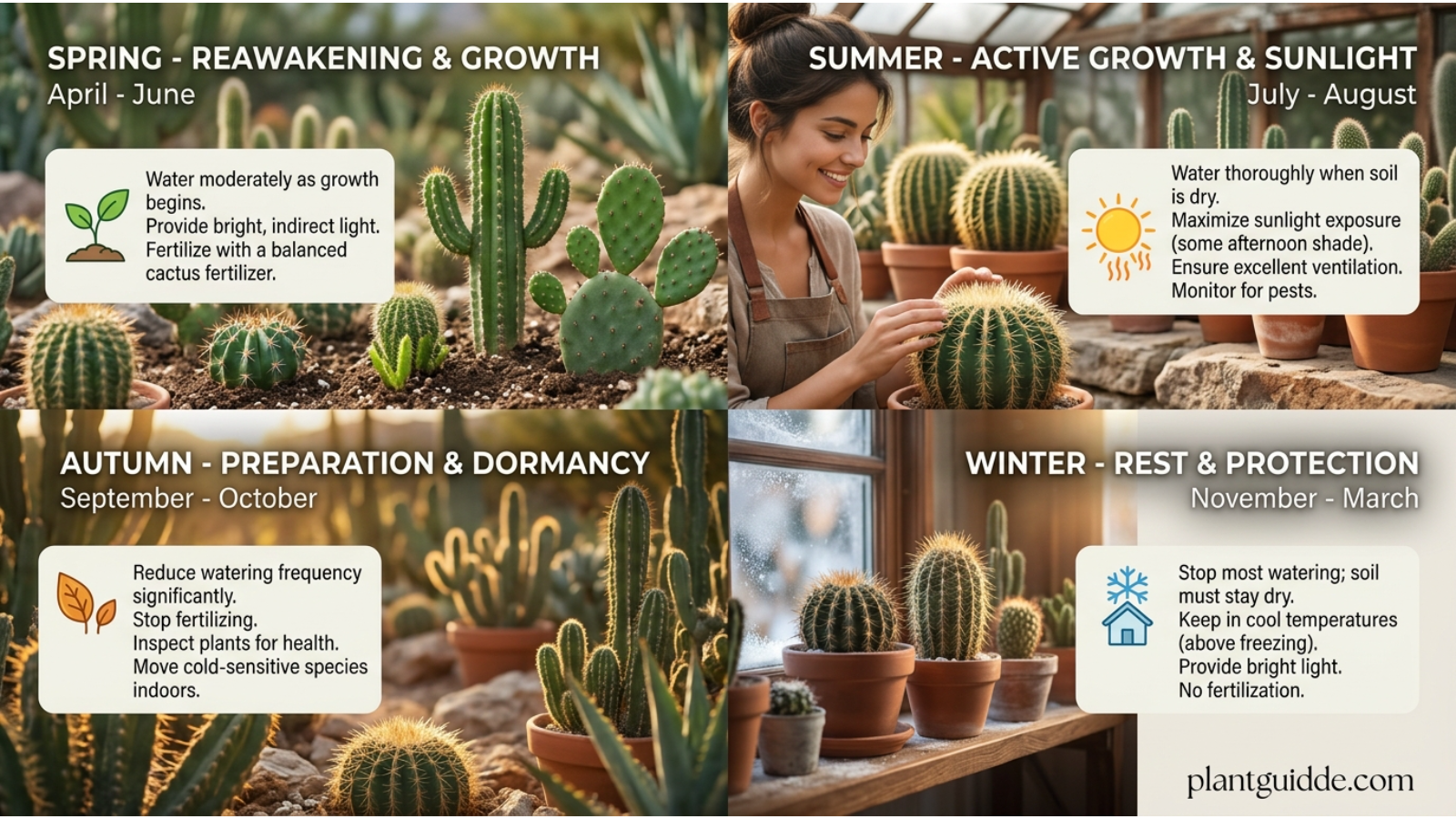
Cactus Plant Care During Different Seasons
Cactus watering and growth naturally change with the seasons.
Spring
Spring often marks the beginning of stronger growth for many cacti. As light levels increase and temperatures become more favorable, the plant may begin using water more quickly.
This is a good time to:
- Check for new growth
- Inspect roots and soil
- Repot when necessary
- Gradually increase watering as the plant becomes active
- Increase light exposure carefully
Summer
Bright, warm conditions can increase water consumption, but this does not mean the soil should remain constantly damp.
Check the growing medium regularly and consider the actual conditions around the plant rather than following a fixed weekly schedule.
Autumn
As temperatures and daylight decrease, water demand may decline. Gradually adjust watering rather than continuing a summer routine automatically.
Winter
Many desert cacti slow down significantly during cool, darker conditions. If the plant is not actively growing, it may require substantially less water.
One of the most common winter mistakes is watering on the same schedule used during summer.
How to Repot a Cactus Safely
Repotting is useful when the soil has degraded, drainage has become poor, the roots have filled the container, or the existing pot is unsuitable.
Step-by-Step Repotting
- Choose a container with a drainage hole.
- Prepare a fast-draining cactus growing medium.
- Carefully remove the plant from its existing container.
- Inspect the root system for obvious damage or rot.
- Remove unhealthy material with clean tools if necessary.
- Place the cactus at an appropriate depth in the new container.
- Fill around the root system without heavily compacting the soil.
- Allow the plant to settle into its new environment before resuming a normal watering routine.
Cacti can have sharp spines, so use folded cardboard, thick gloves, or appropriate handling tools rather than gripping the plant directly.
Avoid burying the stem deeper than it was previously growing simply to make the cactus appear more stable. Excess moisture around buried tissue can increase the risk of problems.
Fertilizing a Cactus
Cacti generally do not need heavy fertilization.
During active growth, a suitable cactus or succulent fertilizer used according to its label can support healthy development. Overfertilization, however, can create more problems than benefits.
A practical approach is to:
- Fertilize during active growth rather than indiscriminately throughout the year.
- Follow the product’s dilution instructions.
- Avoid repeatedly applying concentrated fertilizer.
- Reduce or stop feeding when the plant is dormant or growth has slowed substantially.
If the cactus is already stressed from root damage, poor light, or improper watering, fertilizer is unlikely to fix the underlying problem.
Fix the growing environment first.
Common Cactus Problems and What They Mean
Cacti often communicate environmental problems through changes in shape, color, firmness, or growth.
Cactus Turning Yellow
Yellowing can have several causes, including excessive moisture, root problems, stress, aging tissue, or environmental changes.
Check the soil and roots before assuming the plant simply needs fertilizer.
If the soil remains wet for long periods and the cactus is also soft, investigate possible root or stem rot.
Cactus Turning Brown
Brown areas can result from sunburn, physical damage, aging, disease, or other environmental stress.
A recently moved cactus that develops a bleached or brown patch on the side facing intense sunlight may have experienced sunburn.
Do not automatically respond by placing the plant in complete shade. Instead, assess how quickly the light changed and whether the plant had been acclimated.
Cactus Getting Soft
Softness is particularly important to investigate.
A slightly wrinkled cactus may simply be thirsty, but a cactus with persistently soft, mushy, or darkened tissue can indicate serious moisture or rot problems.
Check:
- Soil moisture
- Drainage
- Root condition
- Base of the plant
- Recent watering history
Cactus Growing Tall or Leaning
This often indicates inadequate light, especially when the new growth is noticeably thinner than older growth.
Move the cactus toward stronger light gradually rather than exposing a low-light plant suddenly to intense sun.
Cactus Not Flowering
Lack of flowers does not necessarily mean something is wrong.
Flowering can depend on species, maturity, light, temperature, seasonal conditions, and overall health. Some cacti need particular seasonal cues before producing flowers.
If flowering is your goal, identify the exact species or cultivar first. Its natural growth cycle matters more than simply adding fertilizer.
Pests That Can Affect Cacti
Cacti are not immune to pests.
Common problems can include:
- Mealybugs
- Scale insects
- Spider mites
- Fungus gnat larvae in persistently wet growing media
Inspect new plants carefully before placing them beside an established collection.
Look around the base, growing points, areoles, undersides of growth, and areas where pests can hide.
Early detection is much easier to manage than a widespread infestation.
Cactus Plant Care Mistakes Beginners Should Avoid
Some mistakes appear harmless but can gradually weaken a cactus.
Watering on a Fixed Schedule
“Every Sunday” sounds simple, but plants do not consume water at a fixed rate throughout the year.
Better: Check the actual growing conditions first.
Keeping the Soil Slightly Damp
This approach works for some tropical plants but can be problematic for many desert cacti.
Better: Let the soil dry appropriately between watering sessions.
Putting a Small Cactus in a Huge Pot
More soil means more potential moisture retention.
Better: Choose a reasonably sized container with good drainage.
Moving a Low-Light Cactus Directly Into Harsh Sun
A cactus may love strong light, but a sudden change can cause sunburn.
Better: Acclimate gradually.
Assuming Every Cactus Has the Same Requirements
A desert cactus and a forest cactus should not automatically receive identical treatment.
Better: Identify the plant whenever possible.
Using Fertilizer to Fix Poor Growth
Fertilizer cannot compensate for inadequate light, damaged roots, or chronic overwatering.
Better: Diagnose the growing environment before feeding.
How to Build a Simple Cactus Care Routine
You do not need to constantly monitor your cactus.
A simple routine is enough for most home growers:
Once a week: Look at the plant and check for obvious changes, pests, or damage.
Before watering: Check the soil and consider recent weather, temperature, light, and watering history.
After watering: Make sure excess water drains freely and the container is not sitting in collected water.
Every few months: Inspect the pot, soil condition, growth, and overall shape.
When something changes: Diagnose the environment before immediately adding fertilizer, water, or another treatment.
This approach is much more reliable than trying to memorize an exact watering calendar.
How to Improve Cactus Care in a Low-Light Home
Not every home has a bright south-facing window.
If natural light is limited, consider placing the cactus at the brightest suitable window available. A grow light can also help when natural light is consistently inadequate.
Signs that supplemental lighting may be useful include persistent stretching, weak new growth, or a plant that repeatedly leans toward the nearest window.
If you introduce artificial lighting, provide a consistent daily light period appropriate for the plant rather than leaving a bright lamp on continuously.
Indoor Cactus Care vs. Outdoor Cactus Care
The fundamental requirements remain similar, but the environment changes how quickly the plant dries and how much light it receives.
Indoor cactus care usually requires closer attention to:
- Window exposure
- Air circulation
- Container drainage
- Indoor humidity
- Slow soil drying
- Seasonal changes in natural light
Outdoor plants may receive stronger light and better airflow, but they can also face heavy rain, extreme heat, cold nights, and sudden weather changes.
An outdoor cactus should therefore be evaluated according to the local climate and species rather than assuming that “outside” is automatically better.
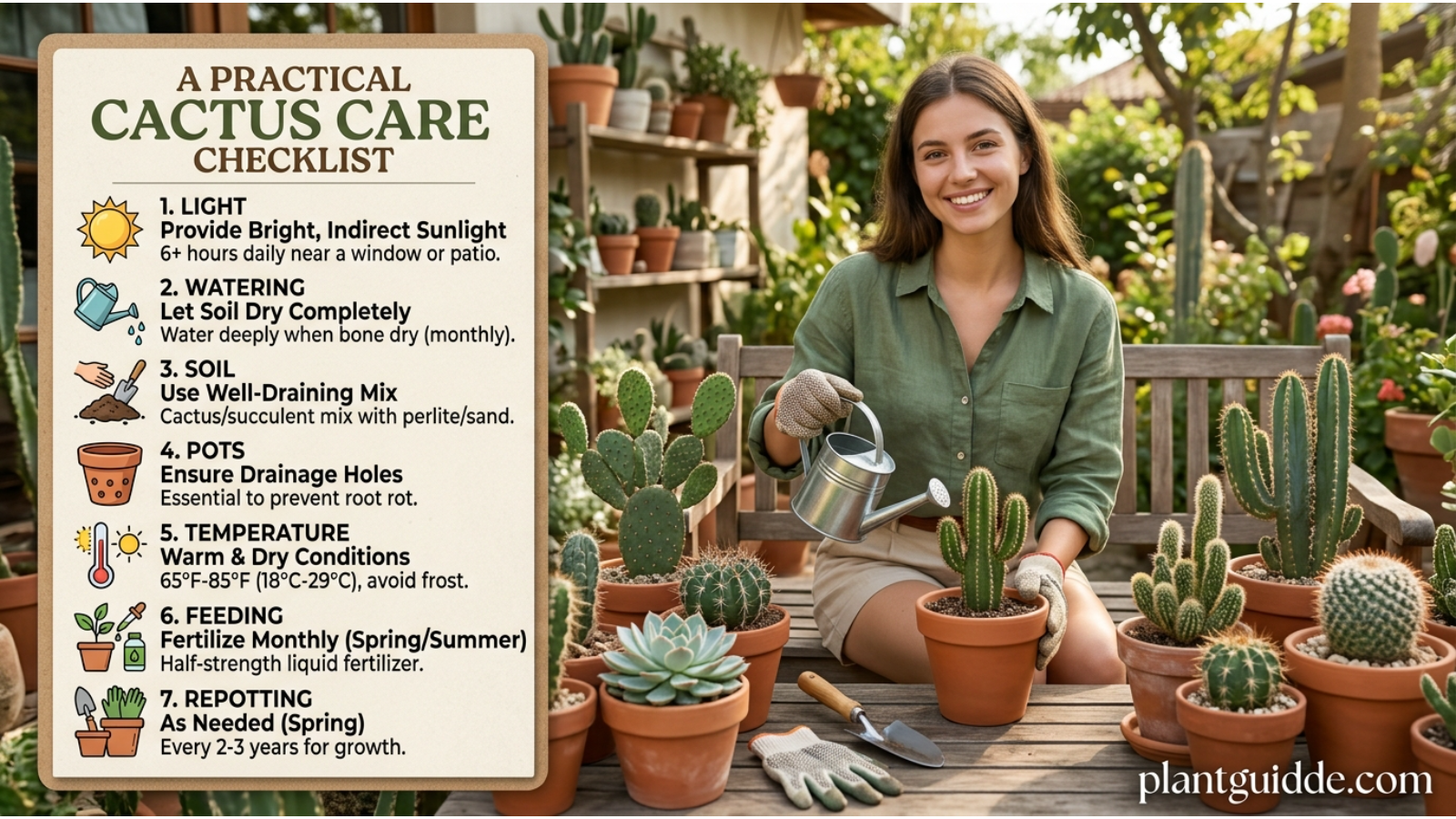
A Practical Cactus Care Checklist
Before changing anything, ask these questions:
- Is the cactus receiving enough light?
- Does the pot have a drainage hole?
- Does water drain quickly?
- Is the soil appropriate for the species?
- Has the soil dried sufficiently since the last watering?
- Is the cactus soft, mushy, or unusually discolored?
- Has the plant recently been moved into stronger light?
- Are there visible pests?
- Has the season changed?
- Am I treating this particular cactus according to its species rather than a generic cactus schedule?
These questions often reveal the problem faster than adding another product or changing several conditions at once.
FAQs:
How often should I water a cactus?
Watering frequency varies with species, season, pot size, soil, temperature, and light. Instead of following a fixed schedule, wait until the growing medium has dried appropriately and then water thoroughly, allowing excess water to drain away.
Do cacti need direct sunlight?
Many desert cacti perform best with strong light and can tolerate or prefer several hours of direct sun once acclimated. However, light requirements vary by species, and a cactus moved suddenly from low light into intense sunlight can suffer sunburn.
What is the best soil for cactus plants?
A fast-draining mix that does not stay saturated for long is generally suitable for many desert cacti. Mineral components such as pumice or perlite can improve drainage and aeration when used appropriately with organic material.
Why is my cactus turning soft?
Softness can be caused by insufficient water, but persistent mushiness—particularly around the base—can indicate overwatering or rot. Check the soil, drainage, roots, and affected tissue before watering again.
Can I keep a cactus in a bedroom?
Yes, a cactus can be grown in a bedroom if it receives suitable light and the container and soil drain well. The key concern is the growing environment, not the room itself. A dark bedroom may require a brighter location or supplemental lighting.
Final Thoughts
Successful cactus plant care is not about neglecting the plant or watering it as little as possible. It is about giving the roots the conditions they need: strong enough light, fast drainage, appropriate watering, and enough time to dry between watering sessions.
If your cactus is struggling, start with the basics rather than changing everything at once. Check the light, inspect the soil, confirm drainage, and examine the plant for softness or pests. Once those fundamentals are right, most cactus-care decisions become much easier.
The most useful habit to develop is simple: check the plant and its growing conditions before you water. That one change can prevent many of the problems associated with indoor cactus growing.

Asad Mumtaz is a dedicated plant enthusiast and gardening writer with a passion for helping people care for their plants successfully. He specializes in plant care guides, indoor gardening, and practical growing tips for all skill levels. His content focuses on making gardening simple, enjoyable, and rewarding. Through his work, Asad shares reliable advice to help readers create thriving green spaces.