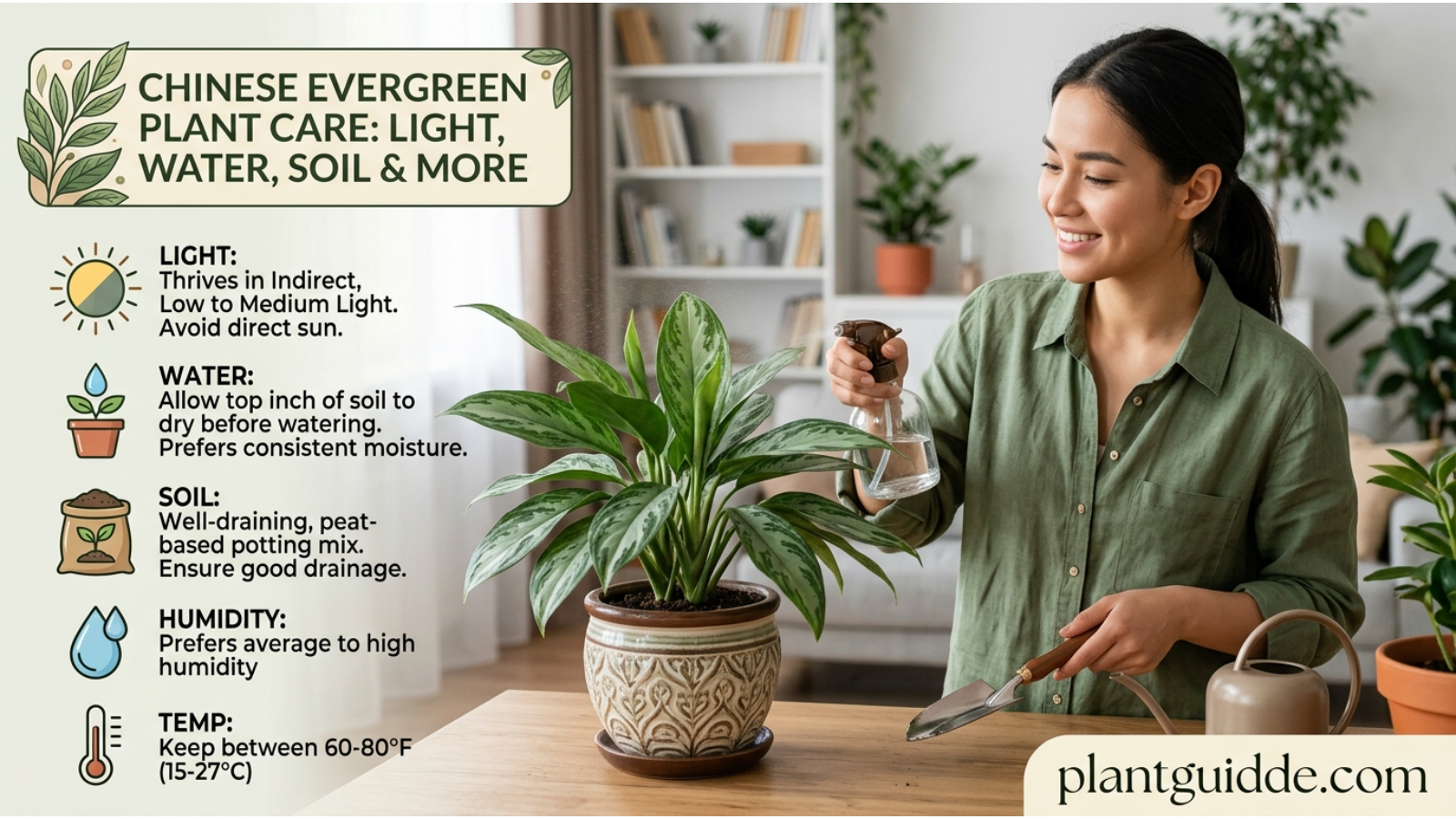
Chinese evergreen plant care, commonly known as Aglaonema, is one of the more forgiving tropical houseplants, which makes it a popular choice for beginners. Its attractive foliage comes in shades and patterns of green, silver, cream, pink, and red, depending on the variety. It can handle less light than many colorful indoor plants, but that does not mean it will thrive in every dark corner.
The biggest mistakes with Chinese evergreen plant care usually involve watering and light. Soil that stays wet for too long can damage the roots, while harsh direct sunlight can scorch the leaves. Once you understand how the plant responds to moisture, light, temperature, and its growing medium, keeping it healthy becomes much easier.
Quick Answer
Chinese evergreen plant care is mainly about providing bright to medium indirect light, well-draining soil, moderate watering, warmth, and reasonable humidity. Let the upper layer of soil dry slightly before watering again, and avoid keeping the roots constantly wet. Aglaonema tolerates lower light better than many houseplants, but stable conditions help prevent yellow leaves, brown tips, drooping, and slow growth.
What Is a Chinese Evergreen?
Chinese evergreen is the common name for Aglaonema, a group of tropical foliage plants in the arum family, Araceae. They are valued primarily for their leaves rather than flowers.
Aglaonema naturally grows in warm, humid environments, so indoor plants generally perform best when their surroundings are reasonably warm and protected from sudden environmental changes.
Popular types include:
- Green-leaved Aglaonema varieties
- Silver and variegated varieties
- Pink and red-leaved cultivars
- Compact varieties suitable for desks and shelves
- Larger varieties grown as floor plants
One useful thing to understand is that different Aglaonema varieties can have different light preferences. A mostly green plant may tolerate relatively low light, while a heavily variegated cultivar often needs brighter indirect light to maintain its markings.
Chinese Evergreen Plant Care Requirements
| Care factor | What Chinese evergreen prefers |
|---|---|
| Light | Medium to bright indirect light |
| Low light | Tolerated, especially by greener varieties |
| Water | Moderate; allow the upper soil to dry slightly |
| Soil | Loose, fertile, and well-draining |
| Humidity | Moderate to high is beneficial |
| Temperature | Warm, stable indoor conditions |
| Fertilizer | Light feeding during active growth |
| Repotting | When roots become crowded or soil deteriorates |
| Growth | Generally slow to moderate indoors |
The goal is not to create a perfect tropical greenhouse. It is to provide stable conditions without extremes.
Light Requirements for Chinese Evergreen
Chinese evergreen is often recommended as a low-light plant, but “low light” is frequently misunderstood.
Aglaonema can survive in lower-light areas, particularly green varieties, but survival and healthy growth are not the same thing. A plant kept too far from a window may remain alive while producing slower growth, smaller leaves, or less pronounced variegation.
Best light
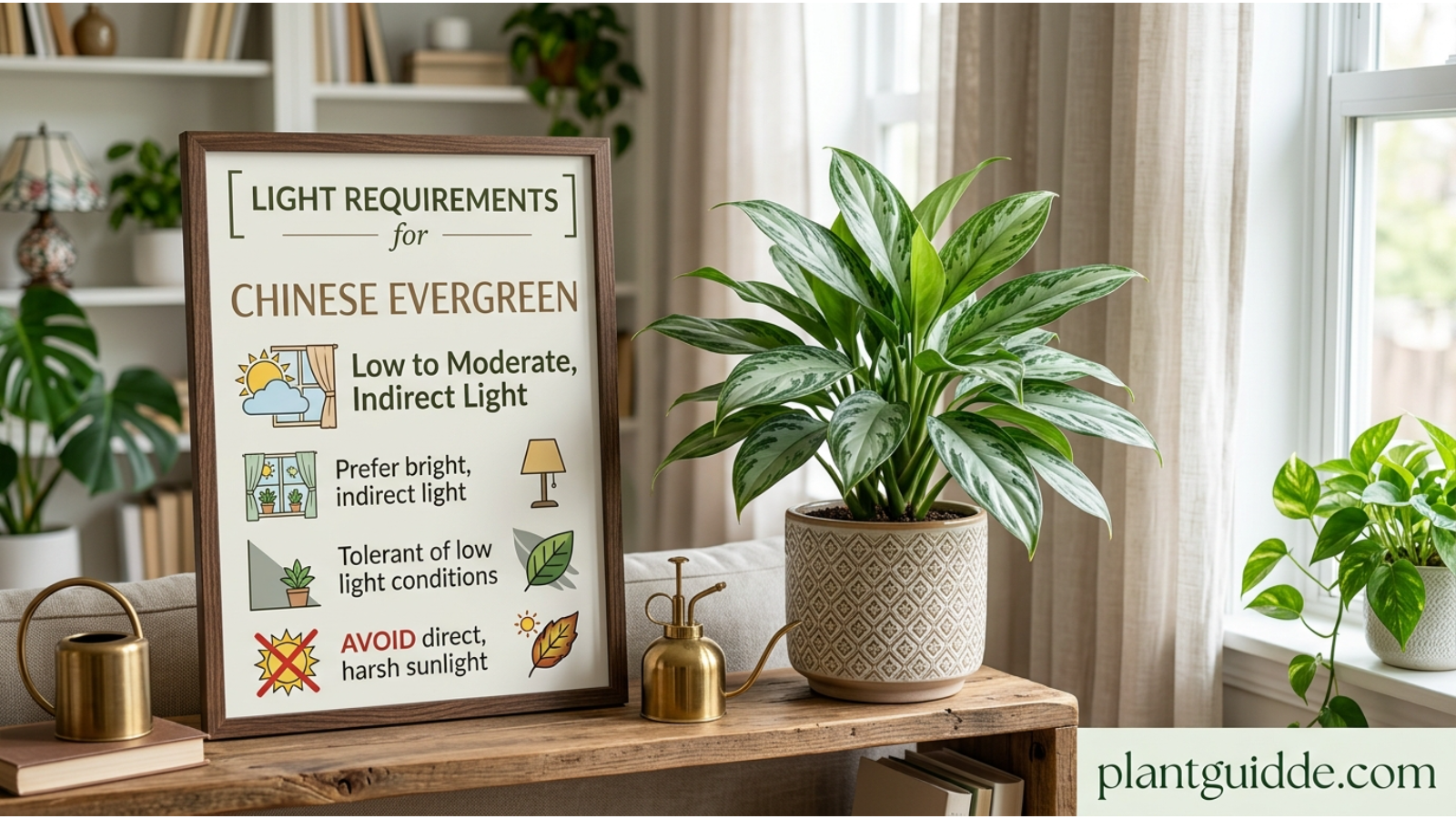
Place your Chinese evergreen where it receives bright or medium indirect light. Near an east- or north-facing window can work well, while a brighter south- or west-facing location may require more distance from the glass or a sheer curtain.
Avoid prolonged exposure to intense direct afternoon sunlight. Strong rays can cause:
- Brown or bleached patches
- Scorched leaf edges
- Faded foliage
- Excessive heat around the leaves
A simple test is to look at the plant’s leaves rather than relying only on the window direction. If the foliage is becoming pale or scorched, adjust the light gradually.
Can Chinese evergreen grow in low light?
Yes, but there is an important distinction.
Low light can be tolerated; it is not necessarily ideal for maximum growth.
If your plant is in a darker room, reduce watering frequency rather than assuming it needs the same amount of water as a plant receiving brighter light. Lower light generally means slower growth and slower water use.
How Often to Water Chinese Evergreen
Watering is one of the most important parts of Chinese evergreen plant care.
Instead of watering according to a fixed calendar, check the soil. Indoor conditions vary significantly with season, pot size, soil composition, temperature, and light.
A practical approach is to:
- Check the top portion of the soil with your finger.
- If it still feels noticeably moist, wait.
- When the upper layer has dried somewhat, water thoroughly.
- Allow excess water to drain from the pot.
- Empty standing water from a saucer or cachepot.
The plant does not need permanently wet soil.
How do you know when Chinese evergreen needs water?
Look for a combination of signs rather than relying on one symptom.
A plant that is becoming too dry may develop:
- Slightly drooping leaves
- Dry or curling leaf edges
- Crispy brown areas
- Noticeably dry potting mix
However, drooping can also occur because of overwatering or root problems, so always check the soil before adding more water.
Should you use tap water?
Chinese evergreen can often be grown successfully with ordinary household water, but water quality varies. If your plant repeatedly develops unexplained brown tips or leaf-edge damage despite appropriate watering, mineral accumulation or water quality may be worth considering.
Rather than immediately changing everything, first rule out inconsistent watering, excessive fertilizer, low humidity, and root problems.
Best Soil for Chinese Evergreen
Chinese evergreen needs moisture, but its roots also need access to air.
A heavy potting mix that remains saturated for long periods can create poor root conditions. A better growing medium should hold some moisture while allowing excess water to move away.
A suitable mix can contain:
- Quality indoor potting mix
- Coco coir or another moisture-retaining component
- Perlite or pumice for added drainage and aeration
The exact recipe is less important than the result: the soil should not remain soggy for days after watering.
The container is equally important. A pot with drainage holes gives excess water somewhere to go.
Humidity for Chinese Evergreen
Aglaonema naturally appreciates humid conditions, but you do not need to turn your home into a rainforest.
Average household humidity can sometimes be adequate, especially when other growing conditions are good. During very dry periods, however, low humidity can contribute to crispy edges and slower growth.
If your indoor air is particularly dry, consider:
- Grouping compatible plants together
- Using a humidifier
- Keeping the plant away from strong heating or cooling airflow
- Maintaining a more stable room environment
Misting leaves may temporarily wet the foliage, but it is not a reliable way to maintain consistently higher humidity.
Temperature and Location
Chinese evergreen prefers warm, stable conditions.
Keep it away from:
- Cold drafts
- Frequently opened exterior doors
- Direct blasts from air conditioners
- Strong heating vents
- Very cold windows during winter
Sudden temperature changes can cause stress even when the plant is otherwise receiving appropriate light and water.
A stable indoor location is often more beneficial than repeatedly moving the plant around to chase small changes in light.
Fertilizing Chinese Evergreen
Chinese evergreen does not usually require heavy feeding.
During active growth, a balanced houseplant fertilizer used according to its label directions can support healthy foliage. Avoid the temptation to fertilize more frequently simply because growth appears slow.
Too much fertilizer can contribute to salt buildup and root stress.
A sensible routine is to:
- Water the plant when the soil has dried appropriately.
- Feed during periods of active growth.
- Follow the fertilizer’s recommended dilution and frequency.
- Reduce or stop feeding when growth naturally slows.
Chinese evergreen plant care the plant looks unhealthy, fix environmental problems before adding fertilizer. Fertilizer is not a cure for poor lighting, damaged roots, or inconsistent watering.
Pruning and Cleaning Chinese Evergreen
Regular pruning is mostly about appearance and removing damaged growth.
Use clean, sharp scissors to remove:
- Completely yellow or dead leaves
- Severely damaged foliage
- Weak or unwanted stems
Do not remove healthy leaves simply because they are older or slightly imperfect.
Dust can also accumulate on broad leaves. Gently wiping foliage with a clean, damp cloth can improve its appearance and allows you to inspect the leaves for pests.
Repotting Chinese Evergreen
Chinese evergreen generally does not need frequent repotting.
Consider repotting when:
- Roots are tightly circling the root ball
- Water runs through the pot unusually quickly
- The plant repeatedly dries out much faster than before
- The potting mix has broken down
- Growth has become noticeably restricted
- The plant is becoming unstable in its container
Choose a pot only moderately larger than the existing one. Moving a small root system into a very large container can leave a greater volume of soil wet for longer, increasing the risk of moisture-related problems.
Spring or another period of active growth is often a convenient time to repot.
Chinese Evergreen Propagation
Chinese evergreen can be propagated through methods such as division and, depending on the plant and conditions, stem cuttings.
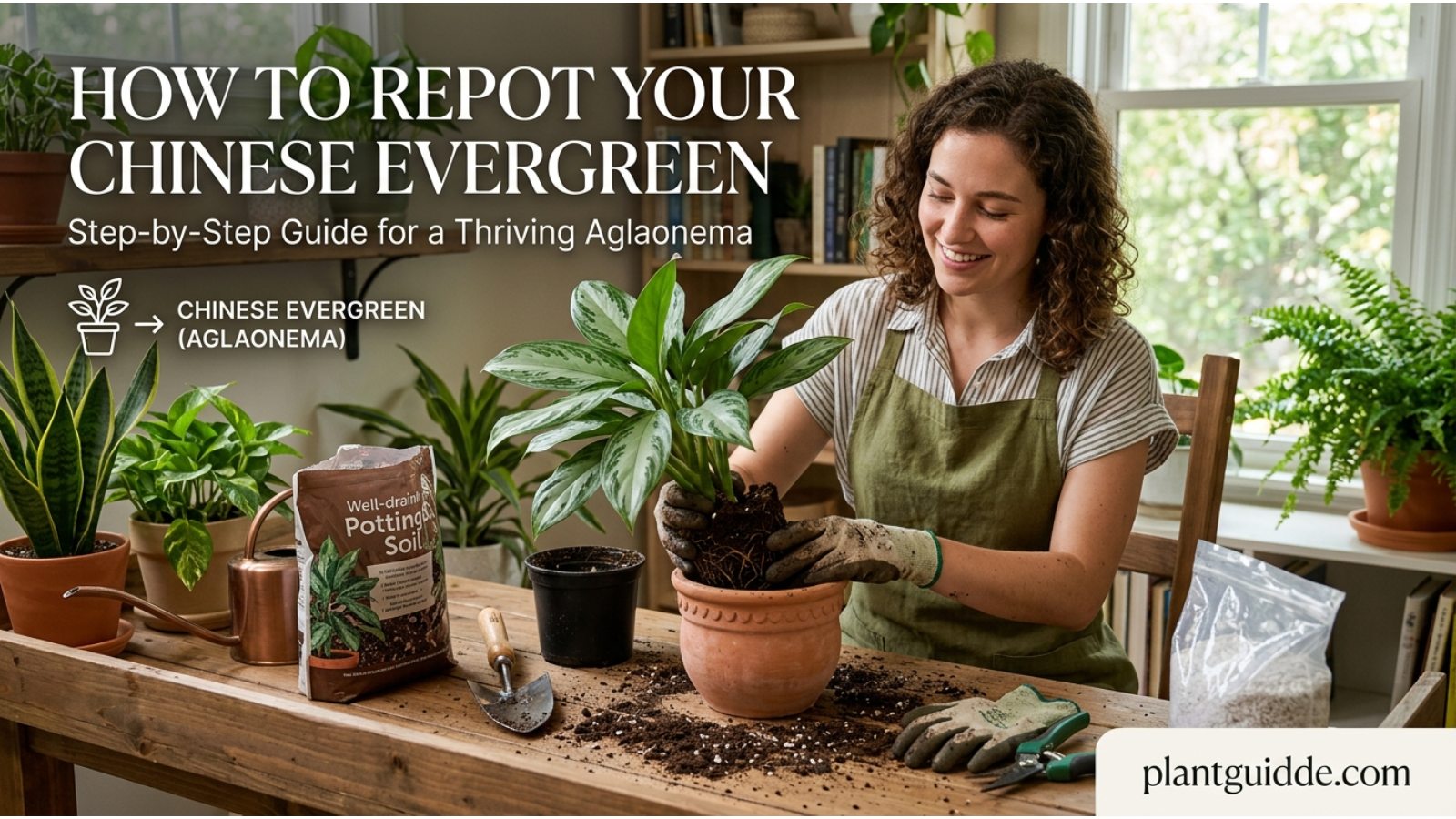
Division is particularly useful when a mature plant has developed multiple rooted sections. During repotting, carefully separate suitable sections while keeping healthy roots attached.
Propagation works best when the parent plant is healthy. Avoid propagating a severely stressed plant simply to “save” it before identifying the underlying problem.
Common Chinese Evergreen Problems
Chinese Evergreen Leaves Turning Yellow
Yellow leaves can have several causes, so the color alone does not provide a diagnosis.
Check:
- Is the soil staying wet for too long?
- Does the pot have drainage holes?
- Is the plant receiving extremely low light?
- Is the yellowing limited to an old leaf?
- Are the roots healthy?
If several leaves are yellowing while the soil remains constantly wet, excessive moisture deserves particular attention.
Brown Leaf Tips
Brown tips are often associated with environmental stress rather than one single cause.
Possible factors include:
- Dry indoor air
- Inconsistent watering
- Excess fertilizer or salt buildup
- Poor-quality water
- Root stress
- Strong light or heat
Look at the growing conditions as a whole instead of treating the brown tip itself.
Curling Leaves
Curling can occur when the plant is under water stress, exposed to excessive heat or light, or experiencing root problems.
Before watering, inspect the soil.
Chinese evergreen plant care the soil is dry, provide a thorough watering. If it is already wet, adding more water may make the problem worse.
Drooping Chinese Evergreen
Drooping does not automatically mean the plant needs water.
A dry root ball can cause wilting, but excessively wet soil can also lead to root damage that prevents the plant from taking up water properly.
Chinese evergreen plant care is why checking soil moisture is more reliable than responding to drooping alone.
Slow Growth
Slow growth can be completely normal for an indoor Aglaonema, particularly in low light.
However, unusually slow growth may indicate:
- Insufficient light
- Poor nutrition
- Root restriction
- Low temperatures
- Seasonal dormancy or reduced growth
- Damaged roots
If the plant is healthy but simply growing slowly, avoid making several major changes at once.
Chinese Evergreen Pests
Indoor Aglaonema can occasionally attract common houseplant pests such as spider mites, mealybugs, scale, and aphids.
Inspect the undersides of leaves and areas around stems when something looks unusual.
Watch for:
- Fine webbing
- Sticky residue
- Cotton-like clusters
- Small insects
- Speckled or distorted leaves
Early detection makes pest management much easier. Isolating an affected plant from nearby houseplants can also reduce the chance of pests spreading.
Common Chinese Evergreen Care Mistakes
Watering on a fixed schedule
“Water every Sunday” sounds simple, but plant water use changes throughout the year.
Better approach: check the soil and the plant’s growing conditions first.
Keeping the soil constantly wet
Chinese evergreen likes moisture but does not need waterlogged roots.
Better approach: use a well-draining mix and allow the upper soil to dry somewhat between waterings.
Treating every Aglaonema as a low-light plant
A green variety may tolerate a dimmer location better than a highly variegated one.
Better approach: match light levels to the specific variety.
Putting it in harsh sunlight
More light is not always better.
Better approach: aim for bright indirect light and protect foliage from intense direct sun.
Fertilizing a struggling plant
Extra fertilizer cannot compensate for damaged roots or poor environmental conditions.
Better approach: diagnose the growing environment first.
Using an oversized pot
A large container can retain more moisture around a relatively small root system.
Better approach: increase pot size gradually when repotting.
A Simple Chinese Evergreen Care Routine
If you want a straightforward routine, use this checklist:
Weekly: Check the soil and inspect the foliage for pests or unusual changes.
When the soil dries appropriately: Water thoroughly and allow excess water to drain.
During active growth: Provide moderate feeding according to the fertilizer label.
Every few weeks: Clean dusty leaves and check underneath them.
As needed: Remove dead or severely damaged foliage.
When roots become crowded: Repot into a slightly larger container with fresh, well-draining soil.
The important part is not performing these tasks on an exact schedule. It is learning to respond to what the plant and soil are telling you.
Chinese Evergreen Care: What to Change First
When an Aglaonema starts looking unhealthy, avoid changing five things simultaneously. That makes it difficult to determine what actually helped.
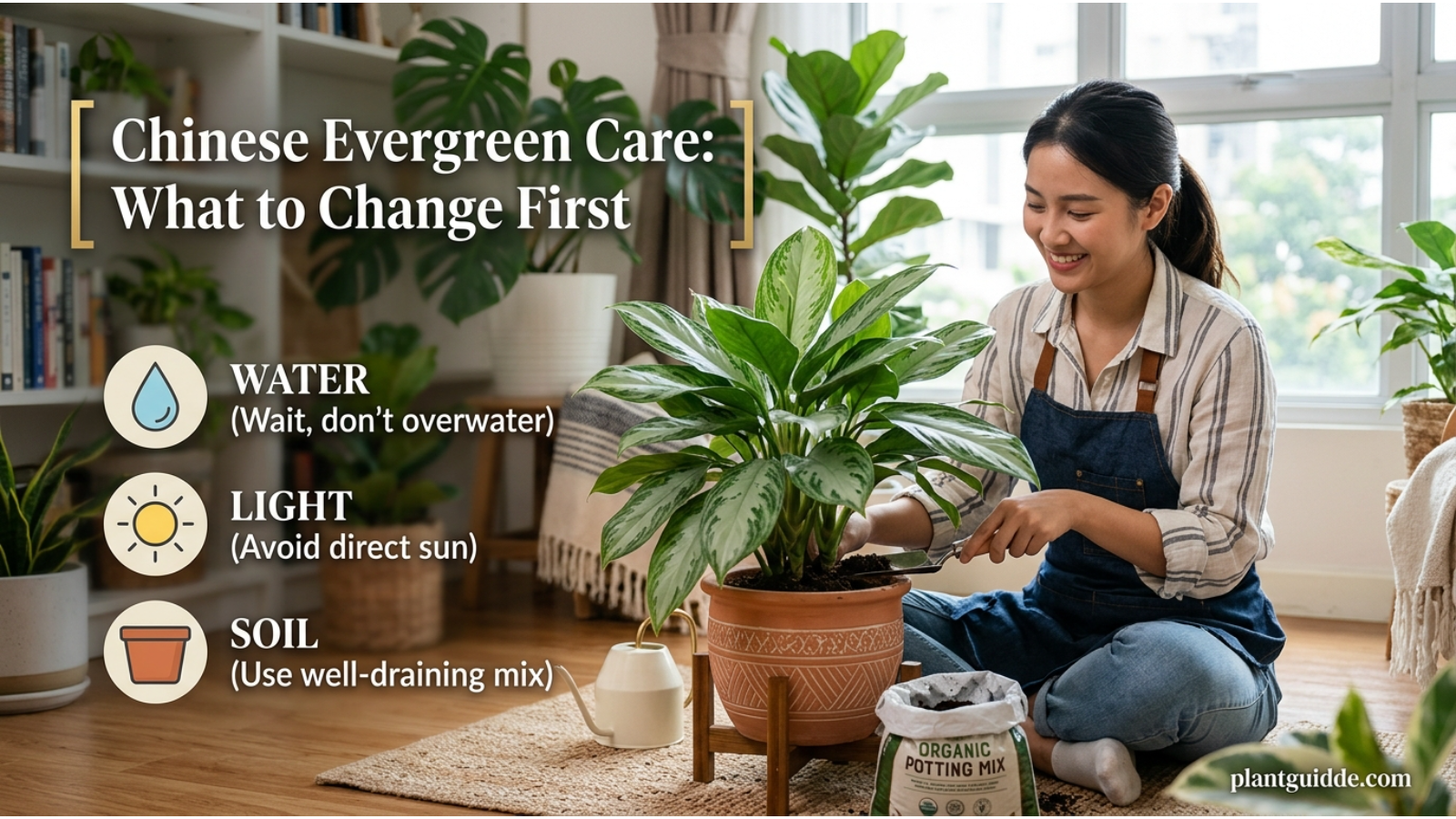
Instead, work through the environment in this order:
- Check the soil moisture. Is it bone dry or staying wet?
- Check drainage. Can excess water escape freely?
- Evaluate light. Is it extremely dark or receiving harsh direct sun?
- Check temperature and drafts. Is the plant exposed to sudden changes?
- Inspect for pests.
- Consider humidity and water quality.
- Only then consider fertilizer or repotting.
This diagnostic approach is often more effective than adding random treatments.
Image Suggestion: A realistic Chinese evergreen care guide showing a healthy Aglaonema beside examples of yellow leaves, brown tips, proper indirect light, and well-draining potting soil.
FAQs:
How often should I water a Chinese evergreen?
Water when the upper portion of the potting mix has dried somewhat rather than following a strict weekly schedule. The exact interval depends on light, temperature, pot size, soil, and season.
Does Chinese evergreen need direct sunlight?
Usually no. Bright indirect light is preferable. Some gentle morning sunlight may be tolerated, but intense direct afternoon sun can scorch the foliage.
Why are my Chinese evergreen leaves turning yellow?
Overwatering, poor drainage, low light, natural aging, and root problems can all cause yellow leaves. Check the soil and roots before changing your watering routine.
Can Chinese evergreen survive in low light?
Yes, particularly greener varieties. However, very low light can result in slower growth and less attractive or less pronounced variegation.
Should I mist my Chinese evergreen?
Misting can temporarily wet the leaves but does not reliably maintain higher humidity. If indoor air is consistently dry, a humidifier is generally a more dependable solution.
Final Thoughts
Successful Chinese evergreen plant care is less about following a rigid schedule and more about maintaining balance. Give Aglaonema suitable indirect light, water only when the soil has dried appropriately, use a well-draining growing medium, and keep the plant warm and reasonably humid.
When problems appear, resist the urge to immediately add more water or fertilizer. Check the soil, roots, light, temperature, and leaves first. That simple diagnostic habit can prevent many of the problems that make Chinese evergreen care seem more difficult than it really is.

Asad Mumtaz is a dedicated plant enthusiast and gardening writer with a passion for helping people care for their plants successfully. He specializes in plant care guides, indoor gardening, and practical growing tips for all skill levels. His content focuses on making gardening simple, enjoyable, and rewarding. Through his work, Asad shares reliable advice to help readers create thriving green spaces.