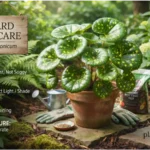
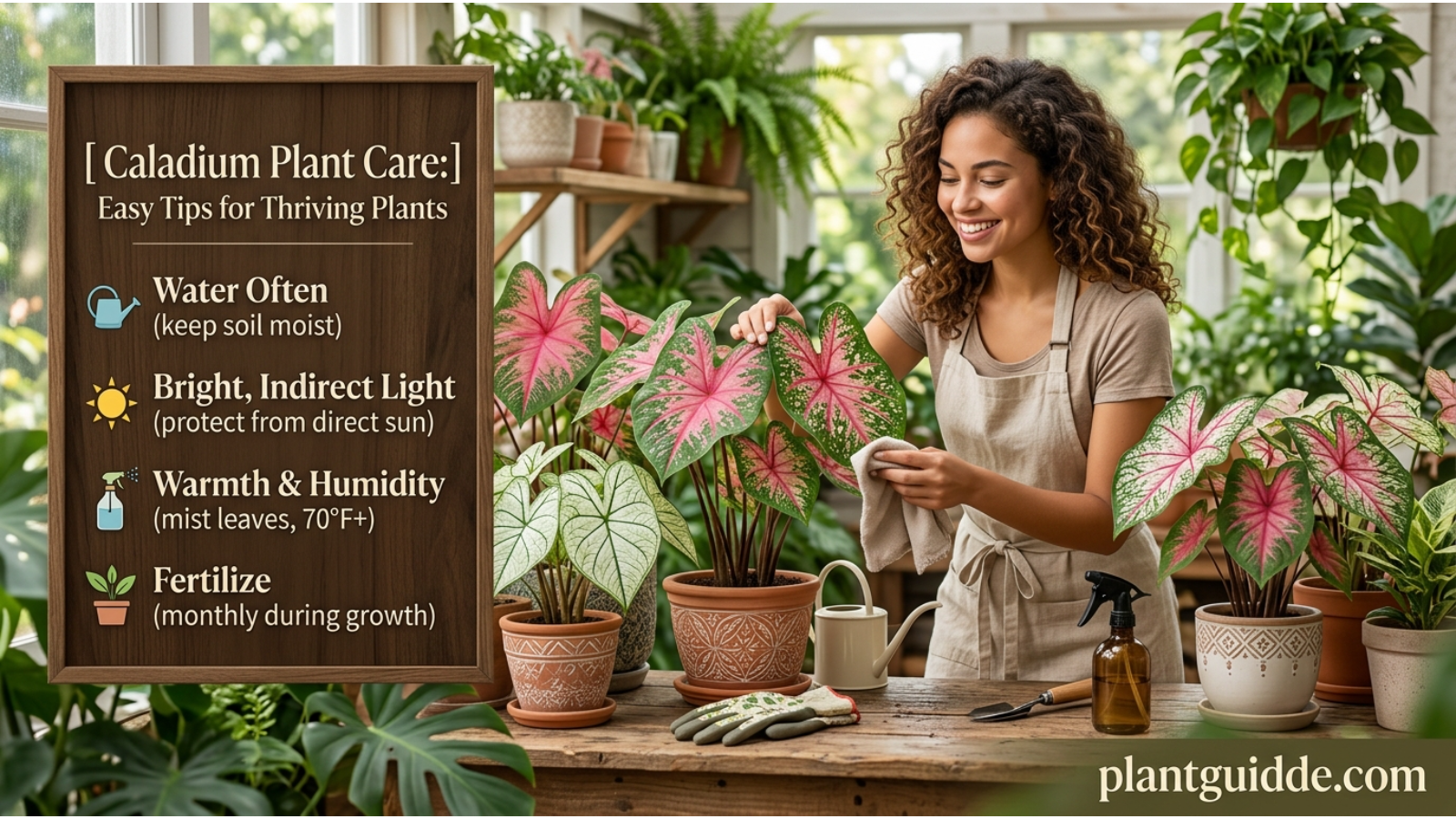
Caladium plant care are grown for their leaves rather than their flowers. Their heart-shaped foliage can display combinations of green, pink, red, white, and cream, making even a shaded corner look remarkably colorful. But that dramatic foliage also gives you useful clues when something is wrong.
Leaves that curl, droop, fade, develop brown edges, or suddenly turn yellow are often responding to a problem with moisture, temperature, light, or the roots. Good caladium plant care is therefore less about following a rigid watering schedule and more about understanding what the plant is telling you.
Caladium Plant Care you are growing caladiums indoors, in containers, or in a garden bed, the goal is the same: provide warmth, filtered or suitable light, moisture without soggy soil, and a growing medium that drains efficiently.
Quick Answer
Caladium plant care is mainly about bright, indirect light, consistently moist but well-draining soil, warmth, humidity, and protection from cold conditions. Keep the soil evenly moist during active growth without leaving the roots waterlogged. With suitable light and moisture, caladiums can produce striking, colorful foliage throughout the growing season.
What Is a Caladium?
Caladiums are tropical and subtropical foliage plants grown for their ornamental leaves. They are commonly associated with warm, humid environments and are particularly useful in areas where many flowering plants struggle with lower light.
Most cultivated caladiums grow from underground tubers. During warm growing conditions, the tuber produces leaves and roots. As temperatures fall and the growing season ends, the plant can naturally enter dormancy.
Caladium plant care growth cycle explains an important point that sometimes confuses new growers: a caladium losing its leaves at the end of the growing season is not necessarily dying.
If the tuber remains healthy and is protected from unsuitable cold and excessive moisture during dormancy, it can produce new growth when favorable conditions return.
Caladium Plant Care Requirements at a Glance
| Care factor | What caladiums generally prefer |
|---|---|
| Light | Bright filtered light or partial shade, depending on variety and climate |
| Soil | Loose, fertile, moisture-retentive but well-draining soil |
| Water | Consistent moisture during active growth |
| Humidity | Moderate to high humidity is beneficial |
| Temperature | Warm conditions; protect from cold |
| Fertilizer | Regular but moderate feeding during active growth |
| Pruning | Remove damaged or yellowing leaves as needed |
| Repotting | Usually when roots or tubers outgrow the container |
| Dormancy | Natural in many climates and growing situations |
The exact requirements can vary between varieties and growing environments, particularly regarding how much direct sunlight a particular cultivar can tolerate.
Light Requirements for Caladiums
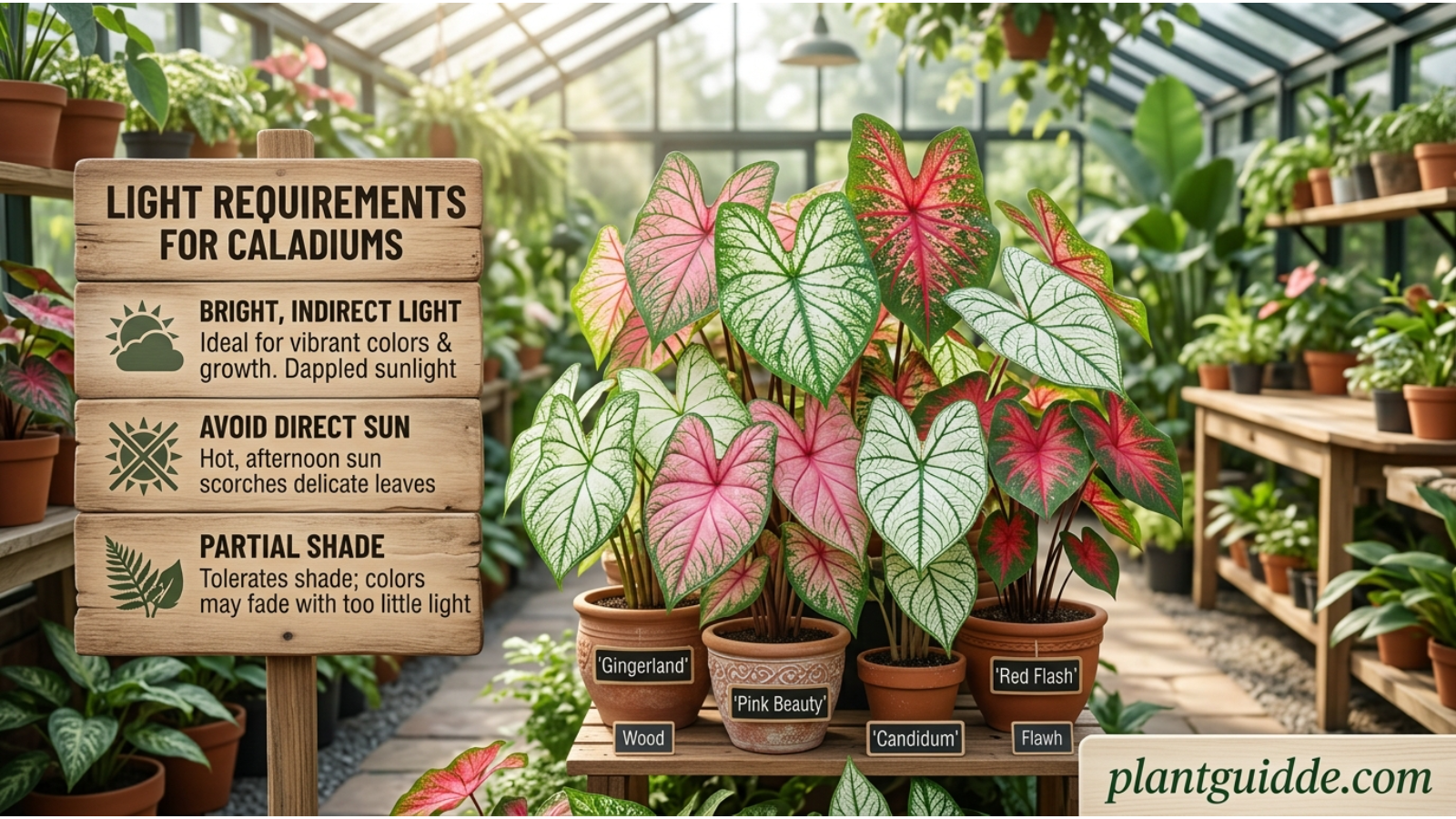
Light is one of the most important parts of successful caladium plant care because it influences both leaf color and overall growth.
Caladiums generally perform well in bright, filtered light or partial shade. Some varieties can tolerate more morning sun, while intense afternoon sunlight can scorch delicate leaves, especially in hot climates.
Too much direct sunlight may cause:
- Brown or bleached patches
- Faded leaf color
- Crispy edges
- Wilting despite moist soil
- Leaf scorch
Too little light can also create problems. A caladium may become weak, produce smaller leaves, or show less vibrant coloration when kept in a very dark location.
Where Should You Put an Indoor Caladium?
For indoor caladium care, place the plant near a bright window where it receives plenty of indirect light.
An east-facing window can be particularly useful because it typically provides gentler morning sunlight. Near a brighter south- or west-facing window, use distance or a sheer curtain if the direct rays are intense.
A practical test is to observe the leaves rather than relying only on the window direction. If foliage becomes bleached or scorched, reduce the intensity of the light. If growth becomes weak and sparse, gradually move the plant toward a brighter position.
How Often Should You Water a Caladium?
Caladiums prefer consistent moisture while actively growing, but that does not mean keeping the pot saturated.
Water when the upper portion of the soil has begun to dry rather than automatically watering on a fixed calendar. The exact frequency depends on temperature, humidity, pot size, soil composition, plant size, and light exposure.
When watering:
- Check the soil with your finger before adding water.
- If the surface has started to dry, water thoroughly.
- Allow excess water to drain from the container.
- Empty a saucer if water remains underneath.
- Check the soil again before the next watering.
During hot weather, a containerized caladium may require water much more frequently than one growing in a shaded garden bed.
Can You Overwater a Caladium?
Yes. Consistently wet soil can reduce oxygen around the roots and increase the risk of root problems.
The mistake is often subtle. A plant can look thirsty because its roots are damaged, even though the soil is already wet. Adding more water in that situation makes the underlying problem worse.
If the soil stays wet for many days, smells unpleasant, or the plant repeatedly wilts despite saturated soil, inspect the drainage and root condition rather than simply watering more.
Best Soil for Caladiums
The best caladium soil holds enough moisture to prevent rapid drying while still allowing excess water to move away from the roots.
A useful container mix should be:
- Rich in organic matter
- Loose and airy
- Moisture-retentive without becoming muddy
- Well drained
- Suitable for containers
Avoid heavy garden soil in containers because it can compact around the roots and restrict drainage.
A container with drainage holes is just as important as the soil itself. Even a well-designed potting mix can become problematic when excess water has nowhere to escape.
Humidity for Caladiums
Because caladiums originate from warm, humid environments, they generally appreciate higher humidity than the average dry indoor room provides.
Low humidity can contribute to:
- Brown leaf edges
- Crispy foliage
- Faster moisture loss
- Leaf curling
- General stress
You can improve the growing environment by grouping plants together, using a humidifier, or placing the plant in a naturally more humid room.
Be careful with constant leaf misting. Misting may temporarily increase moisture on the leaf surface, but it is not a reliable substitute for maintaining appropriate room humidity. Poor airflow combined with frequently wet foliage can also encourage disease problems.
Temperature and Airflow
Warm temperatures are essential for active caladium growth.
Protect the plant from:
- Cold drafts
- Chilly windows
- Sudden temperature changes
- Air-conditioning vents
- Cold outdoor nights
A caladium that is exposed to cold conditions may stop growing, wilt, or begin losing foliage.
At the same time, warm and humid does not mean stagnant. Good airflow helps foliage dry naturally and reduces the likelihood of prolonged moisture sitting on leaves.
The ideal environment is therefore warm, humid, and reasonably well ventilated, rather than hot, enclosed, and constantly wet.
Fertilizing Caladiums
Caladiums can benefit from regular feeding while they are actively producing foliage.
Use a balanced fertilizer according to the product’s label directions. Avoid assuming that more fertilizer will produce better leaves. Excessive fertilizer can damage roots and create nutrient imbalances.
For container plants, nutrients may be depleted more quickly because repeated watering can carry soluble nutrients out of the pot.
A sensible approach is to feed moderately during active growth and reduce or stop routine fertilization when the plant enters dormancy.
How to Grow Caladiums in Containers
Caladiums can be excellent container plants because their colorful leaves make an immediate visual impact.
Choose a container with:
- Drainage holes
- Enough room for root and tuber development
- A stable base that will not tip easily
- Fresh, well-draining potting mix
Avoid putting a small caladium into an unnecessarily huge container. A very large volume of wet soil can take longer to dry, increasing the chance of moisture-related root problems.
As the plant grows, monitor the drainage and soil moisture rather than simply increasing watering frequency.
Caladium Plant Care Outdoors
Outdoor caladiums are particularly effective in beds, borders, containers, and shaded patios.
In warm climates, they can grow vigorously when protected from harsh midday or afternoon sunlight. Their foliage can brighten areas where full-sun plants may struggle.
When planting outdoors, improve the soil if it is heavy or drains poorly. If the planting area stays saturated after rain, consider a raised bed, amended planting area, or container instead.
Caladiums also benefit from protection against strong winds because their large, thin leaves can tear easily.
How to Plant Caladium Tubers
If you are starting caladiums from tubers, timing and soil temperature matter.
Plant when conditions are reliably warm rather than immediately after a cold spell.
A practical process is:
- Choose a location with suitable light and good drainage.
- Prepare loose, fertile soil.
- Plant the tuber at the depth recommended for its size and growing conditions.
- Cover it with soil.
- Water gently.
- Keep the soil appropriately moist as growth begins.
- Avoid disturbing the planting area while waiting for shoots to emerge.
Do not assume that a dormant tuber has failed simply because it does not produce leaves immediately. Cool soil can delay growth.
When and How to Prune Caladiums
Caladiums usually do not require heavy pruning.
Remove leaves when they are:
- Completely yellow
- Dead
- Severely damaged
- Diseased
Use clean scissors or pruners and cut the leaf stalk close to its base without unnecessarily disturbing healthy growth.
Removing badly damaged foliage improves appearance and allows you to monitor the plant more easily for pests or disease.
Avoid removing healthy leaves simply because they are older. Those leaves are still contributing energy to the plant while it is actively growing.
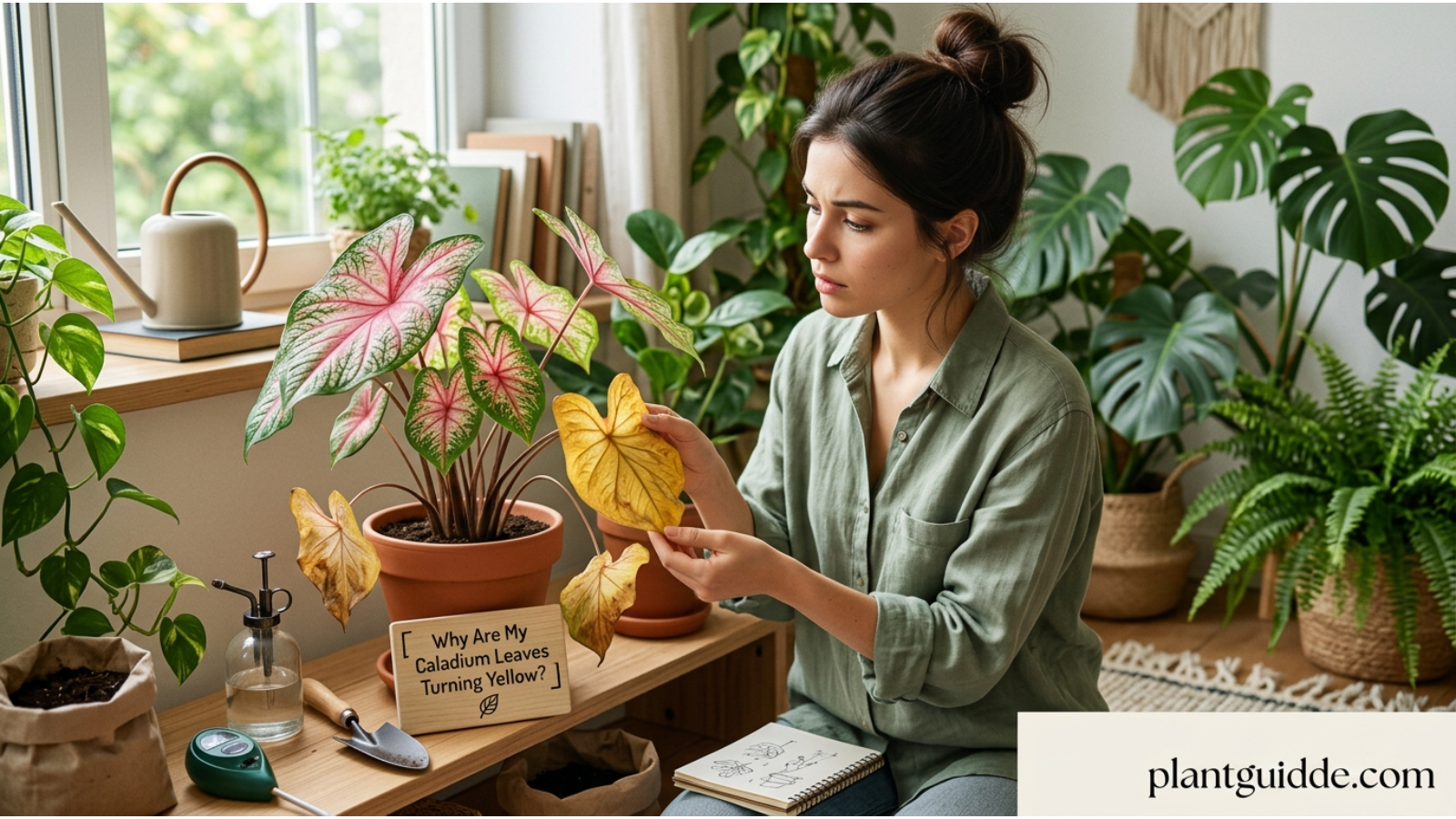
Why Are My Caladium Leaves Turning Yellow?
Yellow leaves can have several causes, so the color alone does not provide a complete diagnosis.
Common possibilities include:
Too Much Water
If the soil remains wet for extended periods, roots may become stressed. Yellowing accompanied by soft stems, persistent wilting, or unpleasant-smelling soil deserves immediate attention to drainage and root health.
Natural Aging
An occasional older leaf turning yellow is not necessarily a serious problem. Caladium foliage has a limited lifespan, and individual leaves can naturally decline.
Insufficient Light
Very low light can weaken growth and may contribute to poor-looking foliage.
Temperature Stress
Cold conditions can cause significant decline, especially when combined with wet soil.
The most useful troubleshooting method is to look at the entire growing environment, not just the yellow leaf.
Why Are My Caladium Leaves Curling?
Curling leaves can be caused by environmental stress.
Check for:
- Dry soil
- Low humidity
- Excessive sunlight
- Heat stress
- Cold exposure
- Root damage
- Inconsistent watering
If the soil is dry and the leaves are curling, water thoroughly and monitor the plant over the following days.
If the soil is already saturated, do not automatically add more water. Investigate drainage and the roots instead.
Why Are Caladium Leaves Turning Brown?
Brown edges or patches often indicate stress rather than a single specific disease.
Possible causes include:
- Dry soil
- Low humidity
- Excessive direct sunlight
- Fertilizer buildup
- Root stress
- Physical damage
If only the tips are brown, examine recent watering and humidity patterns. If large sections of leaves are becoming brown or bleached, check light intensity and temperature as well.
A useful habit is to compare new growth with older leaves. If new leaves emerge healthy while older leaves show damage, the problem may have already been corrected.
Caladium Leaves Drooping: What Should You Do?
Drooping is a signal, not a diagnosis.
First check the soil.
If the soil is dry: water thoroughly and observe whether the leaves recover.
If the soil is wet: do not water again. Check drainage, roots, temperature, and whether the container is holding excessive moisture.
If the plant is in intense sunlight: move it to a more suitable light level, especially during very hot periods.
If the weather has suddenly become cold: protect the plant from the low temperature.
This simple moisture check prevents one of the most common mistakes in plant care: treating every case of drooping as dehydration.
Common Caladium Care Mistakes
Even healthy caladiums can decline when a few small mistakes become repeated habits.
Watering on a Fixed Schedule
Watering every Monday or every three days may sound convenient, but plants do not lose moisture at a constant rate.
Better approach: check the soil and adjust watering according to the environment.
Keeping the Soil Constantly Wet
Caladiums like moisture, but their roots still require oxygen.
Better approach: use a well-draining mix and water thoroughly without leaving the root zone permanently saturated.
Giving Too Much Direct Sun
More light is not automatically better.
Better approach: provide bright filtered light and gradually increase sun exposure only when the variety and climate make it appropriate.
Ignoring Drainage
A pot without drainage holes can turn normal watering into chronic waterlogging.
Better approach: always use containers that allow excess water to escape.
Fertilizing a Stressed Plant
Fertilizer is not a treatment for wilting, root problems, or cold damage.
Better approach: correct environmental stress first and feed only when the plant is actively growing and able to use the nutrients.
Panicking When Leaves Die Back
Caladiums can naturally enter dormancy.
Better approach: understand the plant’s seasonal growth cycle before assuming a dormant tuber is dead.
Caladium Dormancy and Winter Care
Dormancy is one of the most important aspects of caladium care that beginners often overlook.
As temperatures decline or the natural growing season ends, foliage may yellow and disappear. In suitable climates, the tuber can remain in the soil and resume growth when warm conditions return.
In climates with cold winters, caladium tubers may need to be lifted and stored rather than exposed to freezing conditions.
When preparing dormant tubers:
- Allow the foliage to decline naturally when appropriate.
- Handle the tubers carefully.
- Keep them in a dry, protected storage environment suitable for dormant tubers.
- Avoid exposing them to freezing temperatures.
- Inspect stored tubers periodically for signs of rot or deterioration.
Storage requirements can vary with climate and cultivar, so local growing conditions should influence the exact approach.
Pests and Problems to Watch For
Caladiums can encounter common plant pests, particularly when grown indoors or in crowded conditions.
Watch foliage regularly for:
- Spider mites
- Aphids
- Thrips
- Whiteflies
- Mealybugs
Early detection is much easier than dealing with a severe infestation.
Check the undersides of leaves, along stems, and around new growth. Sticky residue, distorted leaves, fine webbing, or clusters of tiny insects can indicate pest activity.
Good airflow, plant hygiene, and avoiding unnecessary stress can help keep plants more resilient.
How to Keep Caladium Leaves Colorful
One of the main reasons people grow caladiums is their foliage coloration.
To maintain strong color:
- Give the plant suitable light.
- Avoid severe sunlight stress.
- Maintain consistent moisture.
- Keep temperatures warm.
- Feed moderately during active growth.
- Avoid letting the plant become repeatedly dehydrated.
Leaf color can naturally vary among cultivars, so a pale-looking plant is not always unhealthy. Compare its current appearance with the characteristics expected for that particular variety.
Indoor vs. Outdoor Caladium Care
| Factor | Indoor caladium | Outdoor caladium |
|---|---|---|
| Light | Bright filtered light near a suitable window | Partial shade or filtered light, depending on variety |
| Watering | Often controlled but can dry quickly near windows | Influenced by rainfall, heat, wind, and soil |
| Humidity | May require additional humidity | Often naturally higher outdoors |
| Temperature | Protect from drafts and cold windows | Protect from cold nights and extreme weather |
| Pests | Inspect frequently | Monitor leaves and surrounding plants |
| Drainage | Essential in containers | Essential in beds and containers |
Neither environment is automatically better. The right conditions matter more than whether the caladium is indoors or outdoors.
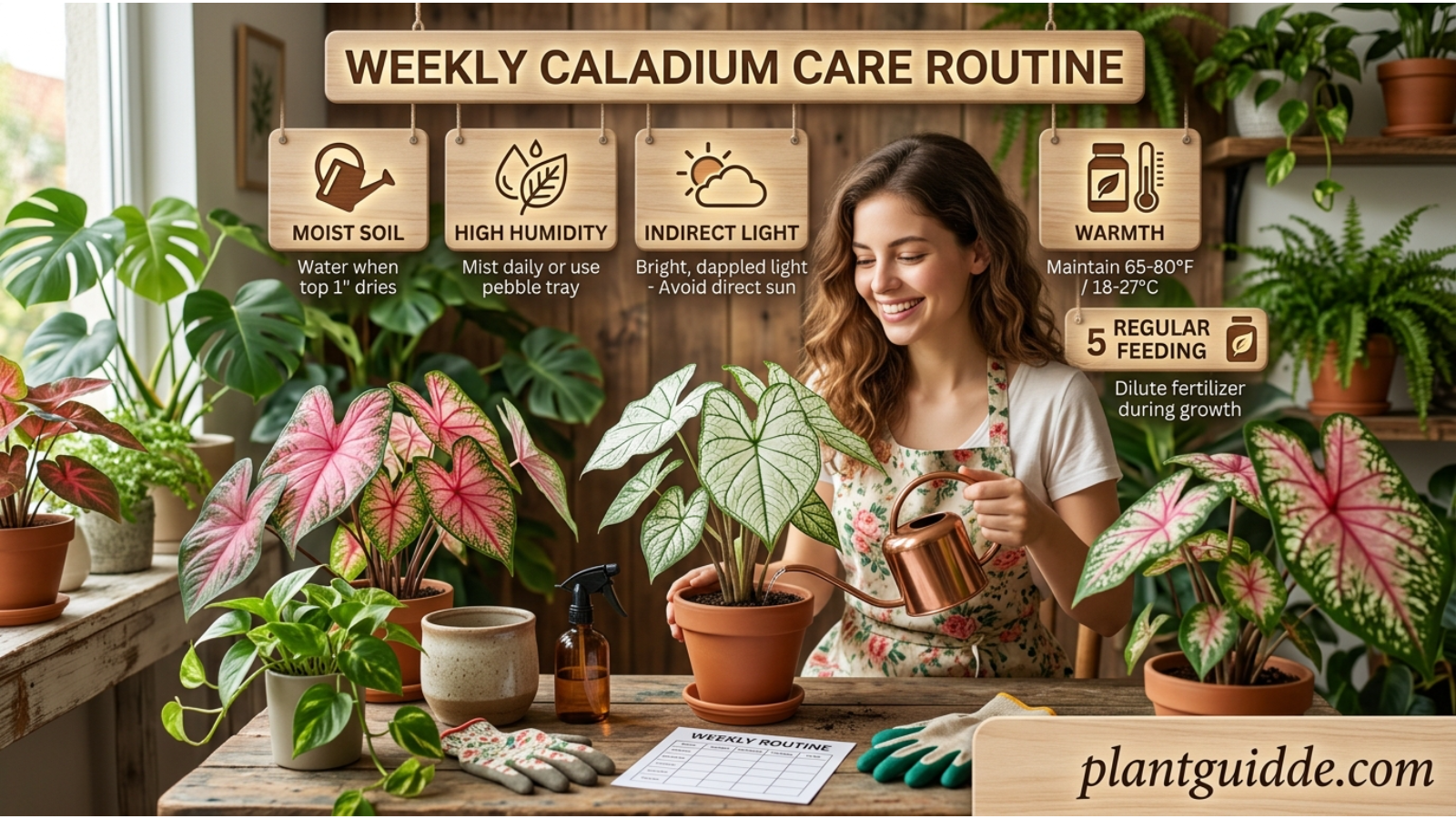
A Simple Weekly Caladium Care Routine
A short weekly inspection can prevent many problems from becoming severe.
Check:
1. Soil: Is it still wet, appropriately moist, or becoming dry?
2. Leaves: Look for curling, yellowing, brown edges, holes, spots, or unusual discoloration.
3. Undersides: Inspect for pests.
4. Light: Has the plant been exposed to stronger sunlight because of seasonal changes or a change in its location?
5. Temperature: Check for cold drafts or unusually high heat.
6. Drainage: Make sure water can escape freely after watering.
This takes only a few minutes but is more useful than blindly following a fixed care calendar.
FAQs:
How much sunlight does a caladium need?
Caladiums generally prefer bright filtered light or partial shade. Some cultivars can tolerate gentle morning sun, but strong afternoon sunlight may scorch the leaves, particularly in hot climates.
How often should I water a caladium?
Water when the soil has started to dry rather than following a fixed schedule. During active growth, keep the soil consistently moist but avoid leaving the roots in saturated soil.
Can caladiums grow indoors?
Yes. Caladiums can grow indoors when they receive adequate bright, filtered light, warmth, suitable humidity, and well-draining soil. A bright location away from cold drafts is usually preferable.
Why is my caladium dying after looking healthy?
Check the roots, soil moisture, temperature, and light before assuming the plant is dead. Sudden decline can result from waterlogged soil, cold exposure, severe dehydration, or intense sunlight. Seasonal dormancy can also naturally cause foliage to disappear.
Do caladiums come back every year?
In warm climates, caladiums can return from their underground tubers. In colder climates, the tubers may need protection or storage because freezing temperatures can damage or kill them.
Conclusion
Successful caladium plant care comes down to creating a stable growing environment rather than trying to make the plant grow faster through extra water or fertilizer. Give it suitable filtered light, warm temperatures, evenly moist but well-draining soil, and reasonable humidity.
When something goes wrong, start with the basics: check the soil, inspect the roots and leaves, evaluate the light, and consider recent temperature changes. That simple diagnostic approach can prevent many common caladium problems and help you maintain the colorful foliage that makes these plants so rewarding to grow.

Asad Mumtaz is a dedicated plant enthusiast and gardening writer with a passion for helping people care for their plants successfully. He specializes in plant care guides, indoor gardening, and practical growing tips for all skill levels. His content focuses on making gardening simple, enjoyable, and rewarding. Through his work, Asad shares reliable advice to help readers create thriving green spaces.