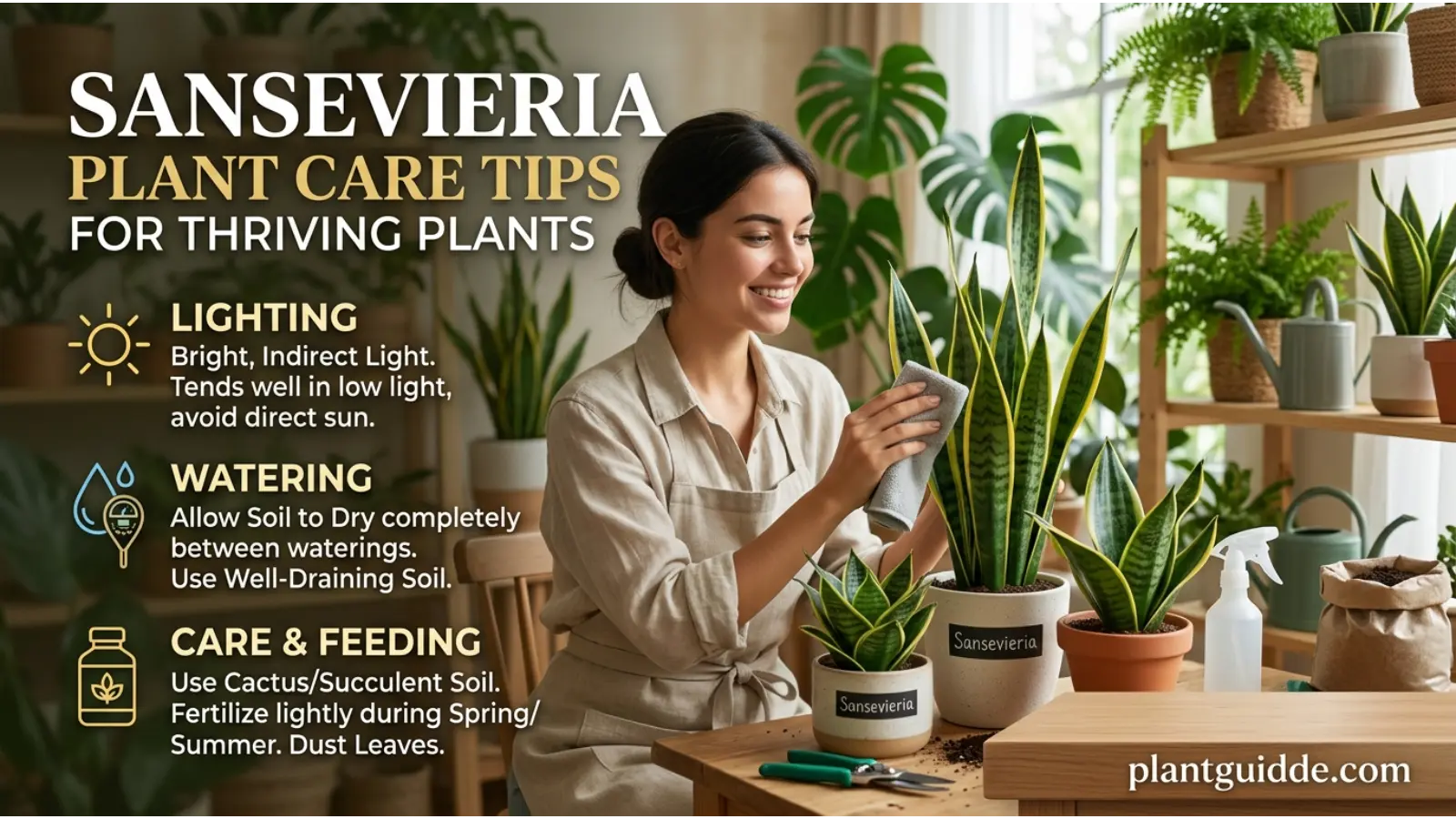
Sansevieria plant care is a popular houseplant known for its upright, sword-shaped leaves, attractive patterns, and ability to tolerate a range of indoor conditions. Whether you grow one in a bedroom, living room, office, or apartment, it can thrive without demanding constant attention.
However, easy-care does not mean no-care. Overwatering, compact soil, insufficient light, and unsuitable temperatures can gradually weaken the plant. Understanding these basic needs makes it easier to prevent common problems before they become serious.
This complete guide to sansevieria plant care explains how to choose the right location, water correctly, prepare suitable soil, encourage healthy growth, and troubleshoot common issues.
Quick Answer
Sansevieria plant care is simple when you provide bright, indirect light, well-draining soil, and infrequent watering. Let the soil dry completely between waterings, use a pot with drainage holes, and keep the plant away from frost and prolonged cold exposure. Snake plants tolerate low light and dry conditions, but excessive moisture and poor drainage can cause root rot and damaged leaves.
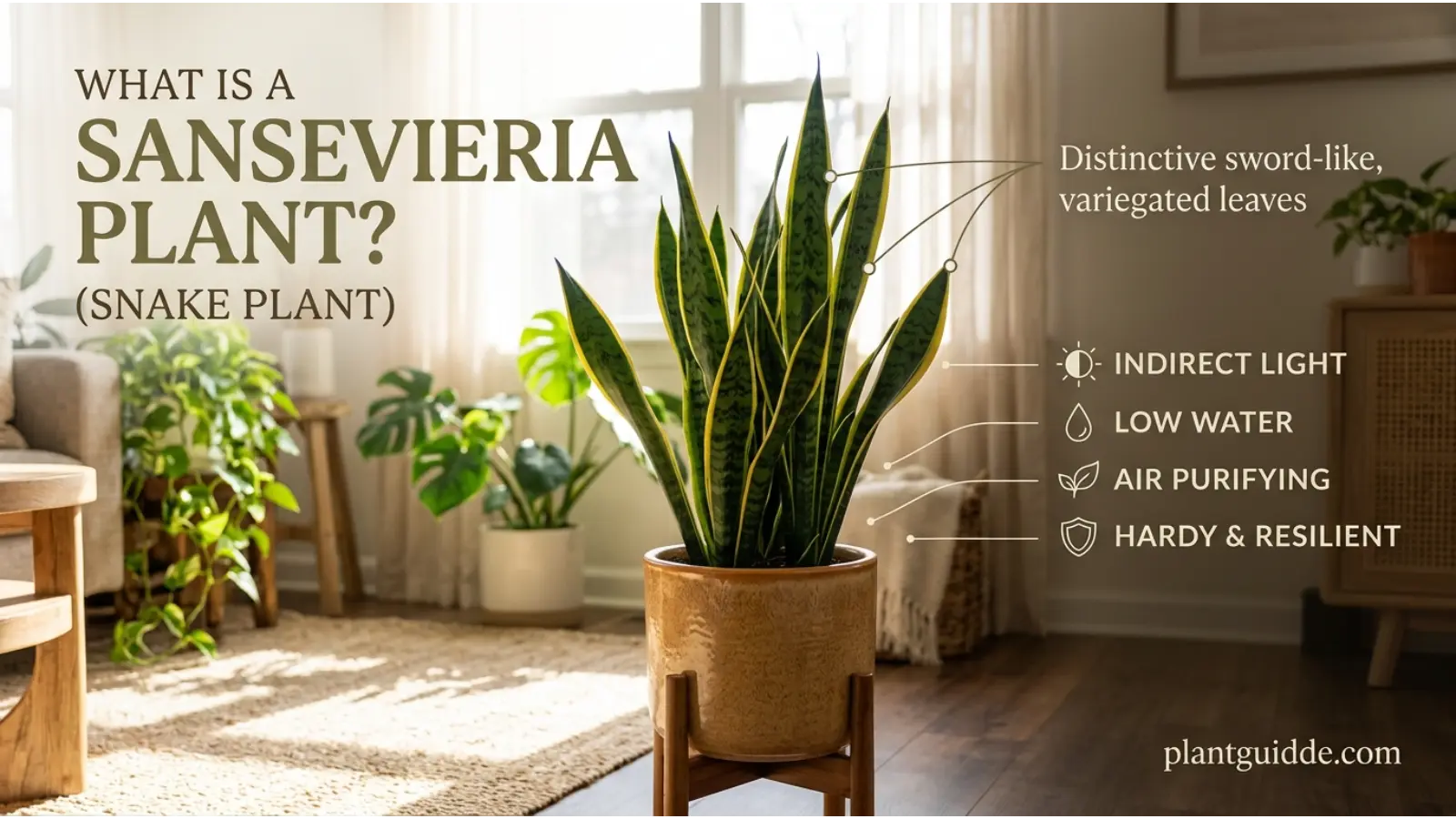
What Is a Sansevieria Plant?
Sansevieria is the former botanical genus name commonly associated with snake plants, also known as mother-in-law’s tongue. Many familiar varieties are now classified under the genus Dracaena, including Dracaena trifasciata, formerly known as Sansevieria trifasciata.
These plants are native to tropical and subtropical regions of Africa and other parts of the Old World. Their thick leaves and underground rhizomes store water, helping them withstand dry periods.
Popular varieties include:
- Laurentii: Recognized by its green leaves with yellow margins.
- Zeylanica: Features long, green leaves with darker crossbands.
- Moonshine: Known for its silvery-green foliage.
- Black Gold: Often displays dark green leaves with yellow edges.
- Bird’s Nest Snake Plant: A compact variety with shorter, rosette-shaped leaves.
Although varieties differ in size, shape, and coloration, most have similar basic growing requirements.
Sansevieria Plant Care Requirements at a Glance
| Care factor | Recommended conditions |
|---|---|
| Light | Bright, indirect light; tolerates lower light |
| Water | Water after the soil dries completely |
| Soil | Well-draining cactus or succulent mix |
| Pot | Drainage holes and suitable root space |
| Temperature | Approximately 65–85°F (18–29°C) |
| Humidity | Average household humidity |
| Fertilizer | Light feeding during active growth |
| Repotting | When crowded or when soil deteriorates |
| Pruning | Remove dead or damaged leaves as needed |
Provide the Right Amount of Light
Light plays an important role in leaf color, growth rate, and overall plant health. Snake plants tolerate lower light than many houseplants, but they generally grow more vigorously when they receive adequate indirect sunlight.
Best lighting conditions
A location near an east-facing window often provides suitable light. You can also place a snake plant a few feet from a bright south- or west-facing window, adjusting the distance according to the intensity of sunlight.
Gentle morning sunlight can benefit many varieties, especially when they have been gradually acclimated. However, intense afternoon sun through glass may scorch the leaves.
Sansevieria plant care you keep your plant in a dim hallway or office, expect slower growth and longer intervals between waterings.
Signs of lighting problems
- Slow growth: The plant may need brighter light.
- Faded leaf patterns: Insufficient light may reduce the intensity of variegation.
- Scorched or bleached patches: Sunlight may be too intense.
- Uneven or leaning growth: The plant may be reaching toward a window.
Rotate the pot occasionally to encourage balanced growth. When moving a plant from a dark location to a brighter one, increase its exposure gradually.
Water Your Sansevieria Correctly
Watering is one of the most important aspects of sansevieria plant care. Because snake plants store moisture in their leaves and rhizomes, they can tolerate dry soil better than consistently wet roots.
The most common mistake is watering on a fixed weekly schedule without checking soil moisture.
How often should you water a snake plant?
There is no universal watering frequency. The right interval depends on light, temperature, pot size, soil composition, and the season.
Use these general guidelines:
- Spring and summer: Check soil moisture every one to two weeks.
- Fall and winter: Check less frequently as growth and water use often slow.
- Bright, warm rooms: Soil may dry more quickly.
- Cool, low-light rooms: Soil may remain damp for longer.
- Plastic pots: Moisture generally lasts longer than in comparable terracotta pots.
These intervals are for checking the soil, not automatic watering instructions.
Step-by-step watering method
- Check several inches below the soil surface using your finger or a wooden skewer.
- If the soil is still damp, wait before watering.
- Once the soil has dried completely, water thoroughly until excess water drains from the bottom.
- Empty the saucer or decorative outer pot.
- Check the soil again before the next watering.
Avoid giving small amounts of water repeatedly. Thorough watering followed by a complete drying period helps maintain a healthier root environment.
Practical tip: If your snake plant remains wet for many days, investigate the pot, soil, drainage, and light exposure. Simply watering less often may not resolve the problem if the soil is too dense or the container is oversized.
Choose Well-Draining Soil
Snake plants need a growing medium that drains freely while providing enough structure to support the roots.
Dense potting soil can remain wet for too long indoors, especially in low-light rooms. Prolonged saturation reduces oxygen around the roots and increases the risk of rot.
Best soil mix for sansevieria
A commercial cactus and succulent potting mix is a convenient starting point. If the mix retains excessive moisture, improve its structure with perlite or pumice.
A practical homemade blend may contain:
- Two parts standard indoor potting mix
- One part perlite or pumice
- One part coarse horticultural material suitable for improving drainage, if needed
The proportions can be adjusted according to the materials available and how quickly the mix dries in your home.
Avoid using heavy garden soil in indoor containers because it may compact and restrict airflow.
Why drainage matters
Healthy roots need both moisture and oxygen. If the soil remains saturated, roots may begin to deteriorate even when the leaves initially appear normal.
If several leaves turn yellow while the soil is persistently wet, check the root zone and drainage before adding fertilizer or increasing watering.
Select a Suitable Pot
A suitable pot helps control soil moisture and supports healthy root development.
Choose a container with drainage holes and enough room for the root ball without leaving a large volume of unused soil around it.
Terracotta vs. plastic pots
Terracotta pots: Their porous walls allow moisture to evaporate, making them useful for growers who tend to overwater.
Plastic pots: These retain moisture longer and may suit plants in warmer, brighter locations, provided the soil drains well.
Glazed ceramic pots: These can work well when drainage holes are present.
You can place a nursery pot inside a decorative container without drainage holes, but remove it for watering and allow it to drain fully before returning it.
Avoid placing stones at the bottom of a pot as a substitute for drainage holes. Stones do not correct an unsuitable growing medium or prevent waterlogged roots.
Maintain Suitable Temperature and Humidity
Snake plants generally adapt well to normal indoor temperatures and do not require a special humidity setup.
A temperature range of approximately 65–85°F (18–29°C) suits many indoor environments. Protect the plant from frost and prolonged cold exposure.
Avoid placing it directly beside cold drafts, air-conditioning vents, or heating outlets that create sudden temperature changes.
Average household humidity is usually sufficient. Misting is unnecessary and does not replace proper watering.
If brown tips appear, check soil moisture, root health, fertilizer use, and water quality before assuming that low humidity is responsible.
Fertilize During Active Growth
Snake plants are modest feeders and do not need frequent fertilization.
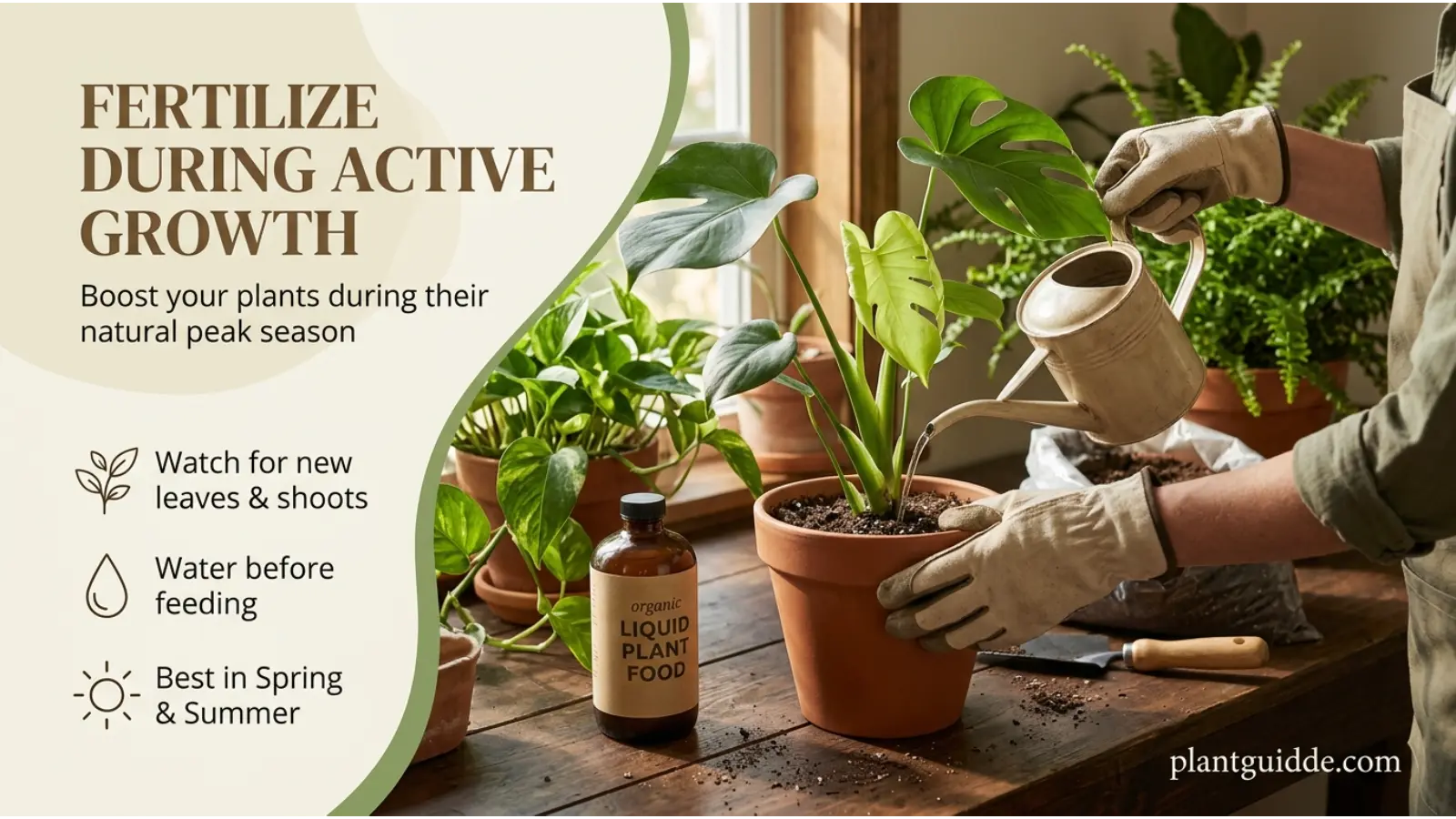
During spring and summer, you can apply a balanced liquid houseplant fertilizer diluted according to the manufacturer’s instructions. Feed only when the plant is healthy and actively growing.
Follow these practices:
- Avoid heavy feeding.
- Do not fertilize a plant with suspected root rot.
- Reduce or stop feeding when growth slows in winter.
- Watch for salt buildup if you fertilize frequently.
- Never assume that fertilizer can compensate for insufficient light.
Excess fertilizer can damage roots and contribute to brown leaf tips. A healthy growing environment is more important than frequent feeding.
Prune and Clean the Leaves
Routine maintenance keeps your snake plant attractive and helps you detect problems early.
Wipe dusty leaves with a soft, damp cloth. Use clean, sharp pruning shears to remove dead, rotten, or severely damaged leaves near the soil line.
If only the tip is brown, you can trim the damaged section while following the leaf’s natural shape. Avoid cutting across large areas of healthy tissue because the cut edge will remain visible.
Snake plant leaves do not become shorter after trimming. If a leaf is too tall, badly damaged, or collapsing, removing it entirely may produce a neater appearance.
Repot Your Sansevieria When Necessary
Snake plants tolerate being slightly root-bound, so annual repotting is rarely necessary.
Repot when the roots or rhizomes crowd the container, the pot cracks, the plant becomes unstable, or the soil has deteriorated and drains poorly.
How to repot a snake plant
- Select a pot with drainage holes that is only one size larger, if needed.
- Remove the plant gently from its current container.
- Inspect the roots and underground rhizomes.
- Remove clearly rotten roots with clean tools.
- Place the plant in fresh, well-draining soil at approximately its original depth.
- Allow the plant to settle and adjust watering to the root condition and soil moisture.
Healthy roots are generally firm. Rotten roots may be dark, mushy, or unpleasant-smelling.
If you remove substantial root rot, avoid immediately saturating the fresh potting mix. Let the root condition and moisture level guide your next watering.
Image Suggestion: Show a snake plant being repotted, with its underground rhizomes, healthy roots, a pot with drainage holes, and a well-draining succulent mix.
Propagate Snake Plants
You can propagate sansevieria through division or leaf cuttings. Division is usually the better option when you want new plants that retain the characteristics of a variegated cultivar.
Propagation by division
Mature snake plants develop underground rhizomes that produce new shoots.
To divide the plant:
- Remove the plant from its pot.
- Identify a healthy shoot with suitable roots or a rhizome section.
- Separate the shoot carefully, using a clean knife if necessary.
- Plant it in a small pot containing well-draining soil.
- Place it in suitable indirect light and avoid keeping the soil constantly wet.
Propagation by leaf cuttings
Healthy leaves can be cut into sections and rooted in an appropriate propagation medium. However, some variegated varieties may produce solid green offspring from leaf cuttings.
If you want to preserve the yellow margins or other defining features of a particular cultivar, propagation by division is generally more reliable.
Troubleshoot Common Sansevieria Problems
Snake plant symptoms often have several possible causes. Examine the leaves alongside soil moisture, root health, and recent changes in the environment before choosing a solution.
| Problem | Possible cause | What to do |
|---|---|---|
| Yellow leaves | Excess moisture, root stress, or natural aging | Check soil and inspect roots if multiple leaves are affected |
| Soft or mushy leaves | Overwatering or rot | Check the base and roots; remove rotten tissue |
| Wrinkled leaves | Prolonged dryness or damaged roots | Assess soil moisture and root health |
| Brown tips | Salt buildup, inconsistent watering, or physical damage | Review water quality, fertilizer, and watering |
| Slow growth | Low light, cool conditions, or seasonal slowdown | Improve indirect light and maintain suitable temperatures |
| Leaning leaves | Uneven light or weak root support | Rotate the pot and inspect its stability |
| Dark, soft patches | Rot or tissue injury | Check the roots and correct moisture problems |
Why are my sansevieria leaves turning yellow?
Yellowing often indicates excessive moisture or root stress, but an occasional older leaf may yellow naturally.
If multiple leaves turn yellow and the soil remains wet, check drainage and inspect the roots. Avoid adding more water until you understand why the mix is staying moist.
Why are the leaves soft or collapsing?
Soft leaves may indicate root rot, prolonged dryness with root damage, or injury near the base.
Check the soil before watering. Wet soil combined with mushy leaves is a reason to inspect the roots, not to add more water.
Why is my snake plant not growing?
Low light, cool conditions, and natural seasonal changes can slow growth. Mature plants may also produce new leaves slowly.
Provide brighter indirect light if possible, maintain healthy roots, and avoid trying to force growth with excess fertilizer or frequent repotting.
Common Sansevieria Plant Care Mistakes
Even a hardy snake plant can struggle when its basic requirements are overlooked.
Watering every week automatically: Check the soil rather than following a fixed schedule.
Keeping it in complete darkness: Low-light tolerance does not mean the plant can grow without light.
Using dense soil: Poor aeration can keep the roots wet for too long.
Choosing an oversized pot: Excess soil may prolong drying time.
Ignoring drainage: Standing water can contribute to root rot.
Overfertilizing: Excess nutrients may damage roots without improving growth.
Mistaking root rot for thirst: A plant with mushy leaves and wet soil may decline further if you water it again.
A simple watering record can help you learn how quickly the soil dries in your particular room. This is more reliable than copying a watering schedule designed for a different home.
A Simple Sansevieria Care Routine
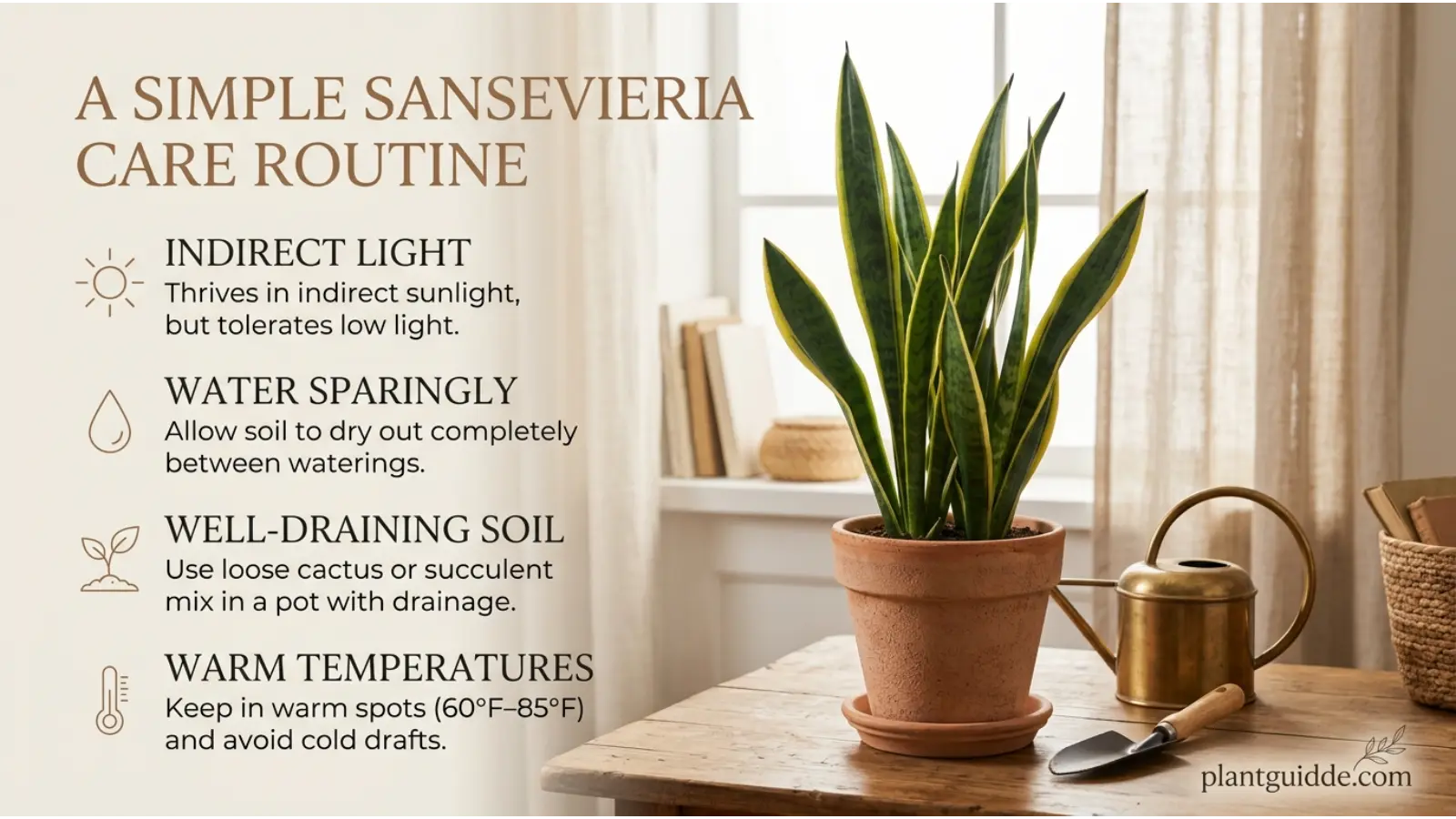
You do not need to maintain a snake plant every day. A brief inspection routine is usually enough.
- Weekly: Look for discoloration, damaged leaves, pests, or soft areas.
- Every one to two weeks: Check soil moisture if the plant may be approaching dryness.
- During spring and summer: Monitor new growth and fertilize lightly when appropriate.
- During fall and winter: Check moisture less frequently as growth slows.
- When necessary: Prune damaged leaves, inspect persistent problems, and repot crowded plants.
These are flexible guidelines, not fixed deadlines. A snake plant in a warm, bright room may need water much sooner than one in a cool, shaded space.
FAQs:
How often should you water a sansevieria plant?
Water when the soil has dried completely. Depending on the temperature, light, pot, and soil mix, this may take a week or several weeks. Always check soil moisture before watering.
Can sansevieria grow in low light?
Yes. Sansevieria tolerates low light, although growth is usually slower than in bright, indirect light. A windowless room requires an appropriate grow light for sustained growth.
Should you mist a snake plant?
No. Misting is generally unnecessary because snake plants tolerate average indoor humidity. Focus instead on suitable light, proper watering, and well-draining soil.
Why is my sansevieria dying even though I water it?
Overwatering, compact soil, poor drainage, and root rot are common possibilities. Check whether the soil is staying wet and inspect the roots if leaves become yellow or mushy. Adding more water without checking the root zone can worsen the problem.
Are sansevieria plants toxic to pets?
Yes. Snake plants contain compounds that can cause gastrointestinal irritation if cats or dogs chew or ingest them. Keep the plant away from pets and contact a veterinarian if an animal eats the plant and develops symptoms.
Conclusion
Successful sansevieria plant care depends on understanding the plant’s water-storing leaves and its need for well-aerated roots. Provide suitable indirect light, use a fast-draining soil mix, choose a pot with drainage holes, and let the soil dry completely between waterings.
Start by checking your plant’s current light and soil moisture before changing anything. Consistent conditions and careful observation will usually do more for its long-term health than frequent watering, excessive fertilizer, or unnecessary repotting.

Asad Mumtaz is a dedicated plant enthusiast and gardening writer with a passion for helping people care for their plants successfully. He specializes in plant care guides, indoor gardening, and practical growing tips for all skill levels. His content focuses on making gardening simple, enjoyable, and rewarding. Through his work, Asad shares reliable advice to help readers create thriving green spaces.