How to Take Care of a Prayer Plant for Healthy Growth. Their patterned leaves add color and texture to a room, while their unusual daily leaf movement makes them more interesting than the average houseplant. The name comes from the way the leaves fold upward in the evening, resembling hands raised in prayer.
But knowing how to take care of a prayer plant is not quite the same as caring for a tough, drought-tolerant houseplant.
Prayer plants can react quickly when their environment is too dry, too bright, too cold, or inconsistently watered. Brown leaf tips, curling leaves, yellow foliage, drooping, and crispy edges are often signs that something in the plant’s environment needs attention.
The good news is that prayer plant care becomes much easier when you stop treating watering, light, humidity, and soil as separate issues. They work together.
For example, a plant sitting in very dry air may lose moisture through its leaves faster than its roots can replace it. A plant kept in constantly wet soil may have the opposite problem: its roots may lack enough oxygen. Understanding these relationships is much more useful than simply following a fixed watering calendar.
This guide explains exactly what a prayer plant needs, how to establish a reliable care routine, and how to troubleshoot the most common problems.
Quick Answer
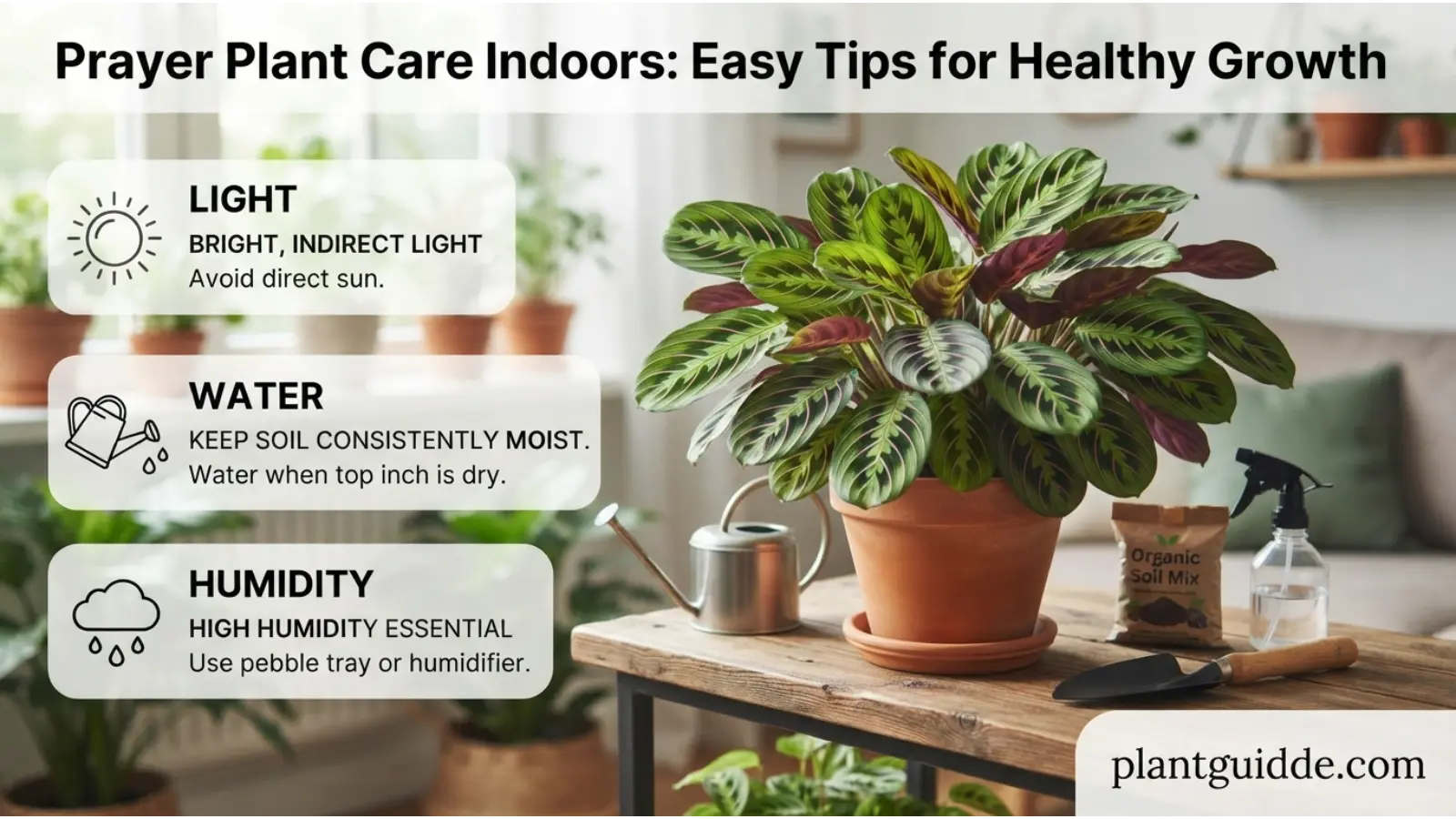
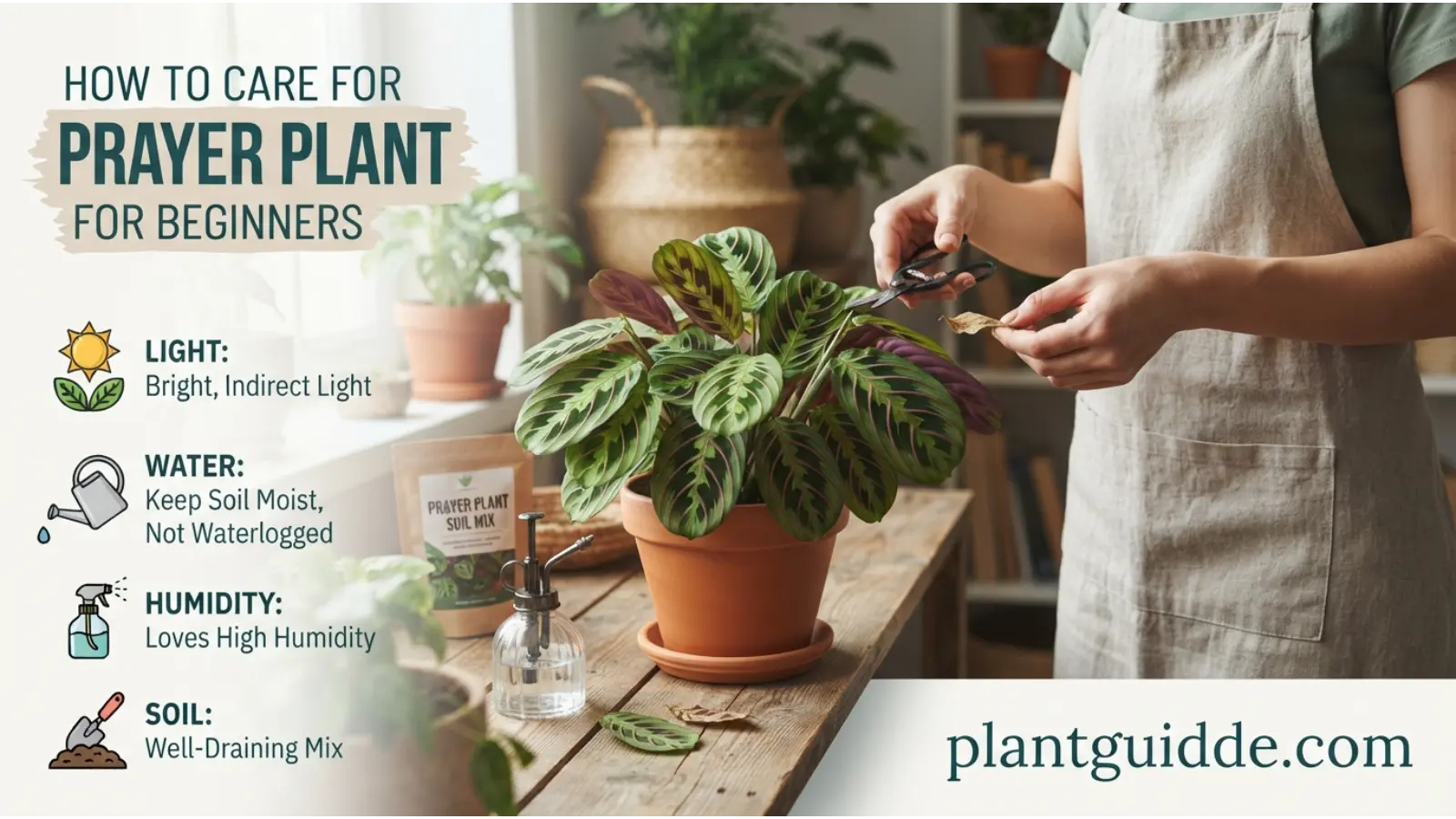
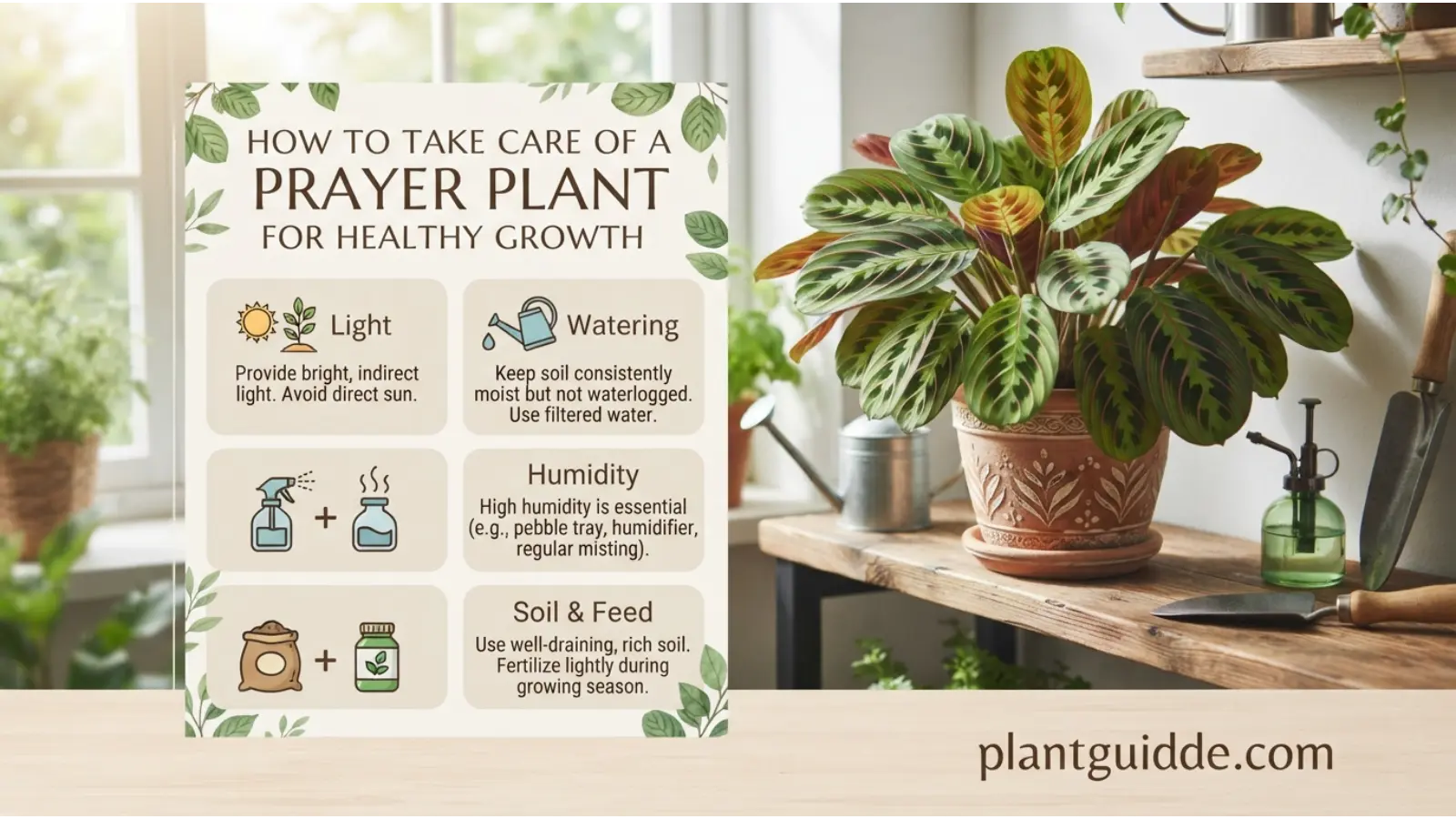
To take care of a prayer plant, give it bright, indirect light, consistently moist but well-draining soil, good humidity, and stable temperatures. Water when the upper part of the soil begins to dry rather than following a rigid schedule. Avoid harsh direct sunlight, soggy soil, cold drafts, and very dry air. Regularly inspect the leaves for curling, brown tips, yellowing, pests, or other signs of stress and adjust its growing conditions accordingly.
What Is a Prayer Plant?
The name “prayer plant” commonly refers to Maranta, particularly Maranta leuconeura. It belongs to the Marantaceae family and is a rhizomatous, clump-forming perennial known for its decorative foliage.
The leaves can have contrasting veins, spots, stripes, and colorful undersides depending on the variety. Some varieties are sold under names such as red prayer plant, green prayer plant, rabbit’s tracks, and herringbone plant.
Prayer plants are sometimes confused with calatheas and other members of the Marantaceae family. Their care requirements overlap considerably, but they are not all the same plant.
One useful distinction is this:
Maranta = true prayer plant.
Calathea and Goeppertia are closely related plants that are also commonly called prayer plants in the houseplant trade.
That matters when researching care because recommendations can vary between species and cultivars.
Prayer Plant Care at a Glance
| Care requirement | What your prayer plant needs |
|---|---|
| Light | Bright, indirect or filtered light |
| Direct sun | Avoid strong, prolonged direct sunlight |
| Water | Keep soil evenly moist, not waterlogged |
| Humidity | Moderate to high humidity is preferred |
| Temperature | Warm, stable indoor conditions |
| Soil | Moisture-retentive but well-draining |
| Pot | Drainage hole is essential |
| Fertilizer | Balanced fertilizer during active growth |
| Repotting | Usually when soil becomes compacted or roots outgrow the pot |
| Pruning | Mostly limited to removing damaged or dead foliage |
| Propagation | Division or suitable cuttings |
| Main problems | Brown tips, curling, yellow leaves, root problems, pests |
The RHS recommends bright filtered or indirect light, moist but well-drained growing conditions, regular feeding during growth, and high humidity for Maranta leuconeura.
Give Your Prayer Plant the Right Light
Light is one of the most important parts of prayer plant care.
A prayer plant generally performs best in bright, indirect light. This means the room can be bright, but intense sunlight should not fall directly on the foliage for long periods.
An east-facing window can work particularly well because it can provide gentle morning light. A bright north-facing location may also work depending on your home and climate.
What happens with too much light?
Strong direct sunlight can fade the attractive leaf patterns and may cause scorched or bleached patches.
If you notice:
- pale or faded markings
- crispy brown patches
- leaves looking washed out
- scorching on the side facing the window
move the plant farther away from the window or filter the sunlight with a sheer curtain.
What happens with too little light?
A prayer plant kept in very low light may grow slowly and produce weaker, less vigorous growth.
The solution isn’t necessarily to put it directly in the sun.
Instead, gradually move it toward a brighter filtered location.
Expert tip: Judge the light at the plant’s actual position, not at the window. A window may look bright to you while several feet away the plant receives dramatically less usable light.
Image Suggestion: A simple diagram showing a prayer plant positioned correctly near a bright window, with direct-sun and low-light zones labeled.
Learn How to Water a Prayer Plant Properly
Watering is where many new prayer-plant owners go wrong.
The goal isn’t to keep the soil permanently soaked. It is to prevent the root ball from becoming bone dry while also allowing excess water to drain away.
The RHS recommends keeping prayer plant compost moist but well drained and reducing watering somewhat during winter.
When should you water?
Instead of watering every Sunday or every three days, check the soil first.
Push a finger into the upper layer of the potting mix. If the surface and upper portion are beginning to dry, check deeper before watering.
A lightweight pot is another useful clue. Dry soil makes a container noticeably lighter.
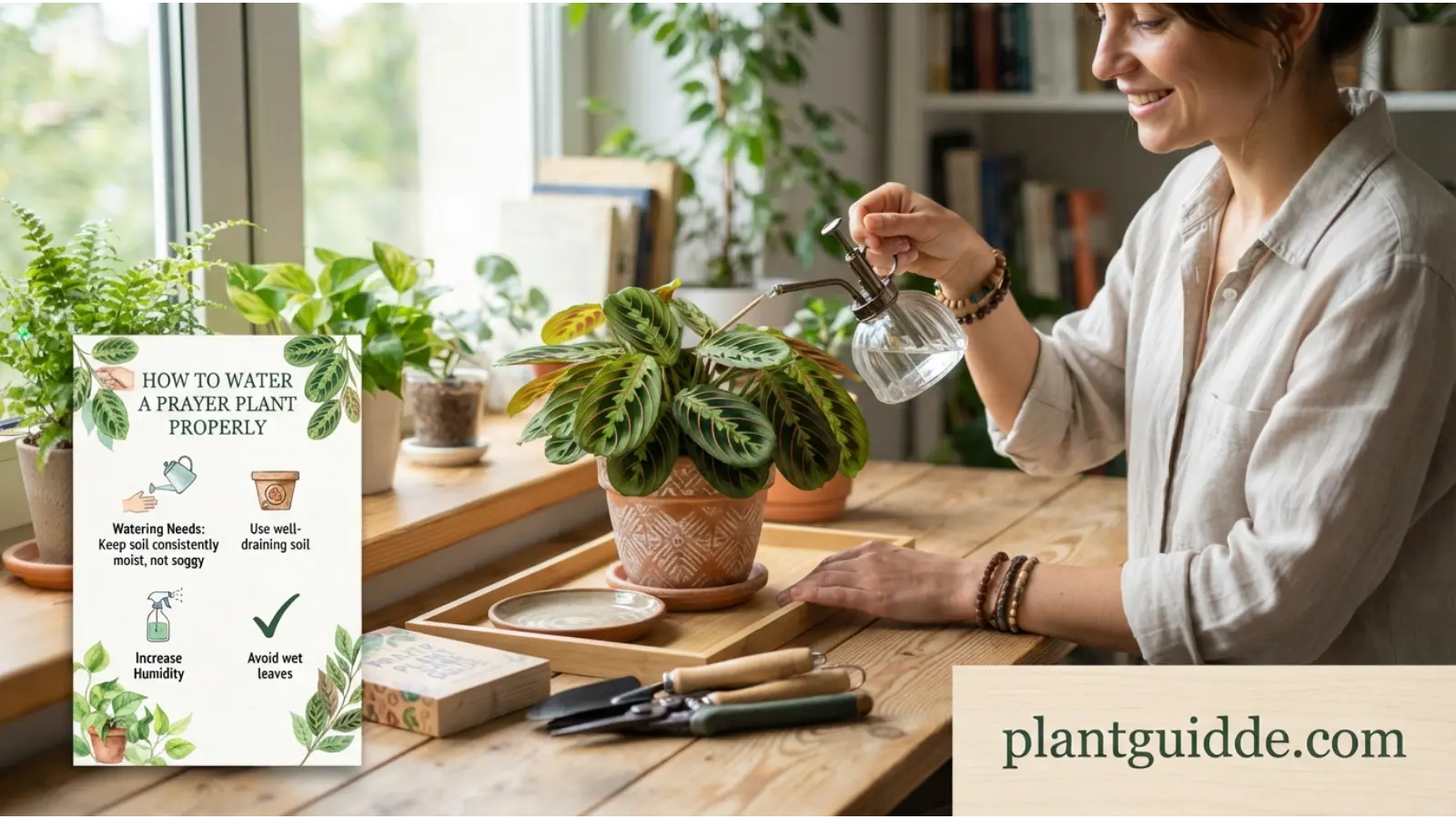
How to water
When your prayer plant needs water:
- Slowly water the soil around the plant.
- Continue until water begins to drain from the bottom.
- Allow the pot to drain completely.
- Empty standing water from the saucer or decorative container.
- Return the plant to its normal position.
This approach wets the entire root zone instead of giving the plant a tiny drink around the surface.
The RHS similarly recommends watering houseplants thoroughly so excess water escapes through the drainage hole and emptying water-filled saucers afterward.
Why overwatering is dangerous
Overwatering does not simply mean “too much water once.”
The bigger problem is soil that stays wet for too long.
Plant roots require oxygen. When all the air spaces in the soil remain filled with water, roots can become stressed and are more vulnerable to rot.
That is why a prayer plant can sometimes wilt even though its soil is soaking wet.
Important: Wilting does not automatically mean “water it.”
Always check the soil before adding more water.
Does Prayer Plant Water Quality Matter?
It can.
Some prayer plants and related Marantaceae are sensitive to components found in certain tap-water supplies. The RHS notes that some houseplants can be affected by chlorine or fluoride and recommends alternatives such as rainwater where appropriate.
If your prayer plant repeatedly develops brown leaf tips despite otherwise good care, water quality is one factor worth investigating.
Depending on your local water supply, you can consider:
- filtered water
- rainwater collected safely
- another low-mineral water source
However, don’t assume tap water is automatically the cause of every brown tip. Low humidity, inconsistent watering, salt accumulation, fertilizer buildup, and environmental stress can produce similar symptoms.
Keep Humidity High Enough
Prayer plants originate from tropical environments and generally appreciate humid conditions.
The RHS specifically recommends high humidity for Maranta leuconeura.
This becomes especially important when indoor heating or air conditioning makes the air dry.
Signs that dry air may be affecting your plant
You may notice:
- brown leaf tips
- crispy leaf margins
- curling leaves
- leaves becoming less lush
- new leaves struggling to unfurl
Humidity isn’t necessarily the only cause, but it is an important part of the investigation.
Best ways to increase humidity
A humidifier is generally one of the most predictable options.
You can also:
- group several plants together
- place the plant in a naturally humid room
- use a pebble tray appropriately
- reduce exposure to drying drafts
The RHS also recommends grouping plants and using trays containing moist gravel or similar material to increase local humidity.
What about misting?
Misting may temporarily increase moisture around the foliage, but it isn’t a substitute for maintaining suitable room humidity.
If your home is consistently dry, a humidifier provides much more dependable control.
Practical tip: Don’t place the plant directly beside a heater, radiator, air-conditioning vent, or strong fan. Even if the room’s average humidity is acceptable, continuous moving air can rapidly dry the leaves.
Image Suggestion: Infographic comparing three humidity setups: humidifier, grouped plants, and pebble tray.
Choose a Well-Draining Potting Mix
Prayer plants like moisture, but their roots should not sit in stagnant water.
This means the potting mix needs to balance two competing requirements:
water retention + air-filled drainage
A suitable indoor mix should hold enough moisture for the plant while allowing excess water to move through the pot.
A quality houseplant potting mix can be used, with additional aerating material if necessary.
The RHS recommends peat-free compost for growing Maranta leuconeura under glass and emphasizes moist but well-drained growing conditions.
The pot matters just as much as the soil
Always use a container with a drainage hole.
A decorative pot without drainage can become a hidden reservoir for excess water.
If you prefer a decorative cachepot, place the prayer plant in a nursery pot with drainage holes inside it.
Keep the Temperature Stable
Prayer plants prefer warm, stable conditions.
Avoid exposing them to:
- cold drafts
- sudden temperature changes
- air-conditioning blasts
- hot heating vents
- very cold windows during winter
The objective isn’t to create a tropical greenhouse inside your home.
It is simply to avoid repeatedly stressing the plant with extreme or rapidly changing conditions.
A stable indoor environment with suitable light, moisture, and humidity is usually more useful than constantly moving the plant around.
Feed Your Prayer Plant During Active Growth
Prayer plants need nutrients to produce healthy new foliage, particularly when they are actively growing.
The RHS recommends feeding prayer plants monthly during growth.
A balanced liquid houseplant fertilizer can be used according to its label directions.
Don’t make the common fertilizer mistake
More fertilizer does not mean faster growth.
Excess fertilizer can contribute to salt buildup in the growing medium and damage roots.
Never compensate for poor light, inadequate humidity, or watering problems by adding more fertilizer.
Think of fertilizer as support for good growing conditions, not a replacement for them.
Repot a Prayer Plant Only When It Needs It
Prayer plants don’t need to be repotted simply because a certain date has arrived.
Look for signs such as:
- roots filling the container
- roots emerging from drainage holes
- water running through the pot unusually quickly
- severely compacted potting mix
- growth slowing despite otherwise suitable conditions
The RHS general houseplant guidance suggests repotting when compost has degraded or become compacted and commonly recommends potting on every two to three years.
However, individual plants can vary.
Don’t choose an enormous pot
Moving a small prayer plant into a dramatically larger container can leave a large volume of wet soil around a relatively small root system.
A modest increase in pot size is usually more sensible.
When repotting:
- Choose a container with drainage.
- Use fresh, well-draining potting mix.
- Gently remove the plant.
- Inspect the roots.
- Remove obviously dead or severely damaged roots if necessary.
- Replant at approximately the same depth.
- Water thoroughly.
- Allow excess water to drain.
Image Suggestion: Step-by-step illustration of repotting a prayer plant, including the drainage hole and root ball.
Pruning and Cleaning Prayer Plant Leaves
Prayer plants generally don’t require heavy pruning.
Instead, remove leaves that are:
- completely dead
- badly damaged
- heavily diseased
- no longer contributing to the plant’s appearance
Use clean scissors or pruning shears.
If only the tips are brown, you don’t necessarily need to remove the entire leaf.
You can carefully trim the damaged portion while following the natural shape of the leaf. This improves appearance, but remember that trimming the brown area does not fix the underlying problem.
If new leaves continue developing brown tips, investigate watering, humidity, light, fertilizer buildup, and water quality.
Why Are My Prayer Plant Leaves Curling?
Curling leaves are one of the most common questions about prayer plant care.
Curling can occur for several different reasons, so don’t immediately assume the plant needs water.
Check these conditions:
The soil is too dry
If the potting mix is very dry and the leaves are curling or drooping, underwatering is a likely contributor.
Water thoroughly and monitor how the plant responds.
The air is too dry
Low humidity can cause leaf edges to dry and curl.
This is especially common when a plant is kept near heating or strong airflow.
The plant is receiving too much direct light
Strong sunlight can stress the foliage and contribute to curling or damage.
The roots are stressed
If the soil stays wet for a long time, root problems can prevent the plant from taking up water properly.
This is a particularly important point: wet soil and a thirsty-looking plant can occur at the same time when the roots are damaged.
Image Suggestion: Diagnostic infographic showing four causes of curled prayer plant leaves: dry soil, dry air, excessive light, and root stress.
Why Does My Prayer Plant Have Brown Tips?
Brown tips are usually a symptom rather than a diagnosis.
Possible causes include:
- low humidity
- inconsistent watering
- excessive fertilizer salts
- unsuitable water quality
- environmental stress
- root problems
Start by examining the whole care environment.
A useful troubleshooting sequence
Step 1: Check the soil moisture.
Is it extremely dry, consistently wet, or appropriately moist?
Step 2: Check the humidity.
Is the plant near a heater, air conditioner, or draft?
Step 3: Check the light.
Is strong direct sun hitting the foliage?
Step 4: Review fertilizer use.
Have you been feeding too frequently or using fertilizer stronger than recommended?
Step 5: Consider water quality.
If everything else appears correct, investigate whether your tap water could be contributing.
Don’t change five things simultaneously. If you dramatically alter light, watering, fertilizer, humidity, and location at once, you may not know what actually solved the problem.
Why Are Prayer Plant Leaves Turning Yellow?
Yellow leaves can have several causes.
An occasional older yellow leaf isn’t necessarily a disaster. But widespread or rapidly increasing yellowing deserves attention.
Common possibilities
Too much water:
Constantly wet soil can stress roots.
Poor drainage:
Even if you aren’t watering frequently, compacted soil or a container without proper drainage can keep roots wet.
Insufficient light:
Very low light can contribute to weak growth and poor foliage quality.
Natural aging:
Older leaves eventually decline.
Root problems:
If yellowing occurs together with persistent wet soil, unpleasant-smelling compost, or declining growth, inspect the root system.
Avoid treating every yellow leaf with fertilizer. Nutrient deficiency is only one possible explanation.
Why Is My Prayer Plant Drooping?
Drooping can be caused by either too little water or root stress from too much water.
This is why checking the soil is essential.
If the soil is dry
Water thoroughly and allow excess water to drain.
If the soil is wet
Do not automatically add more water.
Instead, assess drainage, soil condition, and the roots.
If the plant has remained wet for an extended period and continues to deteriorate, root damage may be involved.
This is one of the most important lessons for beginners:
A drooping plant is not always a thirsty plant.
Prayer Plant Leaves Not Opening or Moving?
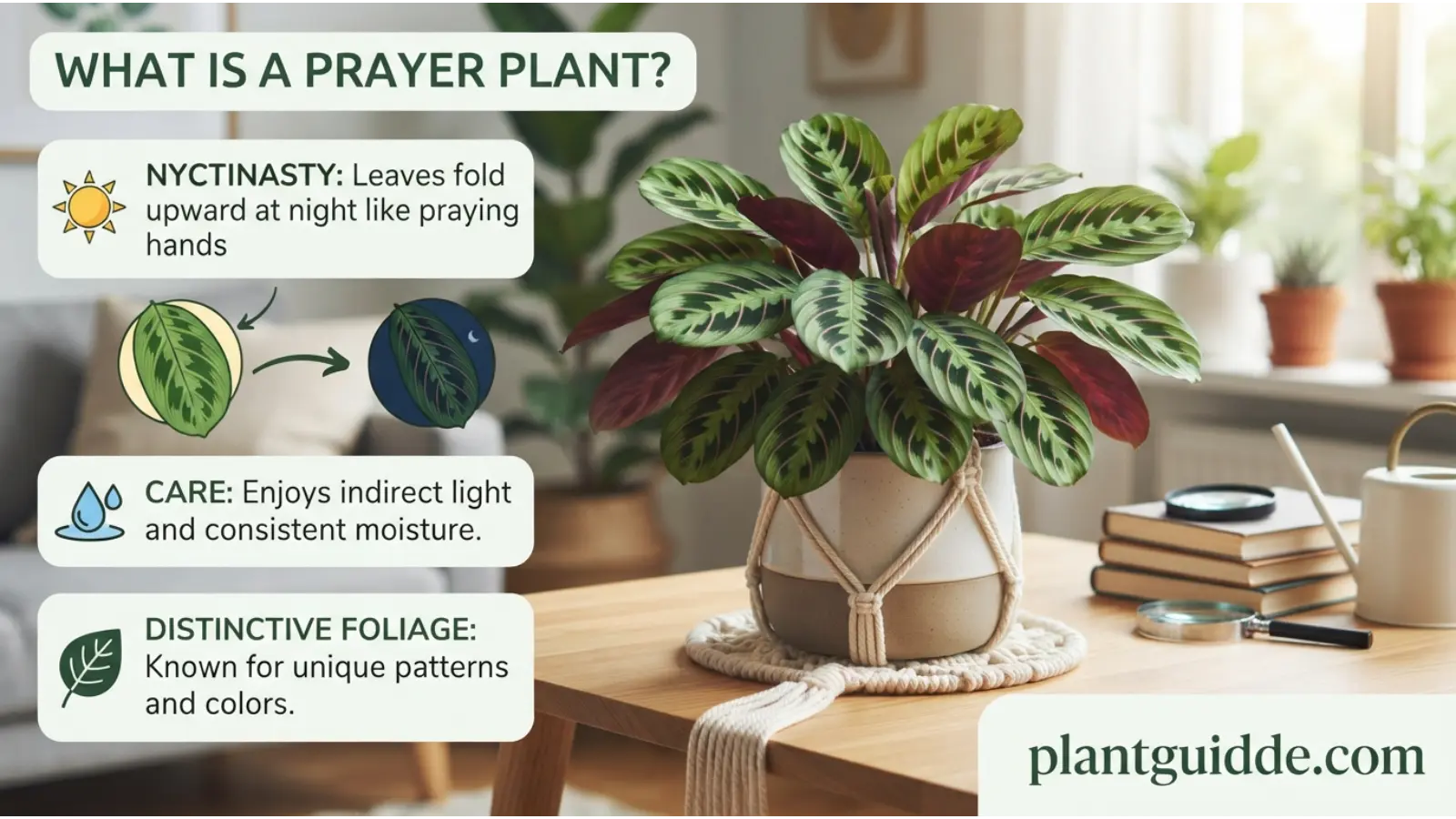
One of the fascinating characteristics of prayer plants is their daily leaf movement.
The leaves may change position between day and night. This movement is associated with specialized structures at the leaf bases and the plant’s response to its light-dark cycle.
If the movement seems less dramatic than expected, don’t automatically assume something is wrong.
Plants can vary in how noticeable their movement is, and environmental stress can also affect overall leaf behavior.
Focus first on the fundamentals:
- suitable light
- consistent moisture
- adequate humidity
- stable temperature
- healthy roots
A prayer plant doesn’t need to perform a dramatic nightly “prayer” to prove that it is healthy.
Common Prayer Plant Pests
Prayer plants can experience common indoor-plant pests, including spider mites and mealybugs. The RHS identifies these among pests that can affect Maranta leuconeura.
Inspect your plant regularly, especially:
- undersides of leaves
- leaf joints
- new growth
- crowded areas around the stems
Early detection makes treatment easier
If you notice unusual speckling, webbing, cottony material, sticky residue, or distorted new growth, isolate the affected plant from other houseplants while you investigate.
Treat pests according to an appropriate indoor-plant pest-management method and follow product directions carefully.
Regular inspection is more effective than waiting until an infestation becomes obvious.
How to Propagate a Prayer Plant
Propagation is another useful part of learning how to take care of a prayer plant, especially once you have a healthy, established specimen.
Prayer plants can be propagated through division, and suitable cuttings can also be used depending on the plant and method. The RHS lists division and cuttings among propagation options for Maranta.
Division
Division is particularly useful when a mature plant has developed multiple clumps.
A simplified process is:
- Remove the plant from its container.
- Examine the root system and natural clumps.
- Separate suitable sections carefully.
- Ensure each division has roots and healthy growth.
- Plant each section into an appropriately sized container.
- Water and maintain warm, humid conditions while it establishes.
Avoid aggressively splitting a small plant into many tiny pieces. Propagation works best when each division has enough roots and growth to establish itself.
Seasonal Prayer Plant Care
Your watering routine should change with the environment.
Spring and summer
During active growth:
- check soil moisture regularly
- provide strong filtered light
- maintain good humidity
- fertilize appropriately
- watch for faster drying during hot weather
Autumn and winter
Growth may slow as light levels decrease.
You may need to:
- water less frequently
- reduce or pause regular feeding depending on growth
- keep the plant away from cold drafts
- monitor indoor humidity if heating dries the air
The important principle is don’t follow the same watering schedule year-round.
A plant that needs water every few days during a hot, bright period may need considerably less during a cool, darker period.
The Most Common Prayer Plant Care Mistakes
Mistake 1: Putting it in direct afternoon sun
Prayer plants appreciate light, but intense direct sunlight can damage their decorative foliage.
Mistake 2: Watering on a fixed schedule
The calendar doesn’t know how warm your room is, how much light the plant receives, or how quickly the soil dries.
Check the plant instead.
Mistake 3: Keeping the soil constantly soaked
Moist does not mean waterlogged.
Roots need access to air.
Mistake 4: Ignoring humidity
A prayer plant may survive in relatively dry air but still develop recurring brown edges and crispy tips.
Mistake 5: Using a pot without drainage
This creates unnecessary risk of water accumulation.
Mistake 6: Fertilizing a stressed plant heavily
Fertilizer isn’t a cure for poor lighting, root problems, or dry air.
Mistake 7: Moving the plant repeatedly
Constantly changing its location makes it harder to determine what conditions actually work.
A Simple Weekly Prayer Plant Care Routine
Find a suitable position and give the plant time to respond.
You don’t need to spend hours caring for a prayer plant.
A short weekly inspection is often enough.
Once a week, check:
Soil:
Is the upper layer beginning to dry?
Leaves:
Are there new brown tips, yellow leaves, curling, spots, or pests?
Light:
Has the plant been exposed to stronger sunlight because the season changed?
Humidity:
Is it now sitting near heating, air conditioning, or another source of dry air?
Pot:
Is water draining normally?
Growth:
Are new leaves developing normally?
This routine turns prayer plant care into observation rather than guesswork.
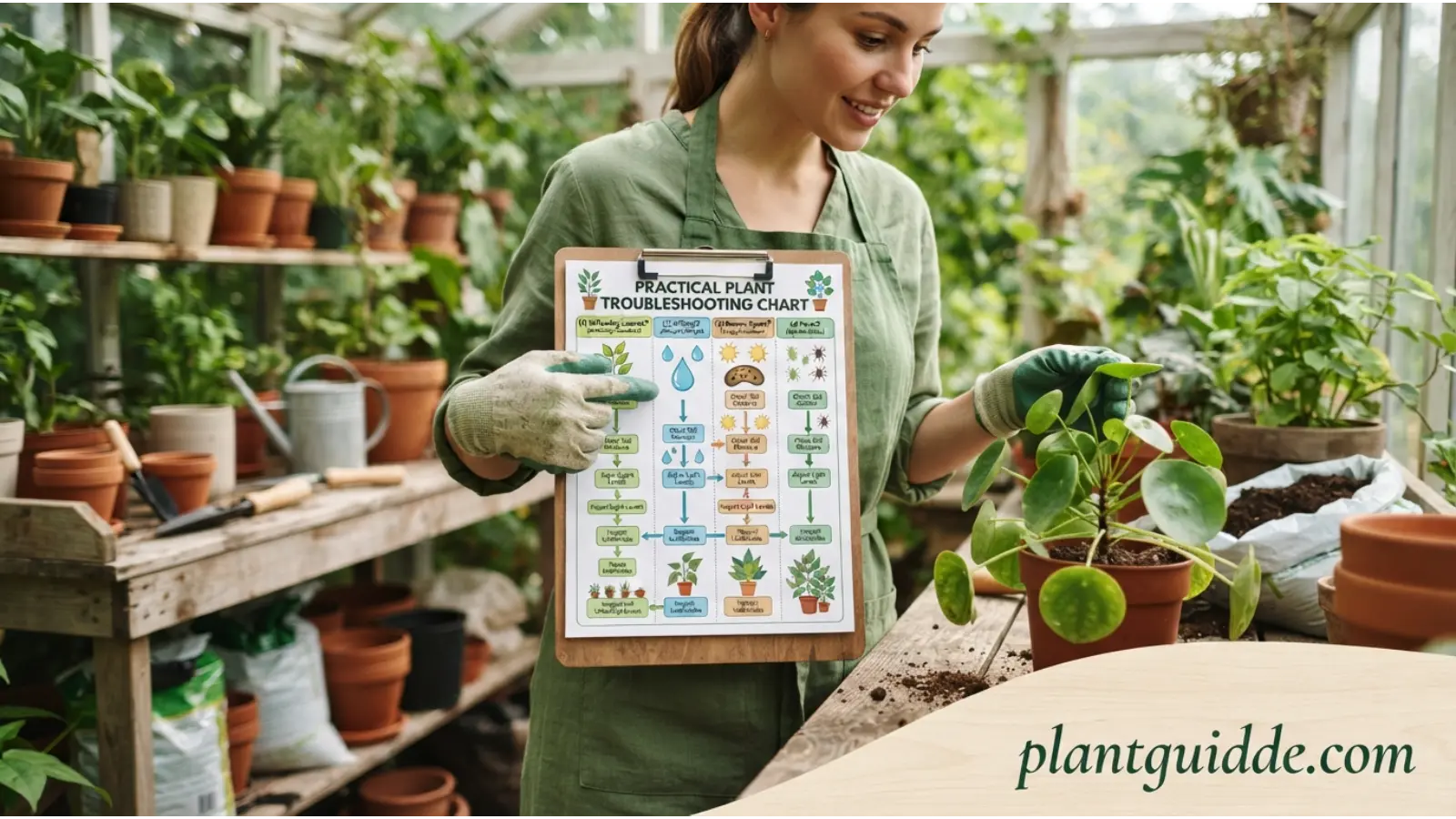
A Practical Troubleshooting Chart
| Symptom | First things to check | What to do |
|---|---|---|
| Brown tips | Humidity, watering, water quality, fertilizer | Correct the underlying stress |
| Curling leaves | Dry soil, dry air, strong light, roots | Check soil before watering |
| Yellow leaves | Wet soil, poor drainage, aging, low light | Inspect moisture and roots |
| Drooping | Dry soil or root stress | Check soil rather than assuming thirst |
| Crispy edges | Dry air, inconsistent moisture, light | Improve environmental consistency |
| Faded leaves | Excessive direct light | Move to filtered light |
| Slow growth | Low light, poor roots, inadequate nutrition | Check growing conditions |
| Persistent wet soil | Poor drainage, compact mix, excessive watering | Improve drainage and watering |
| Fine webbing | Possible spider mites | Inspect and isolate if necessary |
| Cottony insects | Possible mealybugs | Inspect and treat appropriately |
How to Tell if Your Prayer Plant Is Actually Healthy
Don’t judge the plant by one imperfect leaf.
A healthy prayer plant generally shows:
- firm, well-colored foliage
- active new growth
- good leaf pattern and coloration
- no widespread pest damage
- soil that drains properly
- no persistent foul-smelling or waterlogged growing medium
- stable growth appropriate to the season
A few older leaves may naturally decline.
The more useful question is:
Is the plant producing healthy new growth and maintaining most of its foliage?
That tells you much more than whether every leaf looks perfect.
The Best Place to Put a Prayer Plant Indoors
The ideal location combines several conditions rather than maximizing just one.
Look for a spot with:
- bright filtered light
- no harsh direct afternoon sun
- stable temperatures
- reasonable humidity
- protection from drafts
- enough space for air circulation
- easy access for watering and inspection
A bathroom can be excellent if it receives enough natural light. A bright bedroom or living room can also work.
Don’t choose a location solely because it looks attractive.
Choose the location where the plant can actually thrive.
FAQs,
How often should I water a prayer plant?
Water when the upper portion of the potting mix begins to dry rather than using a fixed schedule. The exact interval depends on temperature, light, humidity, pot size, and soil. Water thoroughly and allow excess water to drain.
Does a prayer plant need direct sunlight?
No. Prayer plants generally do best in bright, indirect or filtered light. Strong direct sunlight can fade or scorch their foliage.
Why are my prayer plant leaves turning brown?
Brown tips can result from low humidity, inconsistent watering, water-quality issues, fertilizer buildup, or other environmental stress. Check the complete growing environment rather than assuming there is only one cause.
Should I mist my prayer plant?
Misting can temporarily add moisture around the foliage, but it is not the most reliable way to maintain humidity. A humidifier or naturally humid room provides more consistent conditions.
Can prayer plants grow in low light?
They can tolerate less light than many sun-loving houseplants, but very low light can result in weak or slow growth. Bright filtered or indirect light is a better target.
Why is my prayer plant curling its leaves?
Check soil moisture, humidity, direct sunlight, temperature, and root health. Curling is a stress response with multiple possible causes, so inspect the plant before changing its watering routine.
Why is my prayer plant drooping even though the soil is wet?
Wet soil does not guarantee healthy roots. If the growing medium remains saturated, roots may become stressed and unable to function properly. Check drainage and root condition instead of adding more water.
Does a prayer plant need fertilizer?
Yes, feeding can support healthy growth during the active growing season. The RHS recommends monthly feeding for Maranta leuconeura.
When should I repot a prayer plant?
Repot when the plant has outgrown its container, roots are crowded, or the potting mix has become compacted or degraded. Avoid automatically moving a small plant into a very large pot.
Can I propagate a prayer plant?
Yes. Prayer plants can be propagated by division, and suitable cuttings can also be used. Division is particularly practical for mature plants that have developed multiple clumps.
Why does my prayer plant fold its leaves at night?
The characteristic movement is part of the plant’s natural daily response to changing light conditions. This unusual movement is one reason Maranta is commonly called the prayer plant.
Final Takeaway
Learning how to take care of a prayer plant is less about following a rigid schedule and more about learning to read the plant.
Give it bright filtered light, keep its soil moist but well drained, maintain good humidity, avoid extreme temperature changes, and use a pot with proper drainage. Then pay attention to what the leaves are telling you.
If the tips turn brown, investigate the environment. If the leaves curl, check the soil and humidity before automatically watering. If the plant droops while sitting in wet soil, consider root stress rather than adding more water.
The most successful prayer-plant owners aren’t necessarily the ones who water most often. They’re the ones who observe consistently and make small adjustments before a minor problem becomes a major one.
Once those fundamentals are right, prayer plants can reward you with vigorous patterned foliage and the distinctive daily leaf movement that makes them such enjoyable houseplants.
Related topics worth covering next: prayer plant care indoors, why prayer plant leaves curl, how often to water a prayer plant, prayer plant humidity requirements, prayer plant propagation, and how to fix brown leaves on a prayer plant.

Asad Mumtaz is a dedicated plant enthusiast and gardening writer with a passion for helping people care for their plants successfully. He specializes in plant care guides, indoor gardening, and practical growing tips for all skill levels. His content focuses on making gardening simple, enjoyable, and rewarding. Through his work, Asad shares reliable advice to help readers create thriving green spaces.