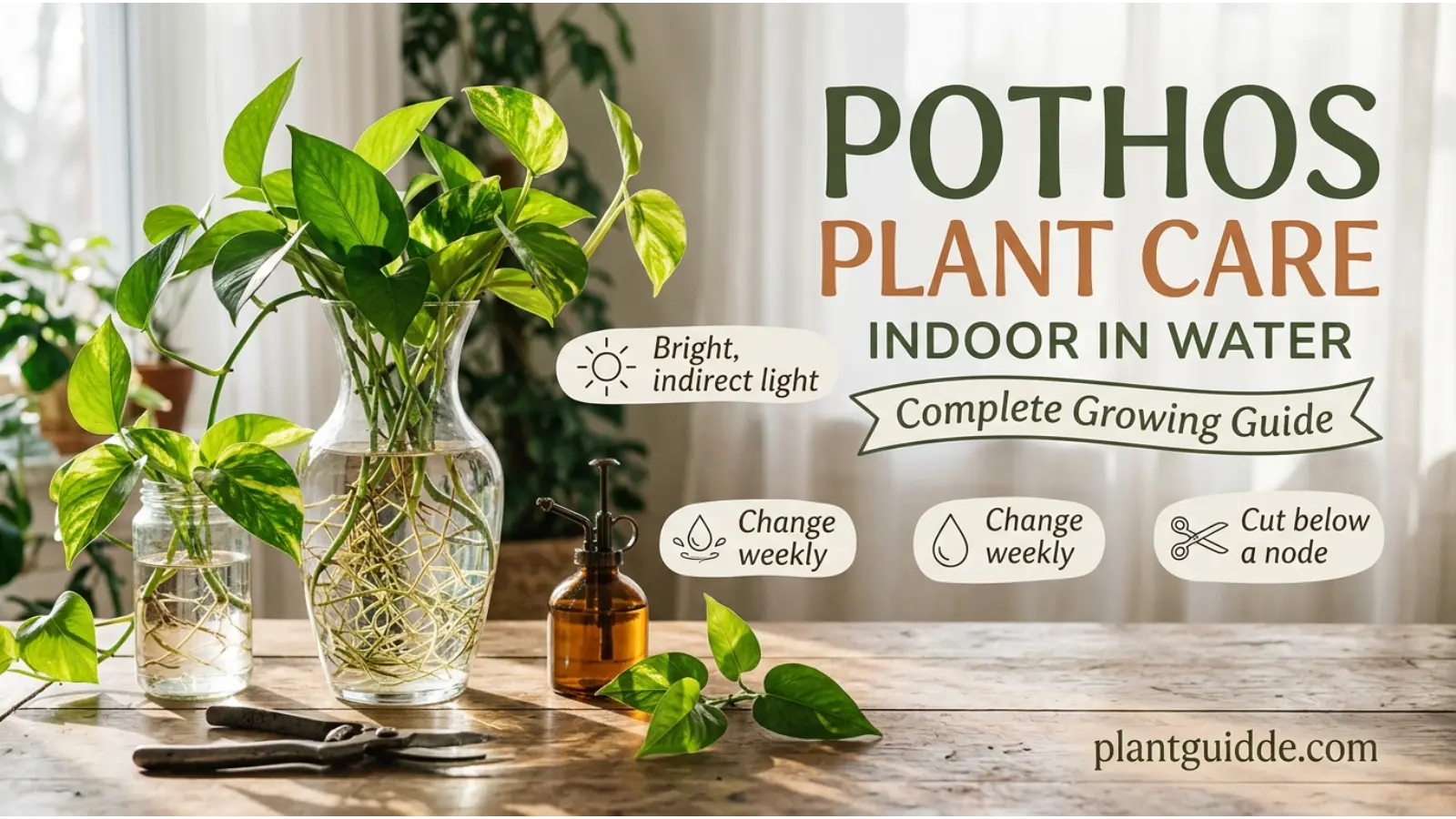
Pothos plant care indoor is one of the easiest houseplants to grow in water, making it an excellent choice for beginners, small apartments, office desks, and decorative glass containers. Its trailing vines and heart-shaped leaves add greenery without requiring a traditional pot filled with soil.
However, growing pothos in water is slightly different from growing it in a regular potting mix. Water quality, oxygen around the roots, light exposure, and nutrient availability all influence how well the plant develops. A cutting may survive in plain water for weeks, but long-term growth requires more attention to nutrition and water conditions.
Understanding pothos plant care indoor in water helps you avoid common problems such as yellow leaves, slimy roots, algae growth, and stalled development. With the right setup, you can maintain a healthy pothos plant in water for months or even years.
Quick Answer
Pothos plant care indoors in water is straightforward when you provide a healthy cutting, clean water, bright indirect light, and a suitable container. Place at least one node beneath the water while keeping most leaves above the surface.
Change the water when it becomes cloudy, refill as needed, and provide diluted hydroponic nutrients once the cutting develops roots and begins growing actively.
Can Pothos Grow Indoors in Water Permanently?
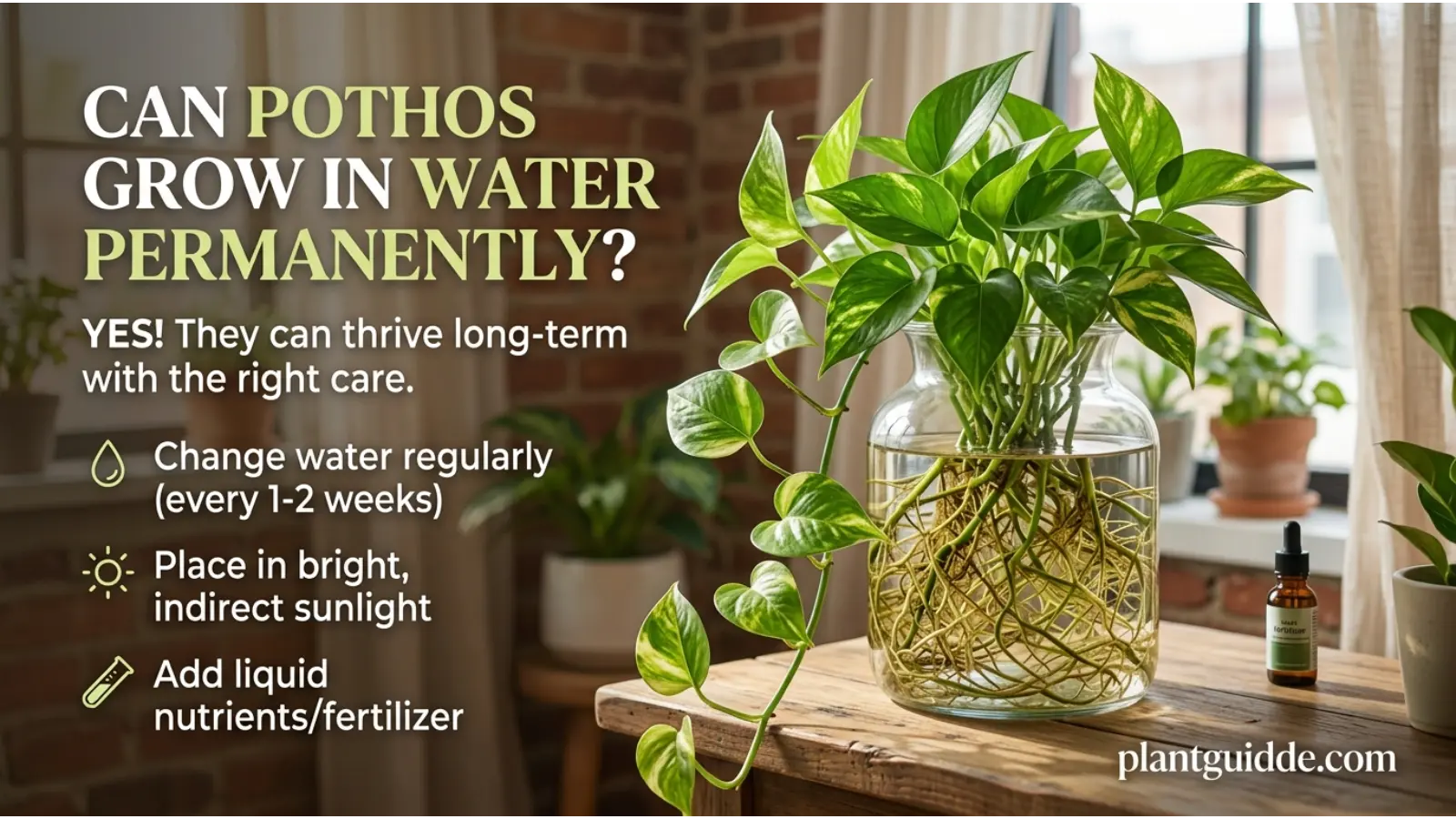
Yes, pothos (Epipremnum aureum) can grow indoors in water for an extended period. You do not necessarily need to transfer it into soil once its roots develop.
The important distinction is between keeping a cutting alive in plain water and maintaining a plant that grows continuously in a water-based environment.
A fresh cutting can use stored energy to produce roots and new leaves. Over time, however, the plant needs essential nutrients that ordinary water may not provide in sufficient amounts.
For long-term success, you have two main options:
- Growing pothos in plain water: Suitable for displaying cuttings and maintaining relatively small plants, although growth may eventually slow because nutrients are limited.
- Growing pothos hydroponically: Suitable for sustained growth when you provide water, oxygen, and a properly diluted nutrient solution.
Pothos plant care indoor you want a simple decorative plant, plain water may be enough for a while. If your goal is vigorous growth and larger leaves, a basic hydroponic setup is more reliable.
What You Need to Grow Pothos in Water
You do not need expensive equipment to get started. A few basic supplies are enough to establish a healthy cutting.
| Supply | Purpose |
|---|---|
| Healthy pothos cutting | Provides a starting point for root development |
| Clean glass jar or vase | Holds water and supports the cutting |
| Clean, room-temperature water | Supplies moisture to the developing roots |
| Bright, indirect light | Supports photosynthesis without excessive heat |
| Hydroponic nutrient solution | Supplies essential minerals for long-term growth |
| Clean scissors | Helps you take and maintain healthy cuttings |
A transparent glass container makes it easy to monitor root development, water clarity, and algae. However, clear glass exposed to strong light can encourage algae growth, so an opaque container or a cover around the lower part of the jar may be helpful.
Choose a container with enough space for the roots to spread. A narrow-necked bottle can look attractive, but it may become difficult to remove the plant without damaging its roots.
How to Start Growing Pothos in Water
The easiest way to grow pothos in water is to begin with a healthy stem cutting. Existing plants can also be transferred from soil, but their roots may need time to adjust.
Step 1: Take a healthy cutting
Choose a healthy vine with firm leaves and no visible signs of pests or disease. Using clean scissors, cut just below a node.
A node is the point on the stem where a leaf and often an aerial root emerge. This small area is essential because pothos roots develop from nodes rather than from an ordinary section of bare stem.
Your cutting should ideally contain two or three nodes and at least one healthy leaf.
Step 2: Prepare the cutting
Remove the leaf closest to the bottom node if it would otherwise sit underwater. Leaves submerged for extended periods can decay and contaminate the water.
Inspect the cutting for damaged tissue and remove any unhealthy material before placing it in the container.
Step 3: Place the cutting in water
Fill a clean jar with room-temperature water. Submerge at least one node while keeping the leaves above the surface.
The node needs contact with water to develop roots, but the foliage should remain dry. Avoid packing too many cuttings into a small container because crowded stems can reduce airflow and make maintenance harder.
Step 4: Position the container correctly
Place the jar near a window that receives bright, indirect light. Avoid strong direct sunlight, which can heat the water, damage leaves, and encourage algae growth.
A stable indoor location is preferable to a windowsill exposed to extreme temperature changes.
Step 5: Monitor root development
Small roots may begin appearing within one to three weeks under suitable conditions, although some cuttings take longer.
Keep the node submerged and replenish the water as its level falls. Once the roots have developed, continue checking their color, firmness, and overall condition.
Best Water for Indoor Pothos
Water quality can influence root health, particularly when pothos grows in a small container without soil.
Tap water is often suitable, but local water composition varies. Very hard water or water containing high concentrations of dissolved salts may contribute to mineral buildup over time.
Consider these practical options:
- Tap water: Usually convenient and suitable if it does not cause persistent problems.
- Filtered water: Useful when your tap water contains high mineral levels or other unwanted substances.
- Rainwater: Can be suitable when collected cleanly and stored in a clean container.
- Distilled or reverse-osmosis water: Useful for hydroponic growing when paired with a complete nutrient solution designed for that water type.
Letting tap water stand may allow some free chlorine to dissipate, but it does not reliably remove chloramine, hardness, or dissolved salts. You do not need to switch water types unless there is a reason to do so.
Pothos plant care indoor the roots look healthy and the plant continues growing, your current water is probably adequate. If mineral deposits repeatedly appear around the container, consider testing the water or trying a different source.
How Often Should You Change Pothos Water?
For cuttings growing in plain water, changing the water approximately every one to two weeks is a reasonable starting point. The exact frequency depends on the container, room temperature, root density, and water condition.
Change it sooner if the water becomes cloudy, develops an unpleasant smell, or contains decaying plant material.
Follow this routine:
- Remove the cutting carefully from the container.
- Discard the old water.
- Rinse the container to remove slime or visible residue.
- Gently rinse the roots if they have accumulated debris.
- Refill the container with fresh water.
- Return the cutting and check that at least one node remains submerged.
Avoid scrubbing healthy roots aggressively. Young water-grown roots can be delicate, and rough handling may damage them.
For an established hydroponic pothos, replace the nutrient solution according to the system and nutrient manufacturer’s guidance. Simply topping up the container indefinitely can cause an imbalance as the plant absorbs water and nutrients at different rates.
Best Light for Pothos Growing in Water
Pothos grows best in bright, indirect light indoors. It can tolerate lower-light conditions, but prolonged dimness often produces slower growth, smaller leaves, and longer spaces between leaves.
An east-facing window is often a useful location. Near a brighter south- or west-facing window, filtered light or some distance from the glass may prevent scorching.
Signs your pothos needs more light
- New leaves are noticeably smaller than older leaves.
- Vines become long and sparse.
- Growth slows during a period when the plant should be actively growing.
- Variegated cultivars gradually produce less distinctive patterns.
Move the plant closer to a bright window gradually rather than placing it immediately in intense direct sunlight.
Pothos plant care indoor natural light is limited, a grow light can help. Follow the manufacturer’s recommended distance and duration, and monitor the leaves for signs of excessive exposure.
Temperature and Humidity Requirements
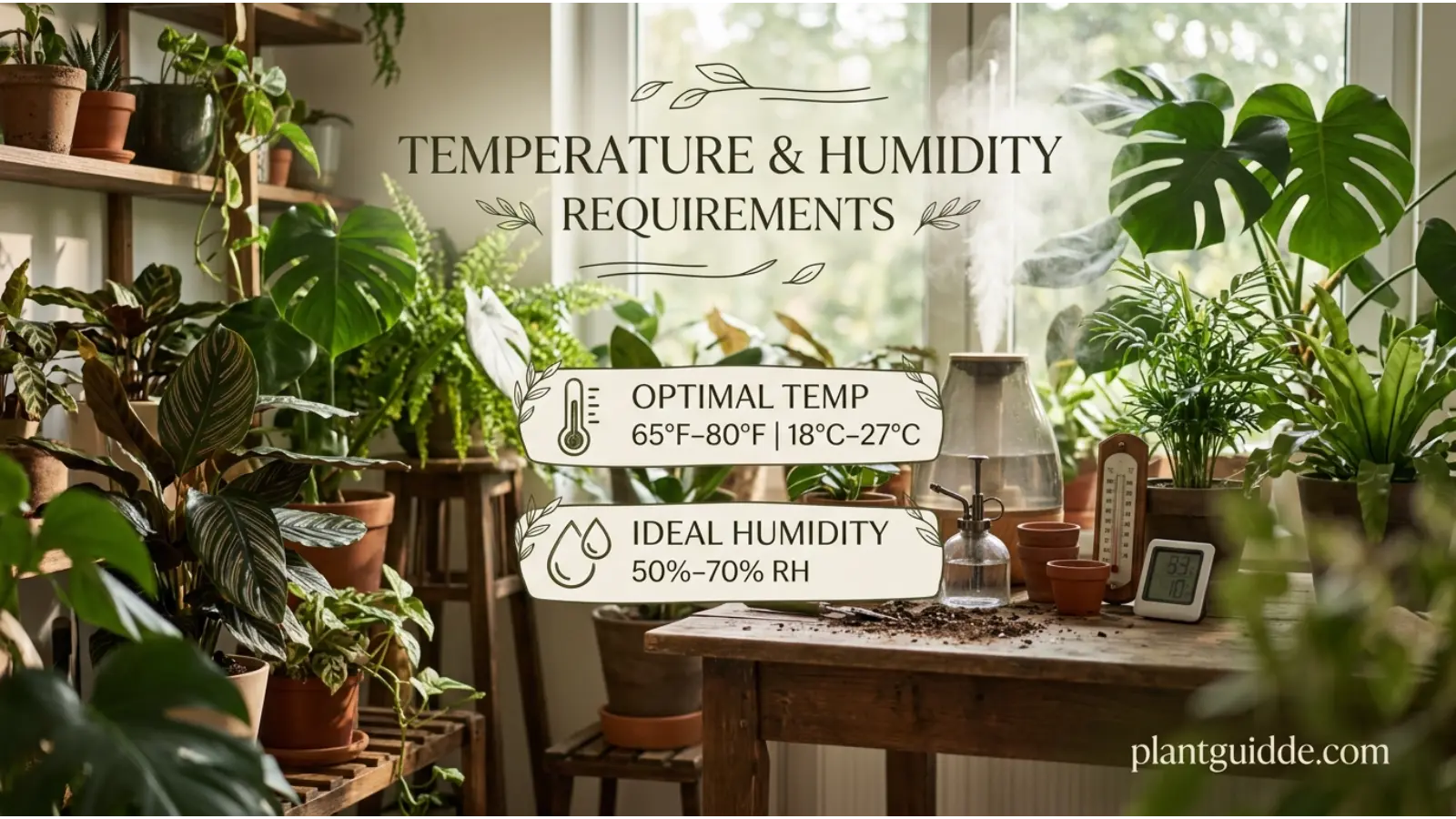
Pothos generally performs well in ordinary indoor temperatures, approximately 65–85°F (18–29°C). Keep the container away from cold drafts, heating vents, and locations where the water experiences repeated temperature changes.
Average household humidity is usually sufficient. Higher humidity may support foliage growth, but it is not a substitute for adequate light, clean water, and nutrients.
Avoid placing the jar directly above a heater or in a spot where strong sunlight warms the water excessively. Stable conditions are more useful than frequent environmental adjustments.
Does Pothos Need Fertilizer When Growing in Water?
Yes, if you want sustained growth over the long term. Plain water provides moisture but does not consistently supply all the nitrogen, phosphorus, potassium, and micronutrients a pothos needs.
Once the cutting has developed healthy roots, use a complete hydroponic nutrient solution according to its label.
How to fertilize water-grown pothos
- Choose a nutrient product specifically suitable for hydroponic or water-based growing.
- Dilute it according to the manufacturer’s instructions.
- Use a formulation appropriate for the water source and growing system.
- Monitor new growth and root health rather than increasing the concentration automatically.
- Replace the solution periodically instead of continually adding fertilizer to old water.
Avoid adding ordinary garden fertilizer, excessive liquid plant food, or household ingredients such as sugar to the jar. These may upset the water balance, encourage microbial growth, or damage roots.
Signs of nutrient problems
Slow growth, pale new leaves, and yellowing can sometimes indicate inadequate nutrition. However, similar symptoms may result from poor light, damaged roots, unsuitable water, or temperature stress.
Before adding more fertilizer, check the growing conditions. Excess nutrients can cause salt buildup and root damage, so stronger solutions are not necessarily better.
How to Transfer a Soil-Grown Pothos to Water
You can transfer an established pothos from soil to water, but the transition may be more challenging than rooting a fresh cutting.
Roots adapted to soil differ from roots that develop in water. Some existing roots may deteriorate while the plant produces new roots suited to the new environment.
To improve the chances of success:
- Remove the plant from its pot.
- Gently loosen the soil around the roots.
- Rinse away as much soil as practical without tearing healthy roots.
- Inspect the roots and remove soft, decaying sections with clean scissors.
- Place the plant in a clean container with enough water to reach the roots without unnecessarily submerging the stem and leaves.
- Position it in bright, indirect light.
- Monitor the roots closely during the first few weeks.
Some older roots may die back during the transition. A small amount of root loss does not automatically mean the plant will fail, but widespread softness, slime, or a foul smell requires attention.
Avoid fertilizing heavily while the plant is adjusting. Once new roots appear and the plant shows healthy growth, introduce a suitable nutrient solution gradually according to its instructions.
Common Problems When Growing Pothos in Water
Water-grown pothos can develop several problems, but most are manageable when identified early.
| Problem | Likely cause | Practical solution |
|---|---|---|
| Yellow leaves | Nutrient imbalance, poor light, aging leaves, or root stress | Check light, roots, and nutrient conditions before changing the routine |
| Brown or mushy roots | Root decay, poor water quality, or damaged tissue | Remove decaying roots, clean the container, and refresh the water |
| Cloudy or smelly water | Decaying leaves, microbial buildup, or stagnant conditions | Replace the water and clean the container |
| Green algae on glass | Light reaching nutrient-containing water | Clean the jar and shield the root zone from light |
| Slow growth | Low light, limited nutrients, or seasonal slowdown | Improve suitable light and review nutrition |
| Small new leaves | Insufficient light or nutrients, or normal juvenile growth | Check the overall growing conditions |
| Brown leaf tips | Salt buildup, inconsistent conditions, or root stress | Review water quality and nutrient concentration |
| Wilting despite wet roots | Root damage or impaired water uptake | Inspect root health instead of adding more water |
Why are pothos roots turning brown?
Healthy water-grown roots are often white, cream, or light tan, depending on age and staining. Color alone is not a reliable diagnosis.
Firm roots may be healthy even if they are slightly darker than expected. Roots that are soft, slimy, easily falling apart, or foul-smelling are more concerning.
Pothos plant care indoor rot is present, remove the affected roots with clean scissors, wash the container, and place the healthy portion in fresh water. If much of the root system has deteriorated, take a healthy stem cutting as a backup.
Why is the water turning green?
Green water or a green film on the glass usually indicates algae growth. Algae are more likely when light reaches water containing nutrients.
Clean the container and move it away from direct sunlight. Covering the sides of the root zone with an opaque sleeve can help while still allowing you to inspect the plant occasionally.
Algae are not the same as root rot, but heavy growth can make water maintenance more difficult and indicate that the container needs better cleaning practices.
Why is my pothos not growing new leaves?
First, consider the season. Pothos often grows more slowly during cooler, darker months.
Pothos plant care indoor the plant receives little light or has been kept in plain water for a long time, limited energy or nutrients may be responsible. Improve light gradually and consider a suitable hydroponic nutrient solution if the roots are healthy.
Do not respond to slow growth by adding a large amount of fertilizer. Correct the likely limiting factor first and allow time for the plant to respond.
Plain Water vs. Hydroponic Pothos Growing
Both methods can work indoors, but they serve slightly different purposes.
| Feature | Plain water | Hydroponic nutrient solution |
|---|---|---|
| Setup | Very simple | Requires nutrient preparation |
| Maintenance | Regular water changes | Solution monitoring and periodic replacement |
| Nutrient supply | Limited and inconsistent | Can provide essential nutrients when properly formulated |
| Growth | May slow over time | Generally better suited to sustained growth |
| Best use | Decorative cuttings and simple displays | Longer-term cultivation and more vigorous growth |
For a small cutting displayed on a desk, plain water may be all you need. For a large pothos that you want to grow continuously, a properly maintained hydroponic setup offers better control over nutrition.
How to Keep Water-Grown Pothos Full and Bushy
Pothos grown in water may develop long trailing vines rather than a compact shape. Pothos plant care indoor you prefer a fuller appearance, pruning and propagation can help.
Trim excessively long vines just above a node with clean scissors. Place healthy cuttings back into water, ensuring that each cutting has at least one node submerged.
As the cuttings develop roots, you can place several in the same container if there is enough space for the roots and adequate access to light. This creates a fuller display without requiring a separate plant for each vine.
Rotate the container occasionally so that light reaches the foliage more evenly. If new growth remains sparse, review the light level before pruning more aggressively.
Keep in mind that pruning does not guarantee a particular branching pattern. The result depends on the cultivar, growing conditions, and the plant’s natural growth habit.
Is Pothos Safe for Pets?
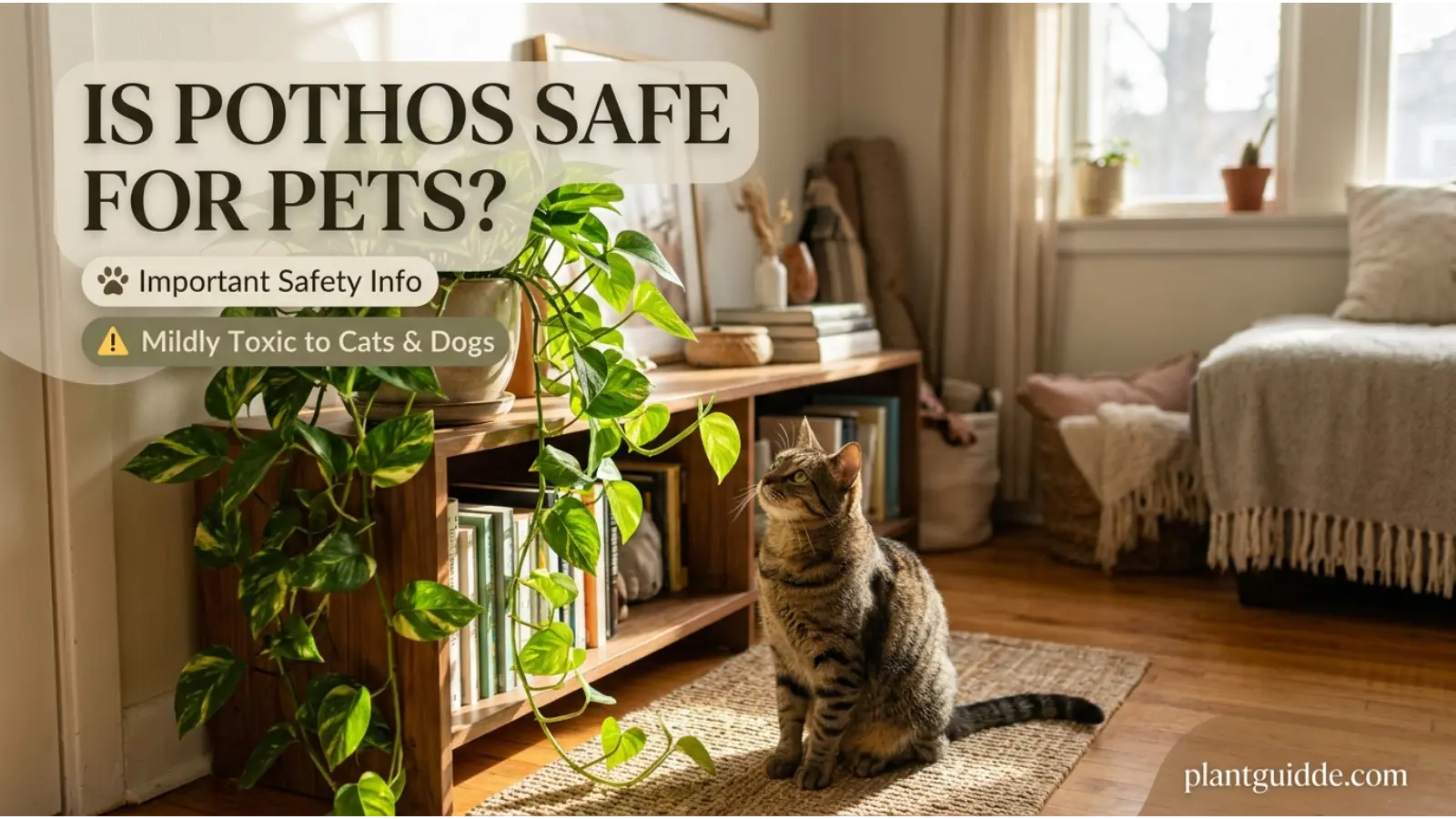
No. Pothos contains insoluble calcium oxalate crystals that can irritate the mouth and digestive tract when chewed or swallowed by pets or people.
Symptoms may include oral pain, drooling, pawing at the mouth, difficulty swallowing, or vomiting. Keep water-grown pothos out of reach of pets and young children, particularly because the leaves and trailing vines may be easy to access.
If a pet chews the plant and develops symptoms, contact a veterinarian for guidance. Do not assume that growing pothos in water makes the plant safer.
FAQs:
How long can pothos live in water?
Pothos can live in water for months or years when its roots receive adequate oxygen and the plant receives sufficient light and nutrients. Plain water may support a cutting for a long time, but sustained growth is more reliable with an appropriate hydroponic nutrient solution and regular maintenance.
Can pothos grow in water without sunlight?
Pothos cannot grow indefinitely without light because it needs light for photosynthesis. It can tolerate low indoor light, but bright, indirect light generally supports healthier growth. If your room has no suitable natural light, a grow light can provide the necessary illumination.
Should pothos roots be completely submerged in water?
The roots should have access to water, but the leaves should remain above the surface. When starting a cutting, submerge at least one node so roots can develop. Avoid unnecessarily submerging the stem and foliage, and maintain conditions that allow oxygen to reach the roots.
Why are the leaves of my water-grown pothos turning yellow?
Yellow leaves can result from nutrient deficiencies, unsuitable light, root stress, or normal aging. Check whether the roots are firm and healthy, whether the water smells unpleasant, and whether the plant has received adequate light. If you have kept the plant in plain water for a long time, consider whether it needs a balanced hydroponic nutrient solution.
Can I use tap water for pothos growing indoors?
Yes, tap water is often suitable for pothos. However, water hardness, dissolved salts, and treatment methods vary by location. If mineral deposits build up or the plant repeatedly develops problems despite proper care, consider testing your water or trying a suitable alternative. For hydroponic growing, choose nutrients appropriate for your water source.
Conclusion
Pothos plant care indoors in water is easy to manage when you balance clean water, suitable light, healthy roots, and adequate nutrition. Start with a healthy cutting, keep a node submerged, leave the leaves above the water, and refresh the water whenever it becomes cloudy or contaminated.
For a simple decorative display, plain water may work well. For continuous, vigorous growth, use a suitable hydroponic nutrient solution and monitor root health regularly. With consistent observation and a few straightforward habits, you can enjoy healthy pothos vines indoors without using soil.

Asad Mumtaz is a dedicated plant enthusiast and gardening writer with a passion for helping people care for their plants successfully. He specializes in plant care guides, indoor gardening, and practical growing tips for all skill levels. His content focuses on making gardening simple, enjoyable, and rewarding. Through his work, Asad shares reliable advice to help readers create thriving green spaces.