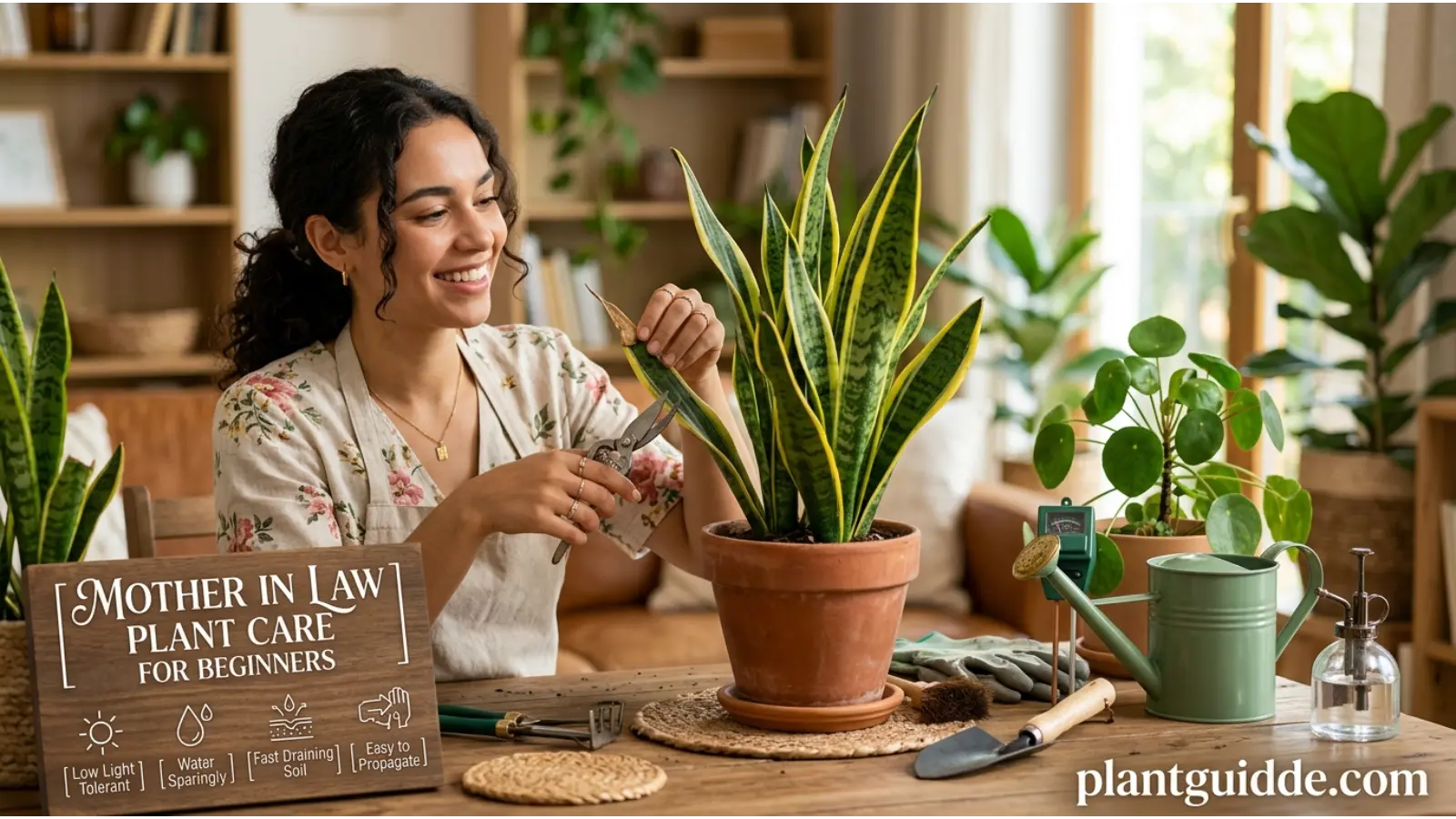
Mother in law plant care is a popular indoor plant known for its upright, sword-shaped leaves, attractive patterns, and ability to tolerate less-than-perfect growing conditions. Its architectural appearance makes it suitable for bedrooms, living rooms, offices, and other indoor spaces where a low-maintenance plant is desirable.
However, easy-care does not mean impossible to damage. Overwatering, compacted soil, insufficient light, and poor drainage can cause yellow leaves, soft stems, root rot, or slow growth.
Understanding the plant’s natural growing habits makes mother in law plant care much easier and helps prevent problems before they become serious.
Whether you are growing your first snake plant or trying to revive an established one, this guide explains how to manage light, watering, soil, temperature, humidity, fertilizing, repotting, and common plant health problems.
Quick Answer
Mother in law plant care is simple when you provide bright, indirect light, well-draining soil, and careful watering. Also known as the snake plant (Dracaena trifasciata, formerly Sansevieria trifasciata), this hardy houseplant stores water in its thick leaves and tolerates occasional neglect. Let the soil dry completely between waterings, use a pot with drainage holes, and protect the plant from prolonged cold and excessive moisture.
Understanding the Mother in Law Plant
The mother in law plant belongs to the Asparagaceae family and originates from tropical Africa. It grows from underground rhizomes and produces thick, upright leaves that store water.
Its common names include snake plant and mother-in-law’s tongue. Depending on the variety, the leaves may be dark green, striped with yellow, edged in gold, or arranged in compact rosettes.
Several characteristics make this plant suitable for beginners:
- Water storage: Its thick leaves and rhizomes help it survive periods of dry soil.
- Adaptability: It can tolerate lower indoor light, although brighter indirect light generally supports better growth.
- Slow to moderate growth: It usually does not require frequent pruning or repotting.
- Variety of forms: Different cultivars offer tall, narrow leaves or shorter, compact growth.
One important distinction is that tolerating low light does not mean thriving in darkness. A plant kept in a dim corner may survive for months but gradually produce weaker growth.

Best Conditions for Mother in Law Plant Care
Providing the right environment is more effective than relying on frequent watering or fertilizing to maintain healthy leaves.
| Growing factor | Best conditions | What to avoid |
|---|---|---|
| Light | Bright, indirect light; some gentle direct sun after gradual acclimation | Sudden exposure to intense afternoon sun |
| Water | Thorough watering after the soil dries completely | Frequent watering while soil remains damp |
| Soil | Loose, fast-draining potting mix | Dense soil that stays wet |
| Temperature | Approximately 65–85°F (18–29°C) | Cold drafts and frost |
| Humidity | Average indoor humidity is generally suitable | Persistently damp conditions combined with poor airflow |
| Fertilizer | Balanced houseplant fertilizer during active growth | Heavy or frequent feeding |
| Pot | A pot with drainage holes | Containers that trap excess water |
How Much Light Does a Mother in Law Plant Need?
Light influences leaf color, growth speed, and the overall strength of the plant. Mother in law plants tolerate a range of indoor lighting conditions, but bright, indirect light is usually the most reliable choice.
Bright, indirect light
Place your plant near an east-facing window or a few feet from a bright south- or west-facing window, depending on the intensity of the sunlight. Sheer curtains can help filter strong rays.
With sufficient light, the plant is more likely to maintain firm leaves and produce new growth during the growing season.
Can it grow in low light?
Yes. A mother in law plant can survive in a relatively dim room, making it useful for offices and spaces with limited natural light. However, growth will usually slow, and the soil may take longer to dry.
Adjust watering according to the actual drying rate rather than following the same schedule you would use for a plant in a sunny room.
Signs of lighting problems
- Pale or faded leaves: The plant may need better light, although nutrient issues and other stress factors can also contribute.
- Slow growth: Low light is one possible cause.
- Bleached or scorched patches: Strong, sudden exposure to direct sunlight may be responsible.
- Leaning leaves: Uneven light can encourage the plant to grow toward a window.
Rotate the pot occasionally to encourage balanced growth. If moving the plant outdoors during warm weather, introduce it to stronger light gradually.
How Often Should You Water a Mother in Law Plant?
Watering is the most important part of mother in law plant care because excess moisture can damage the roots. The plant stores water in its leaves and rhizomes, so it needs less frequent watering than many tropical houseplants.
Follow these watering steps
- Check the soil. Insert your finger into the soil or use a wooden stick to check moisture below the surface.
- Wait until it dries completely. Do not water simply because the top layer looks dry.
- Water thoroughly. Pour water evenly over the soil until it flows from the drainage holes.
- Empty the saucer. Never allow the pot to sit in standing water.
- Check again before the next watering. Allow the soil to dry completely once more.
The interval between waterings varies with light, temperature, pot size, soil composition, and season. A plant in warm, bright conditions may need water more often than one in a cool, dim room.
During winter, growth commonly slows and soil takes longer to dry. Reduce watering frequency accordingly rather than watering on a fixed weekly schedule.
What happens when you overwater?
Overwatering deprives roots of oxygen and can lead to root rot. Watch for yellowing leaves, soft or mushy leaf bases, unpleasant-smelling soil, and persistent moisture.
Mother in law plant care these symptoms appear, remove the plant from its pot and inspect the roots. Healthy roots are generally firm, while rotting roots may be dark, soft, or slimy. Trim damaged roots with clean tools and repot the plant in fresh, well-draining soil.
What happens when you underwater?
Prolonged underwatering may cause wrinkled leaves, curling, or dry, brown edges. Check the soil before assuming the plant needs water, because root damage can sometimes produce similar symptoms.
Mother in Law Plant Care the soil is completely dry and the leaves are losing firmness, water thoroughly and allow excess water to drain.
Best Soil and Pot for a Healthy Snake Plant
The right soil prevents excess water from collecting around the roots. Ordinary potting soil may work if it drains well, but dense mixes designed to retain moisture can create problems.
Choose a fast-draining potting mix
A practical option is a commercial cactus and succulent mix. You can also combine regular potting mix with materials such as perlite or pumice to improve aeration and drainage.
A useful starting mixture is:
- Two parts general-purpose potting mix
- One part perlite or pumice
- One part coarse horticultural material suitable for improving drainage, Mother in law plant care needed
Adjust the proportions according to the materials available and how quickly the mix dries. The goal is a stable medium that allows excess water to escape without becoming compacted.
Avoid using garden soil alone in an indoor container because it can compact and restrict airflow around the roots.
Select the right container
Choose a pot with drainage holes. Terracotta can be helpful because it allows moisture to evaporate through its walls, while plastic pots retain moisture longer.
The pot should accommodate the root system without leaving an excessive amount of wet soil around it. A container that is too large can stay damp longer than necessary.
Decorative pots without drainage can be used as outer covers, but the plant should remain in a draining nursery pot inside them.
Ideal Temperature and Humidity
Mother in law plants grow well in ordinary household temperatures. A range of approximately 65–85°F (18–29°C) is suitable for most indoor conditions.
Keep the plant away from cold windows during winter, air-conditioning drafts, and heating vents that produce extreme temperature changes. Protect it from frost, which can seriously damage its leaves.
Average indoor humidity is generally sufficient. Unlike many tropical foliage plants, the mother in law plant does not usually need a humidifier or regular misting.
Avoid leaving water trapped between crowded leaves or keeping the soil continuously wet in a cool room. Good drainage and suitable temperatures are more important than increasing humidity.
How to Fertilize a Mother in Law Plant
Mother in law plants are relatively light feeders. Too much fertilizer can cause salt buildup in the soil and damage roots or leaf tips.
During active growth in spring and summer, apply a balanced liquid houseplant fertilizer diluted according to its label. Feeding once every four to eight weeks may be sufficient when conditions support active growth, but some plants need less.
Follow these guidelines:
- Water appropriately before applying fertilizer if the soil is extremely dry.
- Never exceed the recommended concentration.
- Avoid fertilizing a plant with damaged roots or signs of severe stress.
- Reduce or stop feeding during winter when growth slows.
- Flush the soil with water occasionally if fertilizer salts accumulate and the pot drains freely.
A healthy plant does not need frequent feeding to maintain its leaves. Adequate light, proper watering, and suitable soil usually matter more.
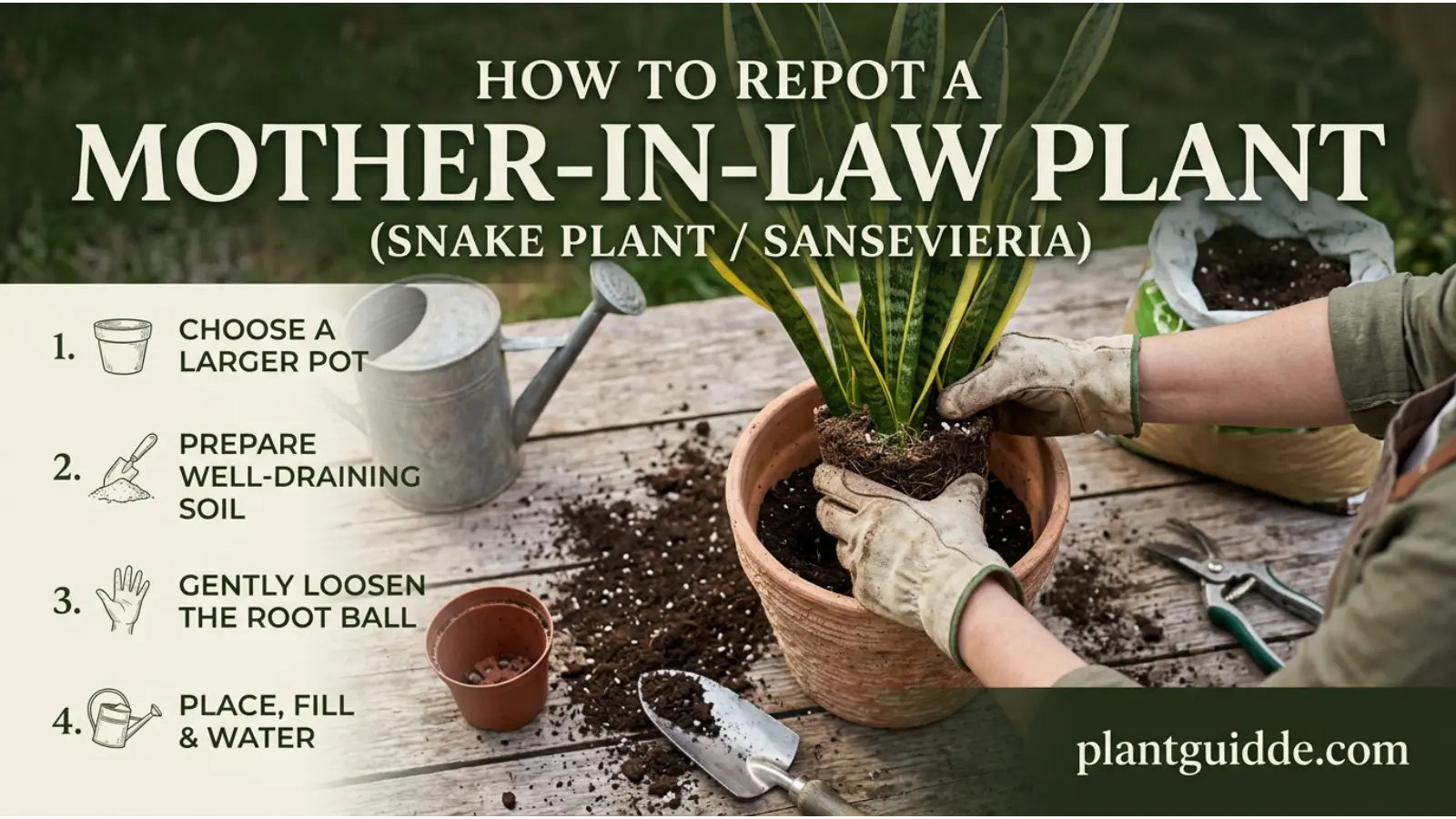
How to Repot a Mother in Law Plant
Mother in law plants prefer to be slightly snug in their containers. Their rhizomes gradually spread underground, producing new shoots that may eventually crowd the pot.
Repot when roots fill the container, the plant repeatedly dries unusually quickly, the pot becomes unstable, or rhizomes push against the sides.
Step-by-step repotting
- Select a container with drainage holes that is only slightly larger than the existing pot.
- Gently remove the plant and loosen the outer soil.
- Inspect the roots and rhizomes for soft, damaged, or rotting sections.
- Trim diseased tissue using a clean cutting tool.
- Position the plant at the same depth it was previously growing.
- Fill around the roots with fresh, fast-draining potting mix.
- Water according to the condition of the roots and soil, allowing excess moisture to drain.
Spring and early summer are often convenient times to repot because the plant can resume active growth afterward. However, a plant with serious root rot should be treated promptly rather than left in unhealthy soil until spring.
Avoid moving a newly repotted plant immediately into intense sunlight or applying fertilizer before it has had time to settle.
How to Propagate a Mother in Law Plant
You can propagate a mother in law plant through division or leaf cuttings. Division is generally the better option when you want new plants that retain the original cultivar’s appearance.
Propagation by division
Division separates established shoots and their attached rhizomes.
- Remove the plant from its container.
- Identify a healthy shoot with roots or a section of rhizome.
- Separate the section using clean tools.
- Plant it in a suitable pot with fresh, well-draining soil.
- Provide bright, indirect light and water carefully while it establishes.
Each division should have a viable growing point and, ideally, some roots.
Propagation from leaf cuttings
A healthy leaf can be cut into sections and placed in an appropriate propagation medium. Keep track of the original orientation of each section so the bottom end is planted downward.
Maintain light moisture rather than leaving the medium saturated. Rooting and shoot development can take weeks or months, depending on temperature and growing conditions.
One important limitation is that some variegated cultivars may lose their distinctive leaf patterns when propagated from leaf cuttings. Division is more reliable when preserving the appearance of a variegated mother plant.
Common Mother in Law Plant Problems and Solutions
Changes in leaf color, texture, or posture can indicate that the growing conditions need attention. Examine the soil, roots, light exposure, and recent care routine before choosing a treatment.
| Symptom | Possible cause | What to do |
|---|---|---|
| Yellow leaves | Overwatering, root damage, or normal aging of older leaves | Check soil moisture and inspect roots if yellowing continues |
| Soft, mushy leaves | Excess moisture or rot | Remove damaged tissue and check the root system |
| Wrinkled or curling leaves | Underwatering, root problems, or environmental stress | Check soil and roots before watering |
| Brown, crispy tips | Inconsistent watering, salt buildup, or environmental stress | Review watering and fertilizer use |
| Drooping or bending leaves | Weak growth, physical damage, or root problems | Improve suitable lighting and inspect the plant’s base |
| Slow growth | Low light, seasonal dormancy, or limited growing conditions | Provide brighter indirect light and review care |
| Brown patches | Sun scorch, physical injury, or disease | Review sun exposure and inspect the affected area |
| White, cottony insects | Mealybugs or similar pests | Isolate the plant and treat the pests appropriately |
Why are the leaves turning yellow?
Yellow leaves are not always a sign that the plant needs more water. If the soil remains damp for several days, particularly in low light, excess moisture may be stressing the roots.
Check drainage and allow the soil to dry before watering again. If several leaves turn yellow and the bases become soft, inspect the roots for rot.
An occasional older leaf turning yellow can be part of normal aging. Look at the overall pattern rather than treating every yellow leaf as a separate emergency.
Why are the leaves falling over?
Leaves may bend or collapse because of physical damage, weakened roots, or rot near the base. Some cultivars naturally produce broader or more outward-growing leaves, so not every leaning leaf indicates a problem.
If the base feels soft, inspect the rhizomes and roots. If the tissue remains firm, consider whether the plant needs more even light or a more stable container.
How do you deal with pests?
Although mother in law plants are relatively resilient, they can develop mealybugs, scale insects, and spider mite infestations.
Inspect leaf surfaces, undersides, and the spaces near the leaf bases. Isolate an affected plant, remove small numbers of pests with an appropriate method, and use a houseplant-labeled insecticidal soap when necessary, following the product instructions. Test sensitive foliage first and avoid applying treatments in harsh sunlight.
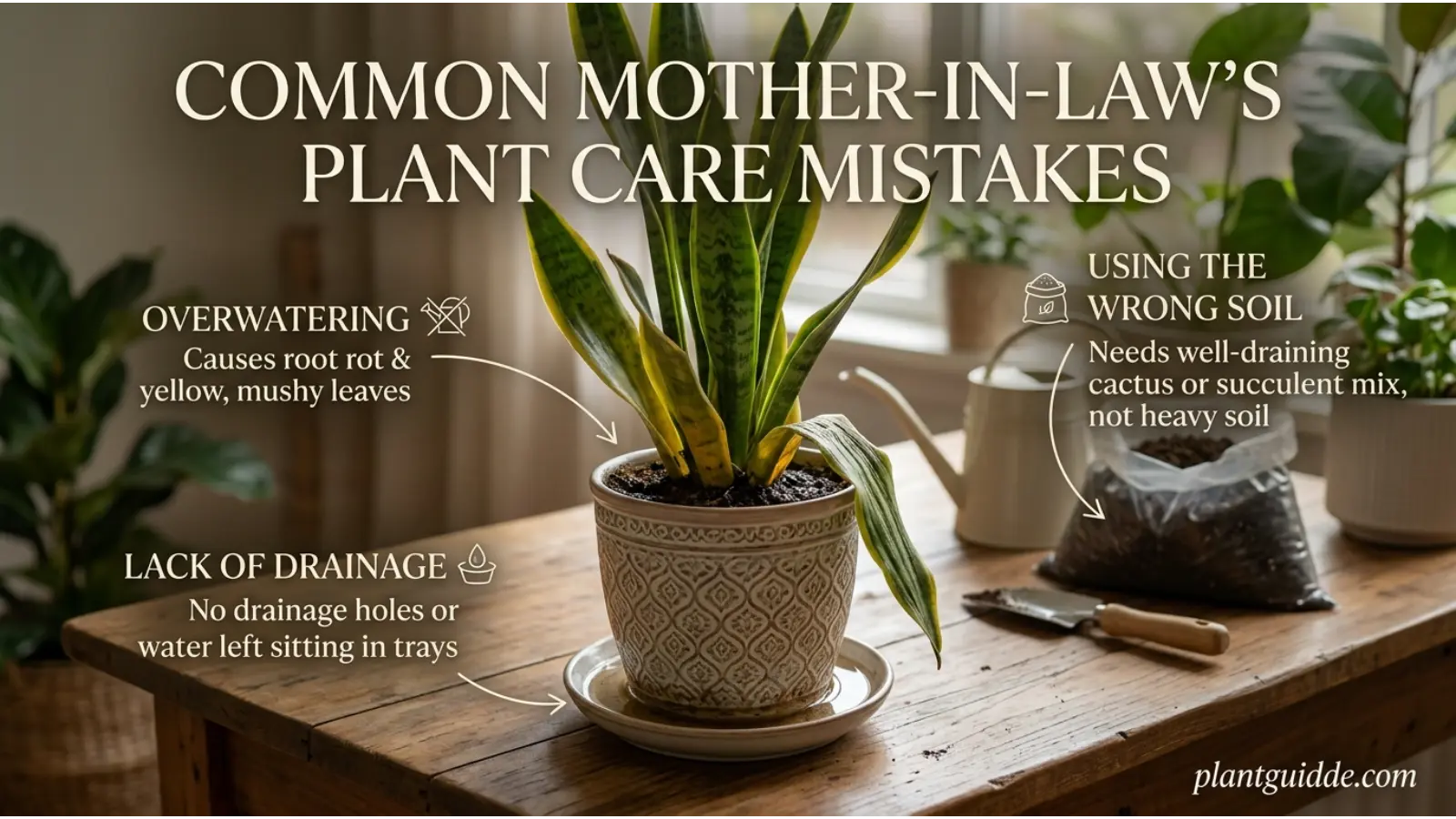
Common Mother in Law Plant Care Mistakes
Even experienced plant owners can damage this plant by treating it like a moisture-loving tropical houseplant.
Watering on a fixed schedule: Water needs change with the season, light, and temperature. Check soil dryness instead of relying on a calendar.
Using a pot without drainage: Excess water trapped at the bottom can create conditions that encourage root rot.
Keeping it in deep shade indefinitely: The plant may survive, but very low light can weaken growth and slow soil drying.
Choosing a pot that is too large: Excess soil around a small root system can remain wet for too long.
Fertilizing too frequently: More fertilizer does not necessarily produce faster or healthier growth.
Ignoring soft leaf bases: Mushy tissue can indicate rot that needs immediate attention.
Assuming every brown tip needs more water: Brown tips can also result from salt accumulation, root damage, or environmental stress. Check the growing conditions before changing the watering routine.
A useful habit is to record when you water and how long the soil takes to dry. After a few weeks, you will better understand how your plant responds to its particular location.
Is the Mother in Law Plant Safe for Pets?
Mother in law plants contain saponins and are considered toxic to cats and dogs if ingested. Chewing the leaves may cause gastrointestinal upset, including vomiting, diarrhea, or nausea.
Keep the plant out of reach of pets and children who might chew its foliage. If a pet eats part of the plant and develops symptoms, contact a veterinarian or an appropriate animal poison service for advice.
Although this plant is often marketed as a low-maintenance indoor choice, it is not a pet-safe plant.
Can You Grow a Mother in Law Plant Outdoors?
Yes, mother in law plants can grow outdoors in warm climates where temperatures remain suitable. Choose a sheltered location with bright filtered light or gentle morning sun.
If the plant has been growing indoors, acclimate it gradually to outdoor conditions. Sudden exposure to intense sunlight can scorch the leaves.
Use well-draining soil and avoid locations where rainwater collects around the roots. Bring container-grown plants indoors before temperatures approach damaging cold levels.
In climates with cold winters, growing the plant in a container makes it easier to protect from temperature extremes.
FAQs:
How often should I water a mother in law plant?
Water when the soil has dried completely throughout the pot. This may take a week or longer, depending on temperature, light, soil, and container size. Water thoroughly, then allow excess water to drain. Avoid watering again while the soil remains damp.
Does a mother in law plant need direct sunlight?
No. Bright, indirect light is generally ideal, although the plant can tolerate some gentle direct sunlight after gradual acclimation. Strong afternoon sun through a hot window may scorch the leaves, while very low light can slow growth.
Why is my mother in law plant dying?
Common causes include overwatering, root rot, poor drainage, and prolonged exposure to cold. Check whether the soil is wet, inspect the leaf bases, and examine the roots if the plant is deteriorating. Correct the underlying problem before adding fertilizer or changing several care conditions at once.
Should I cut off brown leaves on my snake plant?
Remove completely damaged or rotting leaves with a clean, sharp tool. If only the tips are brown, you can trim the damaged portions to improve appearance, following the natural shape of the leaf. Brown tips may return if the underlying watering, root, or salt-buildup issue remains unresolved.
Is the mother in law plant good for beginners?
Yes. It tolerates occasional missed waterings, adapts to different indoor light levels, and generally requires little pruning or feeding. Beginners are most successful when they provide a draining pot, suitable light, and enough time for the soil to dry between waterings. Keep it away from pets that might chew the leaves.
Conclusion
Successful mother in law plant care depends on understanding one basic principle: this plant stores water and does not need consistently moist soil. Give it bright, indirect light, a well-draining potting mix, and a container with drainage holes. Check soil moisture before watering, inspect unusual leaf changes early, and avoid excessive fertilizer.
Your next step is simple: check the soil and drainage of your existing plant, then adjust its care to the conditions in your home. Consistent observation is more useful than following a rigid watering schedule.

Asad Mumtaz is a dedicated plant enthusiast and gardening writer with a passion for helping people care for their plants successfully. He specializes in plant care guides, indoor gardening, and practical growing tips for all skill levels. His content focuses on making gardening simple, enjoyable, and rewarding. Through his work, Asad shares reliable advice to help readers create thriving green spaces.