
Plant health care services do not always stay healthy, even when they receive regular watering and sunlight. Pest infestations, fungal diseases, compacted soil, poor drainage, nutrient deficiencies, environmental stress, and incorrect pruning can gradually weaken a plant before the problem becomes obvious.
This is where plant health care services can be useful. Instead of treating every yellow leaf, brown spot, or wilting stem with the same solution, a qualified plant-care professional evaluates the plant and its growing environment to determine what is actually causing the problem.
For homeowners, gardeners, property managers, businesses, and landscape professionals, this approach can save time, prevent unnecessary treatments, and protect valuable plants.
Quick Answer
Plant health care services help identify, prevent, and treat problems affecting trees, shrubs, houseplants, lawns, and other plants.Professionals assess symptoms such as yellow leaves, pests, diseases, poor growth, nutrient deficiencies, and root problems, then recommend targeted treatments.
The goal is not simply to fix visible damage but to improve growing conditions and prevent the same problem from returning.
What Are Plant Health Care Services?
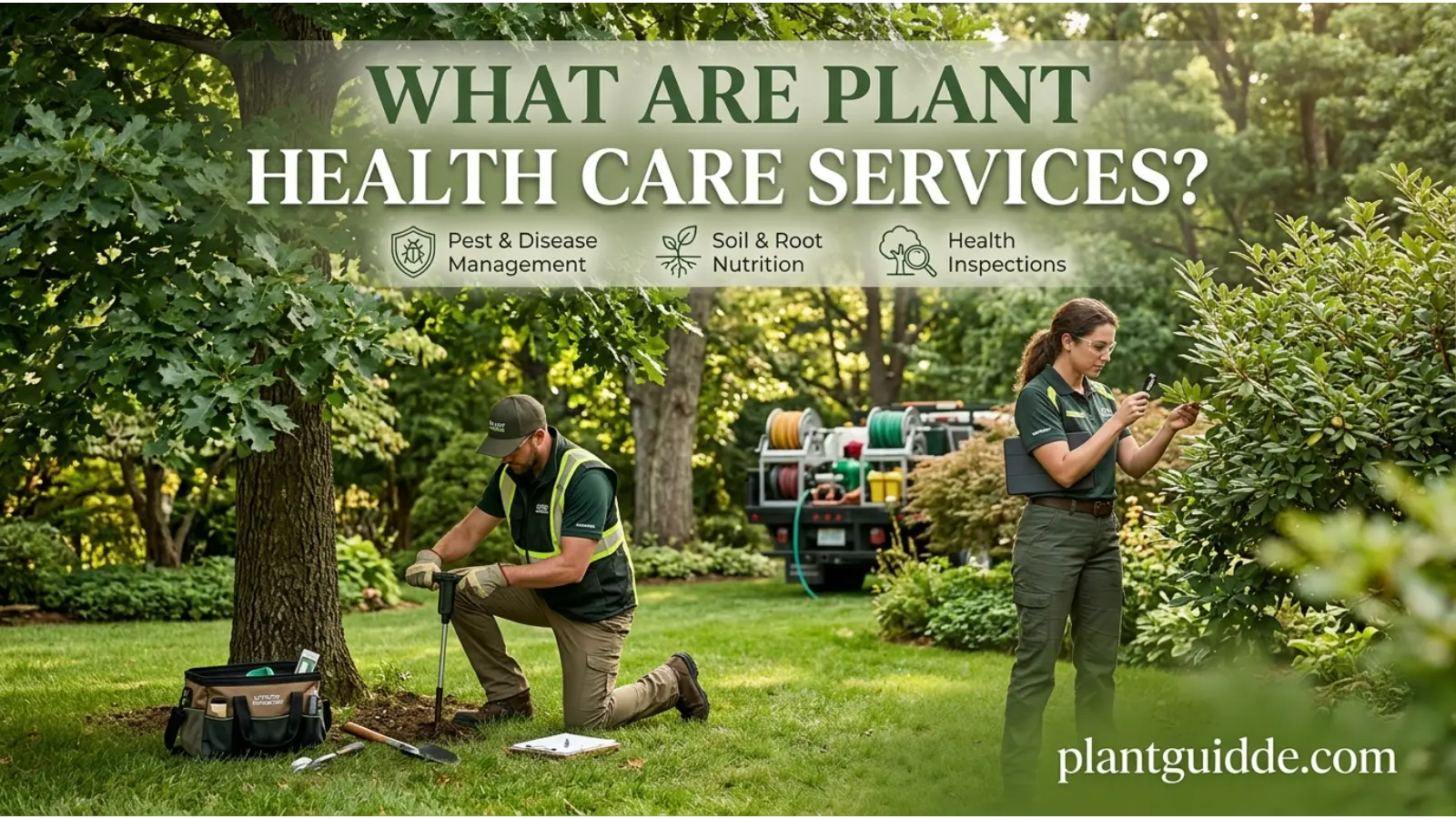
Plant health care services are professional services designed to maintain plant health, diagnose problems, and manage pests, diseases, nutrition, and environmental stresses.
Depending on the provider and type of property, services may cover:
- Plant and tree health assessments
- Pest identification and management
- Plant disease diagnosis
- Soil and root-zone evaluation
- Nutrient deficiency assessment
- Fertilization recommendations
- Pruning and structural plant care
- Root and drainage problem assessment
- Preventive plant health programs
- Tree and shrub inspections
- Indoor plant health management
- Landscape plant monitoring
- Treatment recommendations and follow-up inspections
A good plant health program focuses on the cause of a problem rather than simply treating its symptoms.
For example, repeated yellowing may be caused by overwatering, poor drainage, root damage, insufficient light, nutrient problems, or a disease. Applying fertilizer without identifying the cause may do little to improve the plant and can sometimes make the situation worse.
Why Plant Health Care Matters
Plants are living systems that respond continuously to their surroundings. Changes in water, light, temperature, soil conditions, pests, and physical damage can affect their ability to grow.
Early intervention is particularly valuable because many plant problems become harder and more expensive to correct once significant damage has occurred.
Professional plant health care can help you:
- Detect problems before severe decline occurs
- Identify pests and diseases accurately
- Reduce unnecessary pesticide or fertilizer applications
- Improve soil and root-zone conditions
- Protect valuable landscape plants and trees
- Improve plant appearance and growth
- Reduce recurring plant problems
- Develop a long-term maintenance strategy
One of the biggest advantages is having someone evaluate the entire situation rather than focusing on one symptom.
A professional may examine the leaves, stems, roots, soil, drainage, surrounding plants, irrigation patterns, sunlight, recent weather, and maintenance history before identifying the likely cause.
What Problems Can Plant Health Care Services Diagnose?
Plant health professionals commonly deal with a wide range of problems. The correct diagnosis depends on the plant species, symptoms, environment, and timing of the problem.
Insect and Pest Problems
Common plant pests include:
- Aphids
- Scale insects
- Mealybugs
- Whiteflies
- Spider mites
- Thrips
- Caterpillars
- Fungus gnats
- Borers and other wood-boring insects
Pest damage may appear as stippled leaves, distorted growth, sticky residue, holes, webbing, premature leaf drop, or weakened stems.
The important point is that visible insects are not always the actual cause of a plant’s decline. Some pests remain hidden in soil, stems, bark, or protected parts of the plant.
Plant Diseases
Plant diseases can be caused by fungi, bacteria, viruses, or other pathogens.
Possible warning signs include:
- Leaf spots
- Blight
- Cankers
- Powdery growth
- Root rot
- Sudden wilting
- Dieback
- Discolored stems
- Unusual leaf distortion
Disease management often depends on accurate identification and environmental correction. Simply spraying a general-purpose product may not solve the underlying issue.
Nutrient Deficiencies
Plants require nutrients for healthy roots, leaves, flowers, and overall growth.
Deficiencies may produce symptoms such as:
- Pale or yellow foliage
- Stunted growth
- Poor flowering
- Unusual leaf coloration
- Weak new growth
- Premature leaf drop
However, nutrient deficiency can look like other problems. For example, excessive moisture can damage the roots and prevent them from absorbing nutrients, even when the soil contains enough nutrients.
Root and Soil Problems
The root zone is often overlooked because it is hidden underground.
Compacted soil, poor drainage, waterlogged roots, damaged roots, unsuitable soil structure, or restricted root growth can cause symptoms above ground.
A plant may look thirsty even when the soil is constantly wet because damaged roots cannot function normally.
This is one reason professional diagnosis can be more useful than treating symptoms alone.
How Professional Plant Health Care Works
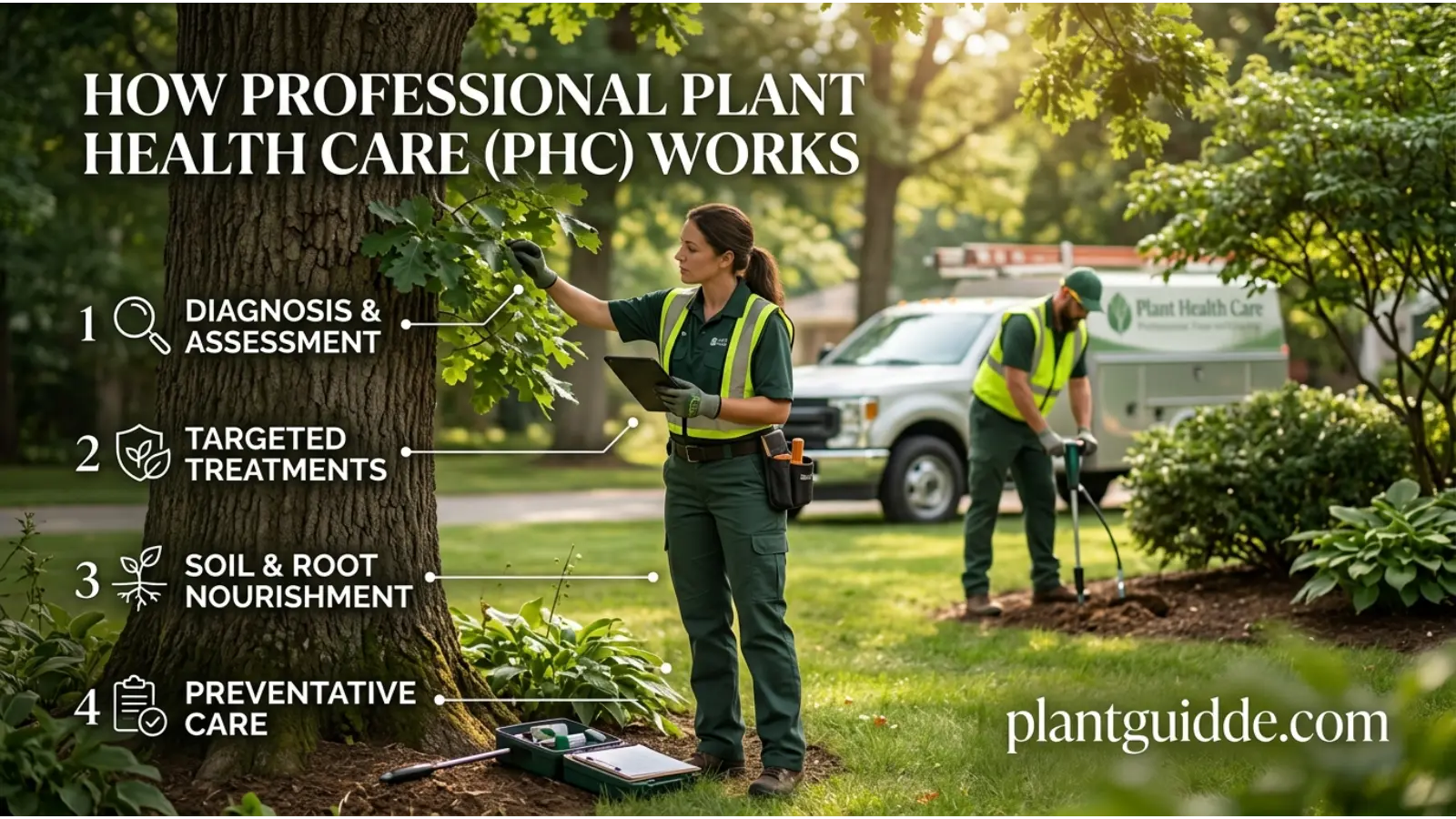
A quality service generally follows a diagnostic process rather than immediately applying a treatment.
1. Plant Inspection
The professional examines the plant for visible symptoms, growth patterns, physical damage, pests, disease signs, and overall vigor.
The surrounding area is also important. A plant should not be assessed in isolation when environmental conditions may be contributing to the problem.
2. Growing Conditions Are Evaluated
The assessment may include:
- Sunlight exposure
- Irrigation practices
- Soil moisture
- Drainage
- Soil condition
- Air circulation
- Plant spacing
- Temperature exposure
- Recent weather
- Fertilizer history
- Pruning practices
This step helps distinguish between a biological problem and an environmental or maintenance problem.
3. Diagnosis
The professional identifies the most likely cause based on the symptoms and available evidence.
In difficult cases, additional testing or laboratory analysis may be appropriate.
A trustworthy provider should be willing to explain uncertainty rather than pretending that every plant problem can be identified instantly.
4. Treatment or Correction
Treatment depends on the diagnosis.
Possible recommendations may include:
- Adjusting irrigation
- Improving drainage
- Correcting soil conditions
- Removing severely affected plant material
- Improving air circulation
- Changing plant placement
- Applying appropriate nutrients
- Managing pests
- Treating a confirmed disease
- Correcting pruning practices
The least disruptive effective solution is often preferable to immediately using aggressive treatments.
5. Follow-Up Monitoring
Plant health is not always restored after one treatment.
Follow-up inspections can determine whether the plant is responding, whether the original diagnosis was correct, and whether additional action is necessary.
Preventive Plant Health Care vs. Reactive Treatment
There are two broad approaches to plant problems.
Reactive care begins after a noticeable problem appears. For example, a homeowner notices that a tree is losing leaves and then calls a professional.
Regular monitoring helps identify potential plant health problems before they become severe.
Preventive care may include seasonal inspections, pest monitoring, pruning assessments, soil management, and observation of plant growth.
Preventive care does not mean treating plants unnecessarily. In fact, a strong program should avoid unnecessary treatments and focus on monitoring, proper cultural practices, and intervention when there is a genuine need.
Signs You May Need Professional Plant Health Care
Not every plant problem requires a professional. Many minor issues can be corrected by improving watering, lighting, drainage, or basic maintenance.
Professional help becomes more valuable when:
- A plant continues declining despite normal care
- The cause of the problem is unclear
- Multiple plants develop similar symptoms
- A valuable tree or mature landscape plant is affected
- You suspect a serious pest infestation
- Disease appears to be spreading
- Roots or soil appear damaged
- A tree develops significant dieback
- Treatment attempts have failed
- You are unsure whether a pesticide or fungicide is appropriate
A particularly important warning sign is rapid decline. A plant that changes dramatically over a short period may require prompt assessment.
How to Choose a Plant Health Care Service
Choosing a provider based solely on price can be risky because diagnosis and treatment quality matter more than the number of services included in a package.
Look for a company or professional that:
Provides a Clear Diagnosis
Ask what they believe is causing the problem and what evidence supports that conclusion.
A professional should be able to explain the diagnosis in language you can understand.
Explains Treatment Options
You should know what treatment is being recommended, why it is appropriate, and what results you should realistically expect.
Considers Non-Chemical Solutions
Good plant health management does not automatically mean spraying.
Depending on the problem, improving drainage, changing irrigation, pruning correctly, removing infected material, improving airflow, or correcting planting conditions may be more important.
Offers Follow-Up Monitoring
Plant recovery can take time. A provider that monitors results can adjust the management plan if the plant does not respond as expected.
Has Appropriate Qualifications
For trees and significant landscape problems, look for relevant professional credentials, training, licensing, or certifications required in your location.
When pesticide applications are involved, verify that the provider follows local laws and application requirements.
Questions to Ask Before Hiring a Provider
Before agreeing to a plant health care program, ask:
- What do you believe is causing the problem?
- How did you identify the problem?
- Is treatment actually necessary?
- What other solutions are available?
- What product or treatment will be used?
- How will the treatment be applied?
- Are there risks to people, pets, beneficial insects, or nearby plants?
- How often will treatment be necessary?
- How will you determine whether the treatment worked?
- Will you provide follow-up monitoring?
- What maintenance changes should I make?
- What is included in the quoted price?
These questions can help distinguish a diagnostic, plant-focused service from a provider that primarily sells routine treatments.
Common Mistakes in Plant Health Care
Treating Symptoms Without Finding the Cause
Brown leaves do not automatically mean a plant needs fertilizer. Yellow leaves do not automatically mean the plant is hungry.
Always consider water, roots, light, pests, disease, temperature, and soil conditions before choosing a treatment.
Overwatering After Seeing Wilting
Wilting is commonly interpreted as a lack of water, but damaged or diseased roots can also cause wilting.
Check the soil and root conditions before adding more water.
Using Pesticides Without Identifying the Pest
Different pests respond to different management strategies. Broad, unnecessary pesticide use can also affect beneficial organisms.
Identification should come before treatment whenever practical.
Ignoring Drainage
Even an appropriate watering schedule cannot compensate for soil that stays excessively wet.
If roots remain saturated, correcting drainage may be more important than changing the watering frequency.
Applying Too Much Fertilizer
More fertilizer does not necessarily mean faster or healthier growth. Excess nutrients can damage roots and create additional problems.
Fertilization should be based on plant requirements, soil conditions, and actual evidence of need.
What Does Plant Health Care Cost?
The cost of plant health care services varies considerably depending on the type and number of plants, property size, location, severity of the problem, diagnostic requirements, labor, and treatment needed.
A simple plant inspection may cost much less than an ongoing program for mature trees across a large property.
Before comparing prices, determine what the quote actually includes. Two providers may charge different amounts because one includes diagnosis, treatment, follow-up inspections, and monitoring while another only provides a single application.
For valuable plants or mature trees, the cheapest initial service is not necessarily the least expensive option in the long run.
Plant Health Care for Homes and Landscapes
Homeowners often seek professional help when plants repeatedly develop problems that do not respond to ordinary maintenance.
For residential landscapes, services may focus on trees, shrubs, ornamental plants, lawns, and garden beds.
A useful long-term approach combines professional inspections with good everyday care:
- Water according to plant and soil needs
- Avoid consistently saturated soil
- Maintain appropriate spacing and airflow
- Prune correctly and at suitable times
- Monitor plants regularly
- Remove severely diseased material when appropriate
- Avoid unnecessary fertilizer applications
- Watch for pests before populations become severe
- Match plants to the conditions where they are growing
Professional care works best when these fundamentals are also maintained.
Plant Health Care for Businesses and Commercial Properties
Commercial landscapes often have additional concerns because plant appearance affects the presentation of offices, hotels, retail properties, apartment communities, and other facilities.
A preventive plant health program can help property managers identify declining trees, damaged shrubs, irrigation problems, pest activity, and disease before they become highly visible.
Regular documentation can also make maintenance easier by recording recurring problems, treatments, plant condition, and seasonal observations.
Indoor Plant Health Care
Indoor plants can develop many of the same problems as outdoor plants, but the environment is different.
Common indoor issues include:
- Overwatering
- Poor drainage
- Insufficient light
- Low humidity
- Spider mites
- Mealybugs
- Fungus gnats
- Root rot
- Salt buildup
- Temperature stress
For indoor plants, the location of the plant is often part of the diagnosis.
Moving a plant farther from a window, changing the watering routine, or improving drainage may sometimes be more useful than applying a product.
Image Suggestion: A professional inspecting a landscape plant while examining leaves, soil, roots, and surrounding growing conditions, with subtle visual callouts showing pests, disease, drainage, and nutrient issues.
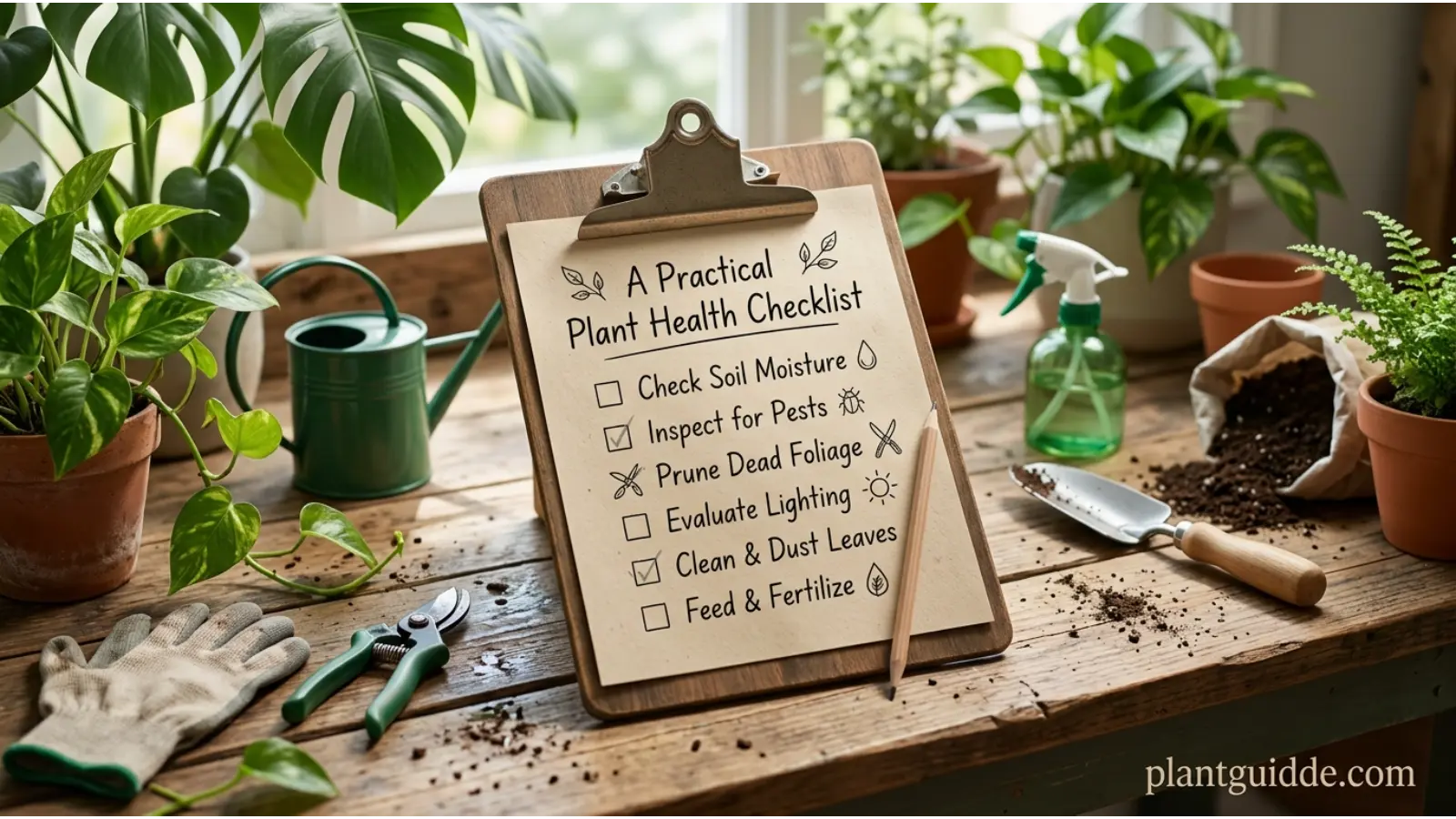
A Practical Plant Health Checklist
Before calling a professional, collect useful information about the plant.
Record:
- Plant species or cultivar, if known
- When symptoms first appeared
- Which leaves or branches are affected
- Recent watering changes
- Recent fertilizer applications
- Recent pruning
- Changes in weather or temperature
- Recent transplanting or repotting
- Pest activity you have observed
- Whether nearby plants show similar symptoms
Take clear photographs of the entire plant as well as close-ups of damaged leaves, stems, soil, or insects.
This information can make diagnosis much more efficient.
FAQs:
Are plant health care services only for trees?
No. Plant health care services can cover trees, shrubs, ornamental plants, lawns, garden plants, and sometimes indoor plants. The exact services depend on the provider and their area of expertise.
Can plant health care prevent plant diseases?
Preventive care can reduce the conditions that encourage many plant problems, but it cannot guarantee that a plant will never develop a disease. Proper plant selection, sanitation, watering, airflow, soil management, and regular monitoring can all reduce risk.
Should I hire a professional for yellow leaves?
Not necessarily. Yellow leaves can result from natural aging, overwatering, underwatering, poor light, nutrient problems, pests, or root damage. If the problem is widespread, persistent, or worsening, professional diagnosis can help identify the underlying cause.
Are plant health care services better than regular landscaping?
They serve different purposes. Regular landscaping generally focuses on maintenance and appearance, while plant health care focuses more specifically on diagnosing and managing plant health problems. The two services can complement each other.
How often should plants be professionally inspected?
There is no universal schedule. Inspection frequency depends on plant type, property conditions, pest pressure, plant value, and local climate. Higher-risk landscapes may benefit from more frequent monitoring, while healthy low-risk plants may only need occasional professional assessment.
Conclusion
Effective plant health care services are about more than treating damaged leaves or applying a product. The strongest approach identifies why a plant is struggling, corrects environmental or cultural problems where possible, and uses targeted treatment only when it is justified.
If a plant is repeatedly declining, developing unexplained symptoms, or showing signs of serious pest or disease pressure, start with diagnosis rather than guesswork. A clear assessment can help protect the plant, avoid unnecessary treatments, and create a healthier growing environment for the long term.

Asad Mumtaz is a dedicated plant enthusiast and gardening writer with a passion for helping people care for their plants successfully. He specializes in plant care guides, indoor gardening, and practical growing tips for all skill levels. His content focuses on making gardening simple, enjoyable, and rewarding. Through his work, Asad shares reliable advice to help readers create thriving green spaces.