Care of a strawberry plant are rewarding plants for containers, raised beds, garden borders, and even small balconies. They do not require complicated equipment, but they do respond strongly to their growing conditions.
A plant that receives enough sunlight and moisture can produce sweet, healthy berries, while poor drainage, overcrowding, inconsistent watering, or insufficient light can quickly lead to weak growth and disappointing fruit.
Learning how to take care of a strawberry plant is therefore less about following a rigid schedule and more about understanding what the plant needs at each stage of growth.
The goal is to keep the roots healthy, encourage productive leaves and flowers, protect developing fruit, and maintain conditions that discourage common problems.
Quick Answer
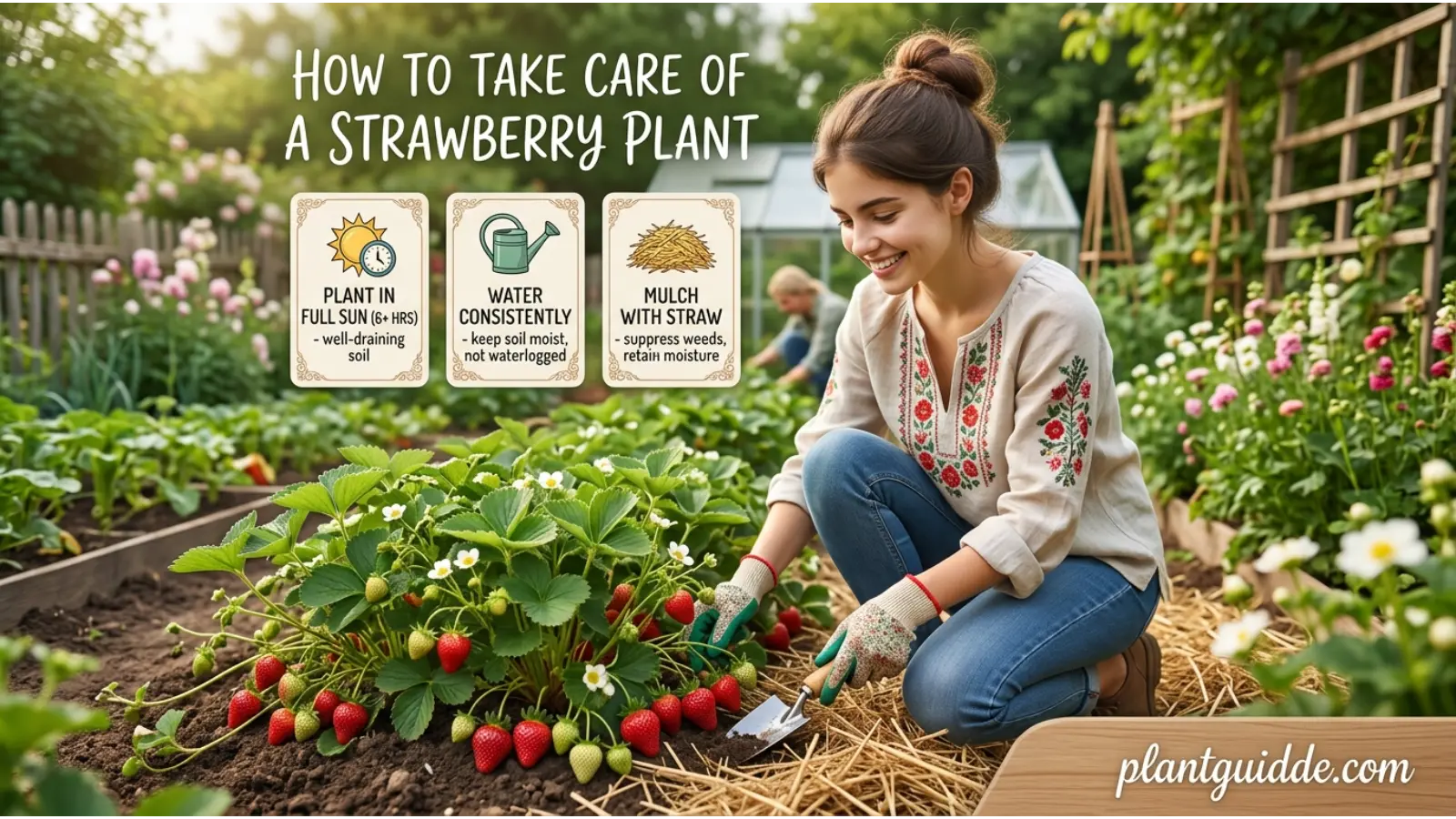
To learn how to take care of a strawberry plant, give it 6–8 hours of sunlight, well-draining fertile soil, consistent moisture, and good airflow. Water when the top inch of soil begins to dry, keep fruit off wet soil with mulch, remove damaged leaves, and feed appropriately during active growth. Regularly check for pests, disease, and overcrowding so small problems do not reduce your harvest.
What Strawberry Plants Need to Grow Well
Strawberries generally perform best when their basic growing requirements are balanced.
| Growing factor | What strawberries prefer | Why it matters |
|---|---|---|
| Light | About 6–8 hours of direct sunlight | Supports flowering and fruit production |
| Soil | Fertile, loose, well-draining soil | Encourages healthy roots |
| Water | Consistent moisture without soggy soil | Prevents drought stress and root problems |
| Drainage | Excellent drainage | Strawberries are vulnerable to prolonged wet roots |
| Airflow | Open space around plants | Helps foliage dry and reduces disease pressure |
| Mulch | Straw or another suitable organic mulch | Keeps fruit clean and reduces soil moisture loss |
| Feeding | Moderate, balanced nutrition | Supports foliage, flowering, and fruiting |
The exact requirements can vary with climate, strawberry variety, container size, and growing season, but these fundamentals provide a reliable starting point.
Choose the Right Location
The first step in strawberry plant care is choosing a suitable growing location.
Strawberries need plenty of sunlight to produce vigorous growth and abundant fruit. A location receiving around 6–8 hours of direct sunlight per day is generally ideal. Morning and afternoon sunlight are particularly useful because good light exposure helps the plant build energy for flowering and fruit development.
Avoid placing strawberries where they are shaded for much of the day by buildings, fences, or taller plants.
Good airflow also matters. Do not pack strawberry plants tightly together simply because they are small. Dense foliage stays damp longer after watering or rain, creating conditions that can encourage fungal problems.
Can strawberries grow in partial shade?
They can tolerate less sunlight than an ideal full-sun location, but reduced light often means weaker growth and fewer or smaller fruits. If your main goal is harvesting strawberries, prioritize the brightest practical location available.

Use Well-Draining, Fertile Soil
Strawberries need moisture, but their roots should not remain saturated.
A loose, fertile soil mixture allows water to move through the root zone while retaining enough moisture for steady growth. Heavy, compacted soil can create the opposite situation: water remains around the roots while air movement through the soil decreases.
Before planting, improve poor garden soil with suitable organic matter if necessary. In containers, use a quality potting mix designed for container growing rather than dense garden soil.
A slightly acidic to neutral soil environment is generally suitable for strawberries.
Why drainage is so important
One of the easiest mistakes is assuming that a plant needing regular moisture should always have wet soil. Strawberries need consistent moisture, not permanently saturated roots.
Care of a strawberry plant soil stays wet for several days after watering, investigate the cause. The problem may be:
- Poor drainage
- An oversized container
- Compacted soil
- A container without adequate drainage holes
- Watering too frequently
- Heavy rainfall combined with slow-draining soil
Correcting the underlying problem is more effective than simply reducing or increasing the amount of water.
How to Water a Strawberry Plant
Proper watering is one of the most important parts of how to take care of a strawberry plant.
Strawberries have relatively shallow roots, so they can become stressed when the soil repeatedly dries out completely. At the same time, constantly wet soil can damage the root system.
Rather than watering according to a fixed calendar, check the soil and the plant’s growing conditions.
A practical watering method
- Check the soil near the root zone.
- If the upper layer is beginning to dry, water thoroughly.
- Apply water around the base rather than repeatedly wetting the fruit and foliage.
- Allow excess water to drain away.
- Check more frequently during hot, dry, or windy weather.
- Reduce watering when cool weather or rainfall keeps the soil naturally moist.
Container-grown strawberries usually need more frequent attention than plants growing in the ground because containers dry out faster.
What does an underwatered strawberry plant look like?
A strawberry plant suffering from insufficient moisture may develop:
- Wilting leaves
- Drooping flower stems
- Dry or crispy leaf edges
- Slow growth
- Small or poorly developed fruit
Do not automatically assume every wilted strawberry needs water, however. Wilting can also occur because roots are damaged by excessively wet soil.
Keep Developing Fruit Off Wet Soil
Once strawberries begin producing fruit, protecting the berries becomes just as important as caring for the foliage.
Strawberries that rest directly on damp soil are more vulnerable to rot, soil contamination, and pest damage. A layer of clean mulch can create a physical barrier between the fruit and the soil.
Straw is traditionally used around strawberry plants, which is one reason the plant is associated with its name. Other suitable mulching materials can also be used depending on your growing system.
Keep the mulch around the plant rather than tightly pressed against the crown.
Feed Strawberries Carefully
Strawberries benefit from adequate nutrition, but more fertilizer does not necessarily mean more strawberries.
Excessive nitrogen can encourage lush leafy growth at the expense of balanced flowering and fruit production. It can also create soft, overly vigorous growth that is more difficult to manage.
Use a fertilizer appropriate for fruiting plants and follow the product’s application instructions. Feeding requirements depend on the variety, soil fertility, growing system, and time of year.
For container strawberries, nutrients can become depleted more quickly because the plant has access to a limited volume of soil. This makes appropriate feeding particularly important.
Care of a strawberry plant plants are already growing strongly with healthy green foliage and producing flowers, avoid adding fertilizer simply because more growth seems desirable.
How to Care for Strawberry Plants During Flowering
Flowering is the transition from vegetative growth to fruit production, so avoid major unnecessary disturbances during this stage.
Provide:
- Plenty of sunlight
- Consistent soil moisture
- Good airflow
- Appropriate nutrition
- Protection from extreme environmental stress
Pollination also matters. Bees and other pollinators can help strawberry flowers develop into fruit. Avoid unnecessarily disturbing flowering plants and consider planting pollinator-friendly flowers nearby when appropriate.
If flowers appear healthy but fruit production remains poor, consider environmental conditions, pollination, plant age, variety, and temperature rather than assuming fertilizer is the problem.
Prune and Remove Unhealthy Growth
Strawberries do not require heavy pruning like many woody plants.
Instead, focus on removing material that is clearly dead, diseased, or damaged. Removing unhealthy leaves can improve the appearance of the plant and reduce sources of disease, while clearing excessive debris around the crown improves airflow.
Avoid removing large amounts of healthy green foliage without a reason. Those leaves produce energy that supports the plant and its fruit.
What to Do With Strawberry Runners
Many strawberry plants produce long stems called runners, which develop small new plants along their length.
Runners are useful when you want to propagate strawberries. A young plant can eventually establish roots and become a new strawberry plant.
However, runners can also divert resources away from fruit production.
If your priority is maximizing the current harvest, removing unwanted runners can help the mother plant focus its resources on growth and fruiting. If you want additional strawberry plants, allow selected runners to root and establish.
This is especially useful in garden beds where you want to expand your strawberry patch without purchasing new plants.
How to Care for Strawberries in Containers
Strawberries are particularly well suited to containers, hanging baskets, and other small-space growing systems.
Choose a container with:
- Adequate drainage holes
- Enough depth for a healthy root system
- Sufficient width for the plant
- Fresh, well-draining potting mix
Do not overcrowd several plants into a container simply because strawberries are small. Crowding increases competition for water and nutrients and can reduce airflow.
Container plants also require closer monitoring because sunlight, wind, and warm temperatures can cause the growing medium to dry much faster than garden soil.
A simple container routine
Check the soil regularly, especially during warm weather. Water thoroughly when needed, confirm that excess water can escape, and rotate the container if necessary so growth remains reasonably balanced.
Do not place the container permanently in a dark location simply because the plant looks healthy after watering. Light is essential for sustained flowering and fruit production.
Common Strawberry Plant Problems
Even healthy-looking strawberry plants can develop problems. The most useful approach is to examine the entire growing environment instead of treating symptoms in isolation.
Yellow leaves
A few older yellow leaves can occur naturally as foliage ages. Widespread yellowing, however, may indicate environmental stress.
Possible causes include:
- Excessive watering
- Poor drainage
- Nutrient imbalance
- Root problems
- Insufficient light
- Natural aging of older foliage
Check the soil before adding fertilizer. If the soil is already staying wet, additional fertilizer will not solve the underlying drainage problem.
Brown or crispy leaf edges
Brown edges can develop when plants experience moisture stress, excessive heat, dry conditions, or other environmental problems.
Check soil moisture, recent weather, container drainage, and exposure to strong afternoon heat before deciding what action to take.
Small strawberries
Small fruit can result from several factors, including insufficient sunlight, inadequate moisture, poor pollination, plant stress, variety characteristics, or unfavorable temperatures.
Look at the whole plant rather than assuming fertilizer is automatically required.
Strawberry leaves turning brown or spotted
Leaf spots can have multiple causes, including fungal or environmental problems. Remove severely damaged leaves when appropriate, improve airflow, avoid unnecessarily wetting foliage, and keep fallen diseased material from accumulating around the plant.
If the problem spreads rapidly or affects a large portion of the crop, identify the specific disease before applying treatment.
Strawberry Plant Pests to Watch For
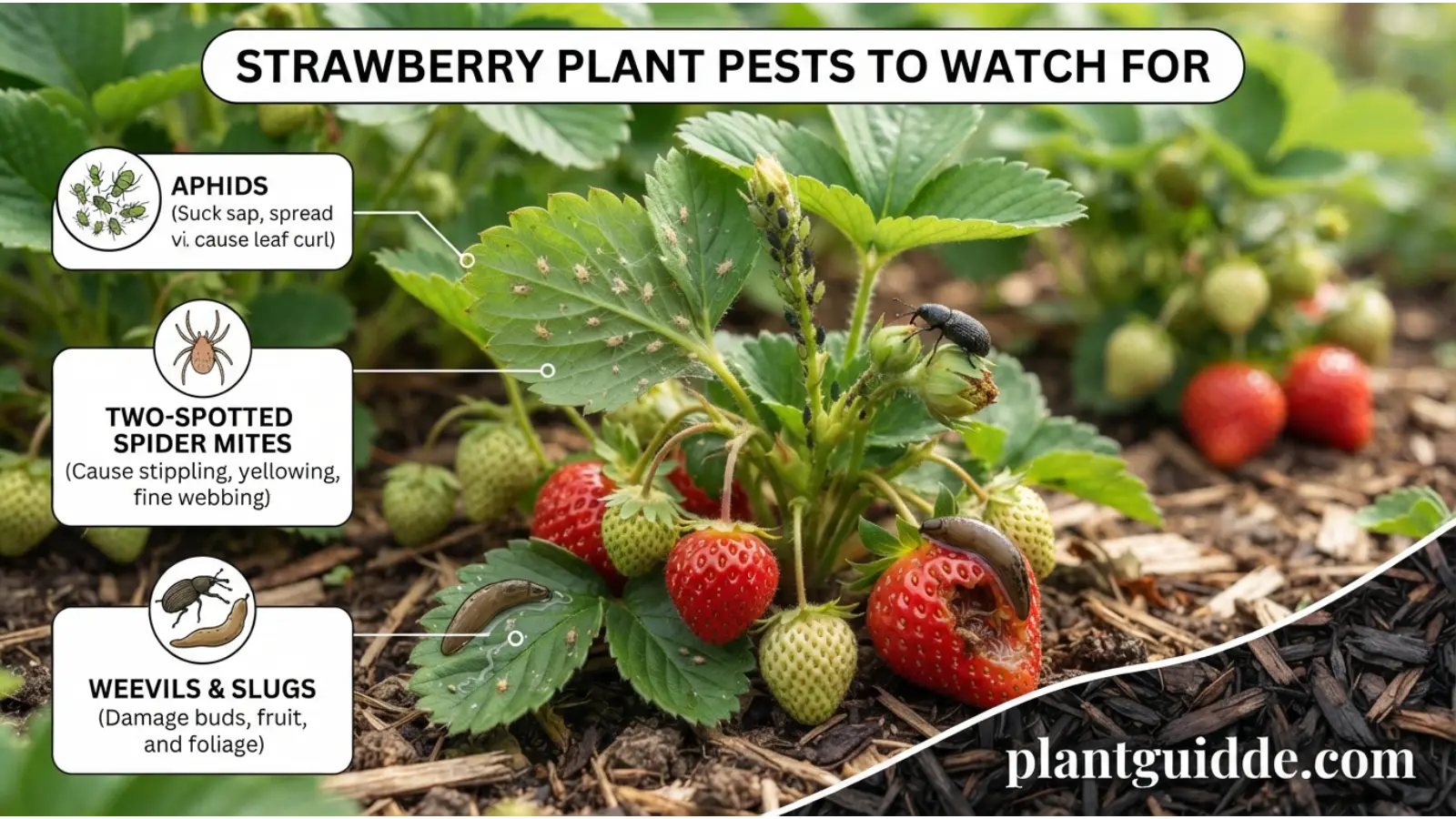
Strawberries can attract a variety of garden pests. Common problems may include aphids, spider mites, slugs, snails, and insects that feed on developing fruit.
Regular inspection is often more useful than waiting until damage becomes severe.
Check:
- The undersides of leaves
- New growth
- Flower clusters
- Developing fruit
- The area beneath mulch
- Stems and crowns
Look for distorted leaves, sticky residue, holes, webbing, chewed fruit, or visible insects.
Whenever possible, identify the pest before choosing a control method. Different pests require different approaches, and unnecessary pesticide use can also affect beneficial insects.
How to Protect Strawberries From Birds and Other Animals
Ripe strawberries can attract birds and other garden visitors before you have a chance to harvest them.
If this becomes a recurring problem, physical protection is often practical. Netting or other appropriate barriers can protect the crop while allowing light and airflow to reach the plants.
Install protective materials carefully so they do not trap wildlife or interfere with pollination during flowering.
When and How to Harvest Strawberries
Harvest strawberries when they have developed their characteristic ripe color and are ready to eat.
Unlike some fruits, strawberries do not continue ripening in the same way after harvest, so picking them at an appropriate stage is important for flavor.
A practical harvesting routine is:
- Check the plants regularly as fruit approaches maturity.
- Harvest ripe berries rather than leaving them exposed unnecessarily.
- Handle berries gently to avoid bruising.
- Remove damaged or rotting fruit promptly.
- Harvest during the cooler part of the day when practical.
- Refrigerate harvested fruit if it will not be eaten soon.
Frequent harvesting also prevents overripe berries from remaining on the plant and becoming a source of pest or disease problems.
Seasonal Strawberry Plant Care
Strawberry care changes as growing conditions change.
Spring
Spring is often a period of active growth, flowering, and fruit development. Focus on sunlight, consistent moisture, airflow, and appropriate feeding.
Inspect plants for winter damage and remove unhealthy foliage.
Summer
Heat and rapid drying become more important. Check soil moisture more frequently, particularly for container-grown strawberries.
Mulch can help moderate soil moisture and keep developing berries away from bare soil.
Fall
Depending on your climate and strawberry type, fall can be an important period for establishing plants, managing runners, and preparing plants for colder weather.
Remove diseased debris and maintain reasonable airflow around the plants.
Winter
Strawberry winter care depends heavily on climate and variety. In regions with significant freezing temperatures, plants may need protection from severe cold. Containers are particularly vulnerable because their roots are exposed to temperature fluctuations.
Avoid assuming every strawberry plant requires the same winter treatment. Check the requirements of the specific variety and consider your local climate.
Common Mistakes When Growing Strawberries
Many strawberry problems come from a few basic mistakes rather than difficult diseases or complicated care requirements.
Watering on a fixed schedule
Watering every day or every few days without checking the soil can result in either drought stress or constantly wet roots.
Better approach: Adjust watering according to soil moisture, temperature, rainfall, container size, and plant growth.
Giving too little sunlight
Strawberries may survive in a relatively bright location but produce disappointing harvests when light is inadequate.
Better approach: Reserve your sunniest practical location for fruiting plants.
Keeping the soil constantly wet
More water is not always better.
Better approach: Maintain consistent moisture while allowing excess water to drain away.
Letting fruit touch the soil
This increases the risk of dirty, damaged, or rotting berries.
Better approach: Use mulch or another suitable method to keep fruit elevated from damp soil.
Overcrowding plants
Dense plants have less airflow and compete for resources.
Better approach: Follow spacing recommendations for your particular strawberry variety and growing system.
Applying too much fertilizer
Heavy feeding can produce impressive leaves without necessarily producing better fruit.
Better approach: Fertilize according to the plant’s actual needs and the instructions for the fertilizer being used.
A Simple Strawberry Plant Care Routine
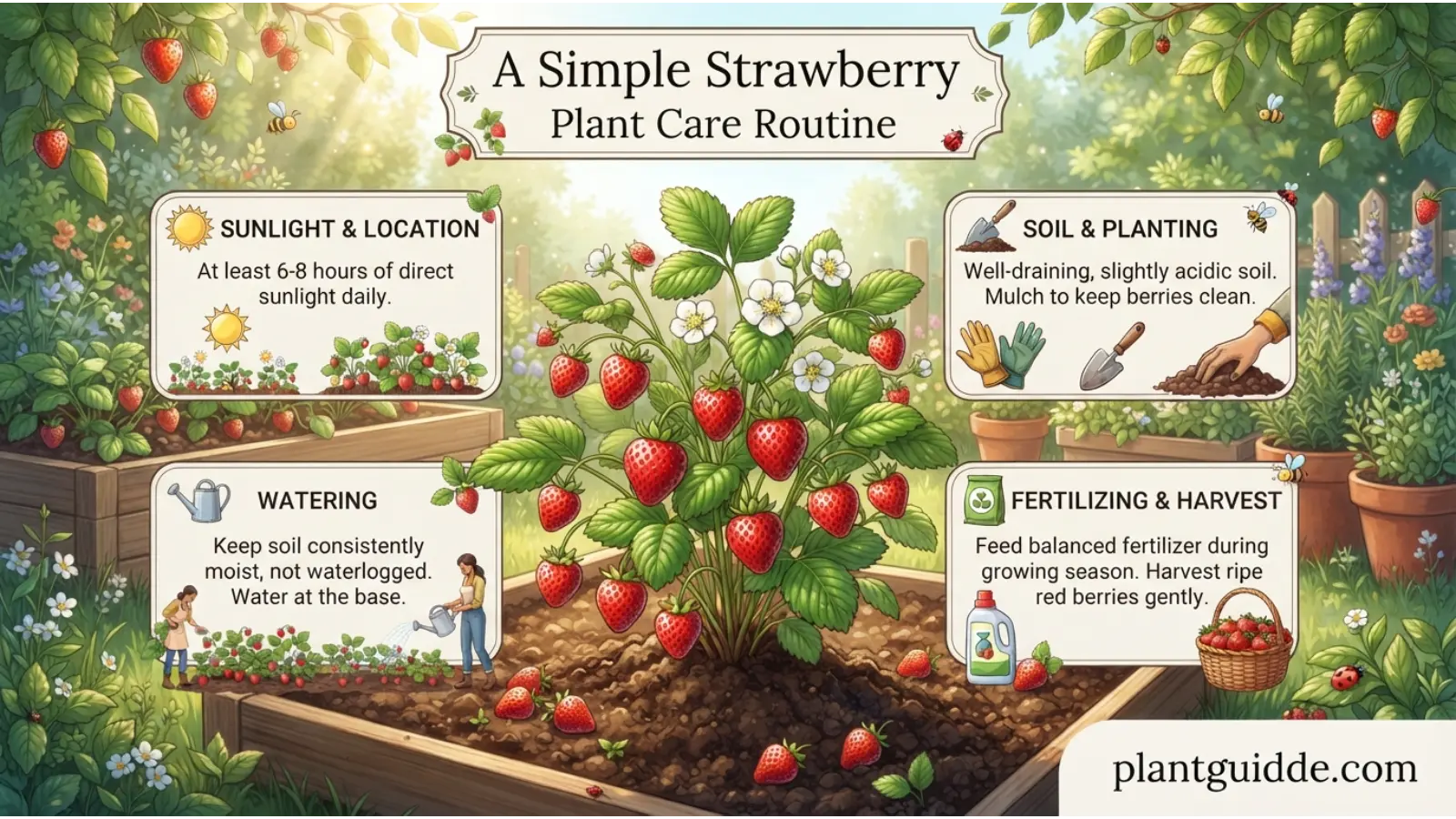
If you want an easy routine rather than a complicated schedule, use this checklist:
Several times a week
- Check soil moisture.
- Look for pests.
- Inspect flowers and developing berries.
- Remove obviously damaged fruit.
Weekly
- Examine foliage for spots, discoloration, or unusual growth.
- Check that mulch has not become excessively wet or compacted.
- Inspect containers for drainage problems.
- Remove unwanted runners if fruit production is the priority.
Throughout the growing season
- Maintain adequate sunlight.
- Keep moisture consistent.
- Harvest ripe berries regularly.
- Remove diseased material promptly.
- Watch for changes in weather that require adjustments to watering.
This approach is more reliable than following an identical watering and feeding schedule throughout the entire season.
FAQs:
How often should I water a strawberry plant?
Water when the soil is beginning to dry rather than following a strict calendar. Strawberries need consistent moisture, particularly while flowering and producing fruit, but the roots should not remain in saturated soil. Containers may need watering more frequently because they dry out faster.
Do strawberry plants need full sun?
Strawberries generally perform best with around 6–8 hours of direct sunlight. More suitable sunlight usually means better flowering and fruit production. Plants receiving insufficient light may grow but produce fewer or smaller berries.
Why are my strawberry leaves turning yellow?
Yellow leaves can result from overwatering, poor drainage, nutrient problems, insufficient light, root stress, or normal aging of older leaves. Check soil moisture and drainage first rather than immediately applying fertilizer.
Should I cut the runners off my strawberry plant?
Remove unwanted runners if you want the mother plant to concentrate more resources on its own growth and fruit production. If you want additional plants, selected runners can be allowed to root and establish new strawberry plants.
Why are my strawberry plants flowering but not producing fruit?
Flowering without good fruit production can be associated with poor pollination, unfavorable temperatures, insufficient sunlight, plant stress, or variety-specific characteristics. Examine the growing conditions and flowering period before assuming the plant simply needs more fertilizer.
Final Thoughts
Successful strawberry plant care comes down to maintaining a healthy balance: plenty of sunlight, fertile but well-drained soil, consistent moisture, good airflow, and protection for developing fruit.
Instead of relying on a rigid schedule, pay attention to the soil, leaves, flowers, and berries and adjust care as conditions change.
If you are growing strawberries for the first time, start with the basics: choose a sunny location, avoid waterlogged soil, mulch beneath developing fruit, and inspect the plants regularly. Those simple habits provide a strong foundation for healthier plants and a more reliable harvest.

Asad Mumtaz is a dedicated plant enthusiast and gardening writer with a passion for helping people care for their plants successfully. He specializes in plant care guides, indoor gardening, and practical growing tips for all skill levels. His content focuses on making gardening simple, enjoyable, and rewarding. Through his work, Asad shares reliable advice to help readers create thriving green spaces.