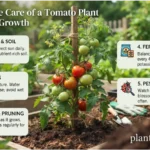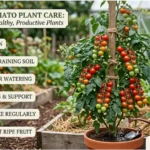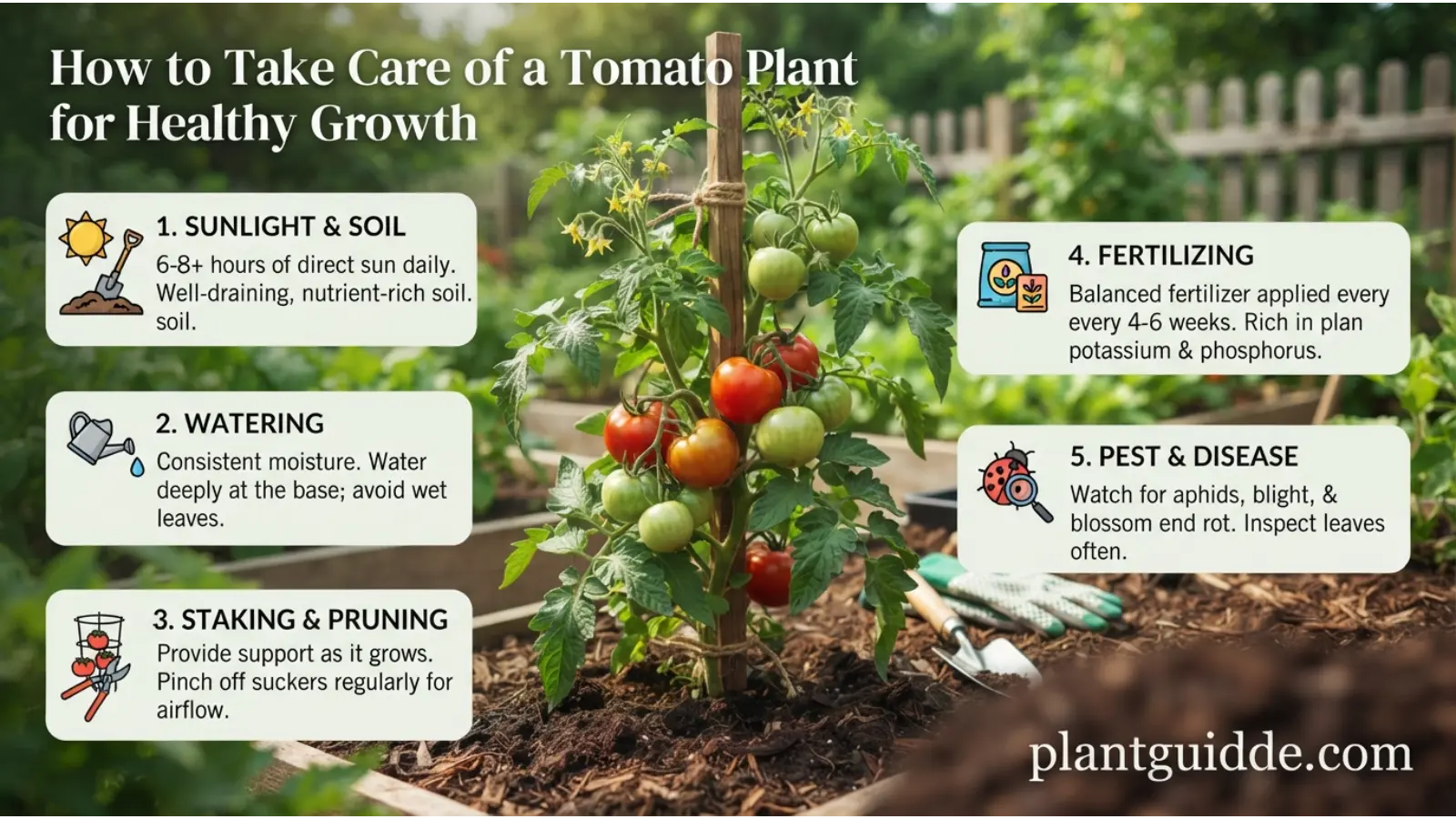
Cherry tomato plant care are among the most rewarding plants for a home garden, patio, raised bed, or large container. They grow quickly, produce clusters of small fruits, and can keep harvesting for weeks when conditions remain favorable.
But productive plants do not happen simply because tomatoes are considered easy to grow. Many problems come from a few basic mistakes: too little sunlight, irregular watering, excessive nitrogen, poor airflow, weak support, or planting in soil that stays wet.
Good cherry tomato plant care is less about following a rigid routine and more about understanding what the plant needs at each stage of growth. Once you learn how to read the leaves, soil, flowers, and developing fruit, it becomes much easier to correct problems before they affect the harvest.
Quick Answer
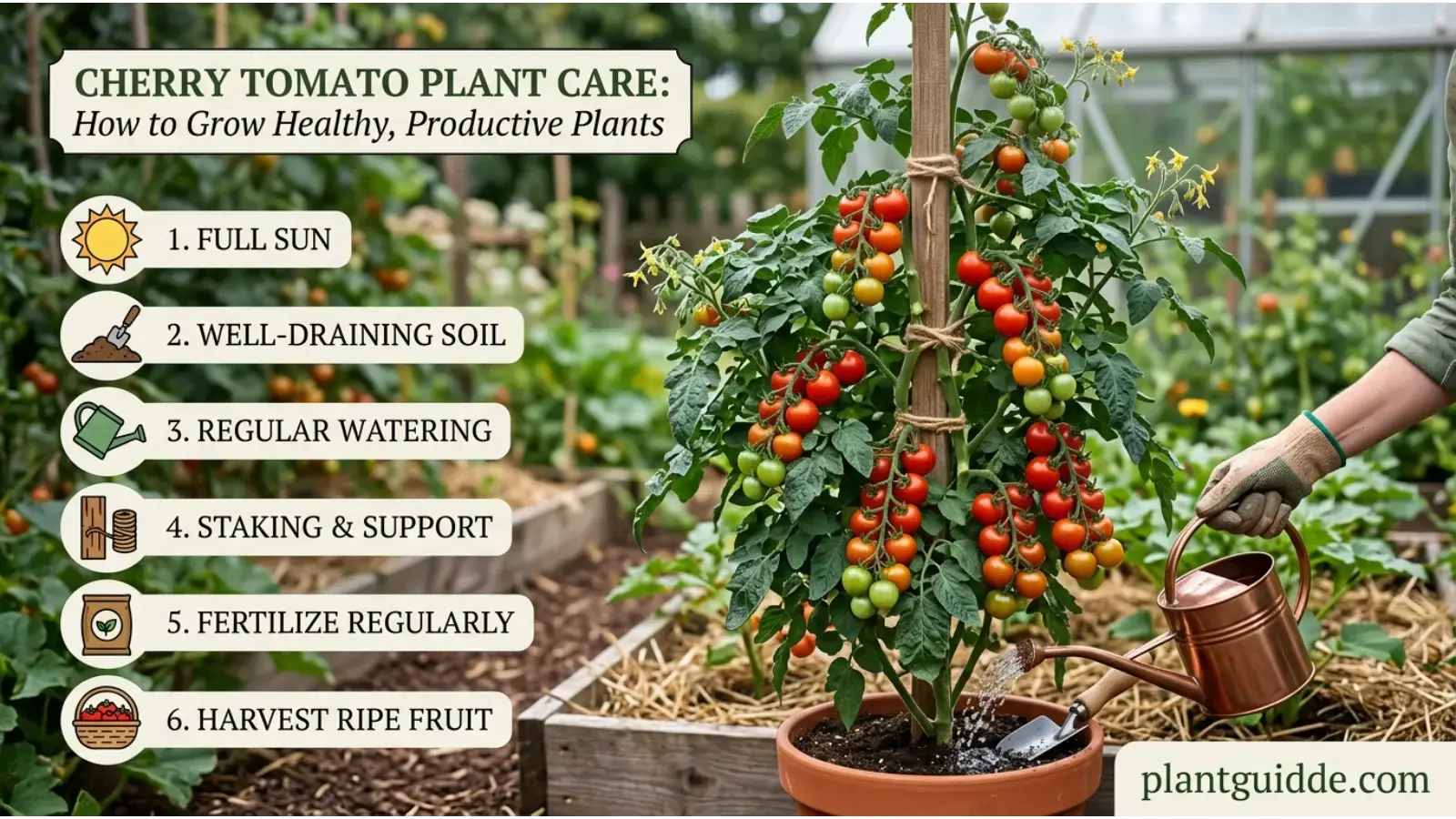
Cherry tomato plant care is mainly about providing at least 6 hours of direct sunlight, fertile well-draining soil, consistent moisture, regular feeding, and reliable support. Water deeply when the soil begins to dry rather than following a rigid schedule.
Mulch helps stabilize moisture, while pruning and good spacing improve airflow. With proper care, cherry tomatoes can produce heavily throughout the growing season.
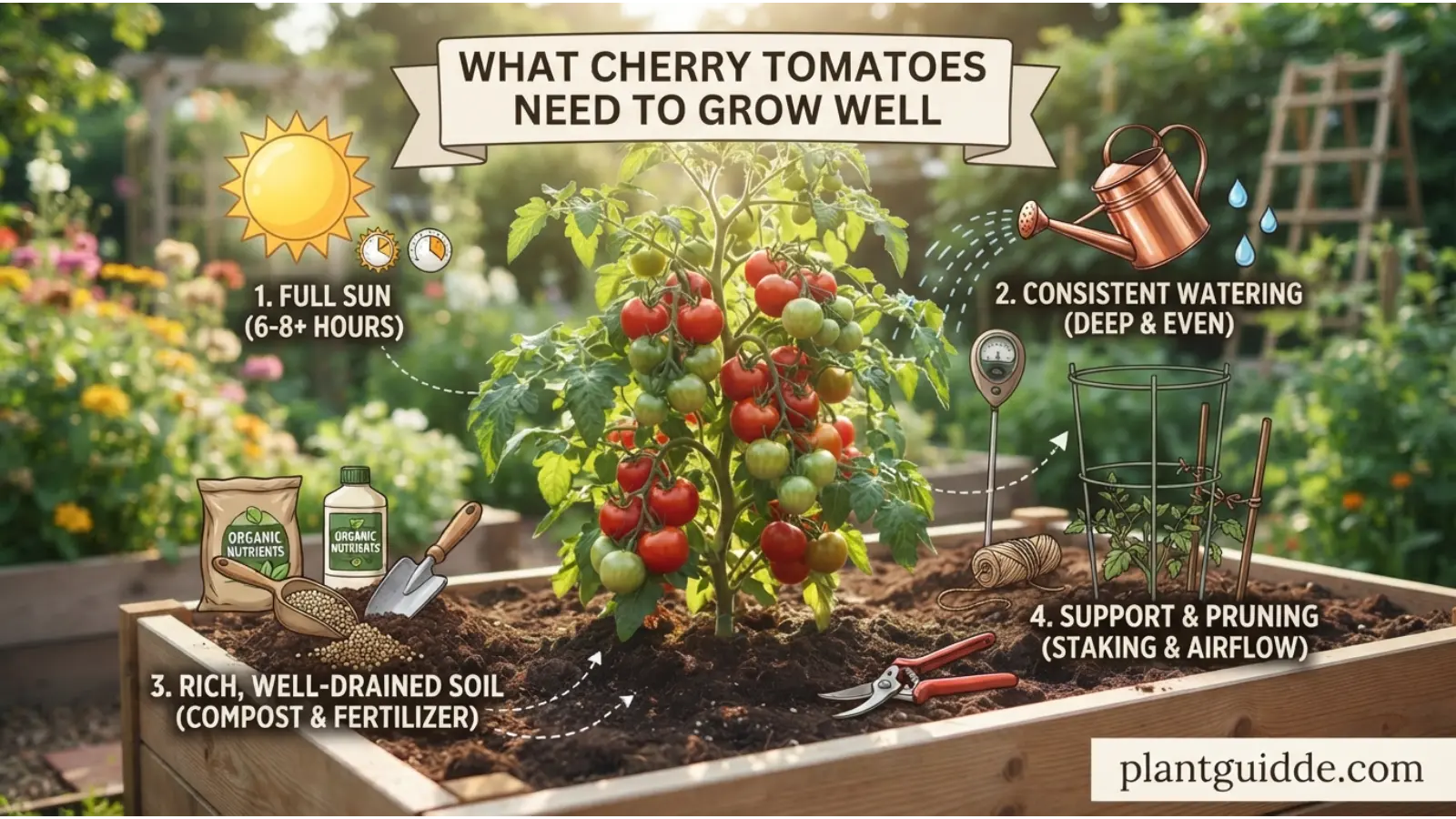
What Cherry Tomatoes Need to Grow Well
Cherry tomatoes are warm-season plants that perform best when their basic growing conditions are consistently favorable.
| Growing factor | What cherry tomatoes prefer |
|---|---|
| Light | At least 6 hours of direct sun, with more generally beneficial |
| Soil | Fertile, loose, well-draining soil |
| Soil pH | Slightly acidic to near neutral |
| Water | Deep, consistent moisture without waterlogging |
| Temperature | Warm conditions with protection from frost and extreme heat |
| Support | Cage, stake, trellis, or another sturdy structure |
| Feeding | Regular nutrition without excessive nitrogen |
| Airflow | Good spacing and open foliage |
| Mulch | Useful for stabilizing soil moisture and reducing soil splash |
The most important point is consistency. A cherry tomato plant can tolerate a less-than-perfect day, but repeated stress from drought, saturated soil, extreme temperatures, or poor light can reduce flowering and fruit production.
Choose the Right Growing Location
Start with the location because even excellent watering and fertilizing cannot compensate for insufficient light.
Tomatoes need strong direct sunlight for vigorous growth and reliable fruit production. Choose the sunniest practical position in your garden, balcony, patio, or greenhouse.
Avoid planting cherry tomatoes where buildings, fences, large trees, or other vegetables shade them for much of the day.
Good airflow matters too. Crowded plants stay humid longer after rain or irrigation, creating more favorable conditions for leaf diseases.
For garden-grown plants, leave enough space between plants for mature foliage to spread without forming a dense wall of leaves.
Practical tip: If a young tomato receives strong morning light but is shaded throughout the afternoon, observe its growth before deciding the location is adequate. Tall, thin growth and sparse flowering can indicate that the plant needs more usable light.
Plant Cherry Tomatoes in Well-Draining Soil
Cherry tomatoes grow best in fertile soil that holds enough moisture for the roots but does not remain saturated.
A useful soil mix should contain organic matter while still allowing excess water to drain away.
Before planting, work mature compost into poor garden soil rather than relying on large amounts of fertilizer to compensate for weak soil structure.
Cherry tomato plant care you are growing in a container, avoid using heavy garden soil by itself. A quality container growing medium provides better drainage and root aeration.
Tomatoes can develop extensive root systems, so choose a container large enough to support the mature plant. Small pots dry out quickly and create much greater fluctuations in moisture.
Why drainage matters
Cherry tomato roots need both water and oxygen. Soil that stays saturated can reduce root function and increase the risk of root problems.
On the other hand, soil that repeatedly becomes extremely dry can stress the plant and interfere with consistent fruit development.
The goal is not constantly wet soil. The goal is evenly moist soil with good drainage.
How to Water Cherry Tomato Plants
Watering is one of the most important parts of cherry tomato plant care, particularly once plants begin flowering and producing fruit.
Instead of watering according to a fixed calendar, check the soil and consider recent rainfall, temperature, wind, container size, and plant size.
Water deeply enough to moisten the root zone rather than giving the surface a small splash every day.
During hot weather, container-grown cherry tomatoes may require much more frequent watering than plants growing in the ground.
A simple watering test
Push your finger several inches into the soil near the plant.
Cherry tomato plant care the soil is still noticeably moist below the surface, you may not need to water yet. If it feels dry several inches down and the plant is beginning to show mild midday stress, give it a thorough watering.
Do not wait until the plant is severely wilted before watering.
Water at the base
Direct water toward the soil rather than repeatedly soaking the leaves.
Keeping foliage dry when possible helps reduce conditions favorable to several common tomato leaf diseases. Mulch can also reduce soil splashing onto lower leaves.
Morning watering is generally preferable when practical because excess moisture on foliage has more time to dry during the day.
Avoid extreme moisture swings
Large changes between very dry and very wet soil can contribute to fruit cracking and other physiological problems.
A useful approach is:
- Check soil moisture regularly.
- Water deeply when the root zone begins drying.
- Adjust frequency during hot or rainy periods.
- Use mulch to slow moisture loss.
- Make sure excess water can drain away.
The exact amount of water a plant needs depends heavily on climate and growing conditions, so observing the soil is more useful than blindly following a universal watering schedule.
Mulch Can Make Cherry Tomato Care Easier
A layer of organic mulch around the plant can provide several benefits.
Mulch helps slow evaporation, moderate soil temperature, reduce weeds, and limit soil particles from splashing onto lower foliage during irrigation or rain.
Suitable options can include clean straw, shredded leaves, or other appropriate organic mulch.
Keep mulch slightly away from direct contact with the main stem. A thick, wet layer pressed against the stem can create an unnecessarily damp environment.
For gardeners who struggle with inconsistent watering, mulch can make maintaining more stable soil moisture considerably easier.
Fertilizing Cherry Tomato Plants
Cherry tomatoes are productive plants and need sufficient nutrients to support continuous growth, flowering, and fruit production.
However, more fertilizer does not automatically mean more tomatoes.
One of the most common mistakes is applying too much nitrogen. Excess nitrogen can encourage large amounts of leafy growth while delaying or reducing flowering and fruit production.
A soil test is the most reliable way to identify major nutrient needs in garden soil.
For container plants, use a fertilizer formulated for vegetables or tomatoes and follow the product’s application directions rather than adding extra fertilizer simply because the plant looks large.
As the plant moves from vegetative growth into flowering and fruit production, avoid aggressive feeding unless the plant actually needs it.
Signs of possible nutritional problems
Nutrient deficiencies can sometimes resemble watering problems or disease, so avoid diagnosing a problem from one symptom alone.
Look at:
- New versus old leaves
- Overall growth rate
- Leaf color
- Flower production
- Fruit development
- Recent fertilizer applications
- Soil moisture
- Root and drainage conditions
Cherry tomato plant care a plant is extremely leafy but produces few flowers, excessive nitrogen is one possibility worth considering.
Give Cherry Tomatoes Strong Support
Many cherry tomato plants become much larger than beginners expect.
A small transplant can eventually turn into a sprawling plant covered with stems, leaves, flowers, and fruit. Supporting it early is much easier than trying to control a tangled plant later.
Depending on the variety, you can use:
- Tomato cages
- Stakes
- Trellises
- String systems
- Strong garden netting
Install support close to planting time so you do not have to disturb established roots later.
Secure stems loosely rather than tying them tightly. The stems continue to thicken as the plant grows.
Determinate vs. indeterminate cherry tomatoes
Check the plant label or seed packet before choosing a support system.
Determinate varieties generally have a more limited growth pattern and produce their main crop over a shorter period.
Indeterminate varieties continue producing new growth and fruit along their stems throughout favorable conditions. They can become large and benefit significantly from sturdy trellising or caging.
This distinction also affects how much pruning and space the plant may require.
Should You Prune Cherry Tomato Plants?
Pruning is not simply a requirement for growing tomatoes. It is a management technique.
Whether heavy pruning is useful depends on the variety, growing system, climate, and your goal.
For many indeterminate plants, removing some unnecessary growth can make the plant easier to support and improve airflow through a dense canopy.
However, aggressive pruning can expose fruit to excessive sunlight and remove leaves that the plant needs for photosynthesis.
A practical approach is to remove damaged or diseased foliage and manage excessive growth without stripping the plant bare.
Some gardeners remove lower foliage near the first fruiting cluster once the plant is established, particularly where foliage is touching the soil or airflow is poor.
What about suckers?
Suckers are shoots that develop in the junction between a leaf and the main stem.
On indeterminate cherry tomatoes, gardeners sometimes remove selected suckers to control plant size and create a manageable structure.
You do not necessarily need to remove every sucker.
If the plant is healthy and has enough space, allowing some additional growth can increase the number of flowering stems. If the plant is becoming excessively dense, selectively removing growth may improve manageability and airflow.
The best pruning strategy is therefore the one that matches your variety and growing system.
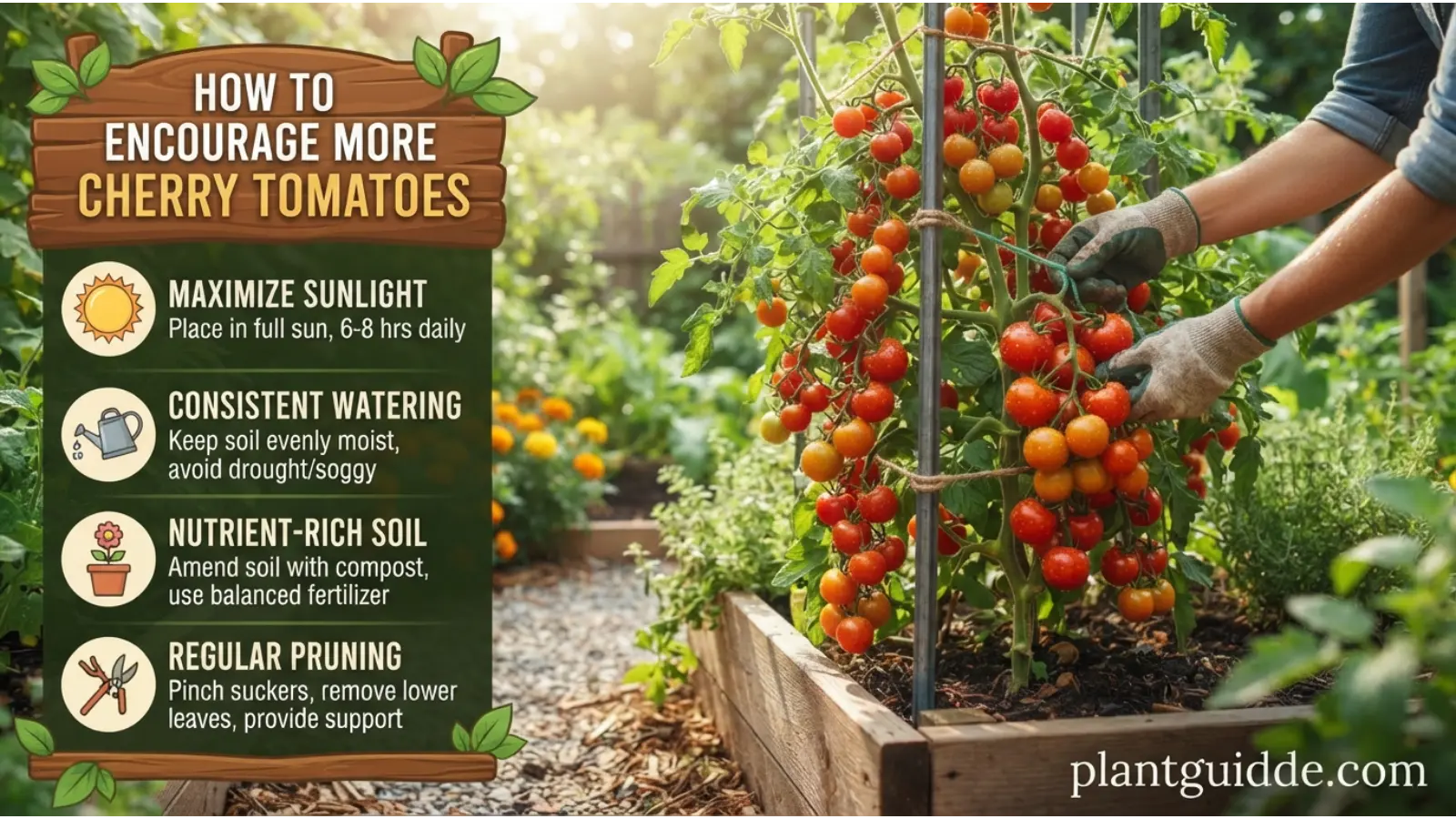
How to Encourage More Cherry Tomatoes
Healthy leaves are the engine behind fruit production.
Instead of focusing only on fertilizer, concentrate on the entire growing environment:
- Provide strong sunlight.
- Keep the root zone consistently supplied with moisture.
- Avoid excessive nitrogen.
- Support the plant properly.
- Maintain adequate spacing.
- Monitor flowers during extreme weather.
- Harvest ripe fruit regularly.
- Remove severely diseased foliage promptly.
Cherry tomatoes generally have small flowers that are capable of self-pollination, but pollination can still be affected by unfavorable temperatures and environmental conditions.
Very hot or unusually cool weather can interfere with flower fertilization and cause flowers to drop without producing fruit.
When this happens, increasing fertilizer is usually not the answer. Check temperature, watering, plant stress, and overall growing conditions first.
When to Harvest Cherry Tomatoes
One advantage of cherry tomatoes is that they can produce a large number of fruits that ripen relatively quickly.
Harvest when the fruits have developed their expected mature color and feel appropriately firm but slightly yielding, depending on the variety.
Do not leave overripe fruit hanging on the plant unnecessarily.
Regular harvesting encourages you to keep checking the plant for new fruit, damaged tomatoes, insects, and disease symptoms.
Cherry tomatoes also tend to disappear quickly from the kitchen because they are convenient for salads, snacks, pasta, sauces, roasting, and fresh meals.
Practical tip: If birds, insects, or cracking are becoming a problem, check the fruit more frequently rather than waiting for a large batch to become fully ripe at once.
Common Cherry Tomato Problems and What They Mean
Cherry tomatoes communicate growing problems through changes in their leaves, stems, flowers, and fruit. The challenge is determining what is actually causing the symptom.
Yellow leaves
A few older yellow leaves can occur naturally as plants age.
More widespread yellowing may be associated with:
- Excessive watering
- Poor drainage
- Nutrient problems
- Root stress
- Disease
- Insufficient light
Do not automatically fertilize a yellow plant. First examine the soil moisture, drainage, sunlight, and pattern of yellowing.
Leaves curling upward
Leaf rolling can occur when tomatoes experience environmental stress, particularly prolonged heat or drought.
If the leaves are curling but remain relatively green and the plant otherwise looks healthy, examine watering and temperature before assuming the plant has a serious disease.
Persistent curling combined with distorted new growth, discoloration, or other symptoms requires closer investigation.
Flowers dropping without fruit
Flower drop can occur when temperatures become unfavorable.
Extremely hot conditions can interfere with pollination, while cool nights can also reduce fruit set.
Other possible contributors include drought stress, excessive nitrogen, or general plant stress.
If the plant is producing flowers but very few tomatoes, look at the environment before increasing fertilizer.
Tomatoes cracking
Cracks commonly appear when fruit development is accompanied by large changes in water availability.
To reduce the risk:
- Keep soil moisture reasonably consistent.
- Mulch the root zone.
- Avoid allowing plants to become severely dry.
- Avoid suddenly flooding very dry soil.
- Choose varieties with better crack resistance if this is a recurring problem.
Cracking is not necessarily a sign that the entire plant is unhealthy.
Blossom-end rot
Blossom-end rot appears as a dark, leathery area developing at the bottom of a tomato.
It is associated with inadequate calcium delivery to developing fruit, often related to inconsistent water availability and root stress rather than simply a lack of calcium in the soil.
Adding calcium without addressing watering or root conditions may not solve the underlying problem.
Focus first on maintaining consistent moisture and healthy root function.
Brown spots on leaves
Brown or dark spots can indicate fungal or bacterial diseases, especially when they begin on older lower leaves and gradually spread.
Early blight and Septoria leaf spot are common examples.
Good preventive practices include:
- Give plants adequate spacing.
- Improve airflow.
- Avoid unnecessary overhead watering.
- Keep foliage as dry as practical.
- Remove severely diseased plant material.
- Mulch to reduce soil splash.
- Avoid working with plants while foliage is wet.
If disease repeatedly affects tomatoes in the same location, crop rotation and disease-resistant varieties can become particularly valuable.
Pests That Commonly Affect Cherry Tomatoes
Tomato plants can attract several pests, including aphids, whiteflies, stink bugs, tomato hornworms, and other insects depending on the region.
Do not spray automatically when you see an insect.
First determine whether it is actually damaging the plant. Some insects are harmless, while others may be beneficial predators or parasitoids.
Check the undersides of leaves, young shoots, flower clusters, and developing fruit.
For larger pests such as tomato hornworms, hand-picking can be an effective first response when practical.
Regular inspection is often more useful than waiting until significant damage has already occurred.
Cherry Tomato Plant Care in Containers
Cherry tomatoes are particularly well suited to containers, but container growing changes the way you need to manage water and nutrients.
A container has a limited root volume, so it can dry much faster than garden soil.
Choose:
- A sufficiently large container
- Drainage holes
- Quality potting mix
- A sturdy support structure
- A sunny location
Check container moisture more frequently during hot weather.
Avoid placing the pot in a shallow tray where excess water remains around the drainage holes for long periods.
Container tomatoes may also require more frequent feeding because nutrients are gradually lost through watering, but follow the fertilizer label rather than feeding excessively.
Growing Cherry Tomatoes From Seed
Starting cherry tomatoes from seed gives you access to a much wider selection of varieties than many garden centers offer as transplants.
Start seeds indoors early enough for plants to become strong before outdoor conditions are suitable.
Young seedlings need:
- Strong light
- Adequate warmth
- Good drainage
- Consistent but not excessive moisture
- Gradual exposure to outdoor conditions before transplanting
Do not move tender seedlings directly from a protected indoor environment into intense outdoor sunlight and wind.
Harden them off gradually so they can adjust to stronger light, temperature fluctuations, and wind.
A Simple Cherry Tomato Care Routine
You do not need to spend hours every day caring for tomato plants.
A short inspection several times per week can prevent many problems.
During each check
Look at the soil first.
Then inspect:
- New leaves for unusual distortion or discoloration.
- Older leaves for spots or disease symptoms.
- Flowers for fruit set.
- Developing tomatoes for cracks or damage.
- Stems and branches for support problems.
- The undersides of leaves for pests.
- The soil around the plant for weeds and excessive dryness.
This routine helps you catch problems while they are still manageable.
Common Cherry Tomato Care Mistakes
Watering on a fixed schedule
Weather changes, containers dry differently from garden beds, and mature plants use more water than young ones.
Better approach: Check soil moisture and adjust watering to conditions.
Giving too much fertilizer
A huge green plant is not necessarily a productive plant.
Better approach: Use soil testing where practical and follow fertilizer directions.
Growing plants without support
Cherry tomato branches can become heavy with fruit and collapse or sprawl.
Better approach: Install support early.
Planting too closely
Crowded plants have poorer airflow and can remain wet longer after rain or irrigation.
Better approach: Follow the spacing recommendation for the specific variety.
Removing too many leaves
A plant needs healthy foliage to capture light and produce energy.
Better approach: Prune selectively instead of stripping the canopy.
Ignoring small symptoms
A few leaf spots or a slight watering problem can become much more difficult to manage when ignored for weeks.
Better approach: Inspect plants regularly and respond to patterns rather than isolated symptoms.
A Practical Care Schedule
After planting
Focus on establishment.
- Water thoroughly.
- Protect the plant from extreme conditions.
- Install support.
- Apply mulch once the soil is appropriately warm.
- Watch for transplant stress.
During vegetative growth
Focus on building a strong plant.
- Maintain consistent moisture.
- Provide strong sunlight.
- Guide stems onto their support.
- Monitor new growth for pests or abnormalities.
- Avoid excessive nitrogen.
During flowering
Focus on reducing stress.
- Maintain consistent soil moisture.
- Watch temperatures.
- Avoid unnecessary heavy pruning.
- Continue monitoring pests.
- Keep adequate airflow around the plant.
During fruit development
Focus on stability.
- Keep moisture relatively consistent.
- Monitor developing fruit for cracking and blossom-end rot.
- Support heavy branches.
- Harvest ripe tomatoes regularly.
- Remove diseased foliage when appropriate.
FAQs:
How much sunlight do cherry tomato plants need?
Cherry tomatoes generally perform best with at least six hours of direct sunlight each day. More strong sunlight can support vigorous growth and fruit production when temperatures and water availability remain suitable.
How often should I water cherry tomato plants?
There is no single schedule that works for every plant. Check the soil several inches below the surface and water deeply when the root zone begins to dry. Container plants and tomatoes growing in hot, windy conditions may need watering more frequently.
Do cherry tomato plants need pruning?
Not always. Determinate varieties usually require less pruning, while selective pruning can help manage indeterminate plants. Remove damaged or diseased growth and avoid excessive pruning that removes too much healthy foliage.
Why are my cherry tomato flowers falling off?
Flower drop can result from unfavorable temperatures, especially excessive heat or cool conditions, as well as drought and other forms of plant stress. Check environmental conditions before adding more fertilizer.
Why are my cherry tomatoes splitting?
Splitting is often associated with fluctuations in soil moisture as fruit develops. Keeping moisture more consistent with appropriate watering and mulch can help reduce the problem. Some varieties are also more prone to cracking than others.
Final Thoughts
Successful cherry tomato plant care comes down to creating stable growing conditions rather than chasing individual symptoms. Give the plant strong sunlight, fertile but well-draining soil, consistent moisture, appropriate nutrition, good airflow, and reliable support.
The most useful habit is regular observation. Check the soil before watering, inspect leaves before problems spread, watch flowers during stressful weather, and harvest fruit regularly. When you respond to what the plant is actually showing you instead of following a rigid schedule, cherry tomatoes become much easier to grow and far more productive.

Asad Mumtaz is a dedicated plant enthusiast and gardening writer with a passion for helping people care for their plants successfully. He specializes in plant care guides, indoor gardening, and practical growing tips for all skill levels. His content focuses on making gardening simple, enjoyable, and rewarding. Through his work, Asad shares reliable advice to help readers create thriving green spaces.