Mandevilla plant care winter is a warm-weather tropical or subtropical vine that can grow vigorously outdoors during the growing season. Its glossy foliage and trumpet-shaped flowers make it popular for patios, balconies, containers, and warm-climate gardens. The challenge begins when temperatures fall.
Unlike plants that naturally tolerate frost, mandevilla can suffer cold damage quickly. Mandevilla plant care in winter is therefore less about encouraging growth and more about helping the plant safely get through its dormant or slower-growing period.
The good news is that an established container plant can often be overwintered successfully indoors. The key is to change your routine rather than continuing summer care through the colder months.
Quick Answer
Mandevilla plant care in winter focuses on protecting the plant from cold, reducing watering, and providing plenty of bright light. Bring container-grown mandevillas indoors before temperatures become too cold, place them near a bright window, keep them away from drafts and heaters, and allow the soil to dry somewhat between waterings. Winter growth naturally slows, so avoid heavy feeding and unnecessary pruning.
When Should You Bring Mandevilla Indoors for Winter?
Bring mandevilla indoors before the first frost and before temperatures become consistently cold.
A practical approach is to move the plant inside when nighttime temperatures are approaching 50°F (10°C). A brief exposure to slightly cooler conditions may not immediately kill the plant, but prolonged cold can cause leaf yellowing, leaf drop, slowed growth, and stem damage.
Do not wait until frost is forecast. Moving the plant indoors while it is still healthy gives it a better chance of adapting to the change.
Before bringing it inside:
- Inspect the leaves, stems, and undersides of leaves for pests.
- Remove dead, damaged, or diseased foliage.
- Check the drainage holes and soil for signs of pests.
- Wash the foliage gently if necessary.
- Move the plant indoors gradually if outdoor conditions allow.
This inspection matters because pests that are barely noticeable outdoors can become much more troublesome in the warm, enclosed environment of a house.

How to Overwinter a Mandevilla Plant Indoors
Overwintering mandevilla is essentially a transition from active summer growth to a lower-maintenance winter routine.
Choose the Brightest Location Available
Mandevilla still needs light during winter, even when its growth slows.
Place it near a bright south- or west-facing window where possible. A bright east-facing window can also work, although the amount of direct sunlight may be lower.
If natural light is weak, particularly during short winter days, a grow light can help maintain healthier foliage.
Avoid placing the plant in a dark corner simply because it is dormant. Too little light can contribute to:
- Leggy or weak growth
- Yellowing leaves
- Leaf drop
- Poor recovery when spring arrives
The goal is bright light with stable indoor conditions, rather than maximum sunlight at all costs.
Keep Temperatures Stable
Mandevilla prefers warmth and does not handle freezing temperatures.
A comfortable indoor range is generally around 60–75°F (16–24°C), although the plant may tolerate somewhat cooler conditions during winter rest.
More important than chasing an exact temperature is avoiding sudden temperature fluctuations.
Keep the plant away from:
- Cold windows
- Frequently opened exterior doors
- Drafty entrances
- Heating vents
- Radiators
- Fireplaces
- Air-conditioning vents
A plant sitting beside a heater may experience very dry air and rapidly drying foliage, while a plant pressed against a cold window may experience chilling stress.
Should Mandevilla Lose Its Leaves in Winter?
Yes, some leaf yellowing and leaf drop can occur after a mandevilla is brought indoors.
This does not automatically mean the plant is dying.
The transition from bright outdoor conditions to lower indoor light, combined with cooler temperatures and reduced growth, can cause the plant to shed some foliage.
However, heavy or continuous leaf loss deserves investigation.
Check:
- Soil moisture
- Drainage
- Light levels
- Temperature
- Pest activity
- Recent environmental changes
Mandevilla plant care winter the stems remain firm and healthy and the plant shows no signs of severe root or stem damage, moderate winter leaf loss may simply be part of its seasonal adjustment.
How Often Should You Water Mandevilla in Winter?
Water mandevilla less frequently in winter than during active summer growth.
The plant uses less water when temperatures are cooler and growth has slowed. If you continue watering according to a summer schedule, the soil can remain wet for too long, increasing the risk of root problems.
Instead of watering on a fixed calendar, check the soil.
A useful routine is:
- Feel the upper portion of the potting mix.
- If it is still noticeably moist, wait.
- When the soil has dried to an appropriate depth, water thoroughly.
- Allow excess water to drain completely.
- Empty standing water from the saucer or decorative container.
The exact interval varies with pot size, indoor temperature, humidity, light, and soil composition.
Winter watering should respond to the plant’s actual conditions rather than an arbitrary weekly schedule.
Can You Overwater Mandevilla in Winter?
Yes, and this is one of the most common winter problems.
A mandevilla that needed frequent watering during hot summer weather may suddenly need much less once it is indoors.
Overwatering can contribute to:
- Yellow leaves
- Wilting despite wet soil
- Soft or damaged roots
- Persistent moisture
- Fungal or root-related problems
- Sudden leaf drop
Poor drainage makes the problem worse.
Use a container with drainage holes and a well-draining potting mix. Do not allow the pot to sit continuously in water.
If the soil stays wet for many days after watering, reassess the container, soil mix, light, and watering frequency.
Does Mandevilla Need Fertilizer in Winter?
Usually, there is little reason to push growth during winter.
When mandevilla growth slows significantly, fertilizer demand also decreases. Heavy feeding when the plant is barely growing can result in unnecessary salt accumulation in the potting mix and weak, poorly timed growth.
For an overwintering plant:
- Reduce or pause routine fertilization during its winter rest.
- Avoid using heavy doses to compensate for slow growth.
- Resume regular feeding when active growth returns in spring.
The exact timing depends on temperature, light, and whether the plant continues actively growing indoors.
Should You Prune Mandevilla Before Winter?
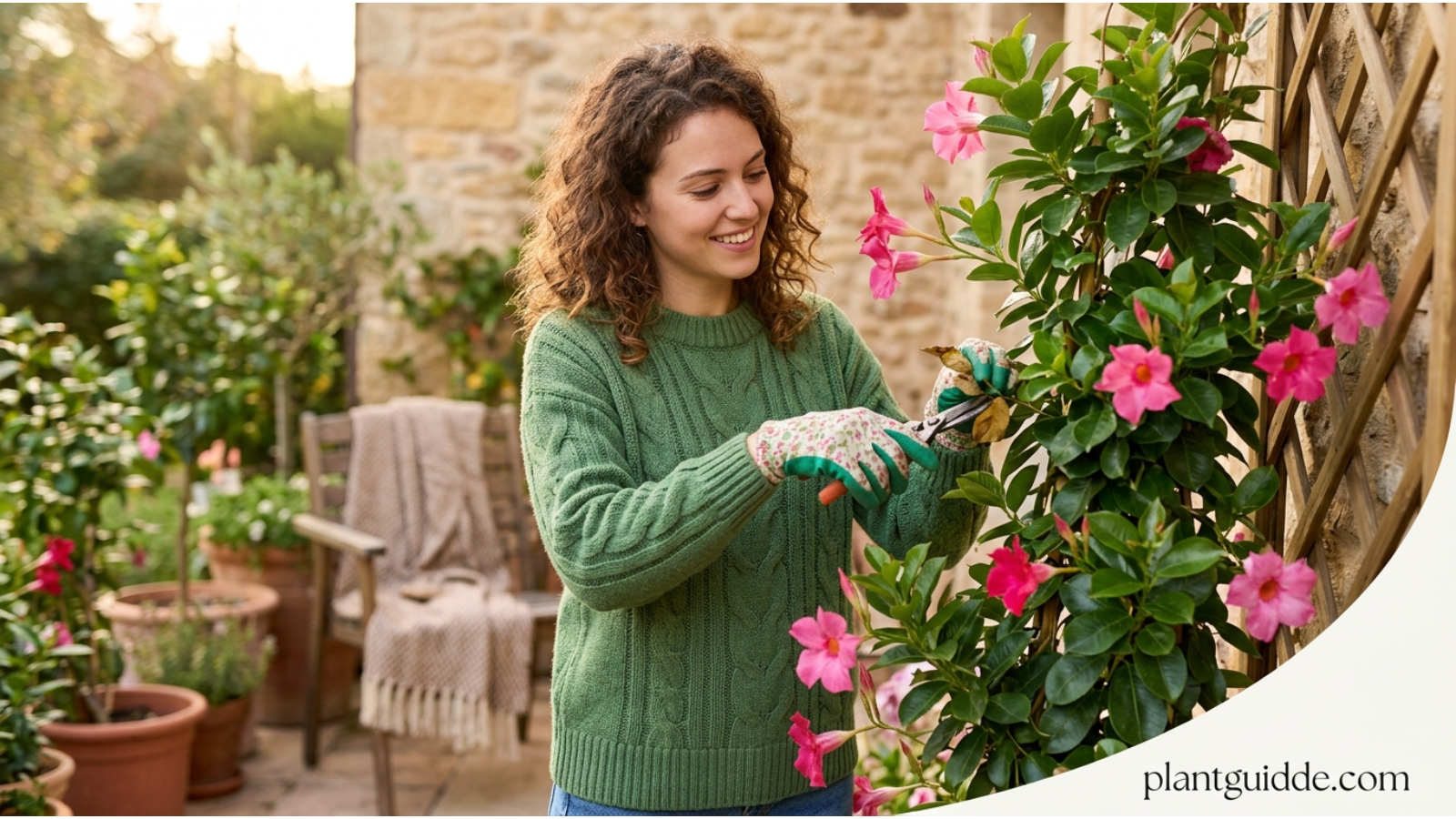
Light pruning can be useful before bringing mandevilla indoors, especially if the plant has become too large for the available space.
You can remove:
- Dead stems
- Damaged growth
- Weak or unhealthy branches
- Excessively long growth that makes indoor placement difficult
Avoid treating winter pruning as an opportunity for aggressive shaping unless there is a specific reason to do so.
Mandevilla plant care winter the plant is healthy and space is not an issue, you can also save more substantial pruning for late winter or early spring, when new growth is preparing to begin.
Mandevilla can become surprisingly large during summer, so pruning is often as much about managing indoor space as it is about plant health.
What Happens to Mandevilla During Winter?
Mandevilla’s winter behavior depends heavily on temperature and light.
In a warm, bright indoor environment, it may continue producing some new growth. In a cooler location with shorter days, growth may slow dramatically and the plant may shed some leaves.
This means winter mandevilla does not necessarily need to look as lush as it did in summer.
Think of winter as a maintenance period:
less water + less fertilizer + slower growth + continued bright light + protection from cold.
Trying to force summer-level growth indoors can create more problems than benefits.
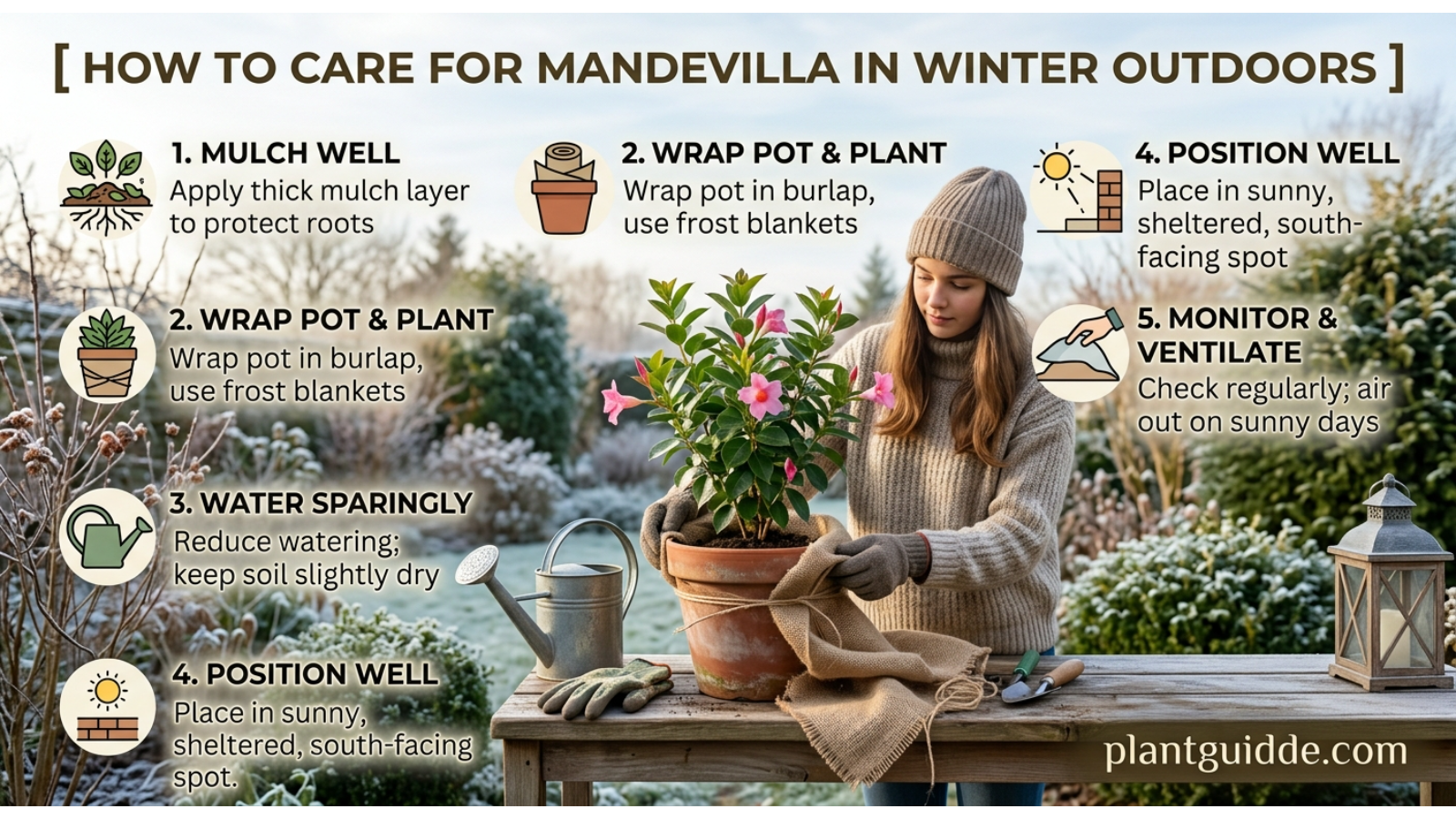
How to Care for Mandevilla in Winter Outdoors
Outdoor winter care depends strongly on your climate.
In frost-free regions, established mandevilla may be able to remain outdoors with appropriate protection. In areas where freezing temperatures occur, outdoor survival becomes much more difficult.
If temperatures may reach freezing, moving a container-grown mandevilla into a protected location is generally safer than relying on a cover alone.
For plants growing in the ground, winter protection may include:
- Mulching around the root zone
- Protecting the plant from cold winds
- Covering the plant during unusual cold events
- Moving container plants to shelter where possible
However, protection cannot reliably make a frost-sensitive plant behave like a cold-hardy perennial. Know the expected winter temperatures for your area before deciding whether the plant can remain outside.
Mandevilla Winter Care in Containers vs. Ground
Container-grown mandevilla has one major advantage: it can be moved.
| Situation | Winter approach |
|---|---|
| Container mandevilla | Move indoors or into a protected warm location |
| Outdoor container in mild climate | Protect from cold and monitor nighttime temperatures |
| In-ground mandevilla in frost-free climate | Reduce watering and protect from cold snaps |
| In-ground mandevilla where freezing occurs | Consider substantial protection or accept possible seasonal dieback |
| Plant exposed to frost | Assess stems and roots for damage before pruning heavily |
Container plants are also more exposed to temperature changes because the relatively small volume of potting mix can cool quickly.
Common Mandevilla Winter Problems
Yellow Leaves
A few yellow leaves during the transition indoors may be normal.
If yellowing becomes widespread, investigate overwatering, poor light, temperature stress, or pests.
Leaf Drop
Mandevilla may drop leaves after being moved indoors.
Sudden changes in light and temperature are common triggers. Give the plant stable conditions rather than responding by increasing watering.
Brown or Crispy Leaves
Brown edges can result from dry indoor air, inconsistent watering, cold exposure, or excessive heat from heating equipment.
Look at the plant’s location before assuming it simply needs more water.
Wilting
Wilting does not always mean the soil is dry.
Check the soil before watering. A mandevilla with damaged roots can wilt even when the potting mix remains wet.
Leggy Growth
Long, weak stems usually indicate that the plant is trying to reach more light.
Move it closer to a suitable bright window or supplement natural light with a grow light.
Pests Indoors
Spider mites, aphids, whiteflies, and other pests can become noticeable after a plant is moved indoors.
Inspect the foliage regularly, especially:
- Leaf undersides
- New growth
- Stem joints
- Areas where leaves are crowded
Early detection is much easier than dealing with a major indoor infestation.
A Simple Winter Mandevilla Routine
If you want a straightforward routine, use this checklist:
Before winter
- Inspect carefully for pests.
- Remove damaged foliage.
- Prune only as much as necessary.
- Move the plant indoors before frost or prolonged cold.
During winter
- Give it the brightest practical location.
- Keep temperatures reasonably warm and stable.
- Water only when the soil has dried appropriately.
- Ensure excellent drainage.
- Reduce or pause fertilizer while growth is slow.
- Check regularly for pests.
Late winter to spring
- Watch for new growth.
- Gradually increase watering as growth and light increase.
- Resume feeding when active growth begins.
- Prune and reshape if needed.
- Gradually acclimate the plant before returning it outdoors.
How to Bring Mandevilla Back Outside in Spring
Do not immediately move a mandevilla from a protected indoor location into intense outdoor sun.
First make sure the threat of frost has passed and outdoor temperatures are suitable.
Then gradually expose the plant to outdoor conditions.
For example, begin with a few hours in a sheltered location and increase outdoor exposure over several days. This helps reduce the risk of sudden stress from stronger sunlight, wind, and temperature changes.
Once the plant is acclimated, you can return it to its normal growing location.
Spring is also the time to reassess the pot, roots, soil, and support structure before vigorous growth resumes.
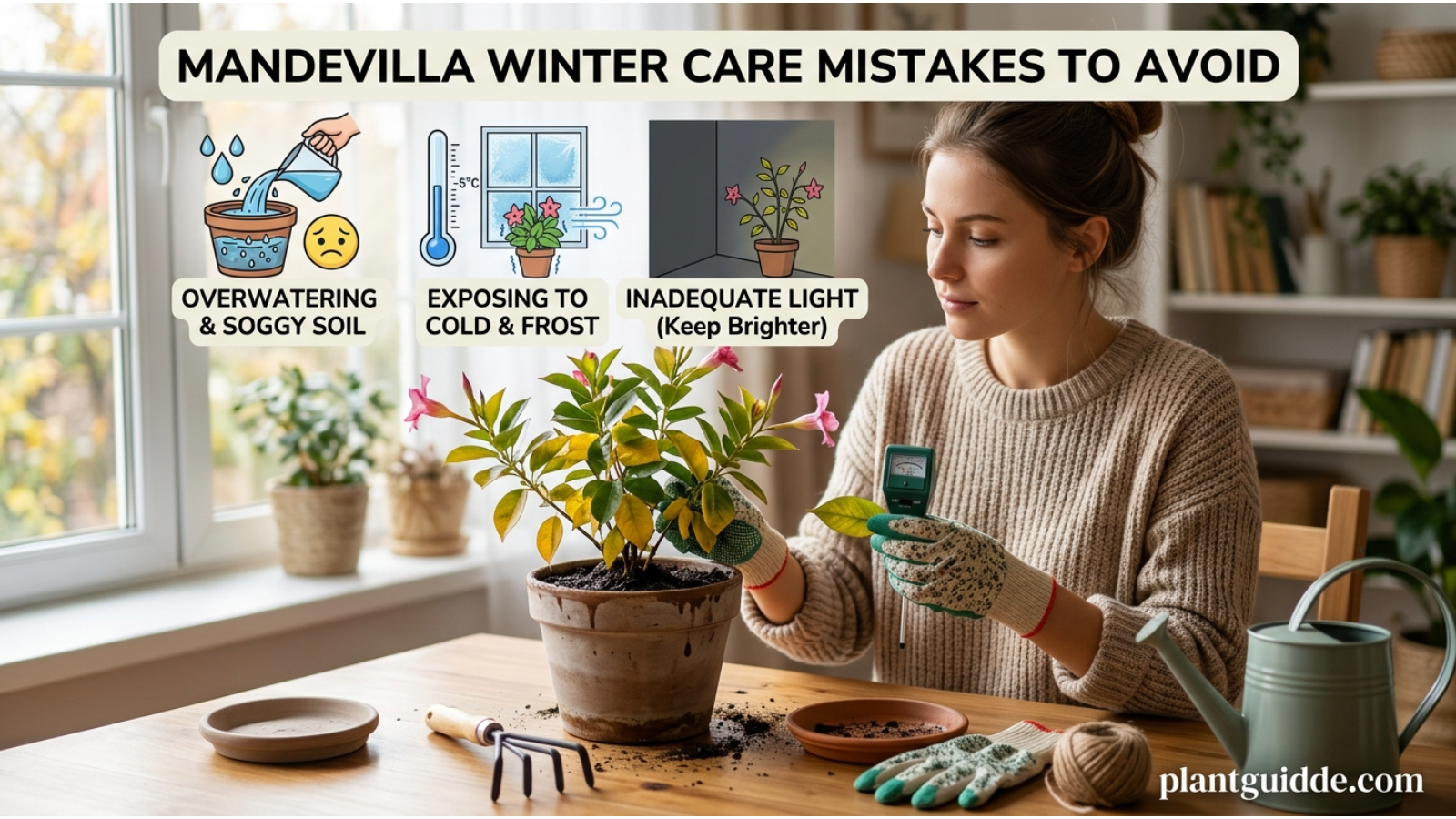
Mandevilla Winter Care Mistakes to Avoid
Some winter problems are caused by trying to care for mandevilla exactly as you did during summer.
Avoid these mistakes:
- Watering on the summer schedule: reduced winter growth means lower water use.
- Keeping it in a dark room: dormancy does not mean the plant can survive indefinitely without light.
- Placing it beside a heater: hot, dry air can stress foliage.
- Waiting for frost before moving it: cold damage can occur before visible frost.
- Heavy winter fertilizing: slow growth does not require aggressive feeding.
- Ignoring pests: indoor conditions can make small pest populations grow quickly.
- Assuming every yellow leaf means underwatering: wet roots can also produce yellowing and wilting.
- Making drastic changes every few days: stability is particularly useful while the plant adjusts indoors.
An Expert Way to Read Your Mandevilla in Winter
Rather than asking only, “When should I water it?” look at several signals together.
Dry soil + firm leaves + bright location: watering may soon be appropriate.
Wet soil + yellow leaves: do not automatically add more water; check drainage and root conditions.
Dry soil + crispy foliage + heater nearby: investigate environmental dryness and heat exposure.
Long, weak new stems + adequate watering: light may be insufficient.
Leaf drop immediately after moving indoors: consider transition stress before assuming disease.
This approach is more reliable than following a fixed winter watering calendar because indoor environments vary considerably.
Image Suggestion: A realistic winter mandevilla care infographic showing a healthy mandevilla indoors beside a bright window, with icons for temperature, reduced watering, bright light, pruning, and pest inspection.
FAQs:
Can mandevilla survive winter indoors?
Yes. Container-grown mandevilla can often be overwintered indoors when protected from freezing temperatures and given adequate light, appropriate watering, and stable conditions.
Should I cut back my mandevilla for winter?
Light pruning can make the plant easier to manage indoors and allows you to remove damaged or unhealthy growth. More substantial pruning can often be done toward late winter or before vigorous spring growth.
How often should I water mandevilla in winter?
There is no reliable fixed schedule. Check the potting mix and water when it has dried appropriately rather than watering according to the summer routine.
Why is my mandevilla losing leaves indoors?
Leaf loss can occur when mandevilla adjusts to lower indoor light, cooler temperatures, reduced growth, or a change in environment. Excessive leaf loss should prompt checks for overwatering, poor drainage, pests, and temperature stress.
Can mandevilla survive frost?
Mandevilla is not a frost-tolerant plant. Freezing temperatures can cause serious damage, so container plants should be moved to a protected location before frost threatens.
Final Takeaway
Successful mandevilla plant care in winter comes down to protecting the plant from cold while avoiding the excess water and low-light problems that often develop indoors. Move it inside before frost, provide bright light, keep conditions stable, reduce watering as growth slows, and monitor closely for pests.
The most useful winter habit is simple: watch the soil, foliage, temperature, and light together rather than following a rigid care schedule. When spring brings warmer temperatures and stronger light, gradually return the plant to active-growth care.

Asad Mumtaz is a dedicated plant enthusiast and gardening writer with a passion for helping people care for their plants successfully. He specializes in plant care guides, indoor gardening, and practical growing tips for all skill levels. His content focuses on making gardening simple, enjoyable, and rewarding. Through his work, Asad shares reliable advice to help readers create thriving green spaces.