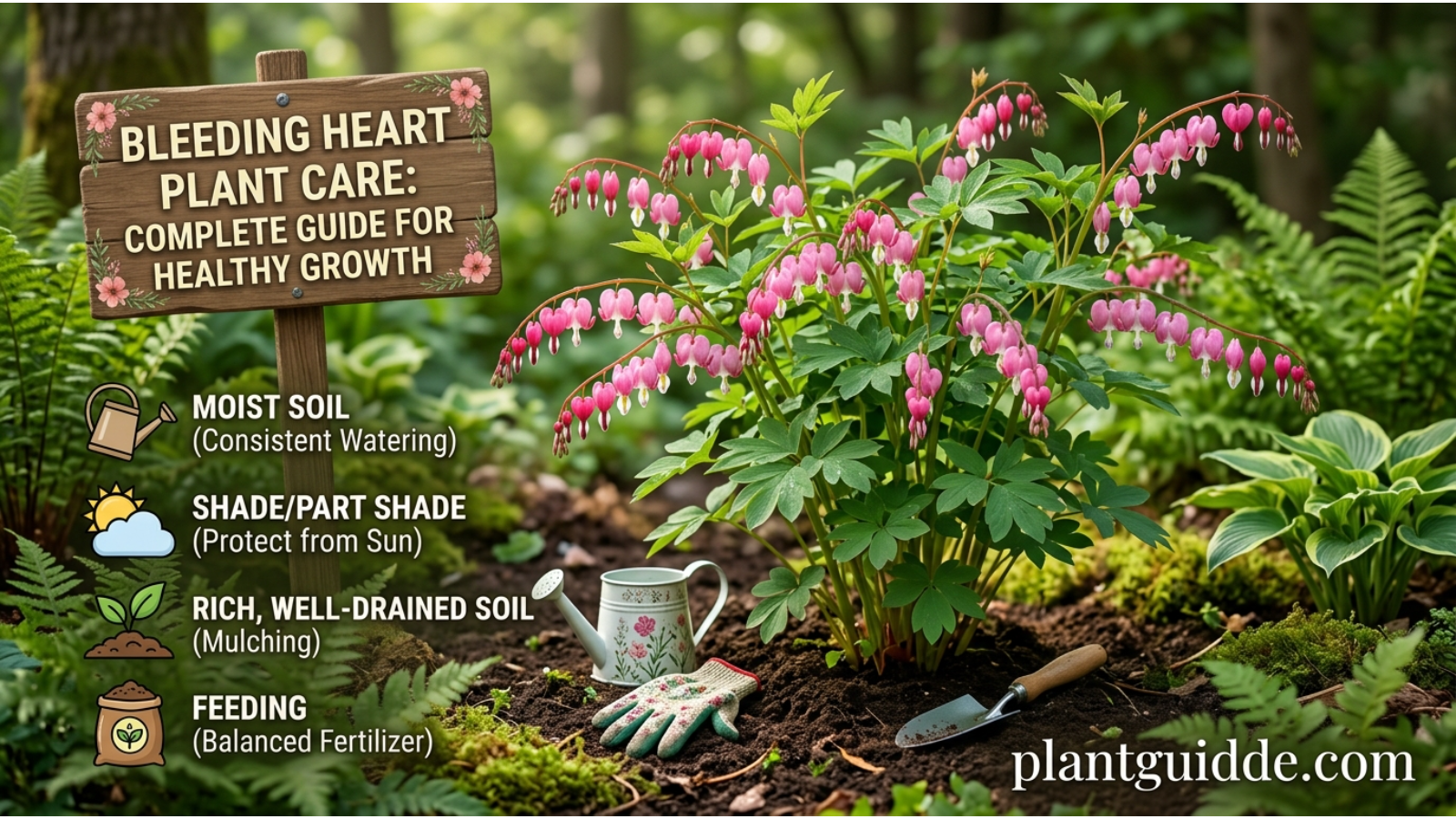
Bleeding heart plant care is a woodland perennial best known for its distinctive heart-shaped flowers that appear along arching stems in spring. Its delicate appearance can make it seem difficult to grow, but the plant is quite manageable when its natural woodland preferences are understood.
The biggest mistake with bleeding heart plant care is trying to treat it like a sun-loving garden perennial. Too much intense sunlight, dry soil, reflected heat, or poor drainage can quickly cause stress. Understanding when the plant naturally grows, flowers, and goes dormant makes its care much easier.
Quick Answer
Bleeding heart plant care is mainly about providing partial to full shade, consistently moist but well-drained soil, and protection from intense heat and drying conditions. Keep the soil from becoming completely dry while avoiding soggy roots. Give the plant good air circulation, add organic matter to the soil, and allow the foliage to die back naturally after flowering rather than cutting it prematurely.
What Is a Bleeding Heart Plant?
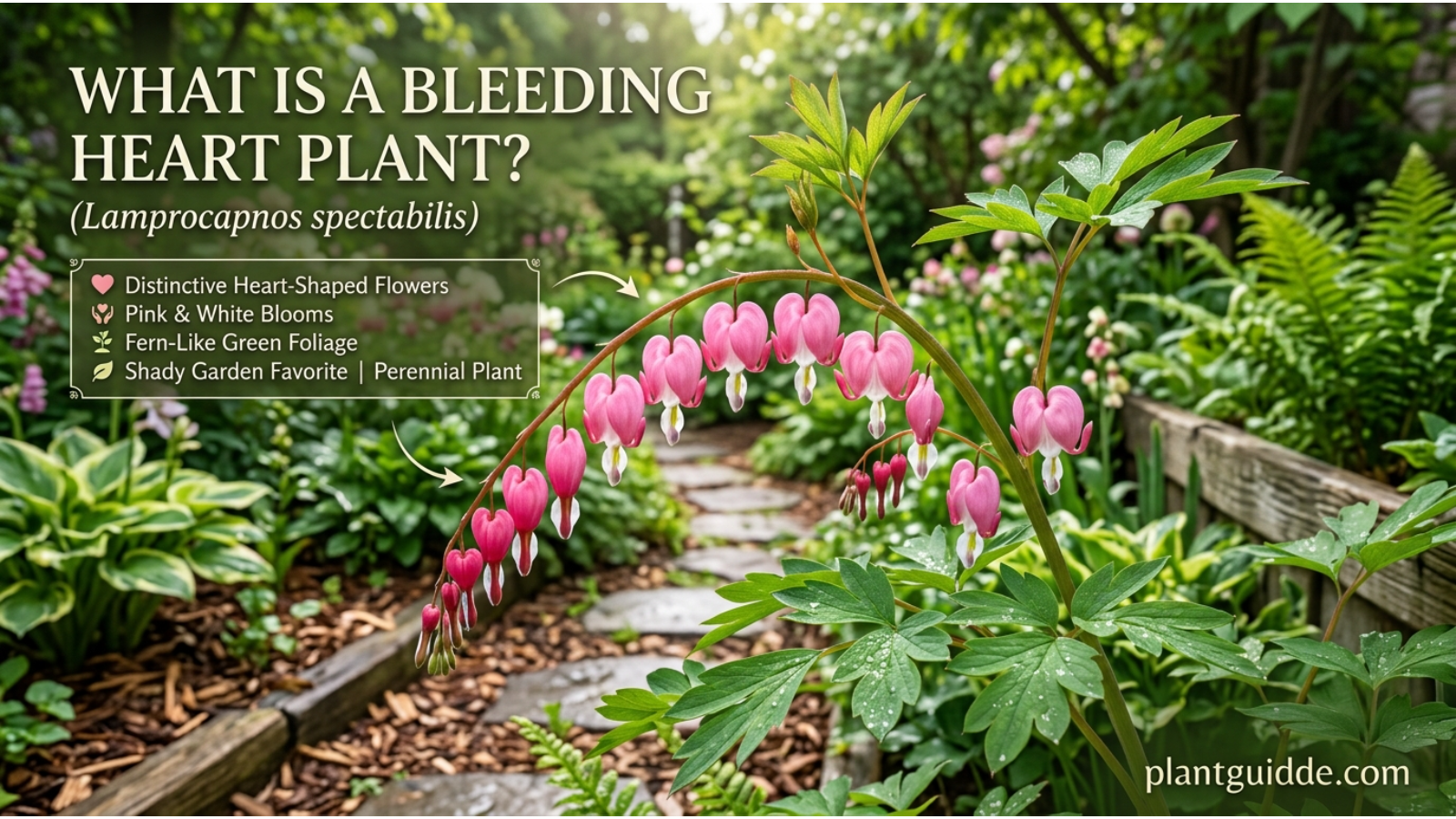
Bleeding heart commonly refers to plants in the former Dicentra group, particularly Lamprocapnos spectabilis, formerly known as Dicentra spectabilis. It is a herbaceous perennial native to parts of Asia and is widely grown in temperate gardens for its unusual pink-and-white or white heart-shaped flowers.
The flowers hang from graceful, arching stems and usually appear in spring. Depending on the climate and growing conditions, the plant may gradually become dormant during the warmer part of the year.
This seasonal behavior is important. A bleeding heart that begins turning yellow after flowering is not necessarily dying. In many cases, it is simply completing its natural growth cycle.
Bleeding Heart Plant Care at a Glance
| Care requirement | What bleeding heart prefers |
|---|---|
| Light | Partial to full shade; gentle morning light can be beneficial |
| Soil | Rich, humus-filled, moist, well-drained soil |
| Water | Consistent moisture without waterlogging |
| Humidity | Normal outdoor humidity is usually sufficient |
| Temperature | Cool to moderate conditions; protect from excessive heat |
| Fertilizer | Usually modest feeding when growing in fertile soil |
| Bloom time | Generally spring |
| Pruning | Remove spent flowers and damaged growth; allow natural dieback |
| Propagation | Division, seed, or other methods depending on species |
| Dormancy | Often dies back after flowering, particularly in warmer weather |
Where Should You Plant a Bleeding Heart?
Choosing the right location is one of the most important parts of bleeding heart plant care.
A position beneath deciduous trees, along a shaded border, or in a woodland-style garden can work particularly well. The plant generally appreciates protection from the strongest afternoon sunlight.
Best light conditions
Bleeding heart performs well in:
- Partial shade
- Filtered sunlight
- Bright woodland-like shade
- Gentle morning sun followed by afternoon shade
In cooler climates, it may tolerate more sunlight if the soil remains consistently moist. In warmer regions, stronger afternoon sun can increase heat and water stress.
Practical test: If the planting area becomes intensely hot and dry during the afternoon, it is probably not an ideal location. A spot with morning light and afternoon protection is often easier to manage.
Too much shade can also reduce flowering and produce weaker, less vigorous growth. The goal is not complete darkness but protected, indirect or filtered light.
How to Prepare the Soil
Bleeding heart prefers soil that holds moisture while still allowing excess water to drain away.
The ideal soil is:
- Rich in organic matter
- Loose and fertile
- Moist but not saturated
- Well drained
- Slightly acidic to neutral in many garden situations
Before planting, improve poor soil with mature compost or other well-decomposed organic matter. This helps create the combination bleeding heart needs: moisture retention without prolonged waterlogging.
Heavy clay can become especially problematic if water remains around the roots after rain. If drainage is poor, improving the planting area or choosing a better location is usually more effective than simply watering less.
How to Water Bleeding Heart
Watering is one of the easiest parts of bleeding heart plant care to get wrong.
Bleeding heart prefers consistent soil moisture, particularly during active spring growth. However, consistently wet soil can damage roots and create conditions favorable to fungal problems.
Rather than watering according to a rigid calendar, check the soil.
A practical watering routine
- Feel the soil several inches below the surface.
- If the soil is beginning to dry, water thoroughly.
- Allow excess water to drain away naturally.
- Check the soil more frequently during unusually warm or dry periods.
- Reduce watering when the plant enters dormancy and no longer has active foliage.
Plants growing in naturally moist woodland soil may need little supplemental water during rainy periods, while those planted beneath trees can require more attention because tree roots compete for available moisture.
How to tell if watering is a problem
Possible underwatering signs include:
- Drooping foliage
- Dry or curling leaves
- Rapid loss of freshness during hot weather
- Dry soil well below the surface
Possible excess-moisture problems include:
- Yellowing leaves accompanied by persistently wet soil
- Poor growth
- Soft or deteriorating roots
- Repeated fungal problems
The important distinction is that yellow leaves alone do not automatically mean the plant needs more water.
Does Bleeding Heart Need Fertilizer?
Usually, bleeding heart does not require heavy feeding when planted in fertile soil rich in organic matter.
A layer of compost incorporated into the soil before planting can provide useful nutrients while improving soil structure.
If the plant is growing poorly despite suitable light and moisture, consider the entire growing environment before reaching for fertilizer. Poor drainage, excessive shade, root competition, drought, or heat can all cause weak growth.
If fertilizer is necessary, use a balanced garden fertilizer according to its label directions rather than repeatedly applying high amounts. Excess fertilizer can encourage lush growth without solving an underlying environmental problem.
How to Mulch Bleeding Heart
Mulching is particularly useful for plants growing in locations that dry quickly.
Apply a layer of organic mulch around the plant to help:
- Slow moisture loss
- Moderate soil temperature
- Add organic matter as it decomposes
- Reduce competition from weeds
Keep mulch slightly away from the crown and stems rather than piling it directly against the plant. Excessively thick or constantly wet mulch around the crown can encourage rot and other problems.
How to Prune Bleeding Heart
Bleeding heart usually needs little routine pruning.
During flowering, remove individual faded flowers if you want to improve the plant’s appearance and prevent energy from being directed toward seed production.
After flowering, the foliage may gradually yellow and decline. This is where many beginners make a mistake: they see declining leaves and assume the plant needs aggressive pruning or more fertilizer.
Instead, allow the foliage to remain as long as it is still green and functioning.
When should you cut bleeding heart back?
Once the foliage has naturally yellowed or died back, it can generally be removed at ground level.
Removing healthy green foliage too early can reduce the plant’s ability to store energy for the following growing season.
If the plant is entering summer dormancy, don’t try to force new growth simply because the above-ground foliage has disappeared. Marking the location with a plant label can prevent accidental disturbance while the plant is dormant.
What Happens to Bleeding Heart in Summer?
One of the most important things to understand about bleeding heart is its seasonal growth pattern.
After spring flowering, many bleeding hearts gradually lose their foliage as temperatures rise. This can look alarming if you expect the plant to remain leafy throughout summer.
In suitable conditions, natural dormancy is part of the plant’s normal cycle.
If the foliage declines:
- Check whether the soil is excessively dry.
- Consider whether temperatures have become unusually high.
- Look for signs of root or crown problems.
- Avoid excessive fertilizer.
- Do not continue heavy watering once the plant has completely died back unless the surrounding soil is genuinely dry and the climate requires it.
The exact timing of dormancy varies with species, climate, and growing conditions.
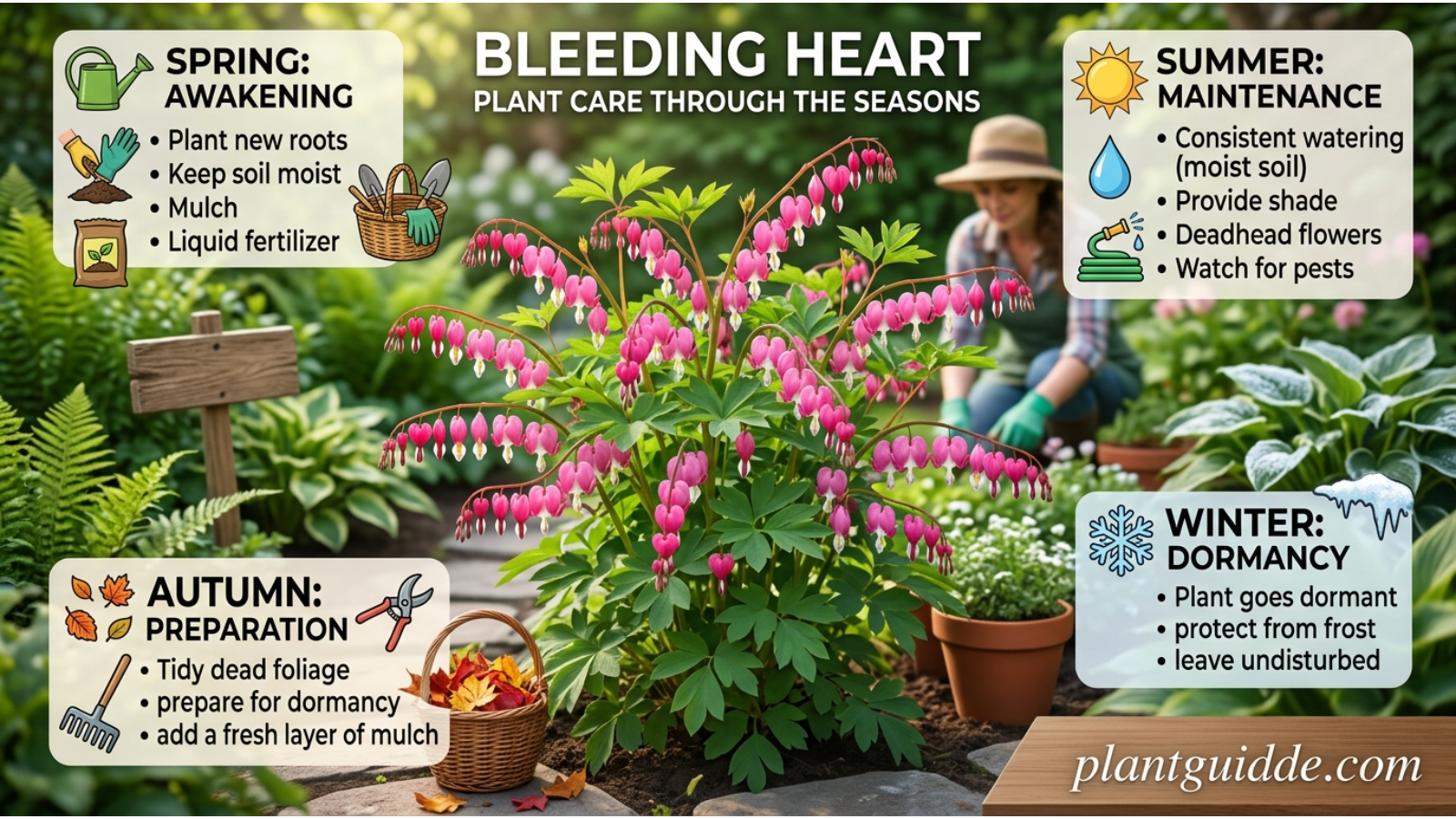
Bleeding Heart Plant Care Through the Seasons
Spring
Spring is usually the main growing and flowering period.
Focus on:
- Consistent soil moisture
- Adequate but gentle light
- Mulching if needed
- Monitoring new shoots for pests
- Removing weeds competing for moisture
Avoid disturbing new shoots because they can be relatively delicate when emerging.
Summer
Summer care depends heavily on climate.
In cooler areas, the plant may retain foliage longer. In warmer conditions, it may naturally enter dormancy.
Keep the root zone from becoming excessively dry while the plant is still actively growing, but don’t keep dormant soil unnecessarily saturated.
Fall
If the plant has entered dormancy, remove dead foliage and clean up the surrounding area. A modest layer of organic mulch can help protect the root zone and improve soil condition.
Avoid unnecessary digging around the crown.
Winter
Established plants in suitable climates generally need little winter maintenance.
The main concern is not usually cold alone but poorly drained soil, particularly where winter moisture remains around the roots for extended periods.
Common Bleeding Heart Problems and What They Mean
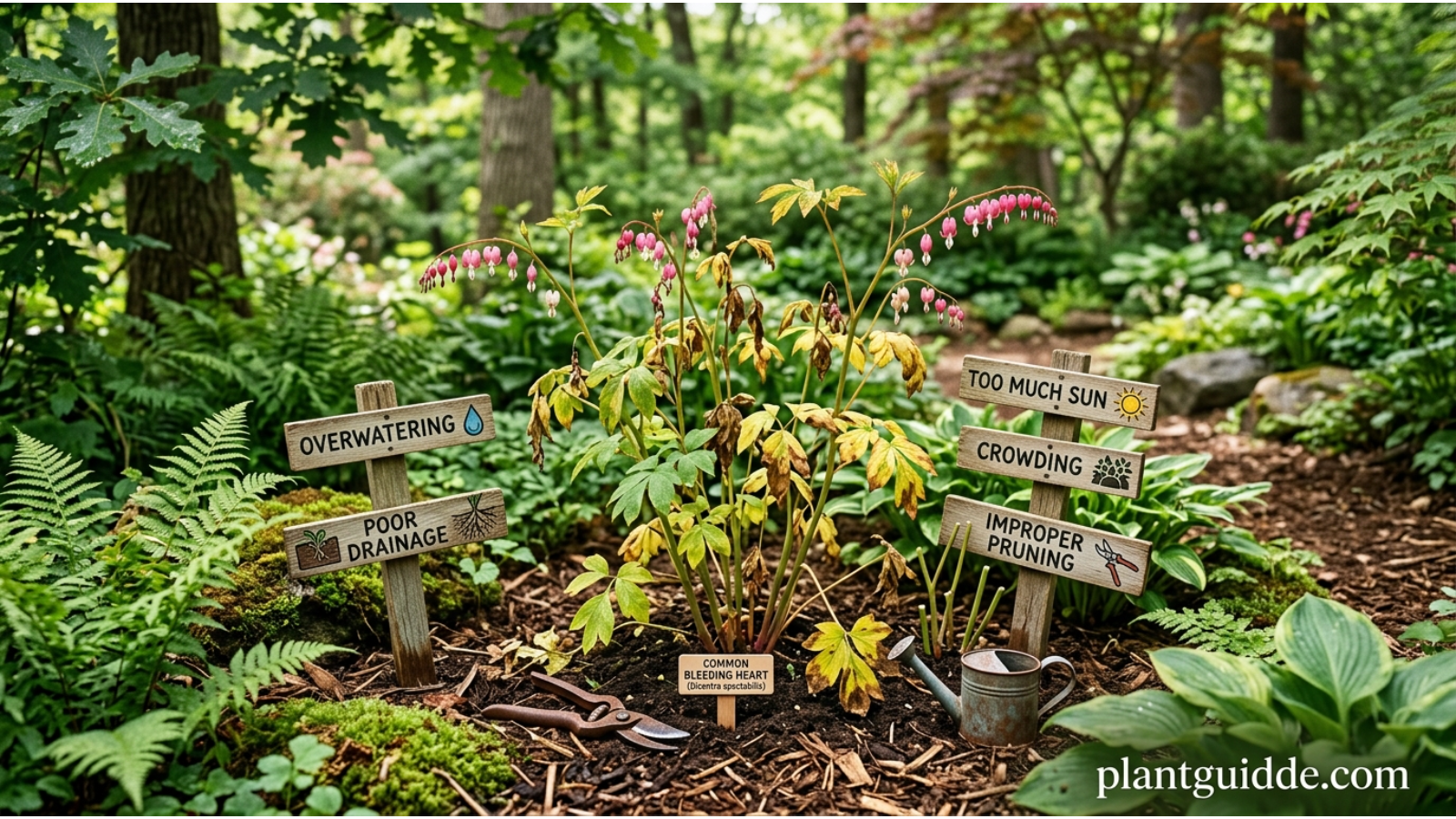
Yellow leaves
Yellowing can have several causes.
If yellowing occurs shortly after flowering and the plant is naturally entering dormancy, it may be completely normal.
If yellow leaves appear during active growth, investigate:
- Overwatering
- Poor drainage
- Root stress
- Excessive sunlight
- Nutrient deficiencies
- Heat or drought stress
Look at the soil before changing your watering routine.
Drooping foliage
Drooping may occur when the soil becomes too dry, especially during unusually warm weather.
However, constantly wet soil can also produce unhealthy, weak growth. Check moisture several inches below the surface rather than watering automatically.
Brown or crispy leaves
Brown edges or crispy foliage commonly point toward environmental stress such as excessive heat, intense sunlight, or insufficient moisture.
A shaded plant can still become stressed if planted near a hot wall, paved surface, or other area that reflects heat.
Bleeding heart not flowering
Poor flowering can result from several conditions, including:
- Excessive shade
- Immature plants
- Stress during the previous growing season
- Poor growing conditions
- Natural differences between species and cultivars
Moving the plant into stronger direct sun is not necessarily the solution. Increasing light should be done carefully, especially in warm climates.
Pests and Diseases
Bleeding heart can encounter common garden pests such as aphids and slugs, particularly when tender new growth is available.
Regularly inspect the undersides of leaves and new stems rather than waiting for serious damage.
Good cultural practices are often the first line of defense:
- Avoid unnecessary overhead watering.
- Maintain good air circulation.
- Remove severely damaged plant material.
- Keep weeds from crowding the plant.
- Avoid keeping the crown constantly wet.
Persistent disease symptoms are worth investigating based on the specific symptoms rather than treating every yellow or spotted leaf as the same problem.
How to Plant Bleeding Heart
Choose a shaded or partially shaded location with fertile, well-drained soil.
Step-by-step planting
- Select a location protected from intense afternoon heat.
- Loosen the soil around the planting area.
- Mix in mature organic matter if the soil is poor.
- Dig a hole wide enough to accommodate the root system without tightly compressing it.
- Position the plant at approximately the same depth at which it was growing.
- Backfill gently and eliminate large air pockets.
- Water thoroughly after planting.
- Add a moderate layer of mulch while keeping it away from the crown.
Water more consistently while the plant establishes roots, especially during dry weather.
How Far Apart Should Bleeding Hearts Be Planted?
Spacing depends on the species and cultivar, so the mature size listed on the plant’s label should take priority.
Avoid crowding plants simply because young specimens look small. Mature bleeding hearts can form substantial clumps, and adequate spacing improves airflow and reduces competition for moisture.
Giving each plant enough room also makes maintenance easier and lets its naturally arching flower stems develop without being crowded by neighboring plants.
Can Bleeding Heart Grow in Containers?
Yes, some bleeding hearts can be grown in containers, although they generally require more careful moisture management than plants growing in the ground.
Choose a container with drainage holes and use a high-quality potting mix that retains some moisture while draining freely.
Container-grown plants may dry out faster than garden-grown specimens, particularly during warm weather. At the same time, a pot without adequate drainage can remain excessively wet after watering.
For container care:
- Check soil moisture regularly.
- Never leave the container sitting in standing water.
- Protect it from intense afternoon heat.
- Repot or divide when the plant becomes crowded.
- Adjust watering as temperatures and plant growth change.
How to Propagate Bleeding Heart
Bleeding heart can be propagated in several ways, depending on the species and available plant material.
Division
Division is often a practical method for established clumps. It allows the gardener to create additional plants while managing an overcrowded planting.
Because the roots can be sensitive, handle divisions carefully and replant them promptly.
Seed
Growing bleeding heart from seed is possible, but it can be slower and less predictable than purchasing an established plant or dividing a mature clump.
Some species and cultivars have particular seed requirements, so follow species-specific propagation guidance when growing from seed.
Common Bleeding Heart Care Mistakes
Treating it like a full-sun perennial
A delicate woodland perennial generally performs differently from plants bred for hot, exposed garden beds.
Better approach: Give it filtered light or partial shade and observe how the planting site behaves during the hottest part of the day.
Keeping the soil constantly wet
Moist soil does not mean waterlogged soil.
Better approach: Improve drainage and water when the soil is beginning to dry rather than keeping it saturated.
Cutting the foliage too early
The plant’s foliage contributes to its energy reserves before dormancy.
Better approach: Wait until the foliage naturally declines before removing it.
Assuming summer dieback means the plant has died
Natural dormancy is one of the defining characteristics that can confuse new gardeners.
Better approach: Check the crown and roots carefully before deciding the plant has failed.
Fertilizing every time growth slows
Slow growth is not automatically a nutrient problem.
Better approach: Check light, moisture, temperature, drainage, and seasonal growth patterns first.
Is Bleeding Heart Toxic?
Bleeding heart plants contain compounds that can cause adverse effects if plant material is eaten. The level of risk varies with the plant and the amount consumed.
Keep plant material away from children and pets that may chew garden plants, and seek appropriate professional advice if ingestion occurs.
When handling unfamiliar plants, washing your hands after gardening is a sensible precaution.
FAQs:
How often should you water a bleeding heart plant?
Water when the soil begins to dry rather than following a fixed schedule. During active spring growth, bleeding heart generally prefers consistently moist soil, but the roots should not remain saturated. Hot or dry weather may require more frequent checks.
Does bleeding heart like sun or shade?
Bleeding heart generally prefers partial shade or filtered light. In cooler climates it may tolerate more sun when moisture is adequate, while intense afternoon sun can cause stress in warmer conditions.
Why is my bleeding heart turning yellow?
Yellowing can be normal when the plant finishes flowering and begins seasonal dormancy. If it occurs during active growth, check for excessive moisture, poor drainage, drought, intense sunlight, heat stress, or other growing problems.
Should I cut back bleeding heart after it blooms?
Remove faded flowers if desired, but avoid cutting healthy foliage immediately after flowering. Allow the leaves to remain until they naturally yellow and die back. Then remove the dead foliage at ground level.
Can bleeding heart survive winter?
Established bleeding hearts can survive winter in suitable climates, although hardiness varies by species and cultivar. Good drainage is important because prolonged winter saturation can damage roots even when temperatures are otherwise suitable.
Conclusion
Successful bleeding heart plant care comes down to recreating the conditions this woodland perennial naturally prefers: protected light, fertile soil, reliable moisture, and good drainage. The plant does not need constant attention, but it does respond poorly to extremes such as intense heat, prolonged dryness, or waterlogged roots.
Most importantly, learn to recognize its seasonal rhythm. Spring growth and flowering are followed by gradual decline and, in many plants, summer dormancy. Once that behavior is understood, a bleeding heart becomes much easier to manage. Start with the right planting location, monitor soil moisture instead of following a rigid watering schedule, and let the plant complete its natural growth cycle.

Asad Mumtaz is a dedicated plant enthusiast and gardening writer with a passion for helping people care for their plants successfully. He specializes in plant care guides, indoor gardening, and practical growing tips for all skill levels. His content focuses on making gardening simple, enjoyable, and rewarding. Through his work, Asad shares reliable advice to help readers create thriving green spaces.