Peppermint plant care is one of the easiest herbs to grow, but its fast growth can create a few surprises for beginners. A plant that looks healthy at first can become leggy, crowded, dry, or weakly flavored when light, moisture, or pruning is neglected.
Good peppermint plant care is mainly about balance. Peppermint likes moisture, but its roots still need oxygen. It grows vigorously in suitable conditions, but too little light can produce thin stems and sparse foliage. Regular harvesting keeps the plant productive while preventing it from taking over its container.
Peppermint plant care you are growing peppermint indoors on a windowsill, outdoors in a container, or in a garden, the goal is the same: give the roots reliable moisture, provide enough light, and harvest the foliage regularly.
Quick Answer
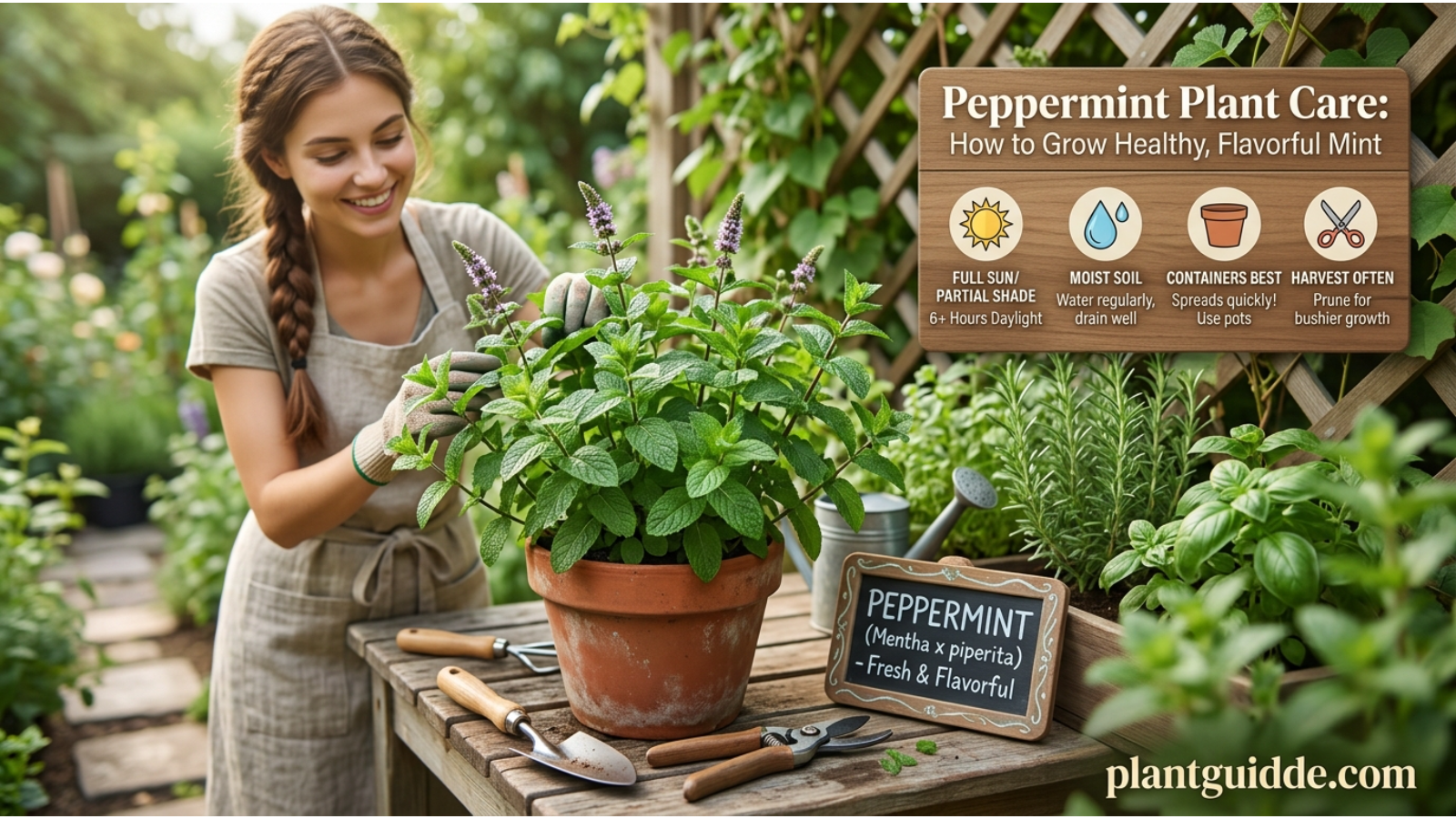
Peppermint plant care is straightforward when you provide bright light, consistently moist but well-drained soil, moderate humidity, and regular harvesting. Peppermint prefers several hours of sunlight or bright indirect light indoors and should not sit in soggy soil. Pruning and harvesting frequently encourages fresh, bushier growth and helps prevent the plant from becoming leggy or overcrowded.
What Is Peppermint?
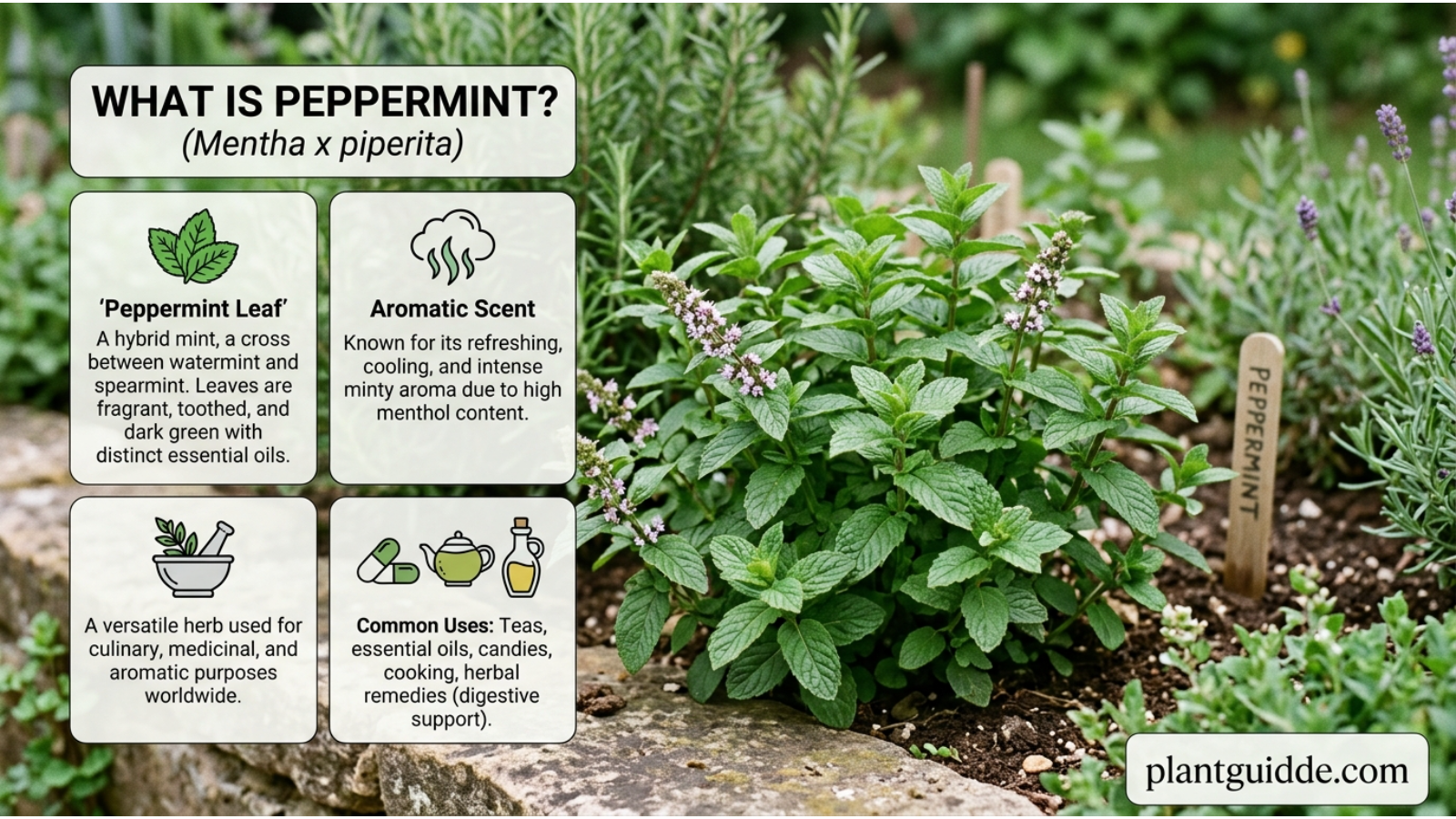
Peppermint (Mentha × piperita) is a strongly aromatic perennial herb in the mint family, Lamiaceae. It is a hybrid mint traditionally associated with spearmint and watermint and is widely grown for its intensely cooling fragrance and flavor.
The leaves contain aromatic oils, particularly menthol, which give peppermint its characteristic cooling sensation. The plant produces square stems, opposite leaves, and small flowers when allowed to mature.
Peppermint spreads readily through underground stems and can become aggressive when planted directly in fertile garden soil. For many home gardeners, a container is the easiest way to keep its growth manageable.
Peppermint Plant Care Requirements at a Glance
| Care factor | What peppermint needs |
|---|---|
| Light | Bright light; several hours of sun outdoors is usually beneficial |
| Soil | Moisture-retentive but well-draining soil |
| Water | Water when the surface begins to dry; avoid prolonged saturation |
| Temperature | Mild to warm conditions with protection from extremes |
| Humidity | Average household humidity is generally adequate |
| Fertilizer | Light, occasional feeding during active growth |
| Pruning | Frequent pinching and harvesting |
| Container | Drainage holes are essential |
| Repotting | When roots become crowded or growth slows |
| Propagation | Stem cuttings, division, or established runners |
How Much Light Does Peppermint Need?
Peppermint grows best with plenty of light, but the ideal exposure depends on whether you are growing it indoors or outside.
Outdoors, peppermint generally performs well with several hours of sunlight. In very hot climates, some afternoon protection can help prevent excessive leaf stress, particularly when the plant is growing in a small container.
Indoors, place peppermint near a bright window where it receives strong natural light. A south- or east-facing window can work well depending on the climate and window exposure.
Insufficient light is one of the easiest problems to recognize. The stems may become unusually long and thin, the spaces between leaves increase, and the plant starts leaning toward the window.
Practical tip: If your indoor peppermint repeatedly becomes tall and sparse despite regular watering, check the light before adding more fertilizer.
How to Water Peppermint
Peppermint prefers evenly moist soil rather than extreme drying followed by heavy watering.
Check the top layer of soil with your finger. If the surface is beginning to dry, water thoroughly until excess water drains from the bottom of the container.
Avoid keeping the pot sitting in a saucer full of water.
The important distinction is:
Moist soil = good. Permanently saturated soil = problem.
Constantly wet conditions reduce air around the roots and can encourage root problems. On the other hand, repeatedly allowing the entire root ball to become bone dry can cause wilting, crispy leaves, and stalled growth.
During hot, sunny weather, container-grown peppermint may need water much more frequently than a plant growing in a larger outdoor bed.
What Type of Soil Is Best for Peppermint?
The best soil for peppermint holds enough moisture to prevent rapid drying while still draining excess water efficiently.
A practical container mix can include:
- Quality all-purpose potting mix
- Compost or another organic component
- Perlite or another drainage-improving material
Avoid heavy garden soil in indoor containers because it can compact and drain poorly.
The container itself matters just as much as the soil. Always choose a pot with drainage holes.
If water takes a long time to pass through the soil or remains around the roots for extended periods, improving the growing medium is usually more effective than simply changing your watering schedule.
How to Grow Peppermint Indoors
Peppermint can grow successfully indoors if you provide enough light and keep its growth under control.
1. Choose a container with drainage
Use a pot with drainage holes at the bottom. Peppermint spreads quickly, so a moderately sized container gives the roots room while remaining manageable.
2. Place it in bright light
Position the plant near a bright window. Rotate the container occasionally so growth remains more balanced.
3. Keep the soil moderately moist
Check the soil regularly rather than following a rigid watering calendar. Indoor conditions change with temperature, sunlight, airflow, and pot size.
4. Harvest regularly
Pinch or cut stems above a pair of healthy leaves. Regular harvesting encourages branching and gives you fresh peppermint for drinks and cooking.
5. Watch for leggy growth
If the plant produces long stems with widely spaced leaves, increase its light before increasing fertilizer.
6. Give the plant airflow
Do not cram peppermint between other plants. Reasonable air circulation helps foliage dry after watering and reduces conditions that favor some fungal problems.
How to Grow Peppermint Outdoors
Outdoor peppermint can grow extremely vigorously when conditions are favorable.
Choose a location with good light and fertile, well-draining soil. Keep the soil from becoming excessively dry, particularly during periods of hot weather.
If you want to prevent peppermint from spreading through a garden bed, growing it in a container is often the simpler solution.
An outdoor container also gives you more control over its roots and makes it easier to move the plant if temperatures become extreme.
How Often Should You Fertilize Peppermint?
Peppermint does not usually need aggressive fertilization.
If the plant is growing in reasonably fertile potting soil, light feeding during active growth is generally sufficient. Excessive fertilizer can encourage soft, overly vigorous growth without necessarily producing a better-quality plant.
If growth is healthy, leaves are a good color, and the plant is producing new shoots, there is usually no reason to increase feeding simply because it grows quickly.
A useful rule is to correct environmental problems first. Poor light, inappropriate watering, or compacted soil cannot be fixed effectively with fertilizer.
How to Prune and Harvest Peppermint
Regular harvesting is one of the most useful parts of peppermint plant care.
Instead of waiting until stems become long and woody, harvest young shoots regularly. Use clean scissors or pruning shears and cut just above a leaf pair.
This encourages dormant buds below the cut to produce new branches.
For a fuller plant:
- Identify a healthy stem.
- Cut just above a pair of leaves.
- Repeat on several stems rather than removing everything at once.
- Continue harvesting as new growth develops.
- Remove damaged or unhealthy foliage.
Avoid stripping every leaf from a plant at one time. The remaining foliage needs to support continued growth.
When Is the Best Time to Harvest Peppermint?
Harvesting shortly before flowering is often preferred when you want tender, aromatic leaves. Young leaves and growing tips are particularly useful for fresh culinary use.
Harvest on a dry day after surface moisture has evaporated, especially if you intend to store or dry the leaves.
How to Propagate Peppermint
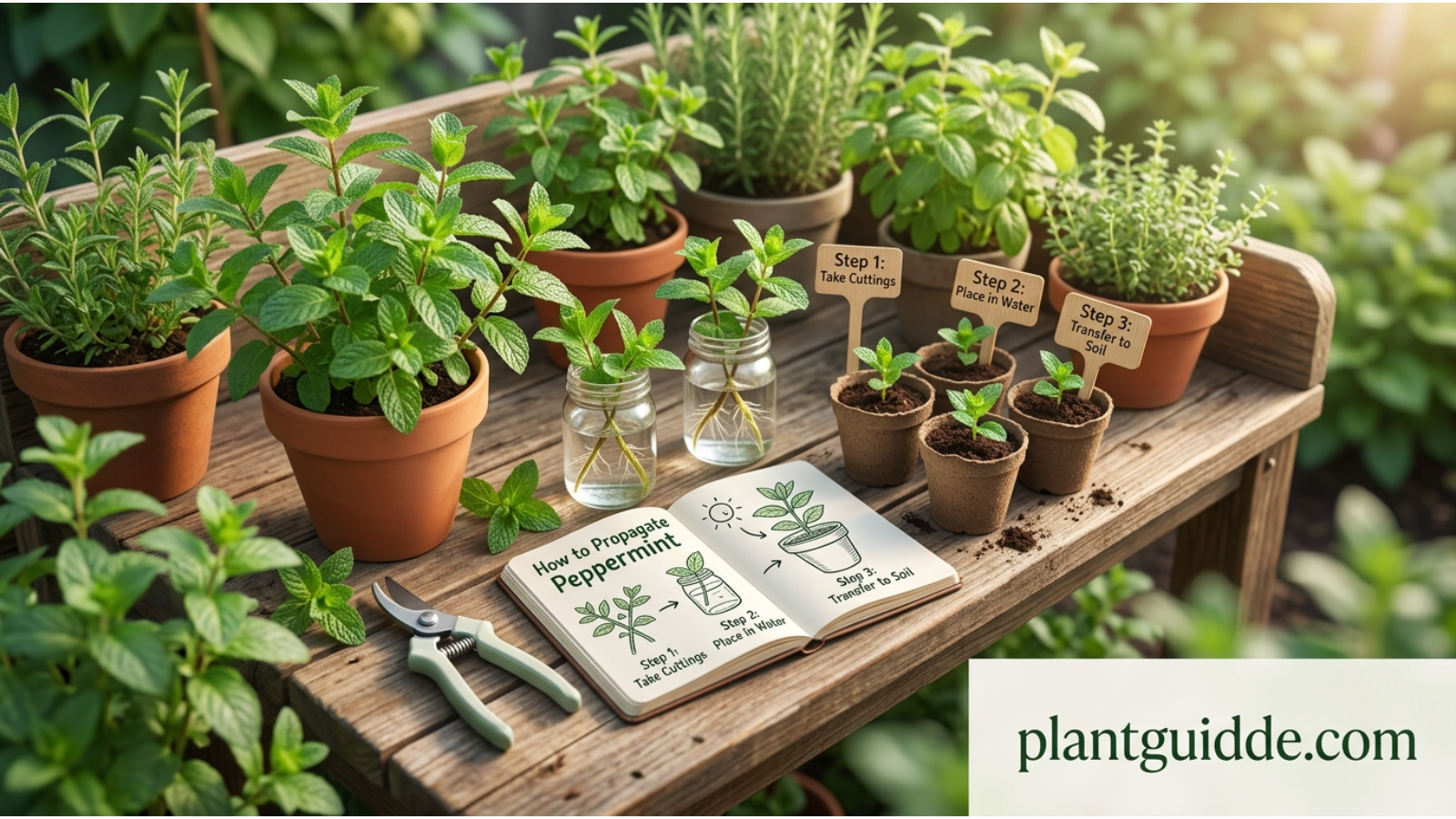
Peppermint is easy to propagate, which is one reason it can spread so quickly.
Stem Cuttings
Take a healthy stem cutting with several leaves. Remove the lower leaves and place the cutting in water or a suitable moist growing medium.
Once roots have developed sufficiently, transplant it into potting mix.
Division
An established plant can be divided into smaller sections, provided each division has healthy roots and shoots. This is useful when a container becomes overcrowded.
Runners and Underground Growth
Peppermint naturally spreads through its underground growth. Outdoor plants can produce new shoots some distance from the original plant, especially in favorable soil.
This is beneficial when you want more plants but can become a problem when you want peppermint confined to one area.
Common Peppermint Plant Problems
Peppermint Leaves Turning Yellow
Yellow leaves can have several causes.
Common possibilities include:
- Excessive watering
- Poor drainage
- Insufficient light
- Nutrient limitations
- Natural aging of older leaves
Look at the whole plant rather than assuming yellow foliage automatically means it needs fertilizer.
If the soil stays wet for a long time and several leaves are yellowing, investigate the roots and drainage first.
Peppermint Leaves Turning Brown
Brown or crispy foliage commonly points toward moisture stress, excessive heat, very dry air, or intense environmental stress.
Check whether the soil has become excessively dry and whether the plant is receiving harsh afternoon sun.
If only a few old leaves are brown, remove them and monitor new growth.
Peppermint Plant Wilting
Wilting can result from either underwatering or root problems caused by excessive moisture.
This is why watering immediately is not always the correct response.
Check the soil first. If it is dry several centimeters below the surface, water thoroughly. If it is already saturated, investigate drainage and root health instead.
Peppermint Becoming Leggy
Long, thin stems with widely spaced leaves usually indicate insufficient light.
Move an indoor plant closer to a bright window and prune the elongated stems. New growth should become more compact if the plant receives adequate light.
Peppermint Not Growing
Slow growth can occur because of:
- Low light
- Cold temperatures
- Root crowding
- Poor soil
- Watering problems
- Lack of active growing conditions
Before adding fertilizer, examine light and root conditions. These are often more important.
Peppermint Flowering
Flowering is a normal part of the plant’s life cycle. If your primary goal is tender foliage, harvest regularly and pinch developing flower buds when appropriate.
Allowing some flowering is not necessarily harmful, particularly if you enjoy the flowers or want to support pollinators.
How to Keep Peppermint Bushy
If your peppermint looks thin instead of full, focus on three things: light, pruning, and consistent moisture.
Give the plant sufficient light, then regularly pinch the growing tips. Cutting above leaf nodes encourages side shoots to develop.
Do not respond to weak growth by continually increasing fertilizer. A plant growing in poor light can become taller and softer rather than genuinely healthier when fertilizer is increased.
Can Peppermint Grow in Water?
Peppermint stems can root readily in water, making water propagation useful for producing new plants.
However, growing a peppermint plant indefinitely in plain water is different from rooting a cutting. Long-term growth generally requires access to a suitable source of nutrients.
For a permanent indoor plant, transferring rooted cuttings into an appropriate growing medium is usually the more practical approach.
Can Peppermint Grow in Shade?
Peppermint tolerates less light than many sun-loving herbs, but tolerating shade does not mean it will produce its best growth there.
Too little light can lead to stretched stems, smaller leaves, slower growth, and weaker overall structure.
Bright indirect light indoors or a suitable combination of sun and partial shade outdoors generally provides a better balance.
Should You Grow Peppermint in a Pot or the Ground?
For most home gardeners, a container is the safer choice if controlling spread is important.
| Growing method | Main advantage | Main drawback |
|---|---|---|
| Container | Controls spreading roots | Dries out faster |
| Garden bed | Can produce abundant growth | Can spread aggressively |
| Indoor pot | Convenient for fresh leaves | Requires strong light |
If you have limited garden space, a container is especially useful because peppermint can otherwise become difficult to remove once established.
Common Peppermint Growing Mistakes
Watering on a fixed schedule
Plants do not consume the same amount of water every week. Check the soil instead.
Using a pot without drainage
Even good soil cannot compensate for a container that traps excess water.
Keeping peppermint too far from a window
Indoor peppermint needs considerably more light than a dim room may provide.
Ignoring overcrowding
A dense mass of stems can reduce airflow and make harvesting more difficult.
Overfertilizing weak plants
If growth is poor, investigate light, roots, water, and temperature before assuming fertilizer is the answer.
Planting peppermint directly in a garden without considering spread
Its vigorous growth is useful until it begins appearing where you did not plant it.
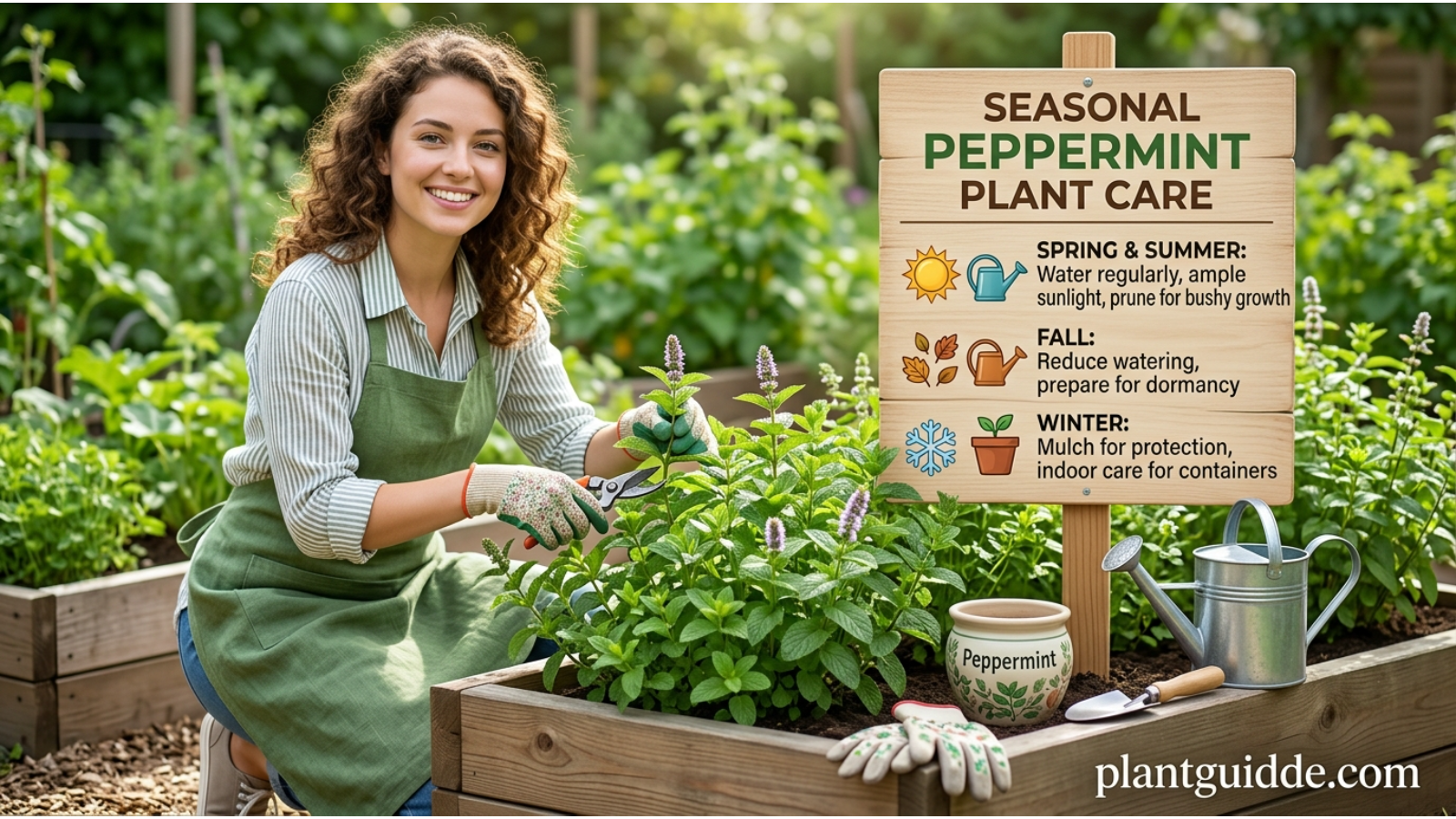
Seasonal Peppermint Plant Care
Peppermint care changes as growing conditions change.
Spring:
Increase watering gradually as new growth accelerates. Begin regular harvesting and watch for rapid spreading.
Summer:
Monitor containers closely because warm weather can dry them quickly. Protect plants from severe heat and keep moisture consistent.
Fall:
Growth may slow as temperatures change. Reduce watering according to actual soil moisture rather than following the summer routine.
Winter:
Indoor peppermint may need less water because growth and evaporation can decrease. Keep it in the brightest practical location and avoid constantly wet soil.
FAQs:
How much sunlight does a peppermint plant need?
Peppermint generally grows well with several hours of sunlight outdoors or strong bright light indoors. In very hot conditions, protection from intense afternoon sun can help prevent leaf stress.
How often should I water peppermint?
Water when the upper layer of soil begins to dry rather than following a fixed schedule. Keep the soil moderately moist but never allow the roots to remain continuously waterlogged.
Can peppermint grow indoors?
Yes. Peppermint can grow indoors when placed in a bright location and grown in a container with drainage. Regular pruning is important because indoor plants can become leggy and crowded.
Why is my peppermint plant turning yellow?
Yellow leaves may result from overwatering, poor drainage, insufficient light, nutrient problems, or natural aging. Check soil moisture and drainage before adding fertilizer.
Does peppermint come back every year?
Peppermint is a perennial herb and can return year after year when growing conditions are suitable. Its underground growth also allows it to spread and produce new shoots.
Conclusion
Successful peppermint plant care does not require complicated techniques. Give the plant bright light, moisture without waterlogging, a well-draining growing medium, and regular harvesting.
The biggest practical lesson is to watch the plant rather than relying on a rigid schedule. Dry soil, persistent wetness, stretched stems, yellow leaves, and overcrowding each provide clues about what needs to change. For the easiest long-term management, grow peppermint in a container and prune it regularly to maintain fresh, bushy growth.

Asad Mumtaz is a dedicated plant enthusiast and gardening writer with a passion for helping people care for their plants successfully. He specializes in plant care guides, indoor gardening, and practical growing tips for all skill levels. His content focuses on making gardening simple, enjoyable, and rewarding. Through his work, Asad shares reliable advice to help readers create thriving green spaces.