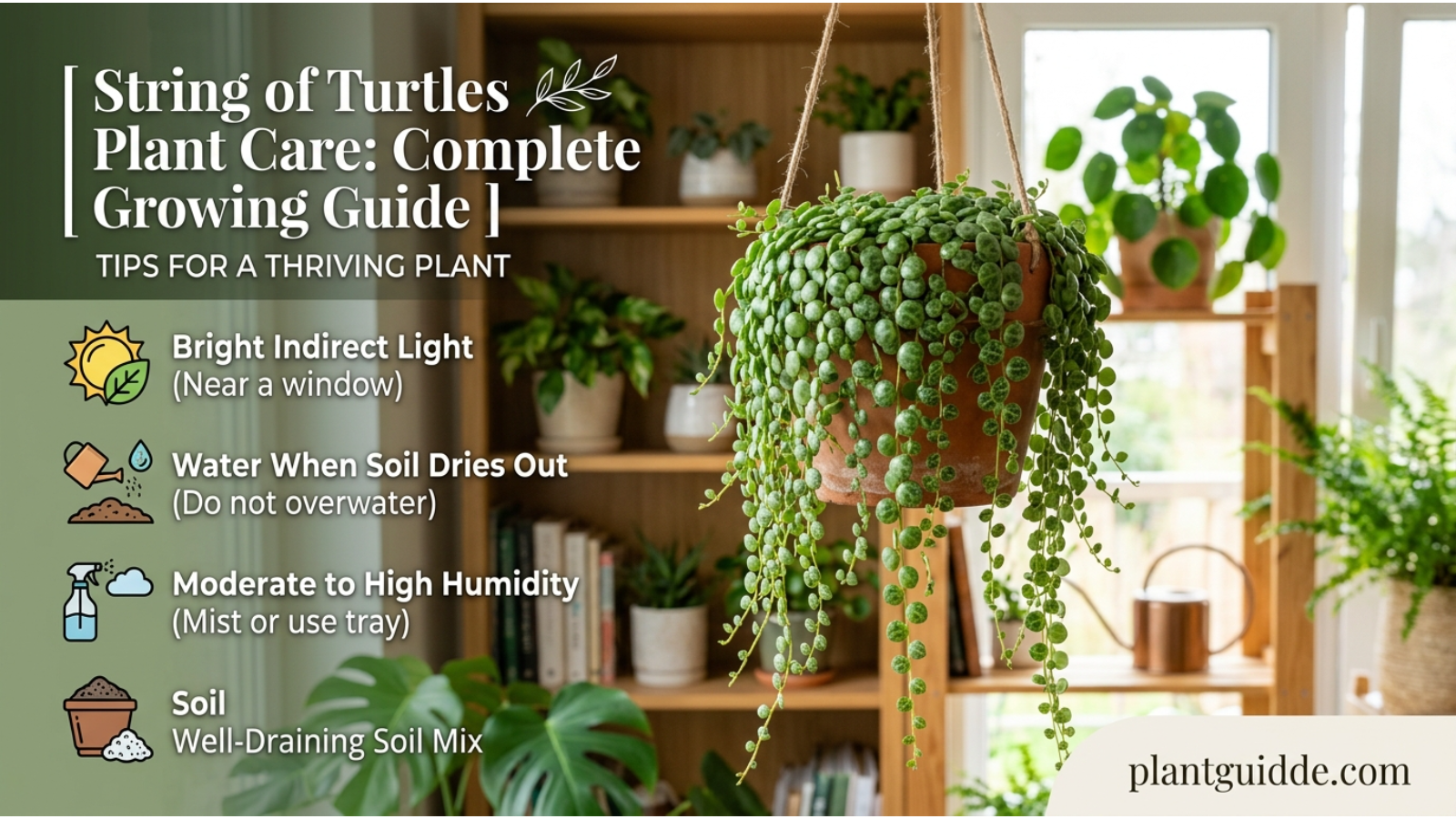
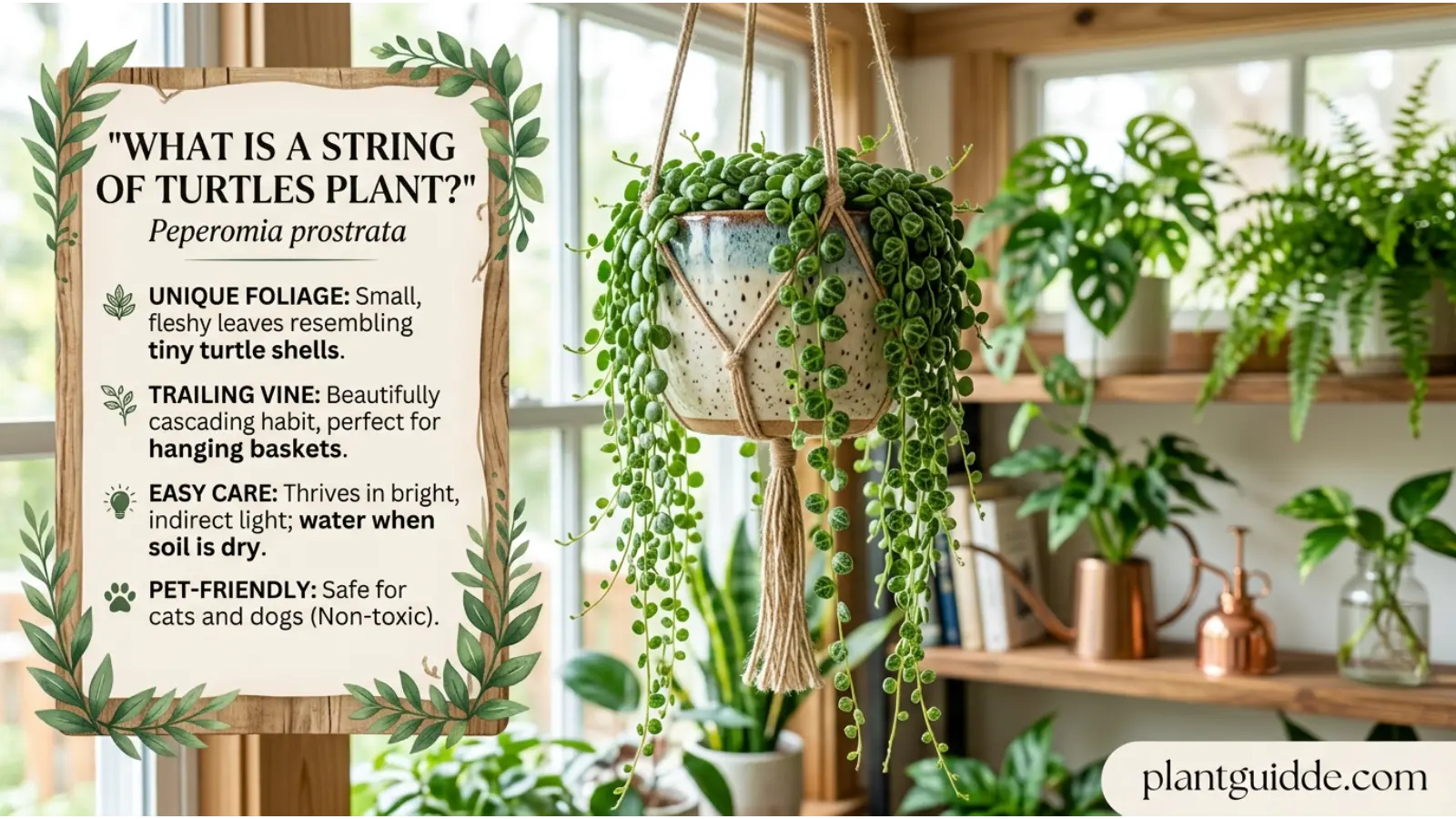
String of turtles plant care is a compact trailing houseplant prized for its unusual foliage. Its small, rounded leaves resemble tiny turtle shells arranged along thin, cascading stems, making it especially attractive in hanging baskets or on shelves where the vines can spill over the edge.
Although this plant is often described as easy to grow, its care is slightly different from that of thirsty tropical houseplants.
The biggest challenge is finding the balance between enough moisture for healthy growth and enough drying time to keep its delicate roots from remaining wet. Once you understand how its leaves, soil, and stems respond to their environment, string of turtles plant care becomes much easier.
Quick Answer
String of Turtles plant care is mainly about providing bright, indirect light, a fast-draining soil mix, careful watering, and good airflow. Peperomia prostrata stores moisture in its small, turtle-shell-like leaves, so it is more likely to suffer from overwatering than occasional dryness. Let the potting mix partially dry before watering and use a container with drainage holes.
What Is a String of Turtles Plant?
String of Turtles is the common name for Peperomia prostrata, a small trailing plant in the pepper family, Piperaceae. It is native to tropical regions of Brazil and naturally grows as a low, creeping plant.
Its most recognizable feature is its foliage. The leaves are small, succulent-like, and patterned with markings that resemble turtle shells. Mature stems can trail several feet when growing conditions are favorable, although growth is generally relatively slow.
Unlike true succulents that prefer intense direct sunlight, String of Turtles generally performs better with bright, filtered or indirect light. Its leaves can store some moisture, but that does not mean the plant should be kept bone dry for long periods.
String of Turtles Plant Care Requirements
| Care factor | Best approach |
|---|---|
| Light | Bright, indirect light |
| Water | Water when the upper portion of the mix has dried |
| Soil | Loose, airy, fast-draining mix |
| Humidity | Average household humidity is usually adequate |
| Temperature | Warm, stable indoor conditions |
| Fertilizer | Light feeding during active growth |
| Pot | Small pot with drainage holes |
| Growth | Slow to moderate, trailing |
| Botanical name | Peperomia prostrata |
The exact watering frequency will vary with temperature, light, pot size, soil composition, and season. Instead of following a rigid calendar, use the condition of the potting mix and plant as your guide.
How Much Light Does String of Turtles Need?
Bright, indirect light is usually the sweet spot for String of Turtles.
Place it near an east- or west-facing window with some protection from intense direct afternoon sun. A bright north-facing location may also work, depending on your climate and the amount of light entering the room.
Good light helps the plant maintain compact growth and strong leaf coloration. If light is too weak, you may notice:
- Longer spaces between leaves
- Thin or weak-looking stems
- Slow growth
- Smaller new leaves
- Faded foliage patterns
On the other hand, harsh direct sunlight through glass can scorch the foliage, especially during hot afternoons.
Practical tip: If the plant is sitting several feet from a bright window and gradually becoming stretched, move it closer rather than immediately increasing watering or fertilizer.
Can String of Turtles Grow in Low Light?
It can tolerate less light than many sun-loving plants, but low light is not the same as ideal light.
In a dim room, String of Turtles may survive while producing sparse, stretched growth. If you want fuller vines and attractive foliage, provide considerably brighter indirect light.
If natural light is limited, a suitable grow light can help maintain healthier growth.
How to Water String of Turtles
Watering is one of the most important parts of String of Turtles plant care.
Because the leaves retain some moisture and the roots dislike prolonged saturation, avoid keeping the potting mix constantly wet.
A useful approach is:
- Check the potting mix with your finger or a moisture meter.
- Allow the upper portion of the mix to dry before watering again.
- Water thoroughly until excess water drains from the bottom.
- Empty water collected in a saucer or decorative container.
- Wait until the mix has dried appropriately before watering again.
Do not water simply because a certain number of days has passed.
During brighter, warmer periods, the plant may use water more quickly. In winter or in a dim, cool room, the mix can remain wet much longer.
Signs of Overwatering
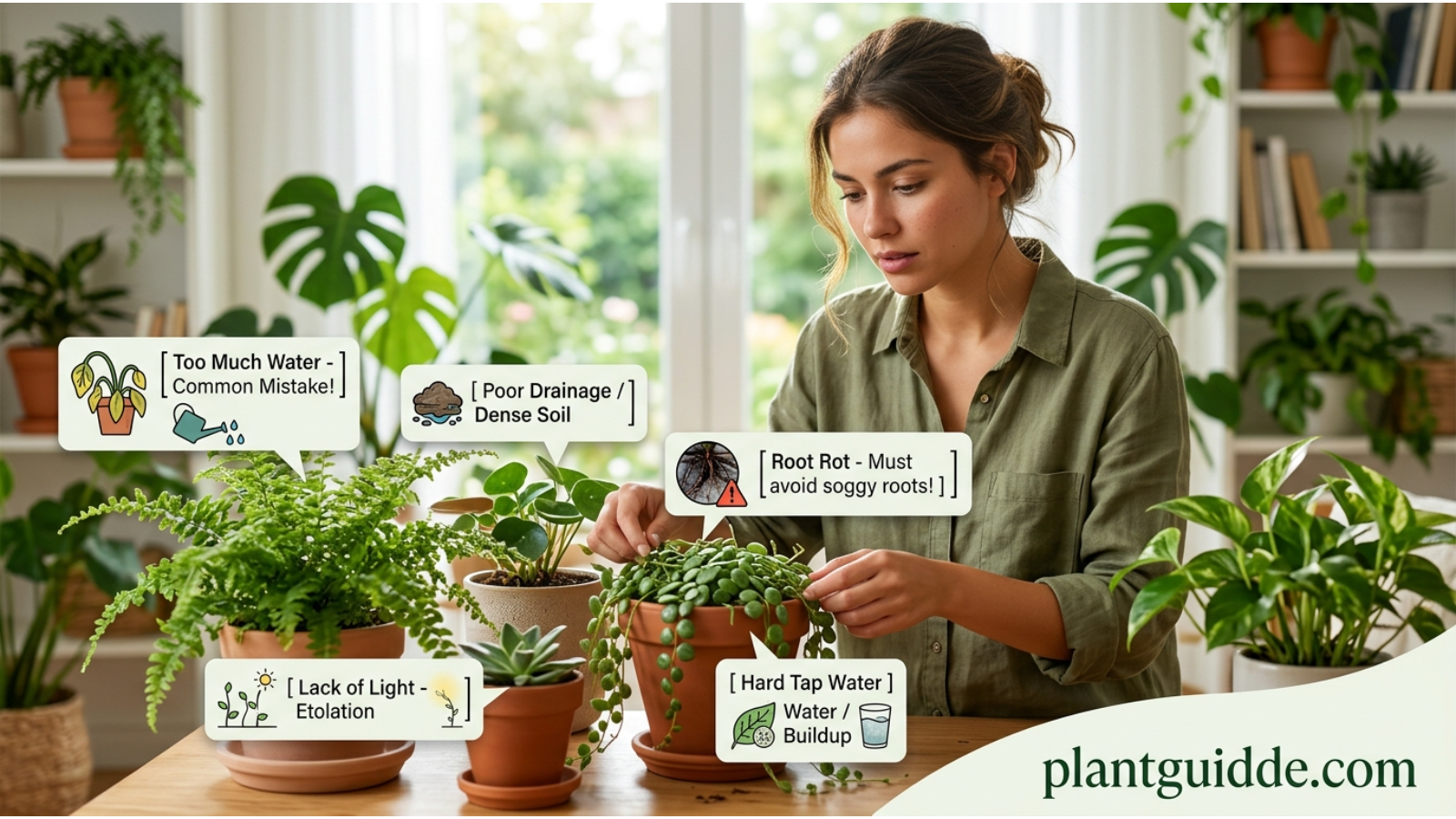
Overwatering is one of the most common problems with String of Turtles.
Watch for:
- Yellowing leaves
- Soft or mushy foliage
- Stems becoming weak near the soil
- Leaves dropping unexpectedly
- Persistent wet soil
- Dark or deteriorating roots
- A musty smell from the potting mix
If the soil remains wet for many days after watering, the problem may not simply be “too much water.” The container, soil mix, temperature, or light level may also be slowing evaporation.
Signs of Underwatering
A plant that stays dry for too long may develop:
- Wrinkled leaves
- Limp or shriveled foliage
- Dry, brittle stems
- Leaf drop
- Slow growth
A slightly wrinkled leaf does not always mean severe dehydration, but repeated dryness can weaken the plant over time.
Best Soil for String of Turtles
String of Turtles needs a potting mix that drains quickly while retaining enough moisture to prevent the roots from drying excessively fast.
A practical homemade mix can combine:
- Regular indoor potting mix
- Perlite or pumice
- Fine orchid bark or another chunky aeration material
The goal is an airy root environment, not a dense mixture that stays saturated.
Avoid heavy garden soil in indoor containers. It can compact around the roots and restrict both drainage and airflow.
Why Drainage Matters More Than a Watering Schedule
A common mistake is trying to solve watering problems by changing the watering calendar while leaving the plant in unsuitable soil.
For example, watering every 10 days does not automatically make a dense, poorly draining mix safe. If the soil stays wet for most of those 10 days, the roots are still spending too much time in saturated conditions.
Good String of Turtles plant care starts with a root zone that can actually dry between waterings.
Choosing the Right Pot
Use a pot with at least one functional drainage hole.
String of Turtles generally does not need an oversized container. A pot that is dramatically larger than the root system can hold more moisture than the plant can use, increasing the risk of prolonged wetness.
When repotting, choose a container only modestly larger than the current root ball.
A hanging pot or shallow container can work particularly well once the plant has developed enough trailing growth.
Temperature and Humidity
String of Turtles prefers warm indoor conditions and does not appreciate cold drafts or sudden temperature changes.
Keep it away from:
- Cold windows during winter
- Strong air-conditioning vents
- Heating vents
- Drafty exterior doors
- Extremely hot glass surfaces
Average indoor humidity is often sufficient, particularly when watering and airflow are well managed.
You do not necessarily need to create a greenhouse-like environment. In fact, constantly wet leaves combined with poor airflow can create more problems than moderately dry household air.
Should You Mist String of Turtles?
Regular misting is usually unnecessary.
Misting can temporarily increase moisture around the foliage, but it does not provide the consistent humidity increase that many people expect. Frequent wetting of dense foliage without adequate airflow can also be counterproductive.
If your indoor air is exceptionally dry, improving overall humidity with a humidifier is generally more consistent than repeatedly spraying the plant.
Fertilizing String of Turtles
String of Turtles is not a heavy feeder.
During active growth, you can use a balanced houseplant fertilizer diluted according to the product’s directions. Feeding too heavily can cause fertilizer accumulation and may damage the roots.
A sensible approach is to:
- Fertilize only when the plant is actively growing.
- Use a diluted application rather than excessive strength.
- Avoid fertilizing severely stressed or recently repotted plants.
- Reduce or stop feeding during periods of slow winter growth.
More fertilizer does not necessarily mean faster or healthier growth.
How to Prune String of Turtles
Pruning is mainly useful for shaping the plant, removing damaged growth, and encouraging a fuller appearance.
Use clean, sharp scissors to cut healthy stems just above a node. Avoid removing large amounts of healthy growth at once, particularly if the plant is already stressed.
Do not throw away healthy cuttings. String of Turtles can often be propagated from suitable stem cuttings.
How to Propagate String of Turtles
Stem cuttings are a practical way to produce new plants.
Step-by-Step Propagation
- Select a healthy stem with several leaves.
- Make a clean cut using sanitized scissors.
- Remove a small number of leaves from the portion that will contact the growing medium.
- Place the suitable node against or slightly into a moist, well-draining propagation medium.
- Keep the medium lightly moist rather than saturated.
- Provide bright, indirect light.
- Maintain warm conditions and monitor the cutting for new growth.
Because the plant grows relatively slowly, patience is important.
Another useful technique is to lay a healthy vine across the surface of moist growing medium and gently secure a node against it. Once roots develop, the rooted section can be separated if appropriate.
How to Make String of Turtles Fuller
A String of Turtles can sometimes become sparse when it receives insufficient light or when stems have been allowed to trail without pruning.
For a fuller appearance:
- Provide brighter indirect light.
- Prune excessively long or bare stems.
- Propagate healthy cuttings.
- Replant rooted cuttings into the same container when appropriate.
- Avoid excessive fertilizer as a shortcut for fuller growth.
The key is to improve the growing conditions rather than simply forcing rapid growth.
Common String of Turtles Problems
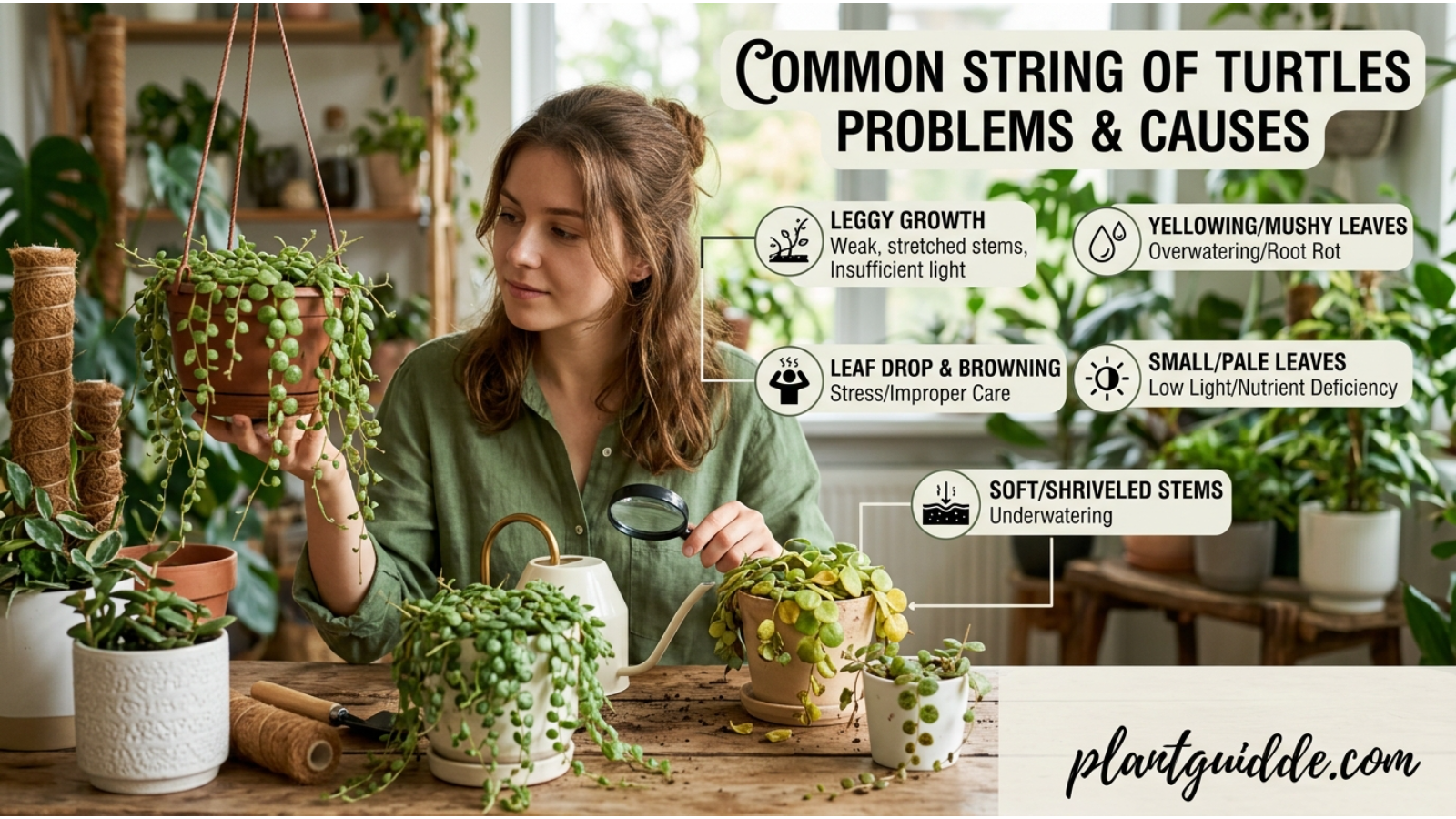
Leaves Turning Yellow
Yellow leaves are often associated with excess moisture, but the underlying cause can vary.
Check:
- How wet the soil remains between waterings
- Whether the pot has drainage
- Whether the soil is compacted
- How much light the plant receives
- Whether roots are showing signs of damage
If several leaves are yellow while the soil stays consistently wet, investigate the root environment before watering again.
Leaves Turning Brown or Crispy
Brown, crispy foliage can result from prolonged dryness, excessive direct sunlight, or environmental stress.
First examine the location and soil moisture rather than immediately assuming the plant needs more water.
Leaves Curling or Wrinkling
Wrinkled leaves can indicate that the plant is using its stored moisture faster than it is replacing it.
Check the soil. If it is very dry, provide a thorough watering and then allow excess water to drain away.
If the soil is already wet but the leaves remain wrinkled, investigate root health. Damaged roots may be unable to absorb water effectively even when plenty of moisture is present.
String of Turtles Losing Leaves
Occasional leaf loss can happen naturally, but widespread dropping deserves attention.
Possible causes include:
- Overwatering
- Root problems
- Severe dryness
- Low light
- Sudden temperature changes
- Physical damage to trailing stems
Look at the pattern rather than treating leaf drop as a single diagnosis.
Long, Bare Stems
Long gaps between leaves usually suggest insufficient light.
Move the plant gradually toward a brighter location with indirect light and prune unattractive sections if necessary.
Why Is My String of Turtles Not Growing?
String of Turtles is naturally a relatively slow-growing plant, so a lack of rapid growth does not automatically indicate a problem.
However, growth may become particularly slow when:
- Light is inadequate
- Temperatures are too cool
- Roots are damaged
- The plant is severely underwatered
- The growing season has slowed
- The container or soil has become unsuitable
Before adding fertilizer, check the basics. Increasing fertilizer cannot compensate for inadequate light or unhealthy roots.
Should You Repot String of Turtles?
Repot only when there is a practical reason.
Good reasons include:
- Roots have significantly filled the container
- The soil has become compacted
- Drainage has deteriorated
- The current container lacks adequate drainage
- Root problems require inspection and treatment
Avoid repeatedly moving a healthy plant into progressively larger pots simply because it has been in the same container for a long time.
After repotting, give the plant time to adjust rather than immediately fertilizing heavily.
Seasonal String of Turtles Plant Care
Spring and Summer
This is typically the period when indoor growth is more active.
Focus on:
- Bright indirect light
- Consistent but controlled watering
- Occasional fertilizer
- Pruning and propagation
- Good ventilation
Monitor the potting mix more frequently because warmer conditions and stronger light can increase water use.
Fall and Winter
Growth may slow considerably.
Reduce watering frequency based on how quickly the soil dries rather than continuing a summer watering schedule. Keep the plant away from cold drafts and provide as much bright indoor light as practical.
The most common winter mistake is watering on autopilot while the plant is using substantially less moisture.
Common String of Turtles Care Mistakes
Watering on a Fixed Schedule
A calendar cannot account for changes in light, temperature, humidity, pot size, or soil.
Better approach: Check the plant and potting mix before watering.
Using a Decorative Pot Without Drainage
Water can accumulate around the roots even when the plant itself looks fine initially.
Better approach: Use a nursery pot with drainage inside a decorative cover, and empty excess water after watering.
Giving It Too Much Direct Sun
More sunlight is not always better.
Better approach: Give it bright light while protecting it from intense, prolonged direct afternoon exposure.
Using Heavy Soil
Dense soil can remain wet around the roots.
Better approach: Use a loose, well-aerated, fast-draining mix.
Fertilizing a Stressed Plant
Fertilizer is not medicine for root rot, dehydration, or poor lighting.
Better approach: Correct the environmental problem first.
Moving the Plant Too Often
Constantly changing locations makes it difficult to determine what is actually helping or hurting the plant.
Better approach: Choose a bright, stable location and make gradual adjustments when necessary.
Is String of Turtles Safe for Pets?
String of Turtles is generally regarded as a non-toxic Peperomia for cats and dogs. However, pets should still not be encouraged to chew on houseplants, because consuming plant material can cause gastrointestinal upset even when a plant is not considered poisonous.
If you have a pet that frequently chews plants, keeping the plant out of reach is the safest practical approach.
FAQs:
How often should you water String of Turtles?
Water when the upper portion of the potting mix has dried rather than following a fixed schedule. Water thoroughly, allow excess water to drain, and avoid leaving the roots sitting in water.
Does String of Turtles need direct sunlight?
No. Bright, indirect light is generally preferable. Some gentle morning sunlight may be tolerated, but strong afternoon sun through a window can scorch the leaves.
Why are my String of Turtles leaves falling off?
Leaf drop can result from overwatering, root problems, prolonged dryness, low light, temperature stress, or physical damage. Check the soil moisture and growing conditions before changing your watering routine.
How do I make String of Turtles grow faster?
Give it bright indirect light, warm and stable conditions, an airy growing medium, appropriate watering, and modest feeding during active growth. Avoid trying to accelerate growth with excessive fertilizer.
Is String of Turtles difficult to care for?
It is generally manageable for beginners, but it does not respond well to consistently wet soil. Proper drainage and careful watering are more important than frequent attention.
Conclusion
Successful string of turtles plant care comes down to managing moisture rather than constantly supplying it. Give Peperomia prostrata bright indirect light, an airy and well-draining potting mix, a container with drainage, and water only when the soil has had time to dry appropriately.
If your plant starts looking stressed, inspect the roots, soil, light, and recent watering pattern before reaching for fertilizer or changing several things at once. That simple diagnostic approach will help you maintain healthier foliage and a fuller, more attractive trailing plant over time.

Asad Mumtaz is a dedicated plant enthusiast and gardening writer with a passion for helping people care for their plants successfully. He specializes in plant care guides, indoor gardening, and practical growing tips for all skill levels. His content focuses on making gardening simple, enjoyable, and rewarding. Through his work, Asad shares reliable advice to help readers create thriving green spaces.