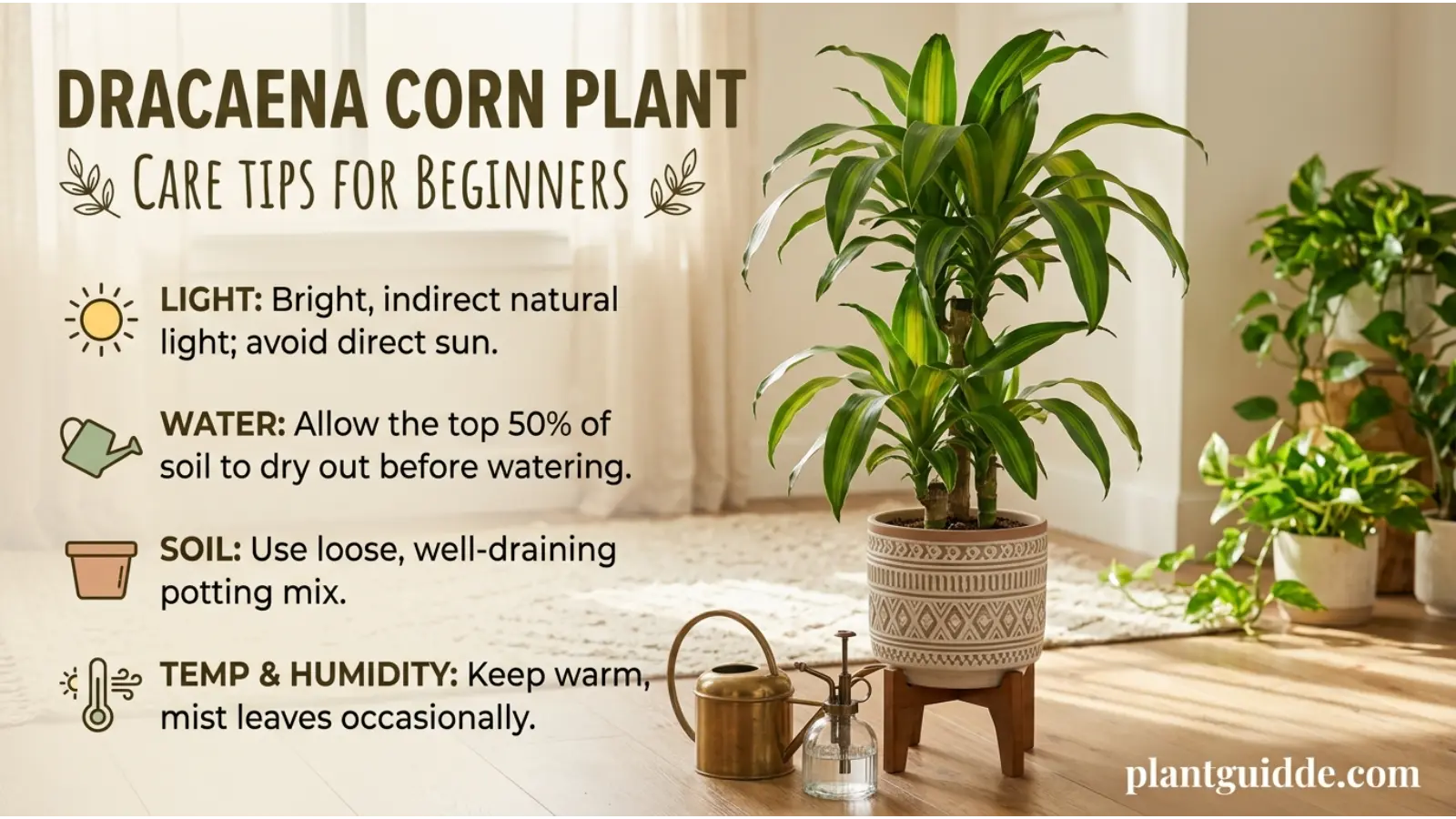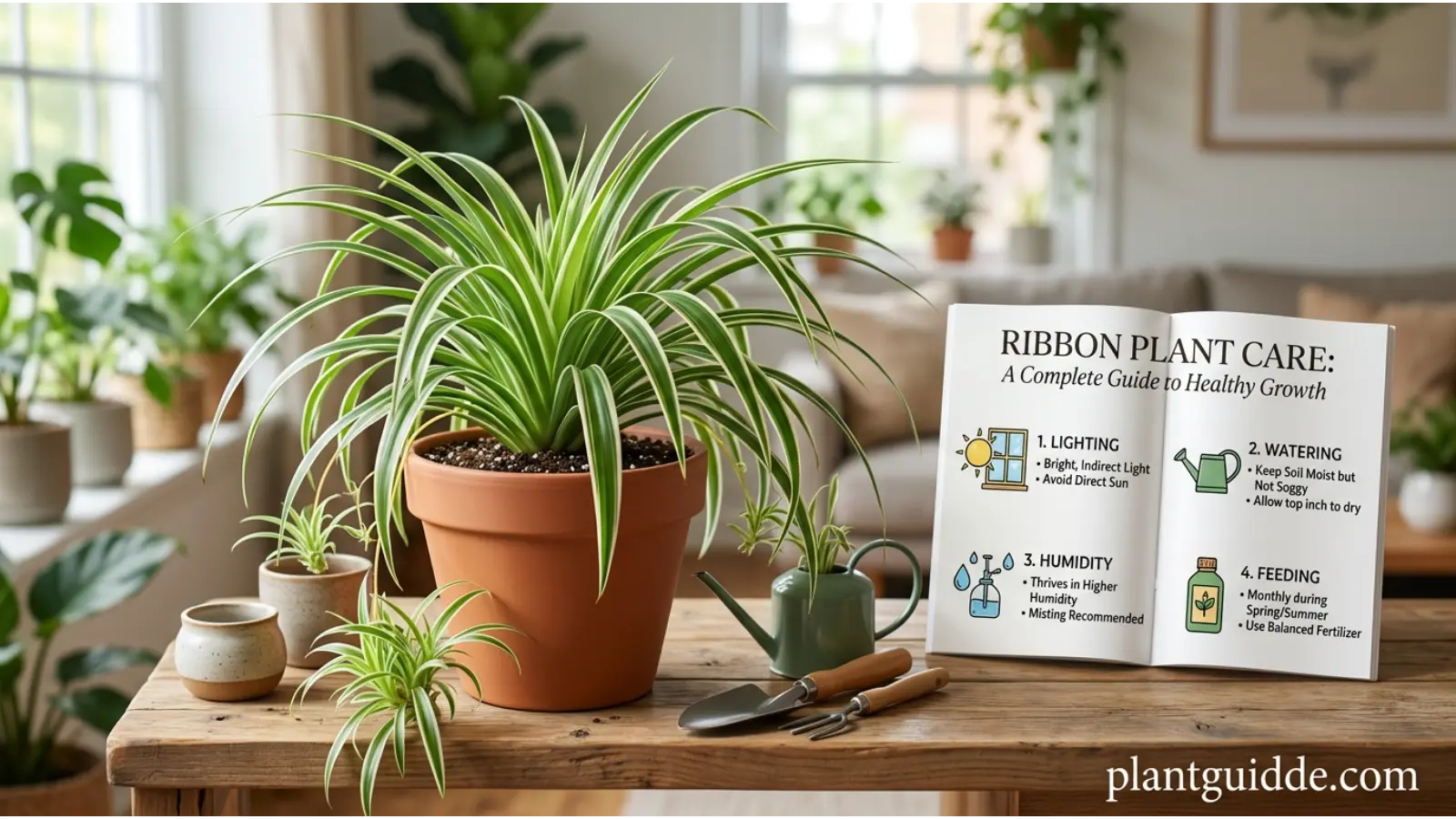
Ribbon plant care is a popular indoor plant known for its graceful, arching leaves and cascading baby plantlets. Its green-and-white foliage adds a fresh look to shelves, hanging baskets, desks, and bright corners of the home.
Because it adapts well to indoor conditions and propagates easily, it is a practical choice for both beginners and experienced plant owners.
However, successful ribbon plant care involves more than occasional watering. Yellow leaves, brown tips, weak growth, and a lack of baby plants can indicate problems with light, watering, fertilizer, or root health.
The term ribbon plant can refer to different plants in different regions, but it commonly describes the spider plant (Chlorophytum comosum). This guide focuses on that plant. If your plant has a different appearance, identifying it first will help you choose the right care routine.
Quick Answer
Ribbon plant care is relatively easy when you provide bright, indirect light, well-draining soil, and consistent moisture without waterlogging the roots. The name commonly refers to the spider plant (Chlorophytum comosum), which produces arching, striped leaves and baby plants on long stems. Water when the top inch of soil feels dry, maintain comfortable indoor temperatures, and trim damaged leaves to keep the plant healthy.
Understanding the Ribbon Plant
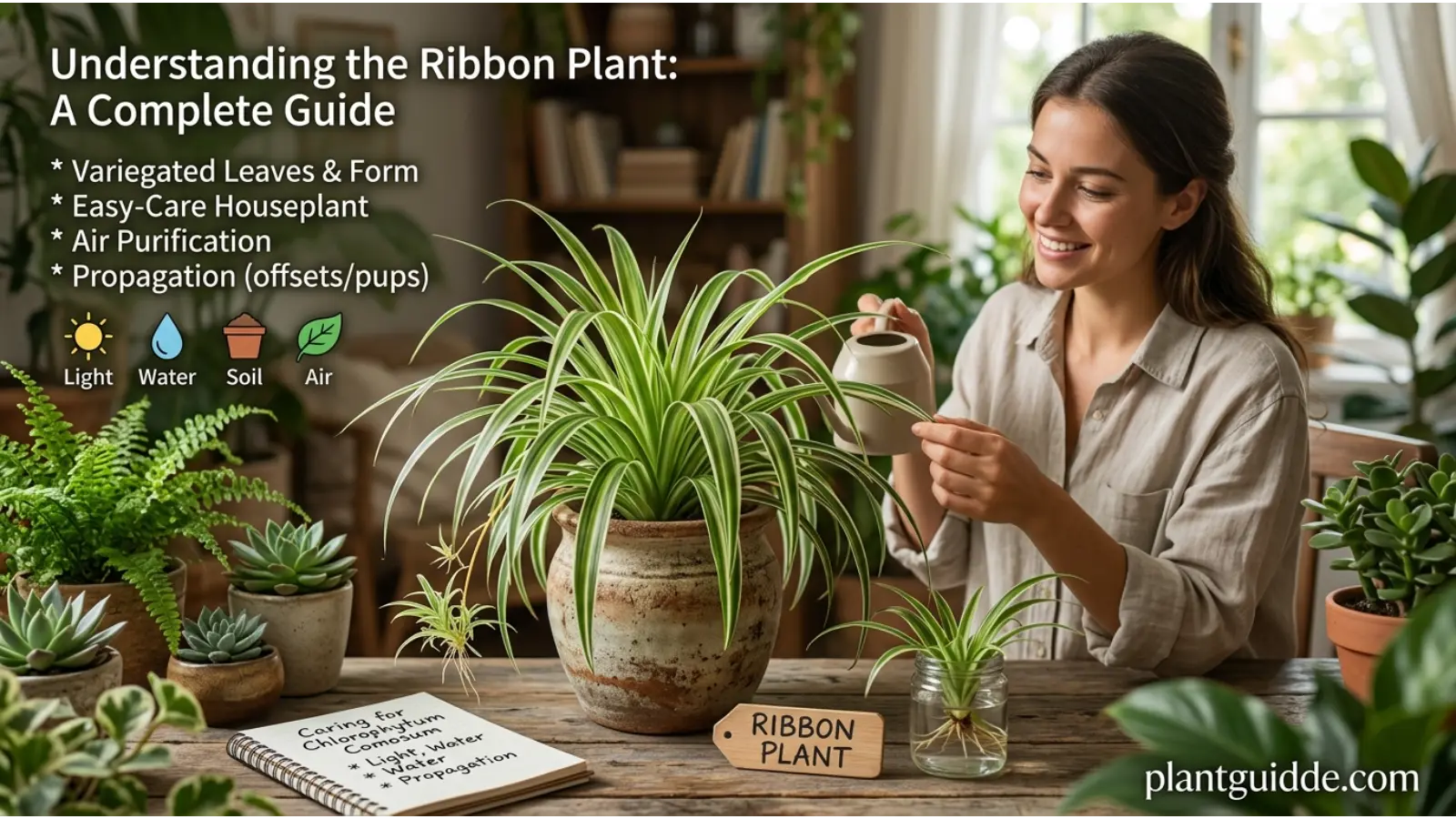
The ribbon plant, commonly known as the spider plant, is a perennial plant native to tropical and southern Africa. It belongs to the Asparagaceae family and is valued for its narrow, arching leaves and ability to produce small plantlets on long, trailing stems.
Common varieties include:
- Variegated spider plant: Green leaves with white stripes along the edges or center, depending on the cultivar.
- Solid-green spider plant: Green foliage without prominent white stripes.
- Curly spider plant: Narrow leaves with a more compact, curled appearance.
Ribbon plants work well in hanging baskets because their leaves and plantlets naturally cascade over the edges. They can also grow in ordinary containers placed on tables or shelves.
One reason this plant is beginner-friendly is its ability to recover from occasional care mistakes. Nevertheless, prolonged overwatering, poor drainage, and severe light stress can still damage its roots and foliage.
Best Growing Conditions for Ribbon Plant Care
Ribbon plants grow best in conditions that provide enough light for healthy foliage while allowing the soil to dry slightly between waterings.
| Growing factor | Recommended conditions | What to avoid |
|---|---|---|
| Light | Bright, indirect light | Harsh afternoon sun or prolonged darkness |
| Water | Water when the top inch of soil feels dry | Permanently soggy soil |
| Soil | Loose, well-draining potting mix | Dense, compacted soil |
| Temperature | Approximately 65–80°F (18–27°C) | Frost and cold drafts |
| Humidity | Average household humidity | Extremely dry air combined with other stress |
| Fertilizer | Light feeding during active growth | Excessive fertilizer |
| Pot | Container with drainage holes | Standing water around the roots |
These recommendations provide a starting point. Your plant’s actual needs depend on the pot size, growing medium, temperature, and amount of light it receives.
How Much Light Does a Ribbon Plant Need?
Light plays an important role in maintaining leaf color, supporting new growth, and encouraging the plant to produce baby plantlets.
Bright, indirect light
A position near an east-facing window is often suitable. A bright room with filtered light from a south- or west-facing window can also work.
Variegated ribbon plants generally maintain their leaf patterns best in good indirect light. If the plant receives too little light, growth may slow and new leaves may appear less vigorous.
Can ribbon plants tolerate low light?
Ribbon plants can survive in moderately low light, but they usually grow more slowly under those conditions. They may also produce fewer plantlets.
Ribbon plant care your plant sits in a dim corner, move it closer to a window or provide suitable grow lighting. Make changes gradually, especially if the plant has been indoors away from direct sunlight.
Signs of lighting problems
- Pale or weak new growth may indicate insufficient light or another growing problem.
- Brown, scorched patches can result from intense direct sunlight.
- Slow growth may occur when the plant receives too little usable light.
- Reduced plantlet production can result from several factors, including inadequate light or an immature plant.
Avoid placing the plant in strong midday or afternoon sunlight without acclimating it gradually.
How Often Should You Water a Ribbon Plant?
Watering correctly is one of the most important parts of ribbon plant care. Spider plants appreciate moderate moisture but do not grow well when their roots remain saturated for extended periods.
Follow a simple watering routine
- Check the top inch of soil with your finger.
- If the soil feels dry, water thoroughly until excess water flows from the drainage holes.
- Allow the pot to drain completely.
- Empty the saucer or outer container so the roots do not sit in standing water.
- Check the soil again before the next watering.
Do not rely on a fixed weekly schedule. A ribbon plant in a warm, bright room may need water more often than one in a cooler room with lower light.
During winter, growth often slows and the soil may take longer to dry. Reduce watering frequency according to the soil’s moisture rather than stopping watering altogether.
Why are the leaf tips turning brown?
Brown tips are common on spider plants and do not always indicate a serious problem. Possible causes include inconsistent watering, fertilizer salt buildup, fluoride-sensitive leaf tissue, and dry indoor conditions.
Ribbon plant care the tips turn brown repeatedly:
- Check that the soil is not staying wet for too long.
- Avoid applying more fertilizer than the label recommends.
- Consider using rainwater or filtered water if your tap water contains high levels of dissolved minerals or fluoride.
- Keep the plant away from hot heating vents.
- Trim damaged tips with clean scissors if you prefer a neater appearance.
Cut along the natural shape of the leaf rather than removing large sections of healthy green tissue.
Best Soil and Pot for a Ribbon Plant
Ribbon plants need a potting mix that holds some moisture while allowing excess water to drain away. A good-quality indoor potting mix is usually sufficient if it does not become compacted.
For improved drainage, mix regular potting soil with perlite or pumice. A practical starting point is two parts potting mix to one part perlite, adjusted according to how quickly the soil dries in your home.
Avoid using heavy garden soil alone in an indoor container because it can restrict airflow around the roots.
Choose a pot with drainage holes
A container with drainage holes helps prevent water from accumulating around the roots. Plastic pots retain moisture longer, while terracotta pots allow more evaporation through their walls.
Ribbon plants can tolerate being somewhat root-bound, but a severely crowded root system may eventually need more space. Choose a pot only one size larger when repotting rather than moving the plant into an oversized container.
Ribbon plant care you use a decorative pot without drainage, keep the plant in a separate nursery pot and remove it when watering so excess water can escape.
Ideal Temperature and Humidity
Ribbon plants prefer comfortable indoor temperatures. Approximately 65–80°F (18–27°C) suits most indoor growing situations.
Protect the plant from frost, cold drafts, and sudden temperature changes. Avoid placing it directly against a cold window during winter or beside an air-conditioning vent that blows cold air continuously.
Average household humidity is generally adequate. Higher humidity can help prevent excessive leaf drying in very dry rooms, but regular misting is not necessary.
If your plant develops dry tips, review watering, water quality, and fertilizer use before assuming that low humidity is the only cause.
How to Fertilize a Ribbon Plant
Ribbon plants are not heavy feeders, but occasional fertilizing can support healthy foliage during active growth.
In spring and summer, apply a balanced liquid houseplant fertilizer at the concentration recommended on the label. Feeding every four to eight weeks may be sufficient, depending on the product and growing conditions.
Follow these guidelines:
- Avoid fertilizing excessively to force faster growth.
- Reduce or stop feeding during periods of slow winter growth.
- Do not fertilize a plant with severely damaged roots.
- Flush the potting mix occasionally if fertilizer salts accumulate and the container drains freely.
Too much fertilizer can contribute to brown leaf tips and salt buildup. If this occurs, reduce feeding and review the plant’s watering routine.
How to Encourage a Ribbon Plant to Produce Baby Plants
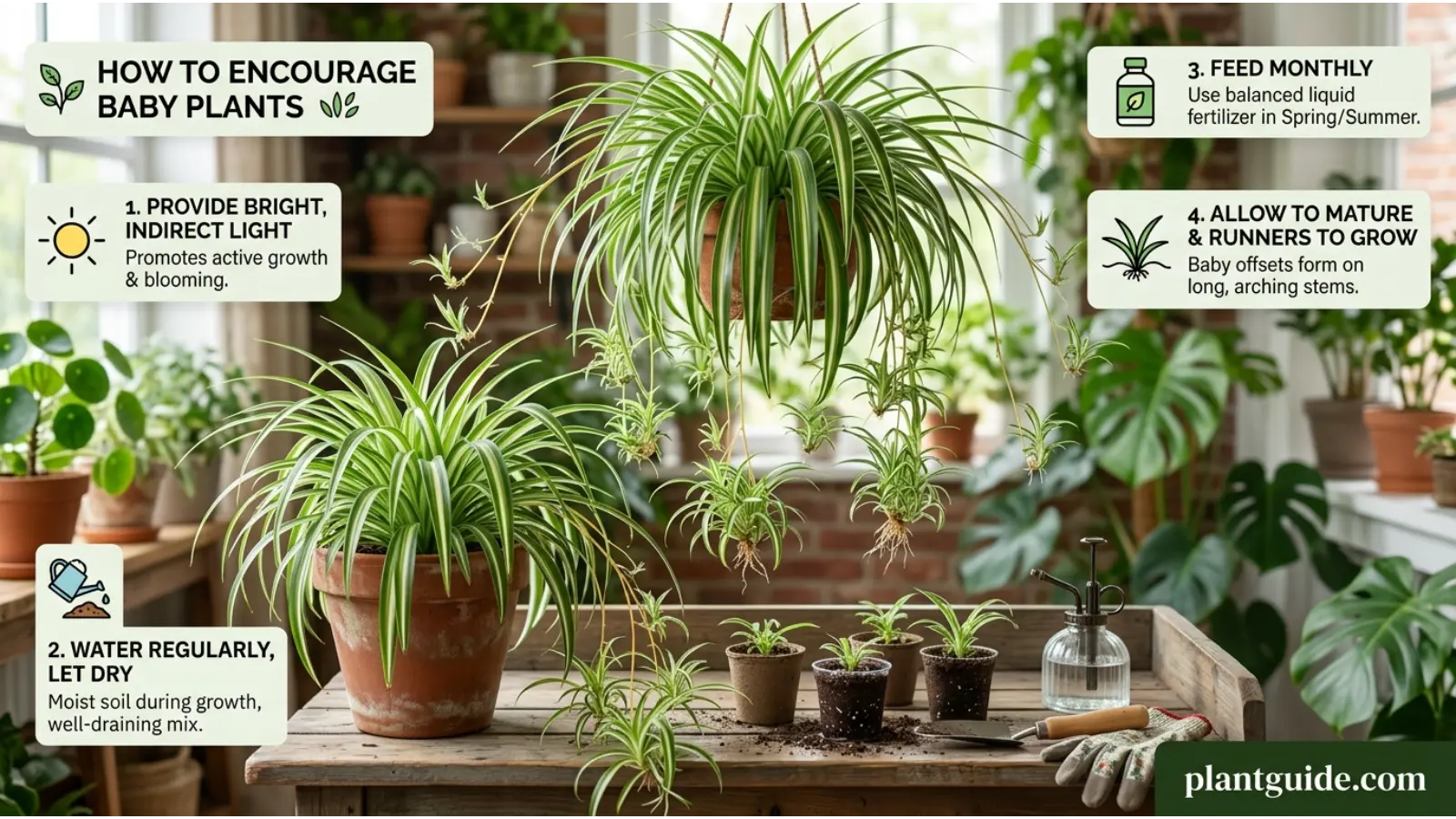
One of the most attractive features of a ribbon plant is its ability to produce small plantlets on long, arching stems. These baby plants can eventually develop roots and grow into independent plants.
What encourages plantlet production?
A mature, healthy plant is more likely to produce plantlets when it receives suitable indirect light, adequate water, and moderate nutrition during active growth.
However, plantlet production depends on the plant’s age, variety, growing conditions, and seasonal growth pattern. A young plant may need time to mature.
Avoid increasing fertilizer simply because the plant has not produced babies. Excessive feeding can damage the roots without solving the underlying issue.
What to do when plantlets appear
Allow the plantlets to remain attached while they develop. If you want to propagate them, you can root them while still connected to the parent plant or remove them and root them separately.
A hanging basket with several cascading plantlets can look attractive, but remove or reposition the stems if they become tangled or place excessive weight on the parent plant.
How to Propagate a Ribbon Plant
Ribbon plants are easy to propagate using their baby plantlets. This method is generally more reliable for beginners than growing new plants from seed.
Propagation while attached to the parent
- Select a healthy plantlet with small root buds or developing roots.
- Place a small pot filled with moist, well-draining potting mix beside the parent plant.
- Position the plantlet on the soil surface and secure it gently if necessary.
- Keep the soil lightly moist while roots establish.
- Once the plantlet resists a gentle tug and begins growing independently, cut the connecting stem.
This approach allows the plantlet to receive support from the parent plant while its roots develop.
Propagation after separating the plantlet
You can also cut a developed plantlet from its stem and place its base in moist potting mix. Keep it in bright, indirect light and avoid saturating the soil.
Plantlets with established roots usually adapt more easily than very small plantlets with no developed root system.
Can ribbon plants grow in water?
Yes. Small plantlets can develop roots in water if their bases are submerged while the leaves remain above the waterline. Once roots have developed, transfer the plant to potting mix if you want to grow it as a conventional potted plant.
Water-grown roots may need time to adapt to soil, so keep the potting mix lightly moist during the transition without leaving it waterlogged.
When and How to Repot a Ribbon Plant
Ribbon plants do not require frequent repotting. Consider moving your plant when roots emerge from drainage holes, the root ball becomes densely packed, or the soil dries unusually quickly despite appropriate watering.
Spring is a convenient time to repot because the plant can resume active growth afterward.
Repotting steps
- Select a container one size larger than the current pot.
- Gently remove the plant and loosen tightly packed roots.
- Inspect the root system for dark, soft, or damaged areas.
- Position the plant at the same depth as before.
- Fill around the roots with fresh, well-draining potting mix.
- Water appropriately and allow excess moisture to drain.
Avoid burying the crown too deeply. After repotting, keep the plant in bright, indirect light and monitor soil moisture while it settles.
Common Ribbon Plant Problems and Solutions
Changes in leaf color, texture, and growth can reveal problems with the growing environment. Check soil moisture, light exposure, roots, and recent care changes before choosing a treatment.
| Problem | Possible cause | What to do |
|---|---|---|
| Brown leaf tips | Mineral or fluoride sensitivity, fertilizer salts, inconsistent watering, or dry conditions | Review water quality and fertilizer use; check soil moisture |
| Yellow leaves | Overwatering, root stress, or normal aging | Check drainage and inspect roots if several leaves are affected |
| Drooping leaves | Dry soil, root damage, or excessive moisture | Check the soil before watering |
| Slow growth | Low light, seasonal slowdown, or crowded roots | Improve suitable light and inspect the root system |
| Pale foliage | Insufficient light or nutrient-related stress | Review light exposure and overall growing conditions |
| Few baby plants | Young plant, unsuitable light, or other growing stress | Allow the plant to mature and maintain consistent care |
| Soft or rotting roots | Prolonged wet soil or poor drainage | Remove damaged roots and repot in fresh, airy mix |
| Small insects on leaves | Possible pest infestation | Inspect foliage and treat identified pests appropriately |
Why are ribbon plant leaves turning yellow?
Yellow leaves can result from excessive moisture, root problems, insufficient light, or natural aging. If only an occasional older leaf turns yellow while the rest of the plant looks healthy, it may not indicate a serious problem.
If several leaves turn yellow and the soil stays wet, check drainage and inspect the roots. Correct the underlying cause before adding fertilizer.
Why is my ribbon plant not growing?
Slow growth can be normal during winter or after repotting. However, a plant kept in very low light may produce little new foliage.
Move it to a brighter location with indirect light, maintain suitable watering, and give it time to respond. If growth remains poor, inspect the roots and check whether the plant has become severely crowded in its pot.
Are ribbon plants affected by pests?
Spider plants can occasionally develop aphids, mealybugs, scale insects, or spider mites. Examine the undersides of leaves and the base of the foliage, particularly if you notice stippling, sticky residue, webbing, or unusual discoloration.
Isolate an affected plant when possible. Remove small numbers of pests manually or use an appropriate houseplant-labeled treatment according to its instructions. Avoid applying treatments in harsh sunlight and test sensitive foliage first.
Is the Ribbon Plant Safe for Pets?
The common ribbon plant, Chlorophytum comosum, is generally regarded as non-toxic to cats and dogs. This makes it a popular option for households with pets.
However, chewing large amounts of foliage may still cause mild digestive upset, and plantlets can attract curious cats. Keep the plant positioned where pets are less likely to damage it or repeatedly chew its leaves.
If your plant has a different identity, verify the species before assuming it has the same safety profile.

FAQs:
How often should I water a ribbon plant?
Water when the top inch of soil feels dry, then allow excess water to drain completely. The interval depends on light, temperature, pot size, and soil composition. Check moisture before watering rather than following a fixed weekly schedule.
Does a ribbon plant need direct sunlight?
No. Bright, indirect light is generally best. Gentle morning sunlight may be suitable, but intense direct sunlight can scorch the leaves. Variegated varieties often maintain their patterns better when they receive adequate indirect light.
Why are the tips of my ribbon plant turning brown?
Brown tips can result from fluoride or mineral sensitivity, fertilizer salt buildup, inconsistent watering, or dry conditions. Check your water quality, avoid excessive fertilizer, and make sure the soil drains properly before changing several care conditions at once.
How do I make my ribbon plant fuller?
Provide suitable indirect light, prune damaged or excessively long leaves when needed, and propagate healthy plantlets or rooted sections to fill the pot. A fuller appearance often comes from growing several established plantlets together rather than expecting one crown to produce dense foliage immediately.
Can a ribbon plant grow indoors all year?
Yes. Ribbon plants grow well indoors throughout the year when they receive suitable light, moderate watering, and comfortable temperatures. Growth may slow during winter, so allow the soil to dry appropriately and reduce fertilizing when the plant is not actively growing.
Conclusion
Successful ribbon plant care depends on bright, indirect light, well-draining soil, and watering that responds to the plant’s actual needs.
Avoid leaving the roots in soggy soil, provide suitable growing conditions, and inspect brown tips or yellow leaves before assuming the plant needs more water or fertilizer.
Start by checking your plant’s light exposure, drainage holes, and soil moisture. With these basic conditions in place, your ribbon plant can develop healthy arching foliage and produce attractive baby plants for propagation.

Asad Mumtaz is a dedicated plant enthusiast and gardening writer with a passion for helping people care for their plants successfully. He specializes in plant care guides, indoor gardening, and practical growing tips for all skill levels. His content focuses on making gardening simple, enjoyable, and rewarding. Through his work, Asad shares reliable advice to help readers create thriving green spaces.