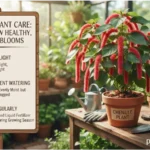
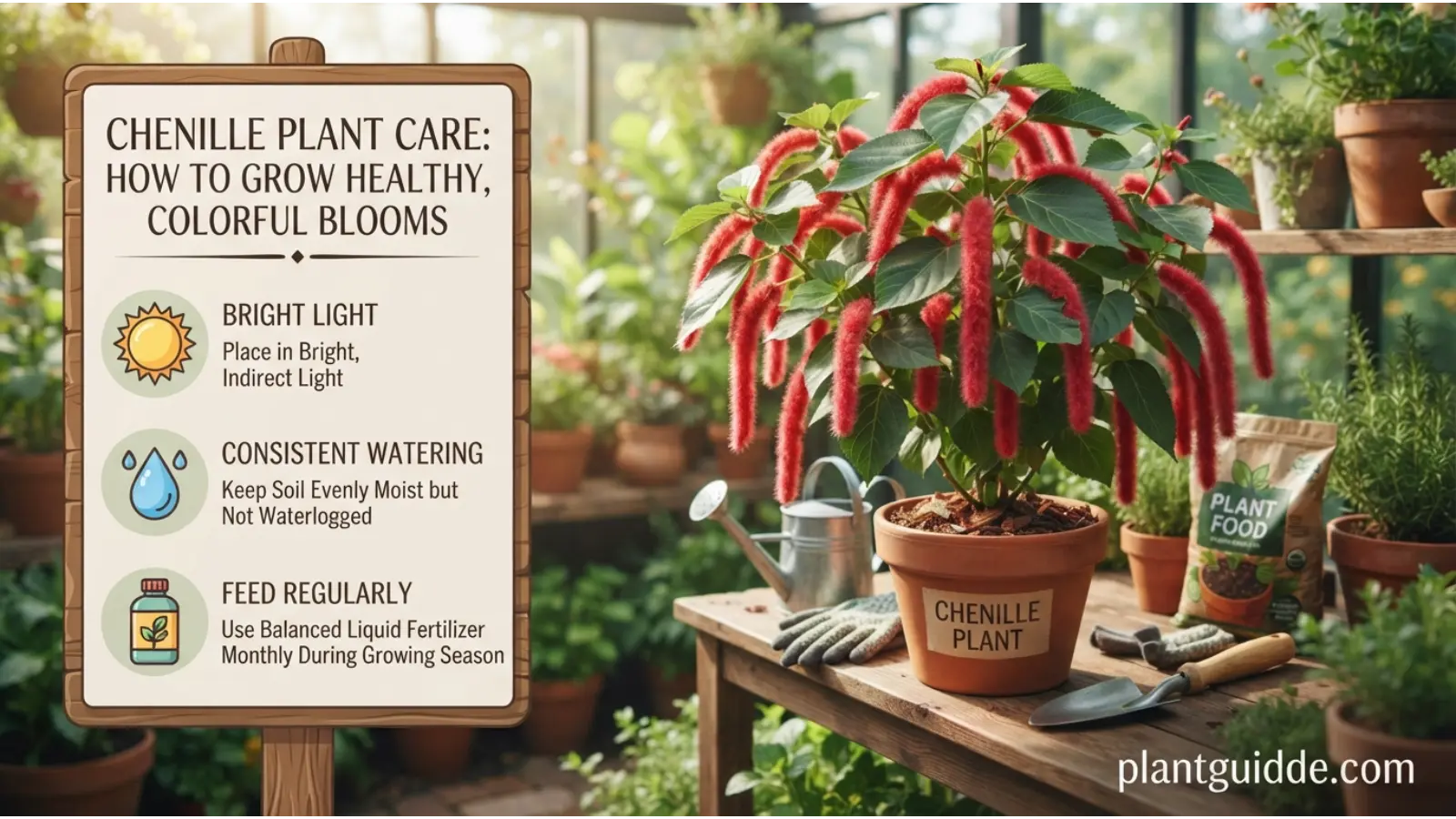
Chenille plant care are hard to miss. Their long, soft-looking flower clusters resemble hanging red tassels, giving this tropical plant an unusual appearance that makes it popular for patios, balconies, containers, and warm-climate gardens. The plant is commonly known as chenille plant, red-hot cattail, or red-hot cat’s tail.
Despite its exotic appearance, chenille plant care is fairly straightforward when its tropical growing preferences are understood. Most problems happen when the plant is exposed to cold conditions, insufficient light, poor drainage, or an inconsistent watering routine.
The goal is not to keep the soil permanently soaked. Instead, give the plant enough moisture to support vigorous growth while allowing excess water to drain freely. With warmth, good light, and regular pruning, a chenille plant can produce its characteristic fuzzy blooms for an extended period.
Quick Answer
Chenille plant care focuses on bright light, consistently moist but well-drained soil, warmth, humidity, and regular pruning. The chenille plant (Acalypha hispida) grows best when it receives several hours of bright light, avoids prolonged wet soil, and is protected from cold temperatures. Regular trimming encourages bushier growth and helps maintain its distinctive long, fuzzy red flower clusters.
What Is a Chenille Plant?
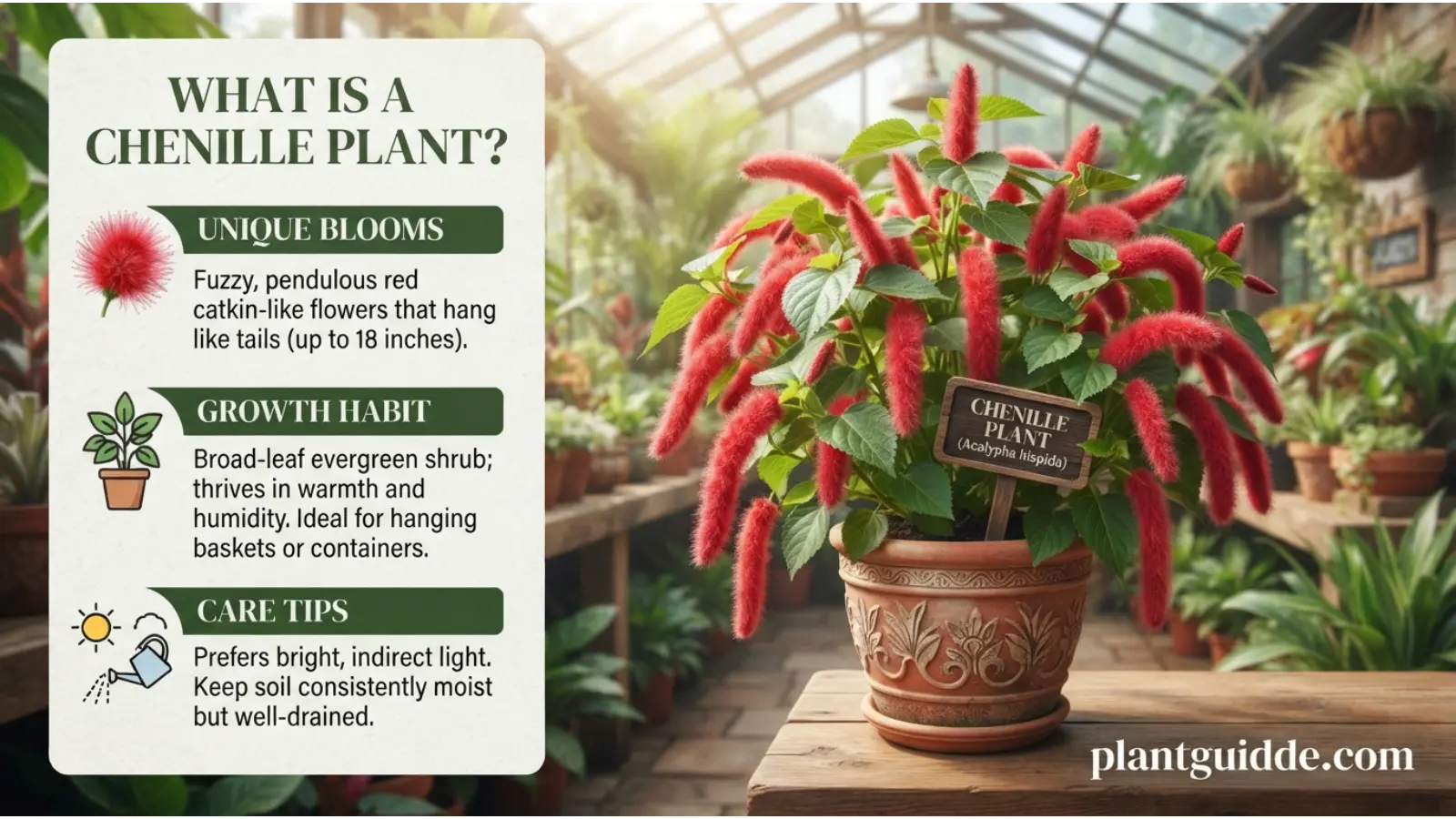
The chenille plant, Acalypha hispida, is a tropical evergreen shrub in the spurge family, Euphorbiaceae. It is native to tropical regions and is grown primarily for its unusual pendulous flower clusters.
The flowers are the feature most people notice first. They can be long, narrow, and covered with tiny flowers that create a soft, fuzzy appearance. Although red is the best-known color, related forms and cultivars may have different flower shades.
Its leaves are generally broad, green, and somewhat heart-shaped. In suitable warm conditions, the plant can become a vigorous shrub rather than remaining a small tabletop houseplant.
Is chenille plant grown for flowers or foliage?
Primarily for its flowers. The foliage provides an attractive green background, but the long, hanging flower clusters are the plant’s main ornamental feature.
This distinction matters when troubleshooting. A chenille plant that produces healthy leaves but few flowers may not have a serious health problem; it may simply need more light, better growing conditions, or pruning to encourage productive new growth.
Chenille Plant Care Requirements at a Glance
| Care factor | What the plant prefers |
|---|---|
| Light | Bright light with some gentle direct sun |
| Soil | Rich, loose, well-draining soil |
| Water | Even moisture without prolonged saturation |
| Humidity | Moderate to high humidity |
| Temperature | Warm, frost-free conditions |
| Fertilizer | Regular feeding during active growth |
| Pruning | Regular trimming to encourage branching |
| Pot | Drainage holes are essential |
| Blooming | Strong light, warmth, nutrition, and healthy new growth |
How Much Light Does a Chenille Plant Need?
Light is one of the most important factors in successful chenille plant care.
Give chenille plants bright light, with some direct sunlight when conditions are not excessively hot. In a bright outdoor location, morning sun or filtered afternoon light can work well. Indoors, place the plant near a bright window where it receives plenty of natural light.
Too little light can result in:
- Long, weak stems
- Sparse foliage
- Smaller leaves
- Reduced flowering
- A stretched or uneven shape
On the other hand, intense midday or afternoon sun behind glass can become excessively hot and may scorch the leaves, especially if the plant has not been acclimated.
How to tell if light is insufficient
Look at the plant’s growth rather than relying only on the number of hours of sunlight.
If new stems become unusually long between leaves and the plant produces little or no flowering growth, insufficient light is a likely factor.
Move it gradually toward a brighter location rather than suddenly placing a shade-grown plant in intense direct sun.
How to Water a Chenille Plant
Chenille plants prefer soil that stays evenly moist but never continuously waterlogged.
A practical approach is to check the upper portion of the soil before watering. If it has started to dry, water thoroughly until some excess drains from the bottom of the container. Then empty any water sitting in a saucer.
Avoid both extremes:
- Too little water: leaves may wilt, curl, or become stressed.
- Too much water: roots may remain oxygen-starved, increasing the risk of root problems.
- Inconsistent watering: repeated cycles of severe dryness followed by heavy watering can cause unnecessary stress.
Do not water simply because it has been a certain number of days. Temperature, light, pot size, soil composition, and season all affect how quickly the soil dries.
What if chenille plant leaves are drooping?
Check the soil before watering.
If the soil is dry and the plant perks up after thorough watering, underwatering may have caused the drooping.
If the soil is already wet and the plant continues to droop, adding more water can make the problem worse. In that situation, inspect the drainage and roots and allow excess moisture to move out of the pot.
Choosing the Right Soil
Good drainage is essential because chenille plants like moisture but do not perform well when their roots remain surrounded by stagnant water.
A useful container mix can combine:
- Quality all-purpose potting soil
- Compost or another source of organic matter
- Perlite, pumice, or another material that improves drainage
The exact recipe is less important than the final structure. Water should move through the mix instead of forming a persistently soggy layer around the roots.
Avoid using heavy garden soil by itself in a container. It can compact and restrict drainage.
Why drainage matters more than a strict soil recipe
Two plants can receive the same amount of water but respond very differently depending on their soil.
A loose, well-draining mix allows roots access to both moisture and oxygen. A compact, poorly draining mix can stay wet much longer, particularly in cool or low-light conditions.
That is why changing the soil and drainage can sometimes solve recurring watering problems more effectively than simply changing the watering schedule.
Humidity and Airflow
Because Acalypha hispida is tropical, it generally appreciates higher humidity than a typical dry indoor environment provides.
Dry air can contribute to:
- Brown or crispy leaf edges
- Leaf stress
- Poor-looking new growth
- Increased susceptibility to some pests
You can increase humidity by grouping plants together, using a humidifier, or placing the pot in a naturally humid room.
However, humidity should not mean stagnant air.
Good airflow around the foliage helps the plant dry appropriately after watering and reduces the conditions that encourage certain fungal and bacterial problems.
Temperature: Keep Chenille Plants Warm
Warmth is particularly important for chenille plants.
They are tropical plants and are not suited to frost or prolonged cold conditions. If grown outdoors in a region with cool winters, move container plants indoors or provide appropriate protection before temperatures become damaging.
Cold stress can appear as:
- Drooping
- Leaf discoloration
- Leaf drop
- Slow growth
- Sudden decline after exposure to cold
If you bring a chenille plant indoors, avoid placing it directly beside a cold window or next to a strong heating or cooling vent.
A stable, warm environment is generally better than repeatedly moving the plant between very different conditions.
Fertilizing Chenille Plants
Active growth and flowering require adequate nutrition, particularly when the plant is growing vigorously in a container.
During the active growing season, use a balanced fertilizer according to the product’s label directions. A diluted liquid fertilizer can be convenient for container-grown plants.
Avoid the temptation to fertilize heavily because you want more flowers. Excess fertilizer can damage roots or encourage excessive leafy growth.
A better approach is to combine:
- Adequate light
- Consistent moisture
- Healthy soil
- Regular but moderate feeding
- Pruning when needed
If growth becomes pale or unusually weak despite appropriate light and watering, nutrition may be one factor worth investigating.
Pruning Chenille Plants for Bushier Growth
Pruning is one of the most useful techniques for maintaining a compact chenille plant.
Without regular trimming, the plant can become leggy, especially when grown indoors or in less-than-ideal light.
Use clean, sharp pruning shears to remove:
- Dead stems
- Damaged growth
- Weak or overcrowded branches
- Excessively long stems
Pinching or trimming growing tips can encourage branching, giving the plant a fuller appearance.
Do not remove large amounts of healthy growth all at once unless there is a specific reason. Gradual pruning is generally easier for the plant to recover from.
Should you remove old chenille flowers?
Yes. Removing faded or unattractive flower clusters can improve the plant’s appearance and keep energy directed toward new growth.
When pruning, avoid damaging healthy emerging shoots that may develop into future flowering branches.
How to Repot a Chenille Plant
Repot when the plant has outgrown its current container or when the growing medium has become compacted and drains poorly.
Signs that repotting may be appropriate include:
- Roots emerging from drainage holes
- Soil drying unusually quickly
- Roots tightly circling the root ball
- Stunted growth despite good care
- Water running rapidly through a severely root-bound pot
Choose a container only moderately larger than the existing one. Moving a small plant into a very large pot can leave a large volume of soil wet for too long after watering.
Always use a pot with drainage holes.
Growing Chenille Plant in Containers
Chenille plants can perform especially well in containers when their basic requirements are met.
Container growing makes it easier to control:
- Soil quality
- Drainage
- Watering
- Placement
- Winter protection
A container-grown chenille plant may need more frequent watering than one growing in the ground because potting mix can dry faster, especially during hot weather.
Check the soil rather than following a fixed calendar.
For hanging baskets, remember that the plant can become quite vigorous. Choose a strong container and make sure it has adequate drainage.
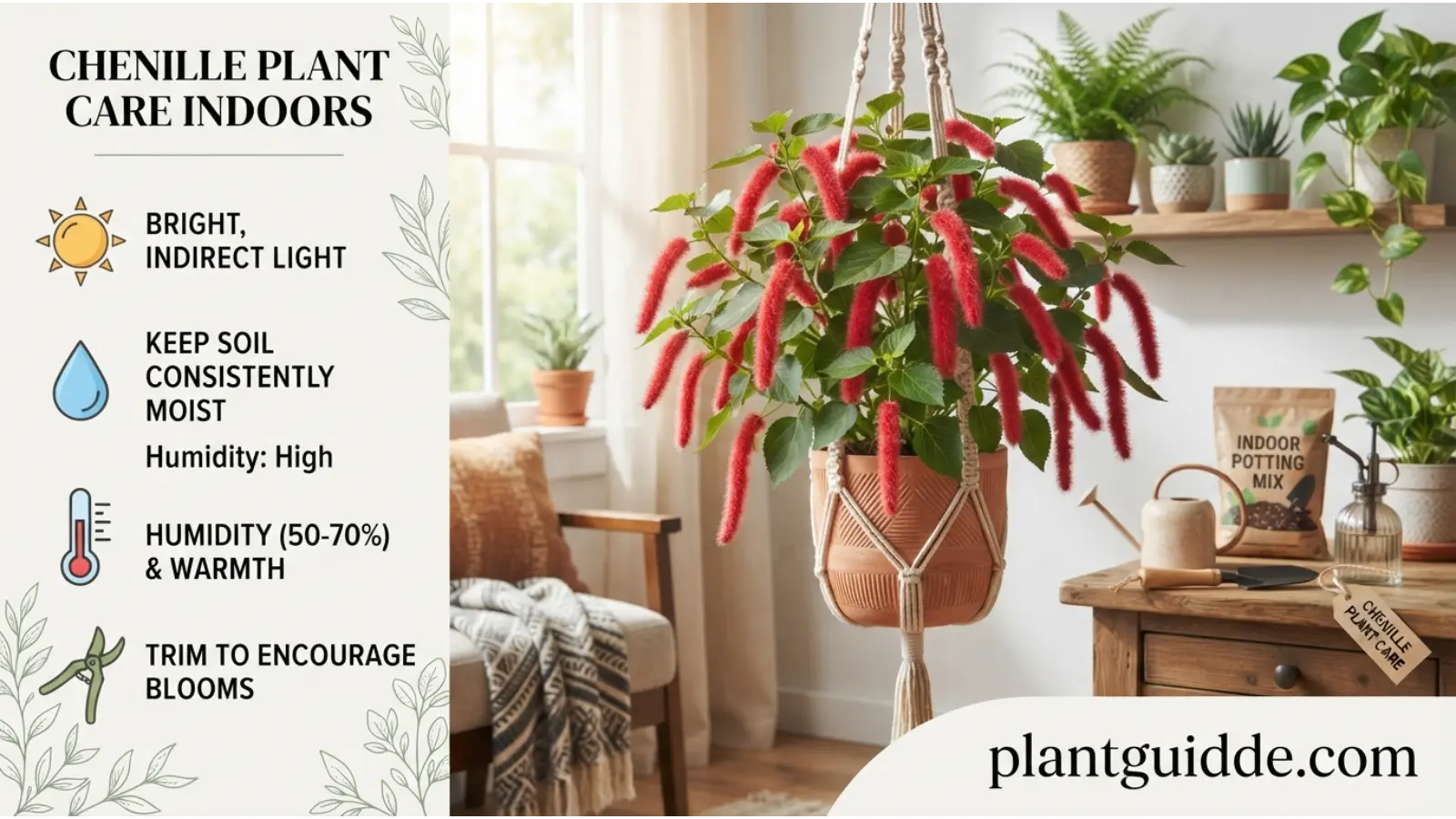
Chenille Plant Care Indoors
Growing chenille plants indoors can be rewarding, but light is usually the biggest challenge.
Place the plant in the brightest suitable location available. A bright window can work well, but protect the foliage from excessively intense heat through glass if signs of scorching appear.
Indoor chenille plants also benefit from:
- Good air circulation
- Adequate humidity
- Well-draining soil
- Consistent watering
- Regular pruning
- Occasional feeding during active growth
If the plant grows rapidly toward a window and becomes sparse on the opposite side, rotate the container periodically for more balanced growth.
If flowering decreases substantially indoors, reassess light before assuming the plant needs more fertilizer.
Common Chenille Plant Problems and Solutions
Chenille plant leaves turning yellow
Yellow leaves can have several causes, so avoid automatically adding fertilizer.
Check:
- How wet the soil remains between waterings
- Whether the pot drains properly
- Whether the plant receives enough light
- Whether older or newer leaves are affected
- Whether the plant has recently experienced temperature changes
If multiple leaves turn yellow while the soil stays wet for long periods, excessive moisture deserves particular attention.
Chenille plant leaves turning brown
Brown edges or tips may develop when the plant experiences dry soil, dry air, excessive fertilizer, intense environmental stress, or root problems.
Check the growing conditions rather than treating the leaf symptom alone.
If the soil is drying extremely quickly, the plant may need more consistent moisture. If the soil stays wet, improve drainage before increasing watering.
Chenille plant not flowering
A lack of flowers is often related to environmental conditions rather than a single missing fertilizer.
Start with light.
Then check:
- Temperature
- Overall plant health
- Pruning
- Nutrition
- Watering consistency
A chenille plant receiving insufficient light may remain alive and leafy but produce far fewer flowers.
Chenille plant losing leaves
Sudden leaf loss can follow environmental stress, especially changes in temperature, watering, light, or location.
Recently purchased plants may also drop some leaves after being moved from a greenhouse or nursery into a different home environment.
Avoid responding to leaf drop by dramatically increasing watering. First determine whether the soil is actually dry and whether the roots are healthy.
Chenille plant becoming leggy
Leggy growth usually means the plant is stretching toward available light or has not been pruned enough to maintain branching.
Move it to a brighter location gradually and trim excessively long stems to encourage new side growth.
Common Chenille Plant Care Mistakes
Treating it like a drought-tolerant houseplant
Chenille plants prefer more consistent moisture than plants adapted to prolonged dry conditions.
Allowing the entire root ball to become extremely dry repeatedly can cause unnecessary stress.
Keeping the soil constantly wet
The opposite mistake is just as problematic.
Moisture-loving does not mean waterlogged. Roots need oxygen as well as water.
Giving a low-light location
A plant may survive in a dim room but still fail to produce the vigorous growth and flowering that make chenille plants attractive.
Using a pot without drainage
Even excellent soil cannot compensate for a container that traps excess water.
Pruning without improving light
Cutting back a leggy plant can temporarily improve its shape, but if the plant remains in inadequate light, new growth may become leggy again.
Pruning works best as part of an overall care strategy.
Moving the plant suddenly into strong sunlight
A plant accustomed to shade or indoor conditions can suffer leaf scorch when exposed abruptly to intense direct sun.
Acclimate it gradually.
How to Encourage More Chenille Flowers
If your main goal is abundant flowering, focus on the conditions that support healthy new growth.
Give it strong light. Flowering generally benefits from good light availability.
Maintain consistent moisture. Avoid repeated severe drying followed by saturation.
Feed moderately during active growth. Nutrients support continued growth, but excessive fertilizer is not a shortcut to flowering.
Prune strategically. Encourage branching rather than allowing the plant to become long and sparse.
Keep temperatures warm. Cold conditions can slow growth and interfere with normal performance.
Give the roots room without oversizing the pot. A severely root-bound plant may struggle, but an oversized container can stay unnecessarily wet.
Are Chenille Plants Toxic?
Chenille plants belong to the spurge family, Euphorbiaceae, which includes many species containing irritating sap. It is sensible to handle the plant carefully, avoid contact with the eyes, and wash your hands after pruning.
Because toxicity can vary by species and exposure, households with children or pets should verify the specific plant with a reliable poison-control or veterinary resource before assuming it is safe to chew or ingest.
Chenille Plant Pests
Healthy chenille plants can still attract common sap-feeding pests, particularly when grown indoors or under stressful conditions.
Watch the undersides of leaves and tender new growth for:
- Aphids
- Mealybugs
- Spider mites
- Scale insects
- Whiteflies
Early detection is much easier to manage than a large infestation.
Inspect the plant regularly, especially when bringing it indoors or introducing a new plant into an existing collection.
If pests are found, isolate the affected plant when practical and use an appropriate treatment according to the pest and product label.
A Simple Chenille Plant Care Routine
For beginners, a simple routine is often more useful than a complicated schedule.
Weekly: Check the soil moisture, inspect leaves and stems, and look for pests.
Every few weeks during active growth: Assess whether the plant needs feeding according to the fertilizer directions.
Regularly: Remove dead flowers and damaged growth.
As needed: Prune long or weak stems to maintain a fuller shape.
Seasonally: Adjust watering according to temperature, light, and growth rate rather than using the same schedule year-round.
The most useful habit is to observe the plant before taking action. Yellow leaves, drooping, sparse growth, and poor flowering are clues—not automatic instructions to add more water or fertilizer.
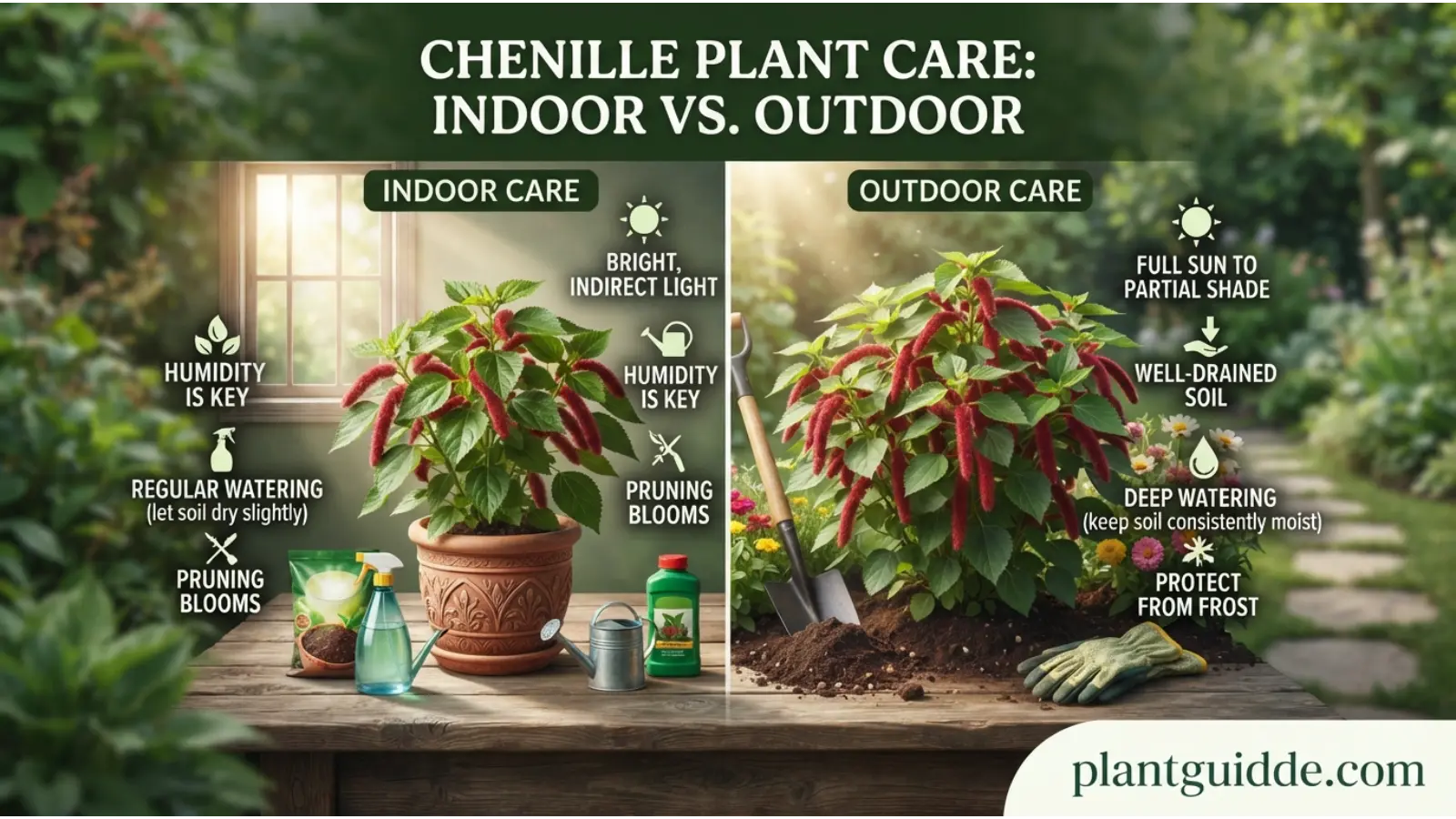
Chenille Plant Care: Indoor vs. Outdoor
| Growing location | Main advantage | Main challenge |
|---|---|---|
| Indoors | Easier temperature control | Providing enough light |
| Patio | Excellent light and airflow | Protecting from extreme weather |
| Tropical garden | Natural warmth and humidity | Controlling vigorous growth |
| Hanging basket | Attractive trailing presentation | Faster drying and heavier maintenance |
Outdoor plants often have access to stronger light and better airflow, while indoor plants provide easier protection from cold.
Whichever location you choose, the fundamentals remain the same: warmth, good light, appropriate moisture, drainage, and regular observation.
FAQs:
How often should I water a chenille plant?
Water when the upper part of the growing medium has begun to dry, then water thoroughly so excess drains away. The exact frequency depends on temperature, light, humidity, pot size, and soil. Avoid using a rigid weekly schedule.
Why is my chenille plant not blooming?
Insufficient light is one of the first things to investigate. Also check temperature, watering consistency, nutrition, pruning, and overall plant health. A plant can produce attractive foliage while flowering poorly when conditions are not strong enough for abundant blooms.
Can chenille plants grow indoors?
Yes. Chenille plants can be grown indoors when they receive bright natural light, warm temperatures, suitable humidity, and well-draining soil. Indoor plants may need regular pruning to prevent weak, stretched growth.
Can chenille plants take full sun?
Chenille plants can tolerate substantial light, but intense afternoon sun can be stressful, particularly in very hot climates or through glass. Morning sun and bright filtered light are often easier to manage. Acclimate plants gradually before exposing them to stronger direct sunlight.
How do I make my chenille plant bushier?
Provide adequate light and prune long stems to encourage branching. Regular tip pruning during active growth can help create a fuller plant. If new growth remains long and sparse, improve the light before relying on additional pruning.
Final Thoughts on Chenille Plant Care
Successful chenille plant care comes down to recreating the conditions this tropical plant naturally prefers: warmth, strong light, steady moisture, good drainage, humidity, and enough nutrition to support active growth.
If the plant is struggling, avoid changing everything at once. Check the soil first, then evaluate light, temperature, drainage, and recent environmental changes.
For most growers, the best next step is simple: give your chenille plant a bright, warm location, keep its soil evenly moist without leaving it waterlogged, and observe its growth before adjusting the routine.

Asad Mumtaz is a dedicated plant enthusiast and gardening writer with a passion for helping people care for their plants successfully. He specializes in plant care guides, indoor gardening, and practical growing tips for all skill levels. His content focuses on making gardening simple, enjoyable, and rewarding. Through his work, Asad shares reliable advice to help readers create thriving green spaces.