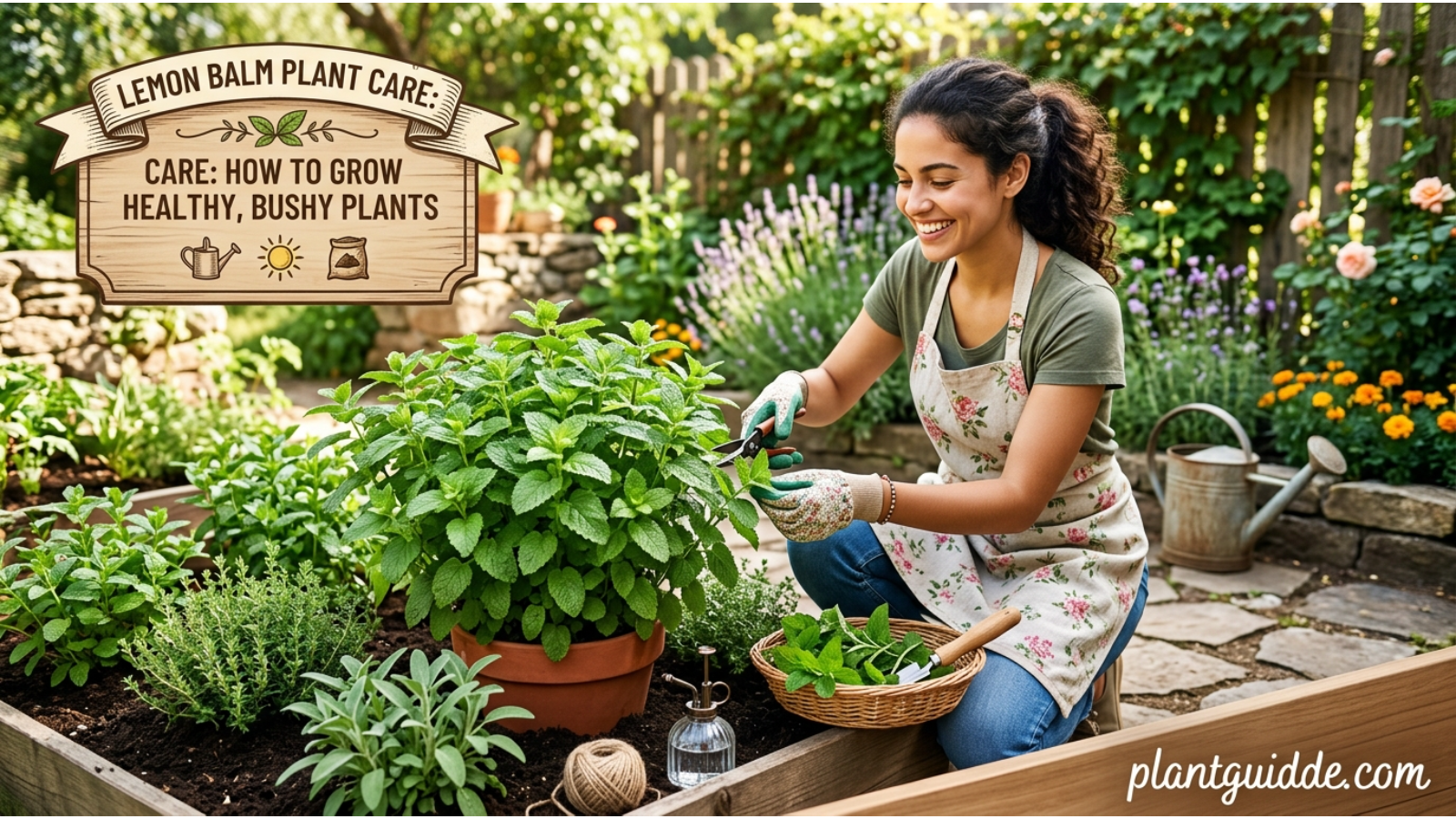
Lemon balm plant care is one of those herbs that can look almost effortless to grow, until it becomes too large, starts flowering heavily, or spreads farther than you expected. The key to successful lemon balm plant care is not complicated maintenance.
Instead, it is about providing enough light, preventing constantly wet roots, harvesting regularly, and controlling the plant before its vigorous growth gets out of hand.
Unlike herbs such as rosemary and thyme that prefer relatively dry conditions, lemon balm appreciates more consistent moisture while actively growing. At the same time, poorly drained soil can create problems, particularly when conditions remain cold and wet.
With the right setup, a single plant can provide fresh, strongly scented leaves for tea, salads, desserts, and other kitchen uses throughout the growing season.
Quick Answer
Lemon balm (Melissa officinalis) is an easy, vigorous perennial herb that grows well in full sun or partial shade and most well-drained soils. Keep the soil moderately moist while plants establish, avoid waterlogged conditions, and harvest the young leaves regularly to encourage fresh growth. Prune after flowering to maintain a compact plant and prevent unwanted self-seeding.
What Is Lemon Balm?
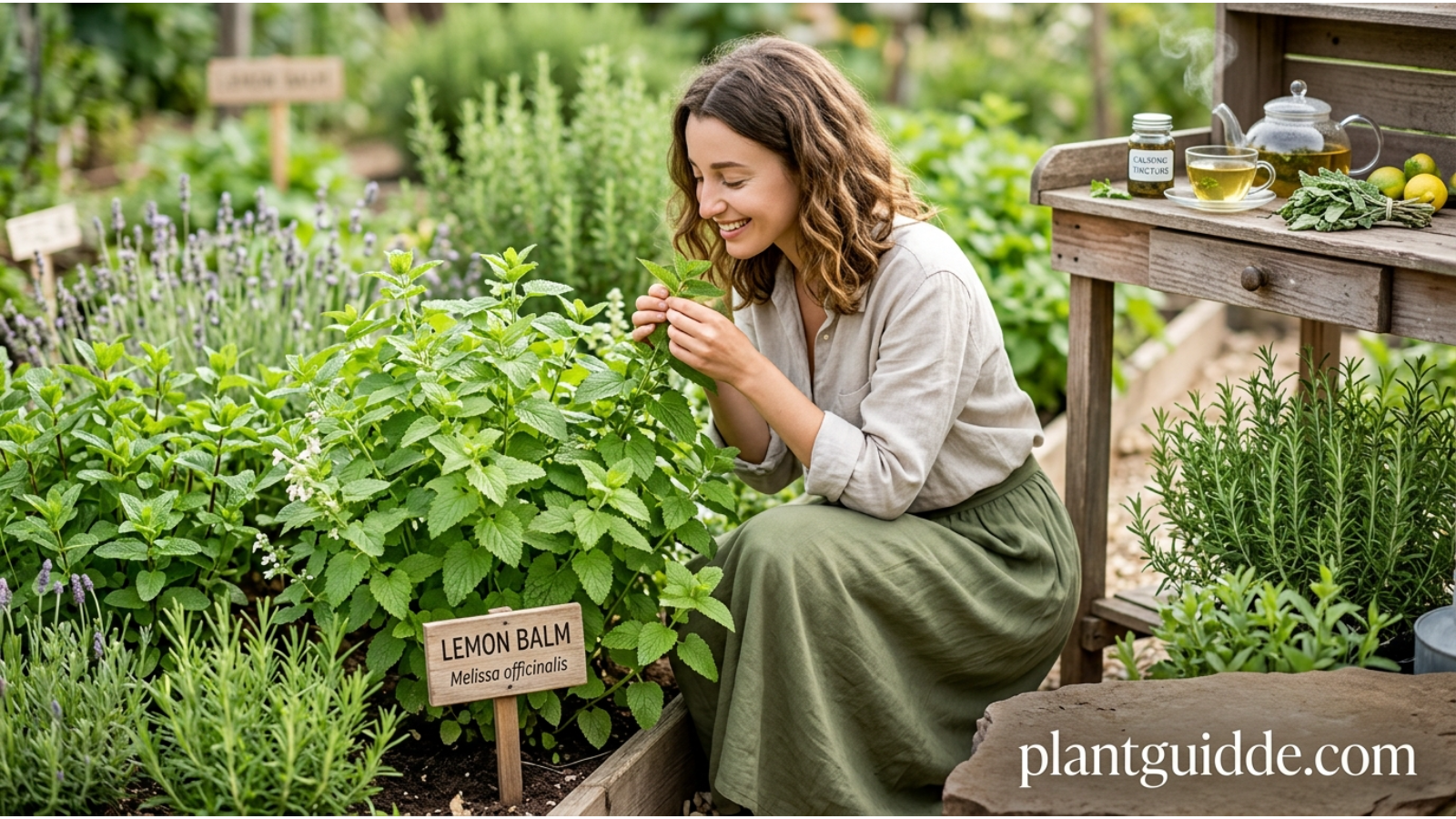
Lemon balm (Melissa officinalis) is a fragrant herbaceous perennial in the mint family, Lamiaceae. It produces bushy growth, square stems, scalloped heart-shaped leaves, and small pale flowers that attract bees and other pollinators. Mature plants can reach roughly 0.5–1 m in height under suitable conditions.
The leaves release a noticeable lemon fragrance when crushed, which is why the plant is commonly grown as a culinary and tea herb. Young leaves generally provide the best flavor and aroma, making regular harvesting useful for both the plant and the gardener.
One important characteristic is its vigor. Lemon balm can spread by self-seeding and can form large clumps over time. If you want a controlled herb garden, growing it in a container is often easier than allowing it to occupy an unrestricted garden bed.
Lemon Balm Plant Care Requirements at a Glance
| Care factor | What lemon balm prefers |
|---|---|
| Botanical name | Melissa officinalis |
| Plant family | Lamiaceae |
| Light | Full sun to partial shade |
| Soil | Fertile or average soil that drains well |
| Moisture | Evenly moist while establishing; avoid waterlogging |
| Container | At least about 25 cm wide and deep |
| Feeding | Usually modest; avoid excessive fertilizer |
| Pruning | Cut back after flowering or when growth becomes untidy |
| Harvest | Young leaves throughout the growing season |
| Growth habit | Vigorous, clump-forming perennial |
| Main concern | Excessive spreading and wet soil |
RHS guidance confirms that lemon balm tolerates a broad range of soil types and grows in full sun or partial shade, provided the soil is well drained.
How Much Light Does Lemon Balm Need?
Lemon balm grows well in full sun or partial shade. A sunny location encourages strong, leafy growth, while partial shade can be useful in hotter conditions or for varieties with lighter-colored foliage.
For most gardeners, aim for a location receiving several hours of direct sunlight with some protection from intense afternoon heat if summers are particularly hot.
Signs of insufficient light
A lemon balm plant receiving too little light may become:
- Tall and floppy
- Sparse rather than bushy
- Less productive
- More inclined to stretch toward a window
If growing indoors, place it near a bright window rather than in a dark corner. Rotate the container occasionally so growth remains more even.
Can lemon balm grow in partial shade?
Yes. Partial shade is one of the reasons lemon balm can work well in mixed herb gardens and less intensely sunny locations. However, very low light is unlikely to produce the dense, vigorous growth you want from a culinary herb.
Best Soil for Lemon Balm
The best soil for lemon balm is moist but well drained. It is adaptable to different soil types, but drainage is more important than creating an unusually rich growing medium.
For garden planting, loosen compacted soil before planting and improve drainage if water tends to remain around the roots.
For containers, use a quality potting mix that drains freely rather than heavy soil that stays saturated.
The mistake to avoid is assuming that because lemon balm likes moisture, it should sit in constantly wet soil. Those are two different conditions. Moist soil supplies water while still allowing oxygen around the roots; waterlogged soil restricts oxygen and can contribute to root problems.
How to Water Lemon Balm
Watering is one of the easiest parts of lemon balm plant care once you stop relying on a fixed schedule.
Instead of watering every certain number of days, check the soil and the plant’s growing conditions.
For young plants
Newly planted lemon balm needs more consistent moisture while its roots become established. Water thoroughly when the upper portion of the soil begins drying, then allow excess water to drain away.
For established garden plants
Established plants are generally less demanding. During normal weather, plants growing in the ground may need little additional watering once established, especially when natural rainfall is adequate.
During prolonged hot or dry weather, check the soil more frequently.
For container-grown lemon balm
Potted plants dry out faster than plants growing in the ground. Check the pot regularly, particularly during warm weather.
Water deeply enough to moisten the root zone, but do not leave the pot standing in water.
Practical rule: Water according to soil moisture and weather, not according to the calendar.
Does Lemon Balm Need Fertilizer?
Lemon balm is naturally vigorous, so heavy feeding is usually unnecessary.
lemon balm plant care the plant is growing in reasonably fertile soil, focus more on good drainage, sufficient light, moisture, and regular harvesting than on frequent fertilizer applications.
Excessive feeding can encourage soft, overly lush growth without solving underlying problems such as inadequate light or poor drainage.
lemon balm plant care container-grown plants are repeatedly producing weak or pale growth despite suitable light and watering, a balanced, general-purpose fertilizer used according to its label can be considered during active growth.
How to Grow Lemon Balm in a Pot
Container growing is particularly useful for lemon balm because it helps control its vigorous spreading habit.
RHS recommends a container at least 25 cm (10 inches) wide and deep for lemon balm.
Choose a pot with drainage holes and use a free-draining potting mix.
Step-by-step container setup
- Choose a container with adequate drainage holes.
- Use a pot at least about 25 cm wide and deep.
- Fill it with a well-draining potting mix.
- Plant the lemon balm at the same general depth at which it was previously growing.
- Water thoroughly after planting.
- Place the pot in full sun or partial shade.
- Harvest regularly to keep the plant compact.
- Prune after flowering if the plant becomes untidy or you want to reduce self-seeding.
A container also makes it easier to move the plant if the growing conditions become excessively hot, wet, or exposed.
How to Prune Lemon Balm
Pruning is one of the most useful parts of lemon balm plant care.
Without regular cutting, lemon balm can become tall, untidy, and increasingly crowded. RHS recommends cutting the plant back after flowering to encourage fresh leaf growth and reduce self-seeding.
If your main goal is fresh leaves, you do not have to wait for the plant to become overgrown before cutting it.
Regularly pinch or harvest growing tips to encourage branching and maintain a bushier shape.
After flowering, you can cut the plant back substantially. Fresh growth can follow when growing conditions remain favorable.
Why pruning matters
Pruning can:
- Encourage new leafy growth
- Keep the plant more compact
- Improve its appearance
- Reduce unwanted seedlings
- Help prevent an old, straggly appearance
For an established clump, cutting it back is often more useful than trying to manage individual long stems.
When and How to Harvest Lemon Balm
Lemon balm can be harvested regularly during active growth, and the youngest leaves are generally preferred for their flavor and fragrance.
For the best quality, harvest leaves before the plant becomes heavily flowered.
Simple harvesting method
Use clean scissors or snips to cut the tender shoot tips rather than repeatedly stripping individual leaves from random parts of the plant.
This approach gives you usable leaves while also encouraging the plant to branch.
You can use fresh lemon balm in:
- Herbal tea
- Fruit salads
- Desserts
- Salads
- Sauces
- Some savory dishes
- Cold drinks
Fresh leaves usually have a stronger, brighter aroma than leaves that have been stored for a long time. RHS also notes that lemon balm can be dried for later use, although the flavor is milder than fresh leaves.
How to Prevent Lemon Balm From Spreading
This is one of the most important things to understand before planting lemon balm in the ground.
Lemon balm is vigorous and can spread by self-seeding. If you leave flowers to mature and produce seed, new plants may appear around the original clump.
If you want to keep one controlled plant:
- Grow it in a container.
- Remove spent flower stems before seeds mature.
- Cut the plant back after flowering.
- Divide large clumps when necessary.
- Remove unwanted seedlings while they are small.
A common beginner mistake is choosing lemon balm because it is easy to grow and then giving it unrestricted space without realizing how productive it can become.
If you want convenience and control, a container is often the simplest solution.
How to Propagate Lemon Balm
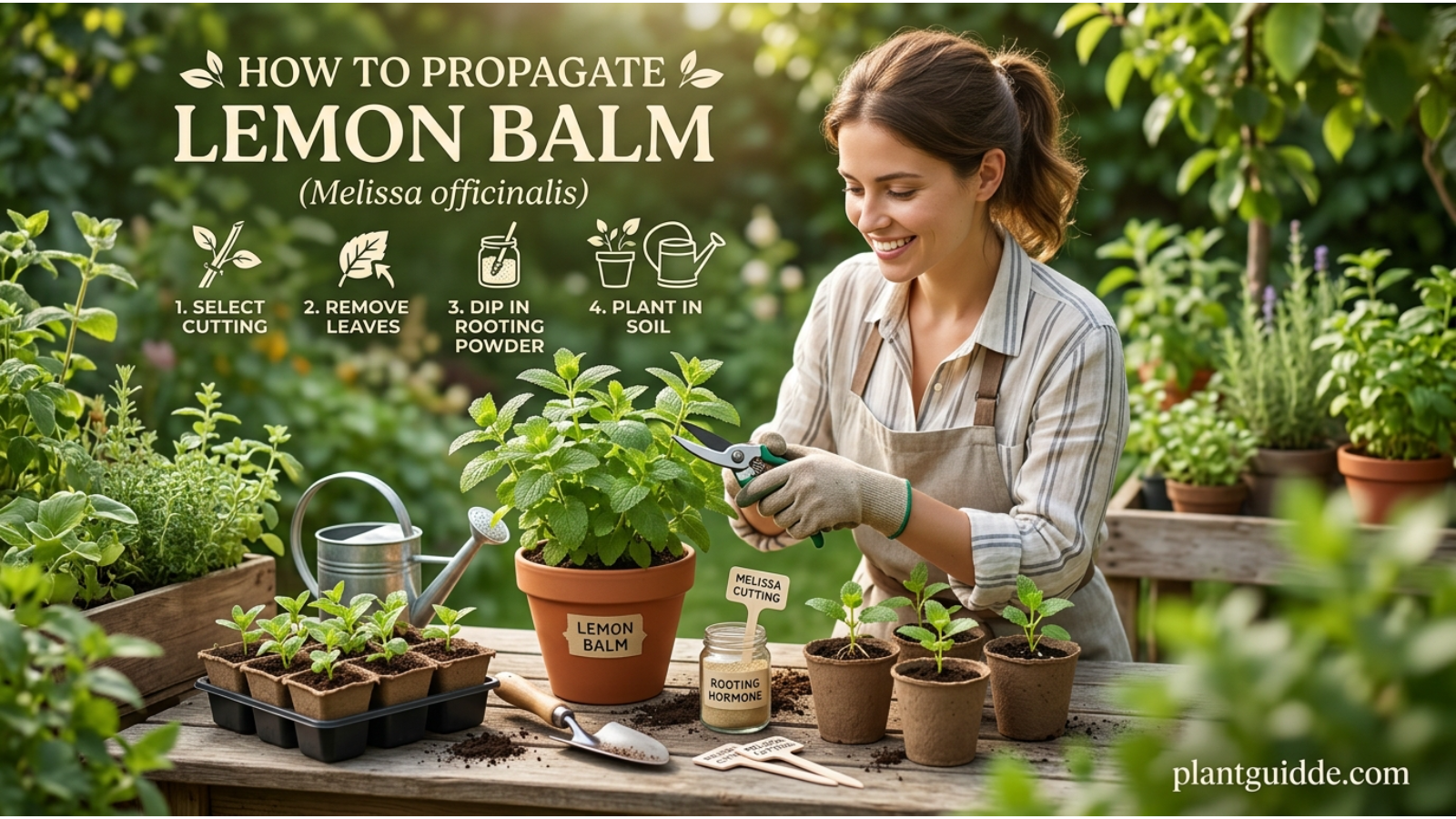
Lemon balm can be propagated from seed, division, or cuttings.
Growing lemon balm from seed
Sow seeds in spring. The seeds should not be buried deeply; RHS recommends only lightly covering them because some light aids germination. Seedlings can take up to around three weeks to appear under suitable conditions.
Keep the growing medium lightly moist during germination.
Propagating by division
Division is particularly useful for established plants that have become large.
Lift the clump, separate it into smaller sections with healthy roots and shoots, and replant the divisions.
This method also gives you better control over named varieties than growing from seed, because some cultivated forms may not reproduce exactly from seed.
Propagating from cuttings
Softwood cuttings can be taken from young growth in spring or early summer. Lemon balm stems can also root readily in water before being transferred into potting mix.
Lemon Balm Flowers: Should You Let Them Bloom?
Yes, but it depends on your goal.
The small flowers are valuable to pollinators, including bees, and are part of the plant’s natural summer growth cycle.
If your priority is supporting pollinators, allowing some flowers to develop can be worthwhile.
If your priority is producing fresh foliage and preventing seedlings, remove flowering stems before seeds develop or cut the plant back after flowering.
You do not necessarily have to choose one approach for the entire plant. You can allow part of the plant to flower while regularly harvesting another section for leaves.
Common Lemon Balm Problems
Lemon balm is generally robust, but a few problems are worth watching.
Lemon balm leaves turning yellow
Yellow leaves can have several causes, including overly wet soil, poor drainage, aging foliage, or stressful growing conditions.
Start by checking the soil before adding more water.
If the soil remains wet for long periods, improve drainage rather than simply changing the watering schedule.
Lemon balm wilting
Wilting does not automatically mean the plant needs water.
Check the soil first.
If the soil is dry, thorough watering may solve the problem. If the soil is already wet, additional water can make the situation worse.
This simple check prevents one of the most common container-growing mistakes: treating every wilted plant as an underwatered plant.
Lemon balm becoming leggy
Leggy growth is commonly associated with insufficient light or a lack of regular cutting.
Move container plants to a brighter position and begin harvesting the growing tips.
A substantial pruning can also encourage a new flush of growth when the plant is actively growing.
White powder on lemon balm leaves
Powdery mildew can occasionally affect lemon balm. RHS notes that cutting back affected stems can encourage fresh growth.
Good airflow around the plant is useful, particularly when foliage becomes dense.
Avoid creating persistently wet foliage and overcrowded conditions.
Lemon balm spreading everywhere
This is usually a management issue rather than a sign that the plant is unhealthy.
The easiest solutions are growing lemon balm in a container, removing spent flowers before seeds develop, and dividing or removing unwanted seedlings.
Lemon Balm Care in Hot Weather
In hot climates, lemon balm may need more attention to moisture than it would in cooler conditions.
If the plant receives intense afternoon sun and temperatures become extreme, partial afternoon shade can reduce heat stress.
Container plants deserve particular attention because their limited soil volume can dry rapidly.
During hot weather:
- Check soil moisture more frequently.
- Water deeply when needed.
- Avoid letting containers completely dry for prolonged periods.
- Provide afternoon protection if leaves repeatedly wilt in extreme heat.
- Maintain airflow around dense foliage.
- Do not compensate for heat with constant shallow watering.
The goal is stable root moisture, not permanently wet soil.
Lemon Balm Care in Winter
Lemon balm is a perennial and naturally dies back in colder conditions before returning with new growth when the growing season resumes.
The biggest concern is not simply cold—it is cold combined with excessive moisture.
RHS specifically advises protecting lemon balm from excessive winter wet.
For container plants, moving pots to a sheltered location can help protect the root system from prolonged rain and saturated compost.
Old top growth can be cut back in winter or early spring, depending on the climate and gardening conditions.
Common Lemon Balm Care Mistakes
1. Keeping the soil constantly wet
Lemon balm likes moisture, but it does not need waterlogged roots.
Better approach: Keep moisture reasonably consistent while ensuring excess water can escape.
2. Planting it without considering its spreading habit
A tiny lemon balm plant can become a substantial clump.
Better approach: Use a container if you want strict control.
3. Ignoring light
A plant can survive in less light than it needs for dense, productive growth.
Better approach: Give it full sun or bright partial shade.
4. Waiting too long to harvest
Allowing stems to become tall and mature can leave the plant looking coarse and untidy.
Better approach: Harvest young shoot tips regularly.
5. Leaving every flower to produce seed
This can result in numerous volunteer seedlings.
Better approach: Remove spent flowers if you do not want self-seeding.
6. Watering on a fixed schedule
Weather, pot size, soil type, and plant size all change how quickly soil dries.
Better approach: Check the soil before watering.
Lemon Balm vs. Lemon Verbena
Lemon balm and lemon verbena are sometimes confused because both have strongly citrus-scented foliage, but they are different plants.
Lemon balm is a perennial herb in the mint family and is generally easy to grow in full sun or partial shade. Lemon verbena has different growth habits and cultivation requirements.
If you want a relatively forgiving herb that can tolerate a range of garden conditions and return year after year in suitable climates, lemon balm is particularly convenient.
Best Lemon Balm Varieties to Consider
The standard Melissa officinalis is the straightforward choice if your priority is strong growth and traditional lemon balm flavor.
Other forms provide different ornamental characteristics.
- ‘Aurea’ has yellow-variegated foliage.
- ‘All Gold’ produces yellow foliage and is suited to brighter locations, although light shade can help protect its coloration.
- ‘Lime Balm’ has a stronger citrus character and can reach around 60 cm under suitable conditions.
For a kitchen herb garden, the standard form is usually enough. Choose a named variety when foliage color, compactness, or a particular scent is an important part of your planting design.
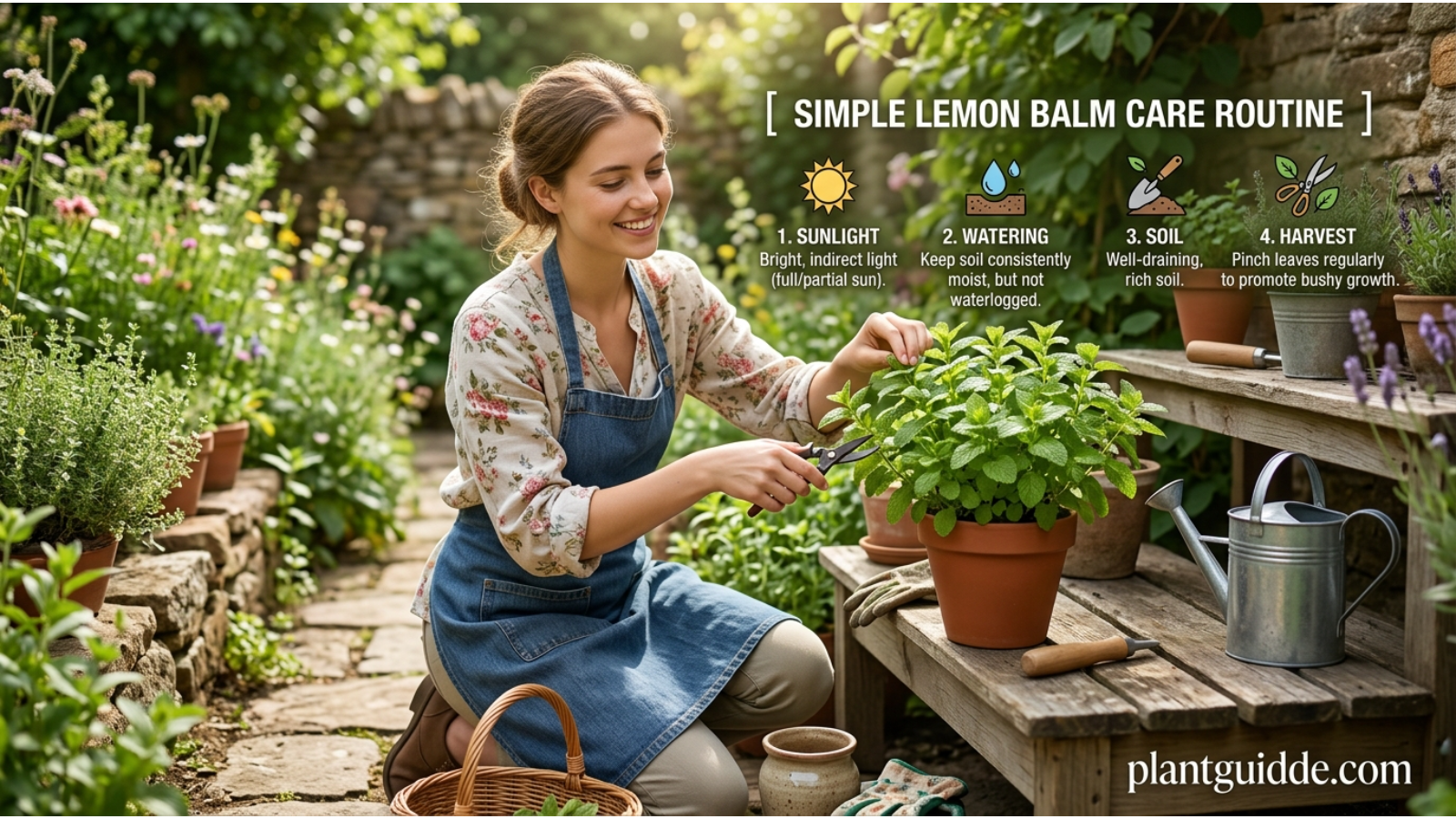
A Simple Lemon Balm Care Routine
If you want a straightforward routine rather than a complicated maintenance schedule, use this approach:
Weekly during active growth:
- Check soil moisture.
- Inspect the undersides of leaves for pests.
- Harvest young shoot tips.
- Remove damaged foliage.
Every few weeks:
- Check whether the plant is becoming crowded.
- Trim overly long stems.
- Inspect the container for roots becoming congested.
After flowering:
- Cut back the plant if you want fresh foliage.
- Remove spent flowers if you want to reduce self-seeding.
Every few years:
- Divide large clumps if they become crowded or difficult to manage.
This routine keeps lemon balm productive without turning it into a high-maintenance herb.
FAQs:
Does lemon balm need full sun?
No. Lemon balm can grow in full sun or partial shade. Full sun generally supports strong growth, while partial shade can be useful in hotter conditions.
How often should I water lemon balm?
There is no reliable universal schedule. Check the soil and water when it begins drying, particularly for young or container-grown plants. Established garden plants may need little additional water when rainfall is adequate.
Can lemon balm grow indoors?
Yes, lemon balm can be grown in a container indoors, provided it receives strong natural light and has good drainage. A bright window is preferable to a dim interior location.
Why is my lemon balm flowering?
Flowering is a normal part of the plant’s growth cycle. If you want more leafy growth and fewer seeds, harvest regularly and cut the plant back after flowering.
Should I cut back lemon balm?
Yes. Cutting back lemon balm after flowering can encourage fresh foliage, maintain a more compact shape, and reduce self-seeding.
Conclusion
Successful lemon balm plant care is mainly about getting four things right: good light, well-drained soil, appropriate moisture, and regular harvesting or pruning. The plant is naturally vigorous, so the bigger challenge is often controlling growth rather than keeping it alive.
Give lemon balm a sunny or partially shaded position, avoid waterlogged soil, harvest the young shoots regularly, and cut it back when it becomes untidy or finishes flowering. If spreading is a concern, grow it in a container from the beginning.
For most home gardeners, that combination provides the easiest way to maintain a healthy, productive lemon balm plant without allowing its vigorous nature to become a problem.

Asad Mumtaz is a dedicated plant enthusiast and gardening writer with a passion for helping people care for their plants successfully. He specializes in plant care guides, indoor gardening, and practical growing tips for all skill levels. His content focuses on making gardening simple, enjoyable, and rewarding. Through his work, Asad shares reliable advice to help readers create thriving green spaces.