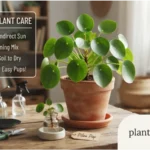
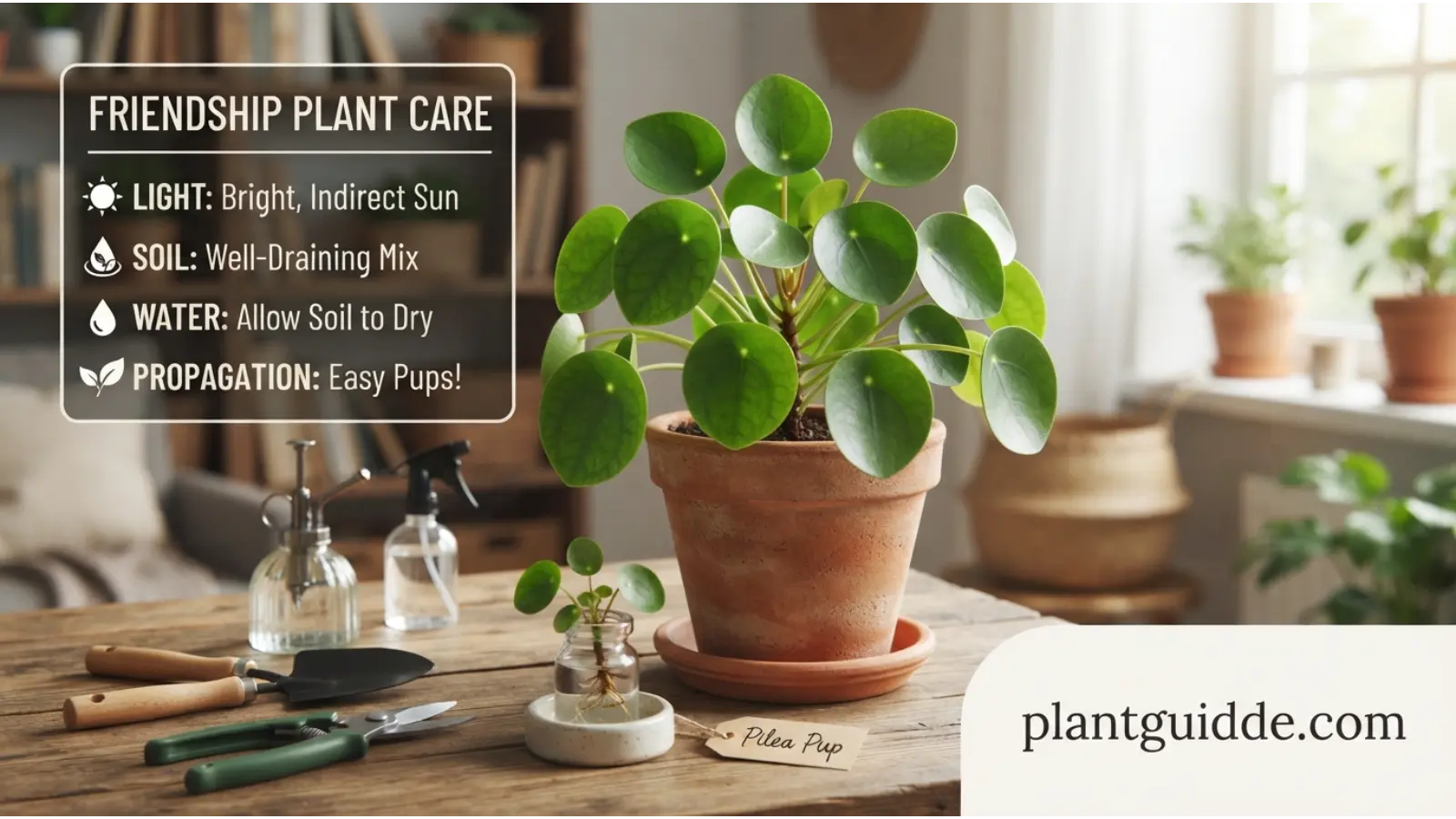
Friendship plant care is a charming houseplant known for its small, textured leaves, compact growth, and ease of propagation. Its common name comes from how readily healthy plants can produce cuttings or offsets that growers can share with friends.
Although it is often considered beginner-friendly, friendship plant care becomes much easier when you understand what the plant actually needs.
Problems such as curling leaves, brown edges, yellow foliage, legginess, and drooping are usually linked to light, watering, humidity, or soil conditions rather than a lack of complicated maintenance.
Quick Answer
Friendship plant care is easiest when you provide bright, indirect light, lightly moist but well-draining soil, moderate humidity, and warm, stable temperatures. Let the top layer of soil dry slightly before watering again, and avoid both harsh direct sun and constantly wet roots. Regular pinching also helps maintain a compact, bushy shape and encourages healthy new growth.
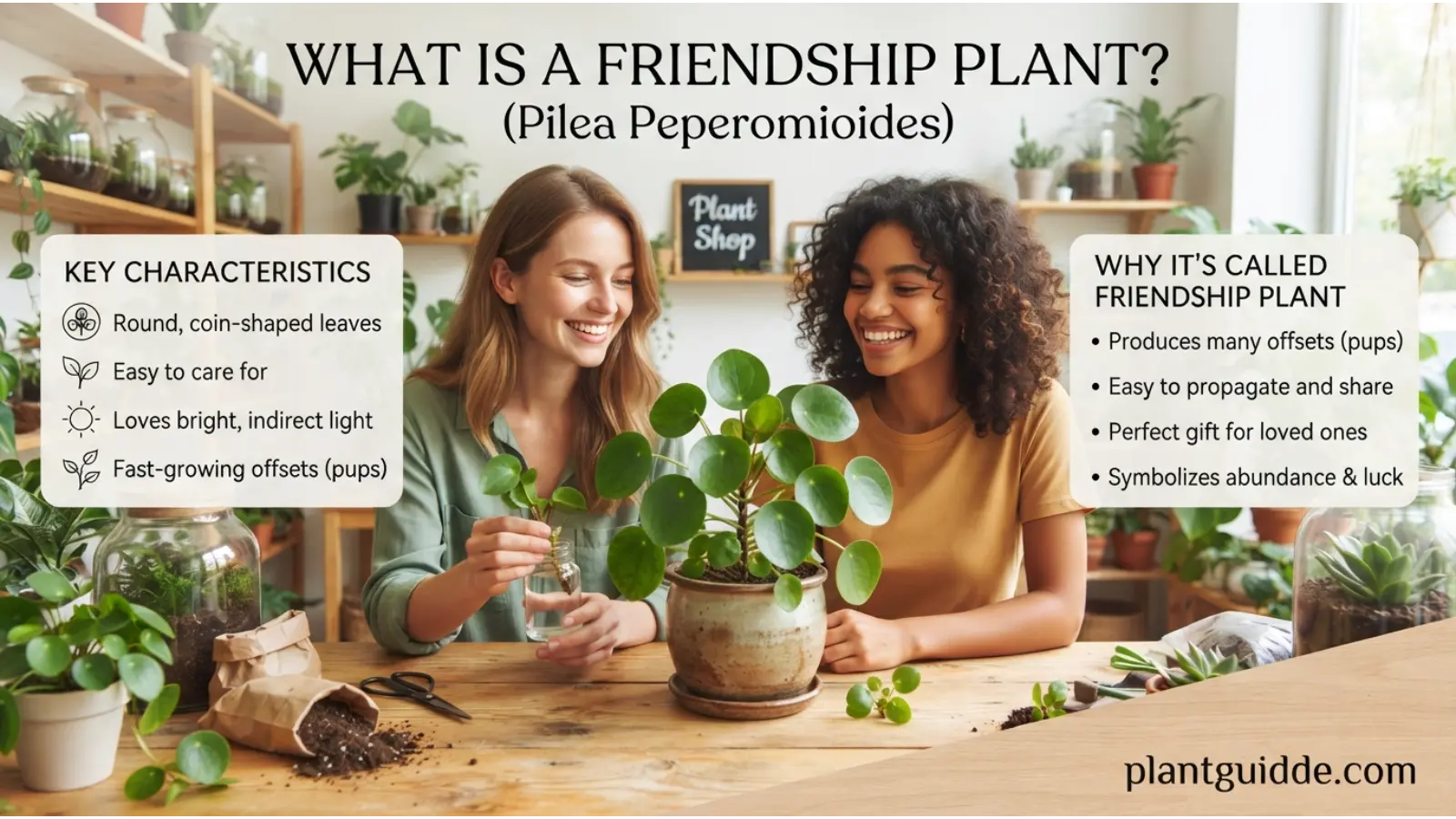
What Is a Friendship Plant?
The name “friendship plant” is most commonly associated with Pilea involucrata, a tropical plant in the nettle family, Urticaceae. It is grown primarily for its attractive foliage rather than showy flowers.
Its leaves are typically oval, textured, and somewhat quilted, with contrasting green, bronze, or reddish tones depending on the variety and growing conditions. The plant has a spreading, compact habit that works particularly well in small pots, terrariums, plant shelves, and indoor displays.
One reason it is popular with houseplant growers is its ability to produce new plants that can be propagated and shared.
Friendship Plant Care at a Glance
| Care factor | Best condition |
|---|---|
| Light | Bright, indirect light |
| Soil | Loose, well-draining, moisture-retentive mix |
| Water | Water when the surface begins to dry |
| Humidity | Moderate to high |
| Temperature | Warm, stable indoor temperatures |
| Fertilizer | Balanced fertilizer during active growth |
| Pruning | Pinch growing tips to encourage bushiness |
| Propagation | Stem cuttings |
| Pot | Container with drainage holes |
| Main risk | Overwatering and poor drainage |
How Much Light Does a Friendship Plant Need?
Friendship plants generally grow best in bright, indirect light.
Place the plant near an east- or north-facing window, or slightly back from a brighter south- or west-facing window where direct sunlight is filtered.
Too little light can cause:
- Long, stretched stems
- Smaller new leaves
- Slower growth
- Reduced foliage density
- Loss of attractive coloration
On the other hand, strong direct sunlight through glass can scorch the leaves, especially during hot weather. Scorched foliage may develop pale, bleached, brown, or crispy patches.
A useful practical test is to observe the plant’s growth rather than relying only on the calendar. If new stems are becoming unusually long and widely spaced, the plant may need more usable light.
Can Friendship Plants Grow in Low Light?
They can tolerate less light than many demanding tropical plants, but tolerating low light is not the same as growing well in it.
If the plant survives but becomes thin, stretched, or slow-growing, move it gradually toward brighter filtered light.
How to Water a Friendship Plant
Watering is one of the most important parts of friendship plant care.
The goal is to keep the root environment evenly moist without leaving it constantly saturated.
Before watering, check the surface of the soil with your finger. If the upper portion feels noticeably dry, water thoroughly until excess water drains from the bottom of the pot.
Then empty any water sitting in a saucer or decorative outer container.
Avoid watering according to a rigid schedule such as every three or four days. Indoor conditions change with temperature, light, season, pot size, and soil composition.
Signs Your Friendship Plant Needs Water
A thirsty plant may show:
- Drooping leaves
- Curling foliage
- Dry-feeling soil
- Slower growth
- Crispy leaf edges in more severe cases
If the soil is already dry but the plant repeatedly wilts, check whether the container is too small or whether the soil has become hydrophobic and is allowing water to run around the root ball instead of soaking in.
Signs of Overwatering
Excess moisture can cause:
- Yellowing leaves
- Soft or limp foliage
- Persistent wet soil
- Weak growth
- Stem or root problems
- Unpleasant-smelling soil
If the soil stays wet for many days after watering, don’t simply reduce the amount of water. Check the drainage, soil structure, pot size, and light level. The underlying problem may be poor aeration around the roots.
Best Soil for Friendship Plants
Friendship plants need a potting medium that retains some moisture while still allowing excess water and air to move through the root zone.
A practical mix can contain:
- Quality indoor potting mix
- Perlite or pumice for drainage
- Fine bark or another airy organic component
The exact recipe does not have to be complicated. What matters most is that the soil does not become dense and waterlogged.
A potting mix that stays wet for too long increases the risk of root problems, especially when combined with a container that has poor drainage.
Do Friendship Plants Need High Humidity?
Friendship plants appreciate moderate to higher humidity, particularly in dry indoor environments.
Low humidity may contribute to:
- Brown or crispy leaf edges
- Curling leaves
- Dry-looking foliage
- Slower or less vigorous growth
If your home is naturally dry, especially during heating or air-conditioning periods, consider placing the plant near other houseplants to create a slightly more humid microenvironment.
A humidifier can provide more consistent humidity than occasional misting.
However, humidity should not come at the expense of airflow. Constantly damp leaves combined with stagnant air can create conditions that encourage fungal and bacterial problems.
What Temperature Is Best for Friendship Plants?
Friendship plants prefer warm, stable conditions.
Keep them away from:
- Cold drafts
- Frequently opened exterior doors
- Strong air-conditioning vents
- Hot heating vents
- Sudden temperature changes
A comfortable indoor environment is generally more important than maintaining an exact temperature.
If growth suddenly slows during colder months, don’t compensate by watering more frequently. Lower temperatures can reduce how quickly the plant uses water, leaving wet soil around the roots for longer.
How to Fertilize a Friendship Plant
During active growth, friendship plants can benefit from a balanced, diluted houseplant fertilizer.
Apply fertilizer according to the product’s instructions rather than assuming that more will produce faster growth.
Overfertilizing can lead to salt buildup and root stress. If you notice crusty deposits on the soil surface or leaf-edge damage despite otherwise suitable conditions, excessive fertilizer may be one factor to investigate.
During periods of slow winter growth, fertilizer requirements are usually lower.
How to Prune a Friendship Plant
Pruning is useful when your friendship plant becomes leggy or loses its compact shape.
Use clean, sharp scissors or pruning snips to remove excessively long stems. Pinching the growing tips can also encourage branching.
Instead of making one drastic cut, you can gradually shape the plant over several pruning sessions.
Pruning is especially helpful when combined with better lighting. Cutting back a stretched plant without correcting insufficient light often results in new growth becoming stretched again.
How to Propagate a Friendship Plant
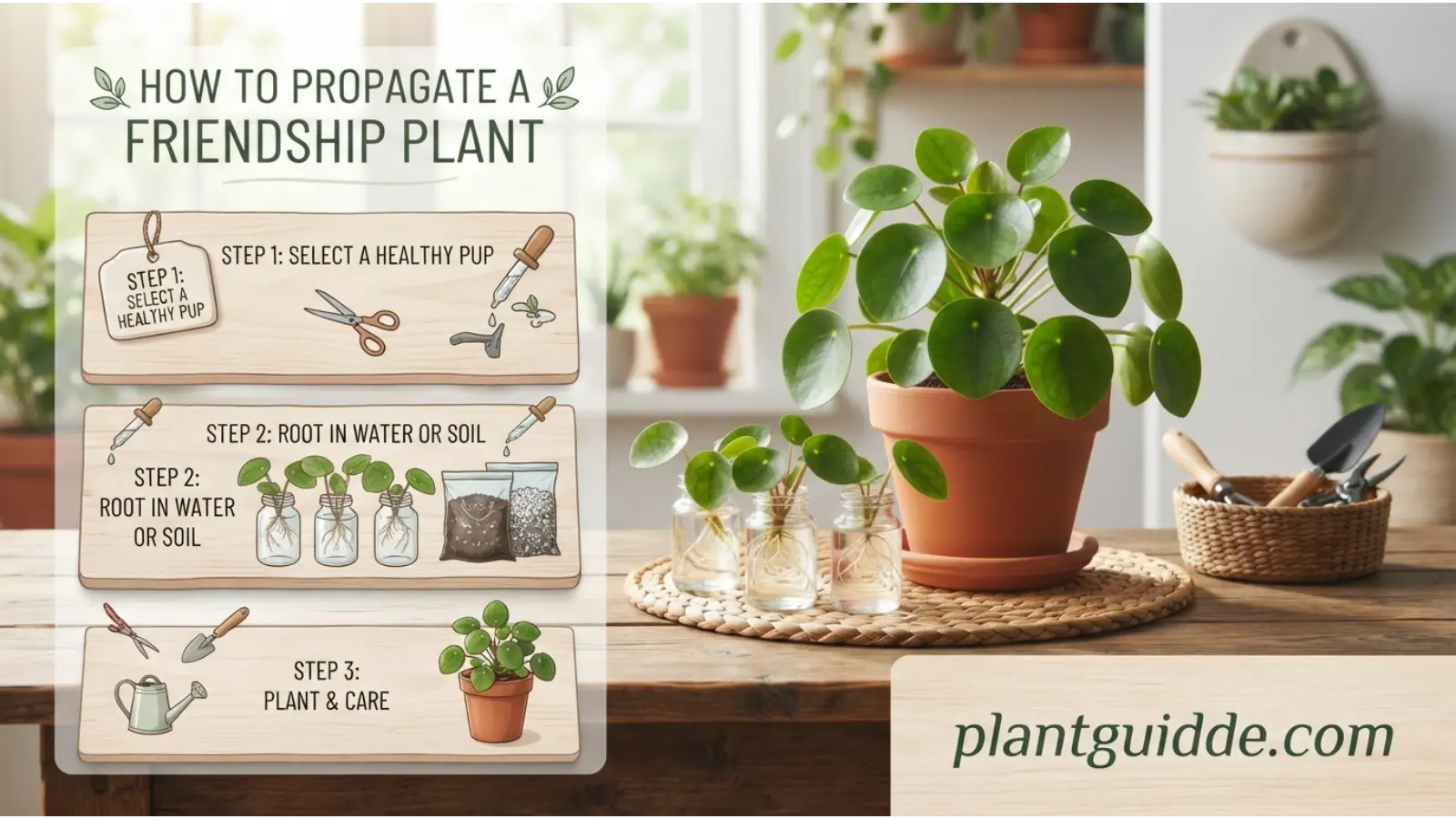
One of the most enjoyable features of a friendship plant is how easy it can be to propagate from stem cuttings.
Step 1: Choose a Healthy Stem
Select a healthy, non-flowering stem with several leaves. Avoid taking cuttings from weak, diseased, or severely stressed growth.
Step 2: Make the Cutting
Using clean scissors, take a cutting just below a suitable node.
The node is important because it is where new roots can develop.
Step 3: Remove Lower Leaves
Remove the leaves from the lower portion of the cutting so they will not sit in water or directly against the propagation medium.
Step 4: Root the Cutting
You can root the cutting in water or a suitable moist propagation medium.
If using water, keep the leaves above the waterline and change the water when it becomes cloudy or dirty.
If using soil or another propagation medium, keep it lightly moist rather than saturated.
Step 5: Pot the New Plant
Once a healthy root system has developed, move the cutting into a small container with a well-draining potting mix.
Avoid placing a tiny cutting into a very large pot. Excess soil around a small root system can remain wet for too long.
How to Make a Friendship Plant Bushier
If your friendship plant looks thin or sparse, focus on light and pruning together.
First, provide brighter indirect light. Then pinch or trim excessively long stems above a healthy node.
You can also root suitable cuttings and plant them back into the same container once established. This can create a fuller-looking pot without relying on excessive fertilizer.
A common mistake is to keep trimming a plant that is receiving insufficient light. The plant may continue producing elongated growth because the underlying lighting problem has not been fixed.
When Should You Repot a Friendship Plant?
Repot when the plant has outgrown its current container or when the soil has become compacted and drains poorly.
Signs that repotting may be appropriate include:
- Roots emerging from drainage holes
- Water running through unusually quickly
- Roots tightly circling the container
- Soil that has broken down or become compact
- Growth slowing despite otherwise suitable conditions
Choose a pot only slightly larger than the existing root system.
Moving a small friendship plant into a very large container is not necessarily an upgrade. More soil means more moisture around the roots after watering.
Common Friendship Plant Problems
Friendship Plant Leaves Turning Yellow
Yellow leaves can have several causes, but consistently wet soil is one of the first things to investigate.
Check:
- How frequently you are watering.
- Whether the soil is drying between waterings.
- Whether the container has drainage holes.
- Whether the potting mix is compacted.
- Whether the plant is receiving enough light.
An occasional older yellow leaf is different from widespread yellowing throughout the plant.
Friendship Plant Leaves Curling
Curling leaves may indicate that the plant is experiencing water stress, excessive light, low humidity, or unsuitable temperatures.
Check the soil before watering. If it is dry, water thoroughly. If it is already wet, adding more water can make the underlying problem worse.
Also inspect the plant for pests and examine where it is positioned.
Friendship Plant Drooping
Drooping does not automatically mean the plant needs water.
A drooping friendship plant can be caused by:
- Dry soil
- Overly wet roots
- Heat stress
- Cold stress
- Root damage
- Sudden environmental changes
The quickest way to narrow down the cause is to inspect the soil and roots rather than watering immediately.
Brown or Crispy Leaf Edges
Brown edges are often associated with dry conditions, inconsistent moisture, low humidity, excessive fertilizer, or environmental stress.
Look at the pattern of damage. If only the edges are affected and the soil is drying extremely quickly, water and humidity may deserve attention. If damage appears alongside salt deposits or heavy fertilization, fertilizer buildup is another possibility.
Friendship Plant Losing Leaves
Leaf drop can occur after sudden changes in light, temperature, watering, or humidity.
Move the plant gradually rather than repeatedly relocating it from one environment to another.
If leaves are dropping rapidly, inspect the roots and soil for signs of excessive moisture or root deterioration.
Friendship Plant Pests
Like many indoor plants, friendship plants can occasionally attract common houseplant pests.
Check regularly for:
- Spider mites
- Mealybugs
- Aphids
- Scale insects
Inspect the undersides of leaves, leaf joints, and young growth.
Early detection makes treatment much easier. If you see insects, isolate the affected plant from nearby houseplants and identify the pest before choosing a treatment.
Image Suggestion: A close-up infographic showing healthy friendship plant leaves alongside common signs of underwatering, overwatering, low humidity, and pest damage.
Common Friendship Plant Care Mistakes
Some problems repeatedly appear because the plant’s basic needs are misunderstood.
Watering on a Fixed Schedule
A calendar cannot account for changing light, temperature, humidity, and soil conditions.
Better approach: Check the soil and the plant before watering.
Keeping the Soil Constantly Wet
Friendship plants appreciate moisture but do not need permanently saturated roots.
Better approach: Use an airy mix and allow the surface to begin drying before watering again.
Giving Too Much Direct Sun
Bright light is useful, but intense direct sunlight can damage foliage.
Better approach: Provide bright filtered or indirect light.
Using a Pot Without Drainage
Decorative containers without drainage can trap excess water around the roots.
Better approach: Keep the plant in a container with drainage holes and use a saucer if necessary.
Ignoring Leggy Growth
Long, widely spaced stems are often a sign that the plant needs more light.
Better approach: Improve lighting first, then prune and propagate to restore a fuller shape.
Overfertilizing
More fertilizer does not automatically mean faster or healthier growth.
Better approach: Use a diluted balanced fertilizer during active growth and follow the product’s recommended frequency.
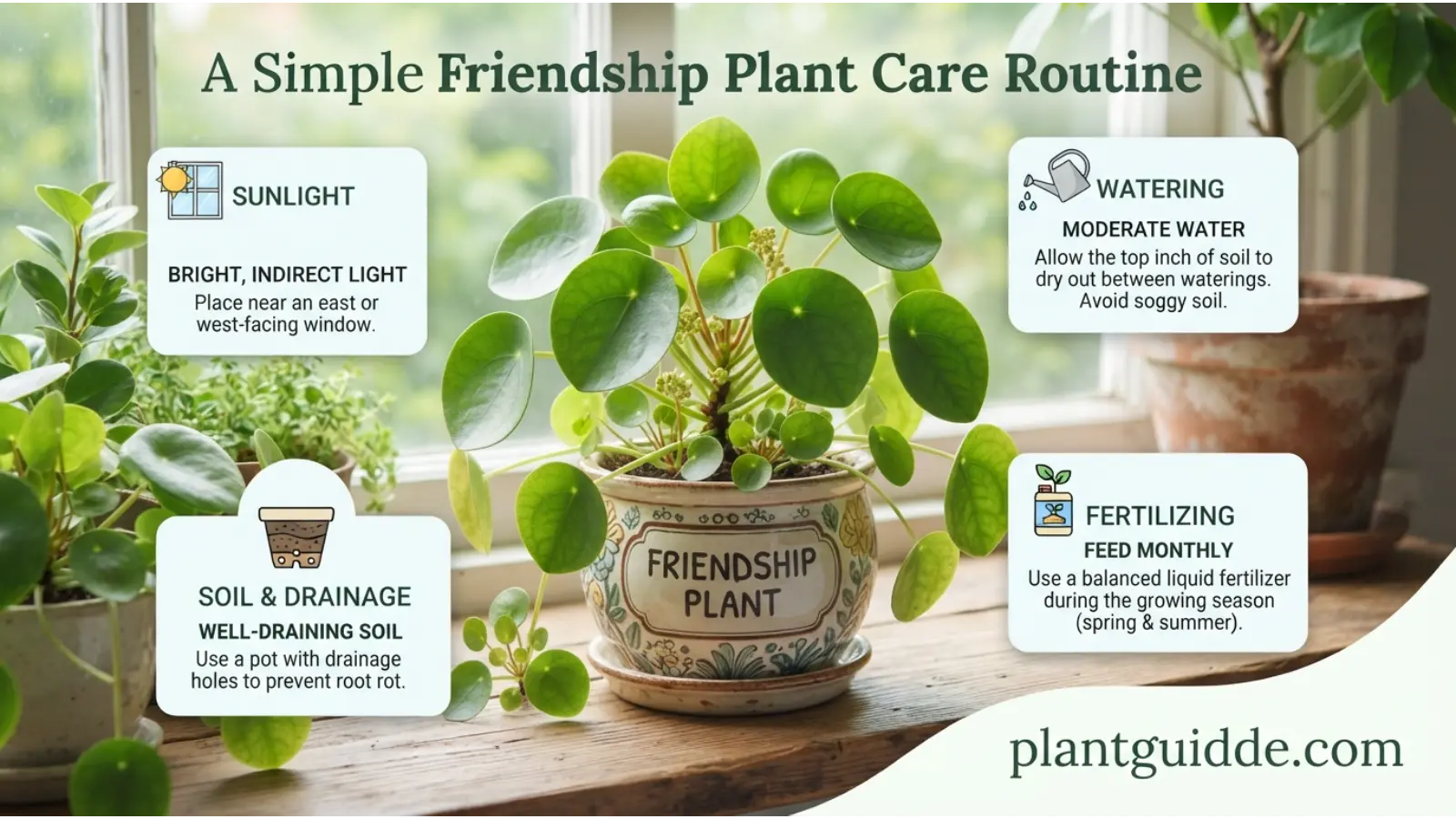
A Simple Friendship Plant Care Routine
For beginners, the following routine keeps maintenance straightforward:
Weekly:
Check the soil moisture, inspect leaves for pests, and look for new growth or signs of stress.
When the soil begins to dry:
Water thoroughly and allow excess water to drain away.
Monthly during active growth:
Assess the plant’s shape, growth rate, and foliage color. Fertilize if appropriate for your growing conditions and fertilizer product.
Every few months:
Rotate the container if growth is leaning toward the light, inspect the drainage, and prune excessively long stems.
When necessary:
Repot if the plant is root-bound or the potting medium has deteriorated.
FAQs:
Is a friendship plant easy to care for?
Yes. Friendship plants are generally manageable houseplants when provided with bright indirect light, suitable moisture, good drainage, warmth, and reasonable humidity. Their main challenge is avoiding extremes, particularly prolonged dry conditions or constantly wet soil.
How often should I water a friendship plant?
There is no universal watering interval. Check the soil and water when the upper layer has begun to dry. Environmental conditions determine how quickly the plant uses water, so it may need more frequent watering during active growth and less during cooler or darker periods.
Can friendship plants grow indoors?
Yes. They are well suited to indoor growing when placed in bright, indirect light. Protect them from harsh direct sun, cold drafts, and locations where temperatures fluctuate significantly.
Why is my friendship plant getting leggy?
Insufficient light is a common reason. Move it toward brighter indirect light and prune long stems to encourage a more compact appearance. Avoid relying on pruning alone because new growth may become leggy again if lighting remains inadequate.
Can I propagate a friendship plant in water?
Yes. Healthy stem cuttings can be rooted in water. Keep the leaves above the water and transfer the cutting to a suitable potting mix after it develops a useful root system. A small container is preferable to an oversized pot during the early establishment stage.
Final Thoughts
Successful friendship plant care is less about following a strict schedule and more about responding to the plant’s growing conditions. Give it bright indirect light, an airy soil mix, appropriate watering, moderate humidity, and good drainage, then adjust your routine as the seasons and indoor environment change.
If your plant begins showing yellow, curling, drooping, or stretched growth, don’t immediately add more water or fertilizer. Start by checking light, soil moisture, drainage, temperature, and recent environmental changes. Those clues usually reveal what the plant needs.

Asad Mumtaz is a dedicated plant enthusiast and gardening writer with a passion for helping people care for their plants successfully. He specializes in plant care guides, indoor gardening, and practical growing tips for all skill levels. His content focuses on making gardening simple, enjoyable, and rewarding. Through his work, Asad shares reliable advice to help readers create thriving green spaces.