Take care of mint plant is one of the easiest herbs to grow, but it has one habit that catches many beginners off guard: it grows aggressively when conditions are right. A healthy mint plant can quickly fill a container, send out new shoots, and become crowded if it is not harvested regularly.
The bigger challenge is finding the right balance. Mint likes moisture, but constantly wet soil can damage its roots. It tolerates some shade, but too little light can produce weak, stretched growth with less flavorful foliage. Good mint plant care is therefore less about complicated techniques and more about maintaining steady moisture, adequate light, good drainage, and regular pruning.
Take care of mint plant you are growing mint indoors on a windowsill, outdoors in a container, or in a garden bed, the basic principles are the same. The main difference is how quickly the soil dries and how aggressively the plant spreads.
Quick Answer
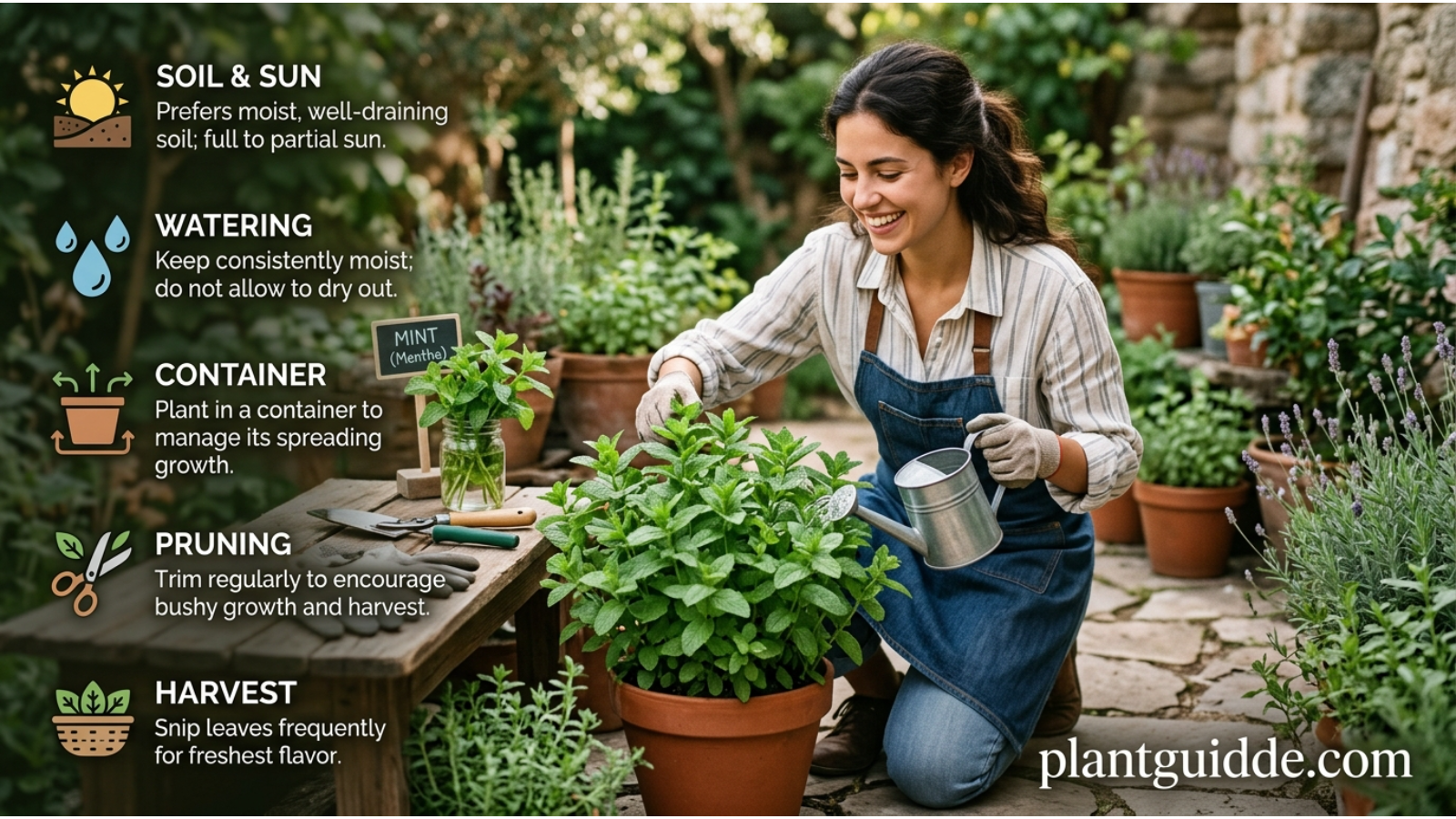
To take care of a mint plant, give it bright light, consistently moist but well-draining soil, regular harvesting, and enough room for its vigorous roots. Mint grows best when the soil does not completely dry out or remain soggy. Trim stems regularly to encourage bushier growth, remove damaged leaves, and repot or divide the plant when roots become crowded.
Mint Plant Care at a Glance
| Care requirement | Best approach |
|---|---|
| Light | Bright light with some direct morning or gentle sun |
| Soil | Rich, loose, well-draining soil |
| Water | Keep soil lightly and consistently moist |
| Temperature | Mild to warm conditions with protection from extremes |
| Humidity | Average household humidity is usually sufficient |
| Fertilizer | Light feeding during active growth |
| Pruning | Harvest and trim stems regularly |
| Pot | Container with drainage holes |
| Repotting | When roots become crowded or growth slows |
| Propagation | Stem cuttings or division |
| Main problem | Overwatering, poor light, and overcrowding |
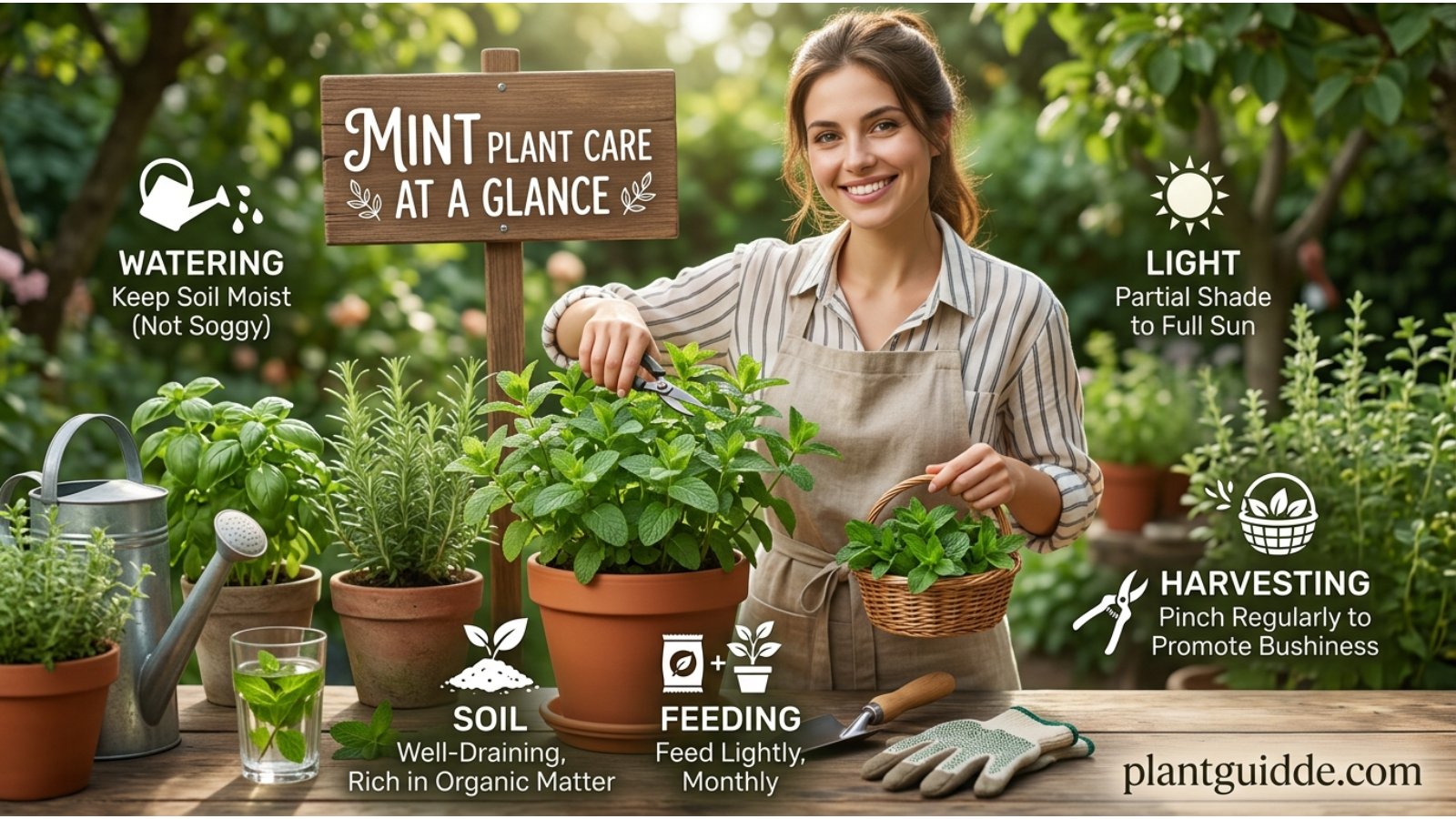
How to Take Care of a Mint Plant
Successful mint care comes down to several factors working together. A plant that receives plenty of water but sits in poorly draining soil may still struggle, while a mint plant in excellent soil may become thin and weak if it receives very little light.
Focus on these essentials:
- Provide plenty of bright light.
- Keep the soil evenly moist without making it waterlogged.
- Use a container with drainage holes.
- Harvest stems frequently.
- Give the roots enough space.
- Feed lightly during active growth.
- Watch for pests and signs of stress before problems become severe.
How Much Light Does Mint Need?
Mint grows best in bright light, although it can tolerate less direct sun than many Mediterranean herbs.
For indoor mint, place the plant near a bright window where it receives several hours of good natural light. A little direct morning sunlight can be beneficial, while intense afternoon sun through hot glass may scorch leaves or cause the container to dry unusually quickly.
Outdoor mint generally performs well with morning sun and some protection from harsh afternoon heat, particularly in very hot climates.
Signs Your Mint Needs More Light
A mint plant may be receiving insufficient light if you notice:
- Long, thin stems
- Large gaps between leaves
- Pale or faded foliage
- Weak, floppy growth
- Slow production of new leaves
- The plant leaning strongly toward a window
If this happens, move the plant gradually toward a brighter location rather than suddenly exposing a shade-grown plant to intense midday sun.
How Often Should You Water a Mint Plant?
Mint prefers soil that stays consistently moist but never saturated.
Instead of following a strict calendar, check the soil. When the upper portion begins to feel slightly dry, water thoroughly until excess water flows from the drainage holes.
The frequency will depend on:
- Pot size
- Temperature
- Light exposure
- Humidity
- Soil composition
- Whether the plant is indoors or outdoors
A small mint plant in a warm, sunny container may need water much more frequently than a large plant growing in a cooler location.
Avoid Both Extreme Conditions
Too little water can cause:
- Drooping leaves
- Crispy edges
- Slow growth
- Dry soil pulling away from the pot
Too much water can cause:
- Yellowing leaves
- Persistent wet soil
- Weak or collapsing stems
- Root problems
- A musty smell from the potting mix
The goal is not constantly wet soil. It is reliable moisture with sufficient oxygen around the roots.
What Soil Is Best for Mint?
Mint grows well in fertile soil that retains some moisture while still draining excess water.
A good container mix can include:
- Quality all-purpose potting mix
- Compost or another suitable organic amendment
- A drainage-improving material such as perlite
Avoid using dense garden soil alone in a container. It can compact around the roots and restrict drainage.
The ideal soil should hold enough water to prevent the plant from drying rapidly while allowing excess moisture to escape.
Choosing the Right Pot for Mint
Mint spreads vigorously through underground stems, so the container you choose matters.
For indoor growing, use a pot with drainage holes and enough width for the plant to expand. A moderately sized container is often easier to manage than an extremely large pot because oversized containers can hold excess moisture for longer.
Take care of mint plant you want to prevent mint from taking over a garden bed, growing it in a container is one of the simplest solutions.
A saucer beneath the pot is fine, but do not allow the container to sit in standing water for extended periods.
How to Prune and Harvest Mint
Regular harvesting is one of the easiest ways to improve the appearance of a mint plant.
Instead of removing individual leaves randomly, cut stems just above a pair of healthy leaves. This encourages the plant to produce additional side shoots and helps create a fuller shape.
Best Time to Harvest Mint
Harvesting can be done throughout active growth. For the strongest flavor, many growers prefer harvesting young, healthy stems before or around flowering.
Do not be afraid to cut the plant back. Mint responds well to regular trimming when it has adequate light, water, and nutrients.
If your mint has become tall and sparse, trim the longest stems and encourage fresh growth from lower nodes.
Should You Let Mint Flower?
Mint can produce small flowers that attract pollinators, but allowing it to flower can change the way the plant looks and may reduce the amount of tender foliage available for harvesting.
If your primary goal is culinary use, regularly pinching or cutting flowering stems can help keep the plant focused on leafy growth.
If you want to support pollinators or enjoy the flowers, you can allow some stems to bloom.
How to Fertilize Mint
Mint does not require an aggressive fertilizer schedule.
If the plant is growing in fertile potting soil, it may need little additional feeding initially. During active growth, a balanced fertilizer applied according to its label directions can support continued foliage production.
Avoid assuming that more fertilizer means more flavorful mint. Excessive feeding can encourage soft, overly lush growth without solving problems caused by poor light, improper watering, or compacted soil.
If growth is weak, first check the plant’s light, moisture, roots, and soil before increasing fertilizer.
How to Grow Mint Indoors
Mint can be an excellent indoor herb when placed in a bright location.
For successful indoor mint care:
- Choose a container with drainage holes.
- Use a loose, fertile potting mix.
- Place the plant near a bright window.
- Check the soil regularly.
- Water when the upper layer begins to dry.
- Rotate the pot occasionally for more even growth.
- Harvest stems frequently.
- Remove yellow or damaged leaves.
- Keep the plant away from extremely hot or cold drafts.
Indoor mint can sometimes become leggy because household light is weaker than outdoor light. If the stems become unusually long and the spaces between leaves increase, improve the lighting before simply adding more fertilizer.
How to Grow Mint Outdoors
Outdoor mint can grow rapidly when temperatures and moisture are favorable.
Choose a location with good light and soil that drains efficiently. In very hot conditions, some afternoon protection can help prevent excessive stress and rapid moisture loss.
Because mint spreads readily, consider growing it in a container if you do not want it to establish throughout the garden.
For garden-grown mint, regular harvesting can also help control its size and maintain fresh foliage.
When Should You Repot Mint?
Mint usually needs repotting when its roots have filled much of the container or the plant begins drying out unusually quickly.
Signs of a root-bound mint plant include:
- Roots circling around the inside of the pot
- Water running through the container unusually quickly
- Soil drying out much faster than before
- Slower growth despite good light and watering
- Roots emerging from drainage holes
Move the plant into a slightly larger container rather than jumping immediately to a very large pot.
If the plant has become extremely crowded, dividing the root mass into smaller sections can also rejuvenate it and give you several new plants.
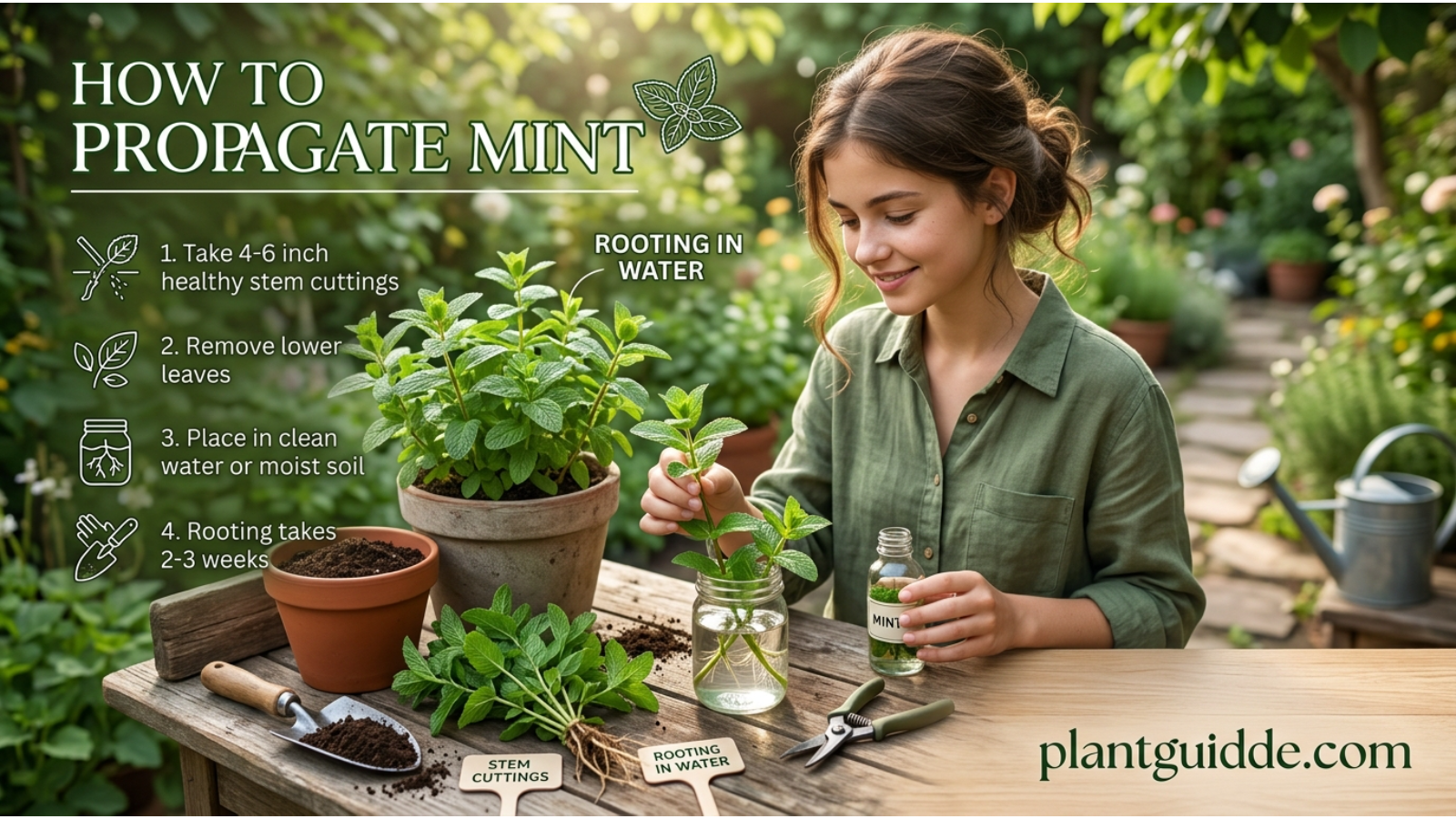
How to Propagate Mint
Mint is particularly easy to propagate.
Propagation From Stem Cuttings
Take a healthy stem several inches long and remove the lower leaves. Place the cutting in water or a suitable moist growing medium.
When roots develop sufficiently, transplant the cutting into soil and keep the growing medium consistently moist while it establishes.
Propagation by Division
Established mint can also be divided by separating portions of the root and stems and planting them individually.
Division is particularly useful when an older container has become overcrowded.
Common Mint Plant Problems
Mint Leaves Turning Yellow
Yellow leaves can have several causes, so avoid immediately assuming the plant needs fertilizer.
Common possibilities include:
- Excessive watering
- Poor drainage
- Insufficient light
- Root stress
- Natural aging of older leaves
If several leaves are yellow while the soil remains wet for long periods, inspect the roots and improve drainage rather than simply watering more frequently.
Mint Leaves Wilting
Wilting usually means the plant is struggling to maintain adequate water balance, but both underwatering and root problems can produce similar symptoms.
Check the soil first.
If the soil is completely dry, water thoroughly. If the soil is saturated and the plant remains wilted, investigate drainage and root health.
Mint Becoming Leggy
Leggy mint is commonly associated with inadequate light.
Move the plant to a brighter location and trim back excessively stretched stems. New growth should become more compact when lighting improves.
Mint Leaves Turning Brown
Brown edges or patches may result from:
- Soil becoming too dry
- Intense heat or direct sun
- Low humidity combined with rapid moisture loss
- Root damage
- Physical damage to the leaves
Look at the entire growing environment rather than treating the brown leaves alone.
Mint Plant Drooping After Watering
If mint remains droopy despite having wet soil, the problem may not be a lack of water.
Constantly saturated soil can reduce oxygen around the roots and eventually interfere with their ability to function properly. Check whether the pot drains freely and whether the soil remains wet for an unusually long time.
Mint Pests to Watch For
Mint can occasionally attract pests such as:
- Aphids
- Spider mites
- Whiteflies
- Caterpillars
- Fungus gnats, particularly when indoor soil stays excessively wet
Inspect the undersides of leaves and the growing tips regularly.
For minor infestations, physically removing affected insects and improving growing conditions may be enough. More serious infestations require a treatment appropriate for edible herbs and the specific pest involved.
Always follow the product label and observe any harvest restrictions when using pest-control products on herbs intended for consumption.
Common Mint Care Mistakes
Keeping the Soil Permanently Wet
Mint likes moisture, but its roots still require oxygen. Constantly saturated soil is not the same as healthy moisture.
Growing Mint in a Pot Without Drainage
A decorative container without drainage holes can trap excess water around the roots. Use a nursery pot with drainage or a properly designed planter.
Ignoring Light Because Mint Is “Easy”
Mint can survive less-than-ideal conditions, but survival is different from producing dense, vigorous, flavorful growth.
Never Pruning the Plant
Untrimmed mint can become tall, crowded, and unattractive. Frequent harvesting encourages fresh shoots and gives you a useful supply of leaves.
Planting Mint Directly in the Garden Without Planning
Mint’s vigorous spreading habit can become difficult to control. Containers or designated growing areas are often better choices for gardeners who want to limit its spread.
Watering on a Fixed Schedule
A rule such as “water every two days” does not account for changes in temperature, light, pot size, or humidity. Check the soil instead.
How to Keep Mint Bushy
If your goal is a dense, attractive mint plant rather than a few long stems, pruning is essential.
When stems become tall, cut them back just above healthy leaf nodes. Continue harvesting new shoots instead of waiting until the plant becomes overgrown.
Also make sure the plant receives enough light. Pruning alone will not correct severe stretching caused by inadequate lighting.
A useful combination is:
Good light + consistent moisture + regular harvesting = fuller mint growth.
Can Mint Grow in Water?
Mint can survive and produce new roots in water, which makes it easy to propagate from cuttings.
However, growing a mint cutting permanently in plain water is different from growing an established plant in a well-balanced growing medium. For long-term, vigorous growth, mint generally benefits from access to a suitable growing medium and nutrients.
Water propagation is best viewed as a convenient way to start new plants.
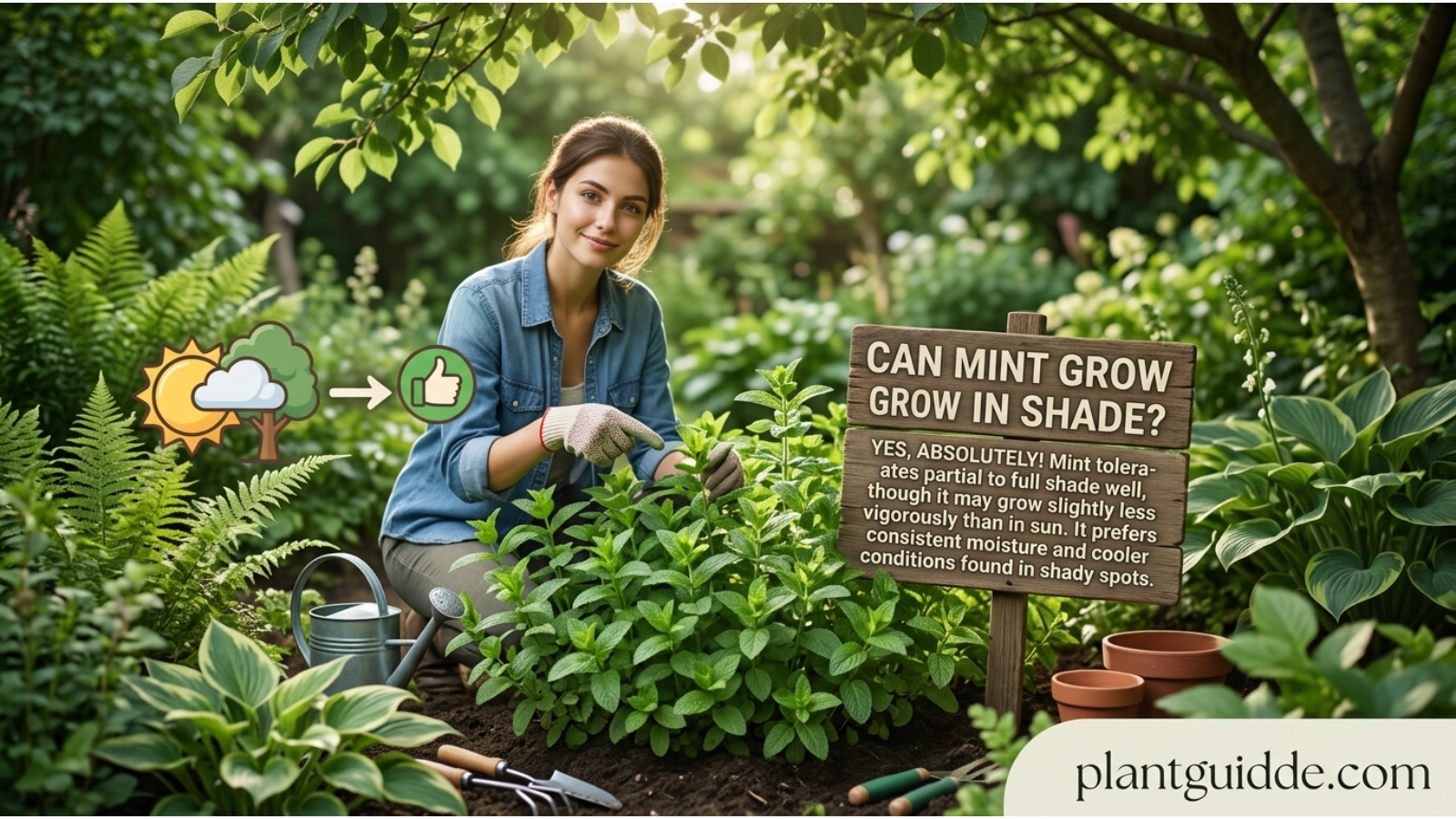
Can Mint Grow in Shade?
Mint can tolerate partial shade, but it generally performs better with plenty of bright light.
In deep shade, growth may become thin, slow, and less vigorous. If outdoor conditions are extremely hot, however, some afternoon shade can protect the plant from excessive heat.
The best location depends on the climate. In cooler conditions, more sun may be beneficial; in very hot conditions, protection from intense afternoon exposure may be preferable.
FAQs:
How often should I water a mint plant?
Water when the upper layer of soil begins to dry rather than following a fixed schedule. Keep the growing medium consistently moist but never continuously waterlogged.
Does mint need full sun?
Mint prefers bright light and can tolerate some direct sun, particularly in the morning. In very hot climates, protection from intense afternoon sunlight can help prevent heat and moisture stress.
Why is my mint plant dying?
Check the soil moisture, drainage, lighting, and roots first. Both severe underwatering and prolonged waterlogging can cause wilting, yellow leaves, and declining growth.
How do I make my mint plant bushier?
Give it adequate light and regularly pinch or cut stems just above healthy leaf nodes. Frequent harvesting encourages branching and prevents the plant from becoming tall and sparse.
Can I grow mint indoors all year?
Yes. Mint can grow indoors year-round when it receives sufficient light, appropriate watering, good drainage, and regular harvesting. Indoor plants may become leggy if natural light is too weak.
Conclusion
Learning how to take care of mint plant is mostly about getting the basics right rather than following a complicated routine. Give mint bright light, moist but well-draining soil, a container with drainage, and regular trimming, and it can produce fresh foliage for a long time.
The most important habit is to check the plant rather than blindly follow a watering schedule. When the soil, light, and roots are balanced, mint usually rewards you with vigorous new growth. For container growing, keep its spreading habit under control by harvesting regularly and dividing or repotting the plant when it becomes crowded.

Asad Mumtaz is a dedicated plant enthusiast and gardening writer with a passion for helping people care for their plants successfully. He specializes in plant care guides, indoor gardening, and practical growing tips for all skill levels. His content focuses on making gardening simple, enjoyable, and rewarding. Through his work, Asad shares reliable advice to help readers create thriving green spaces.